How We Fix It
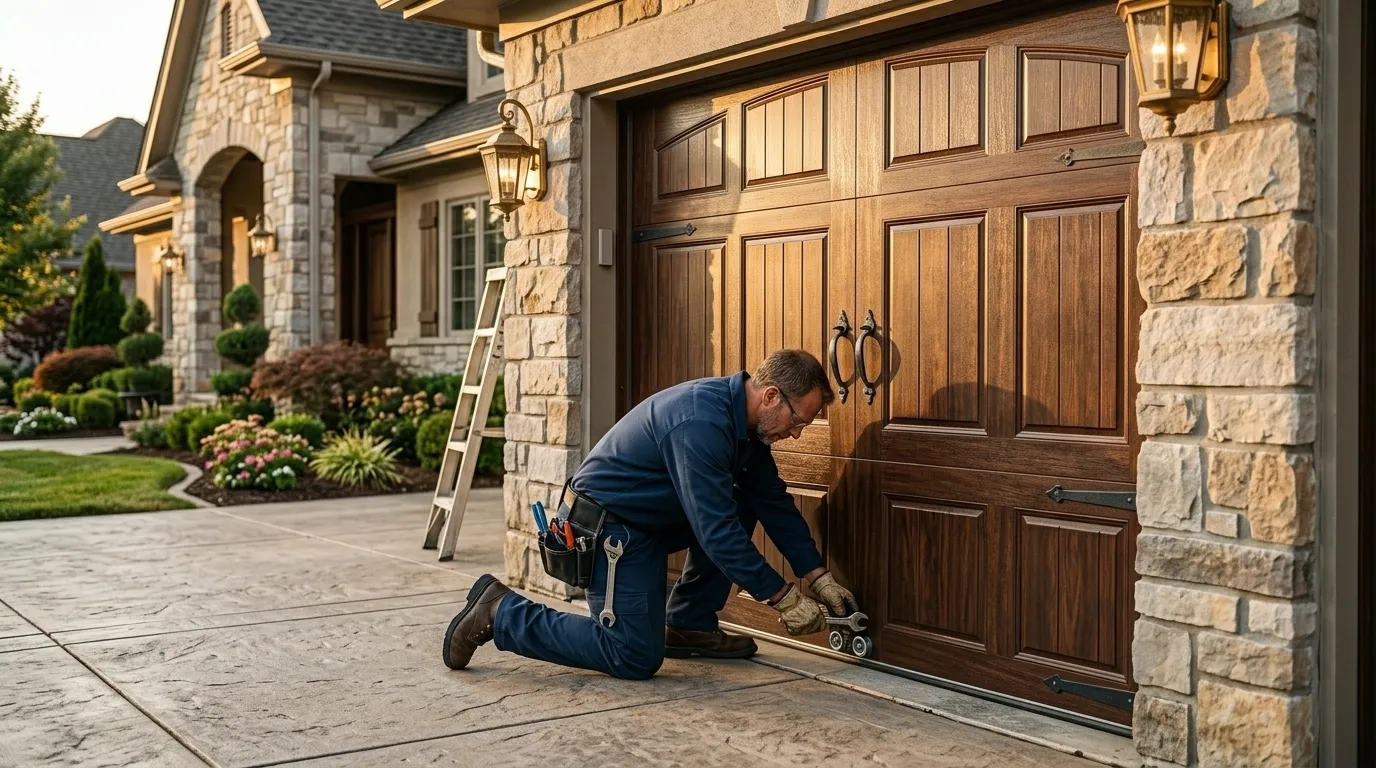
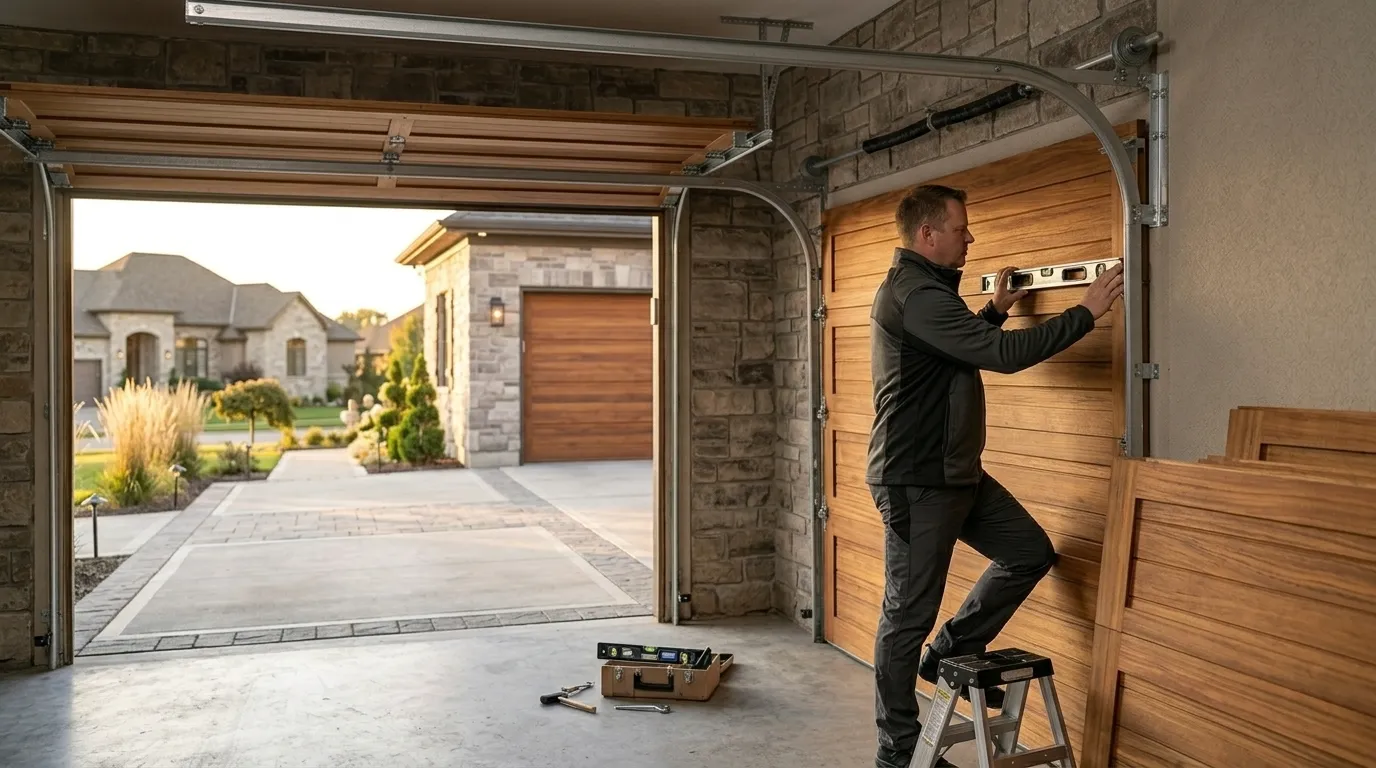
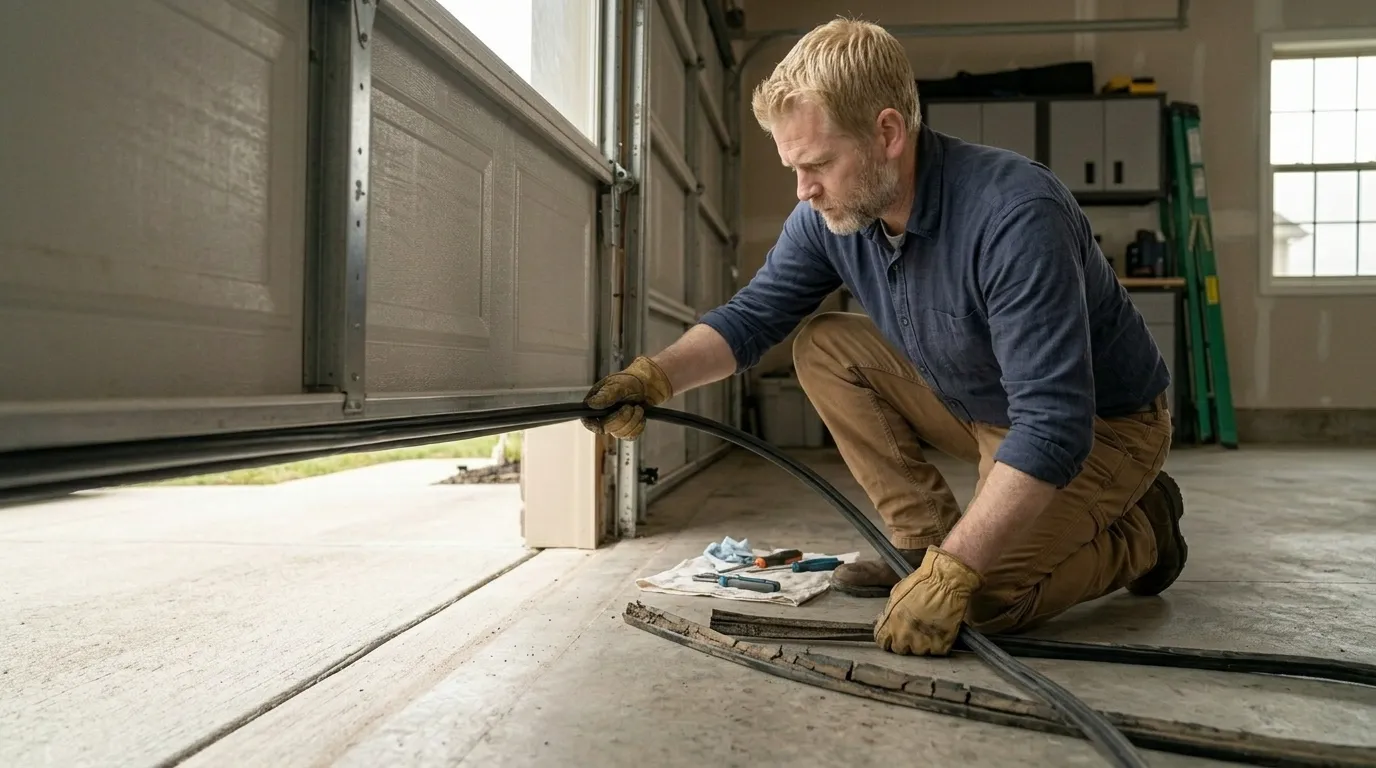
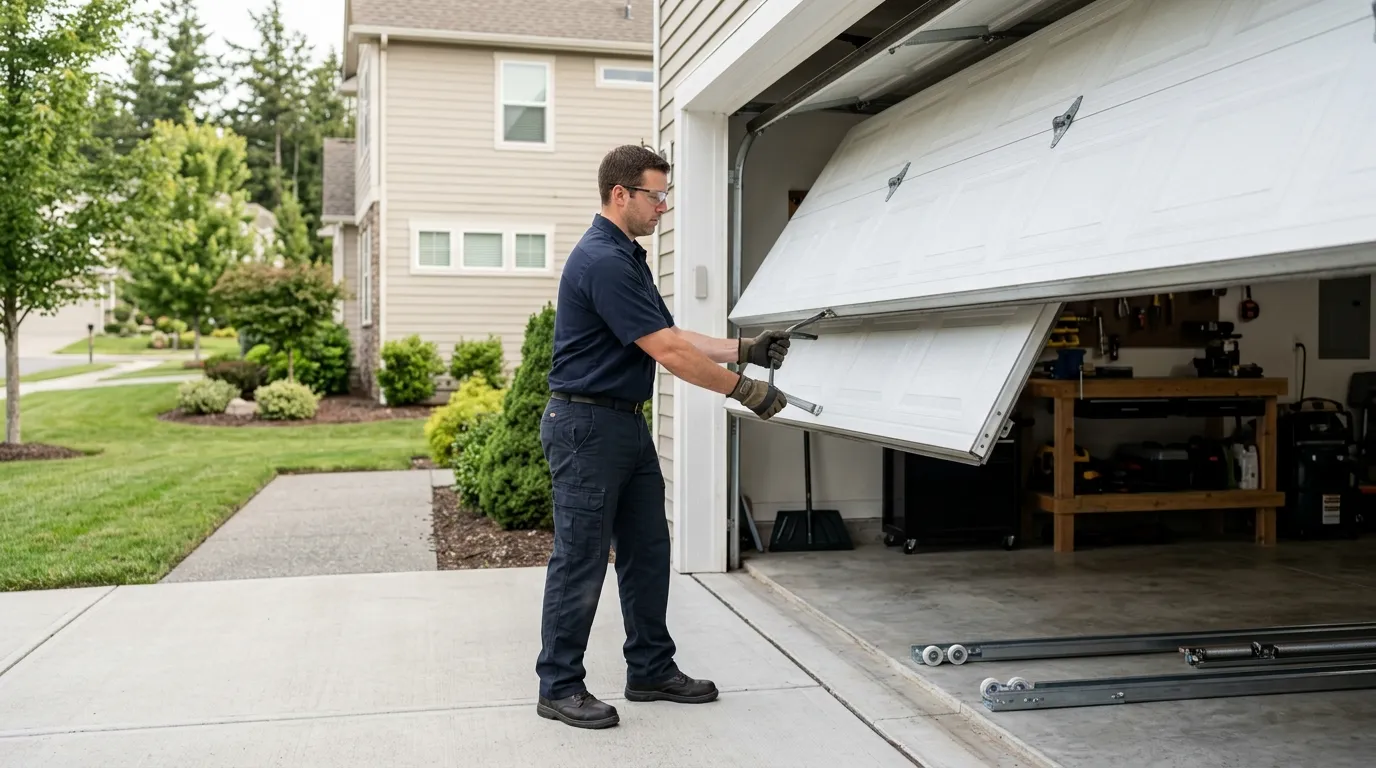
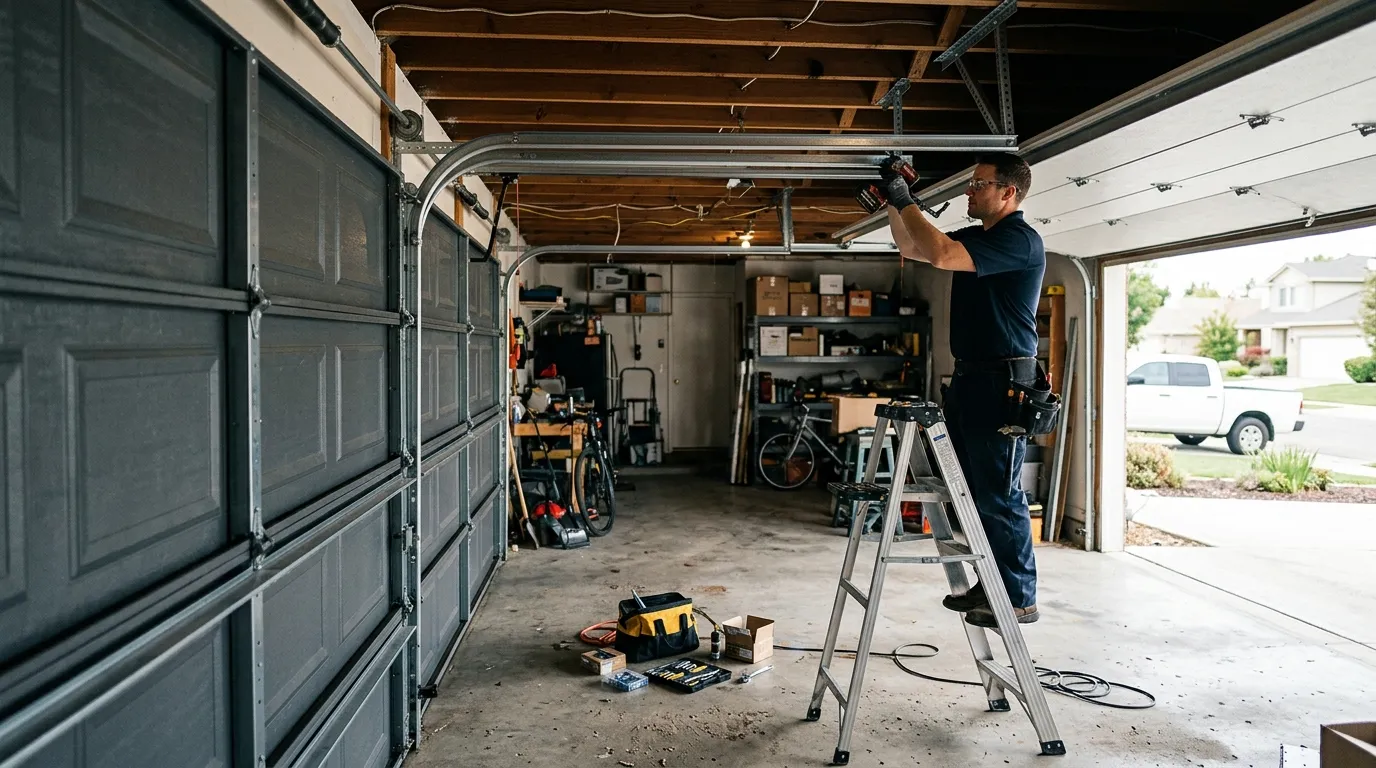
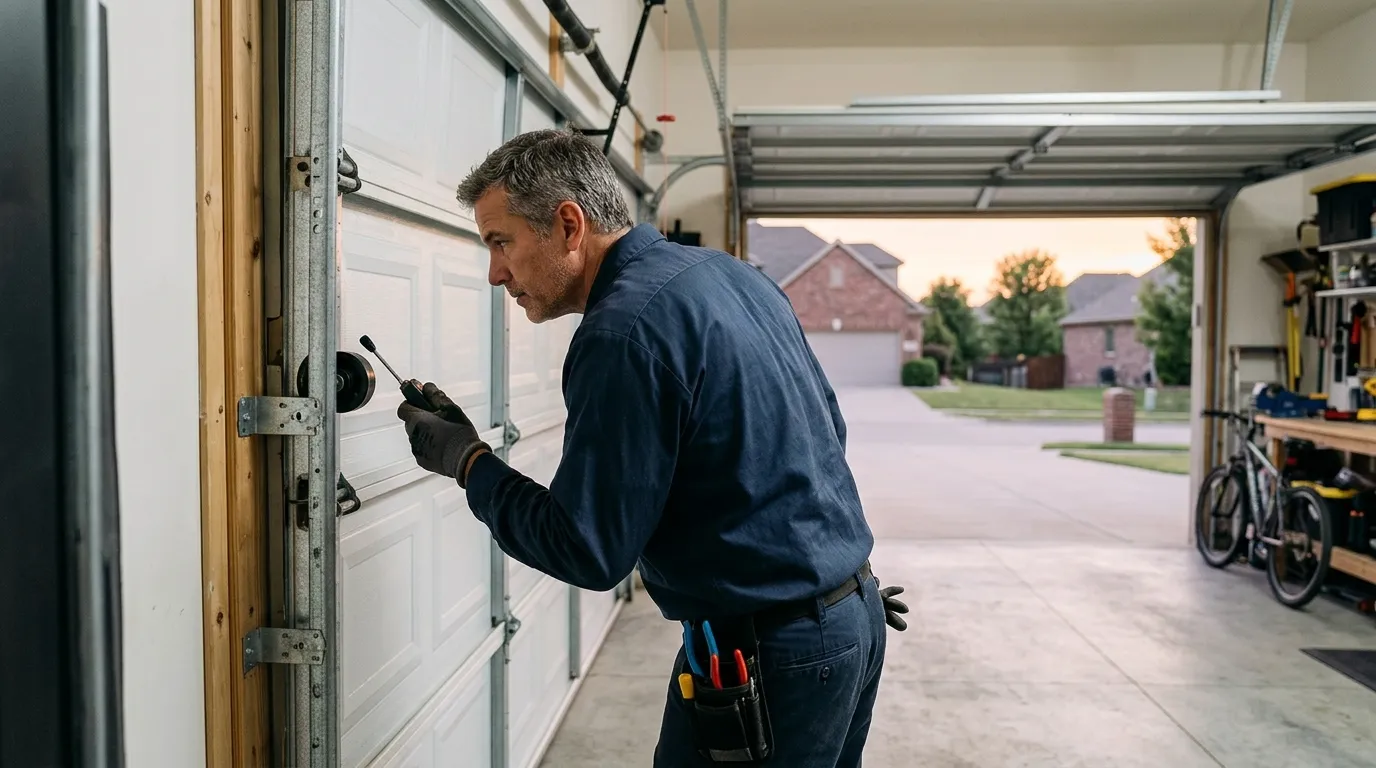
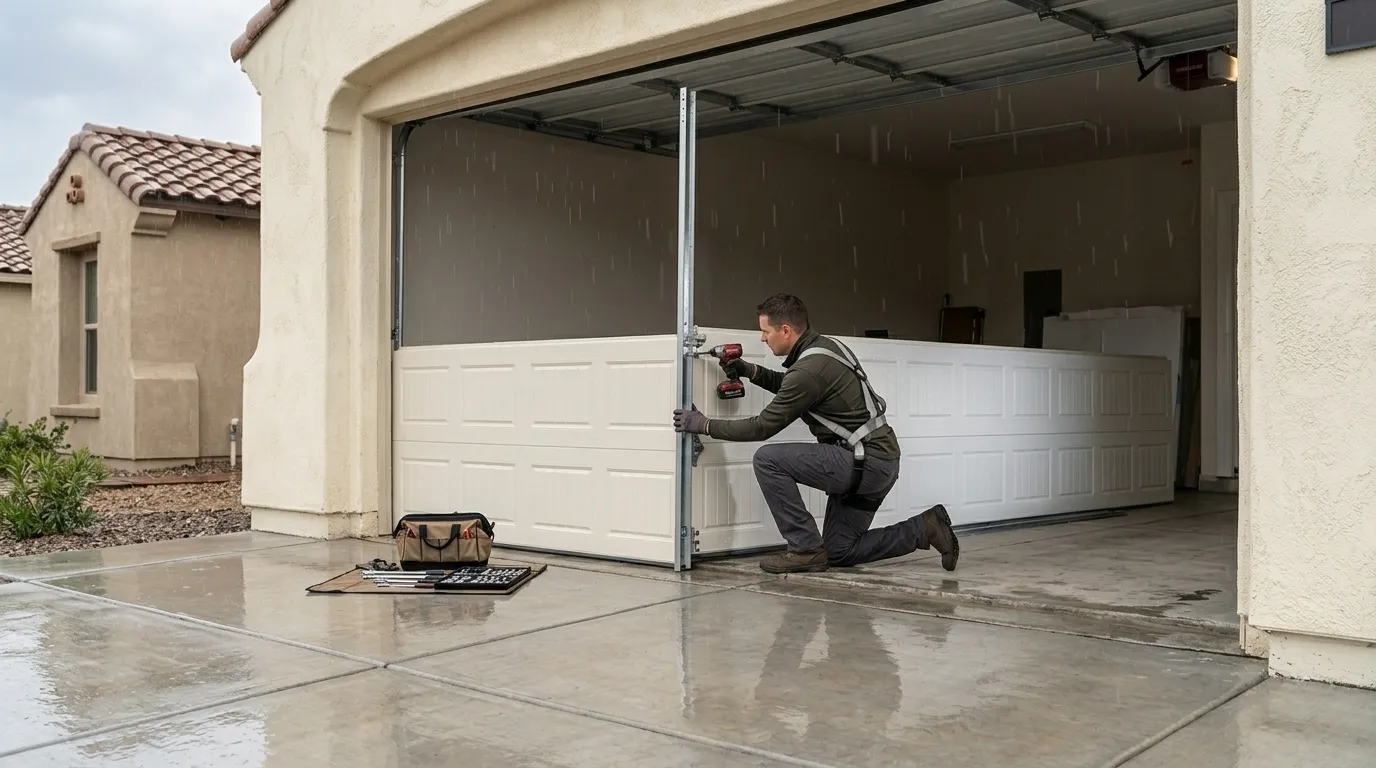
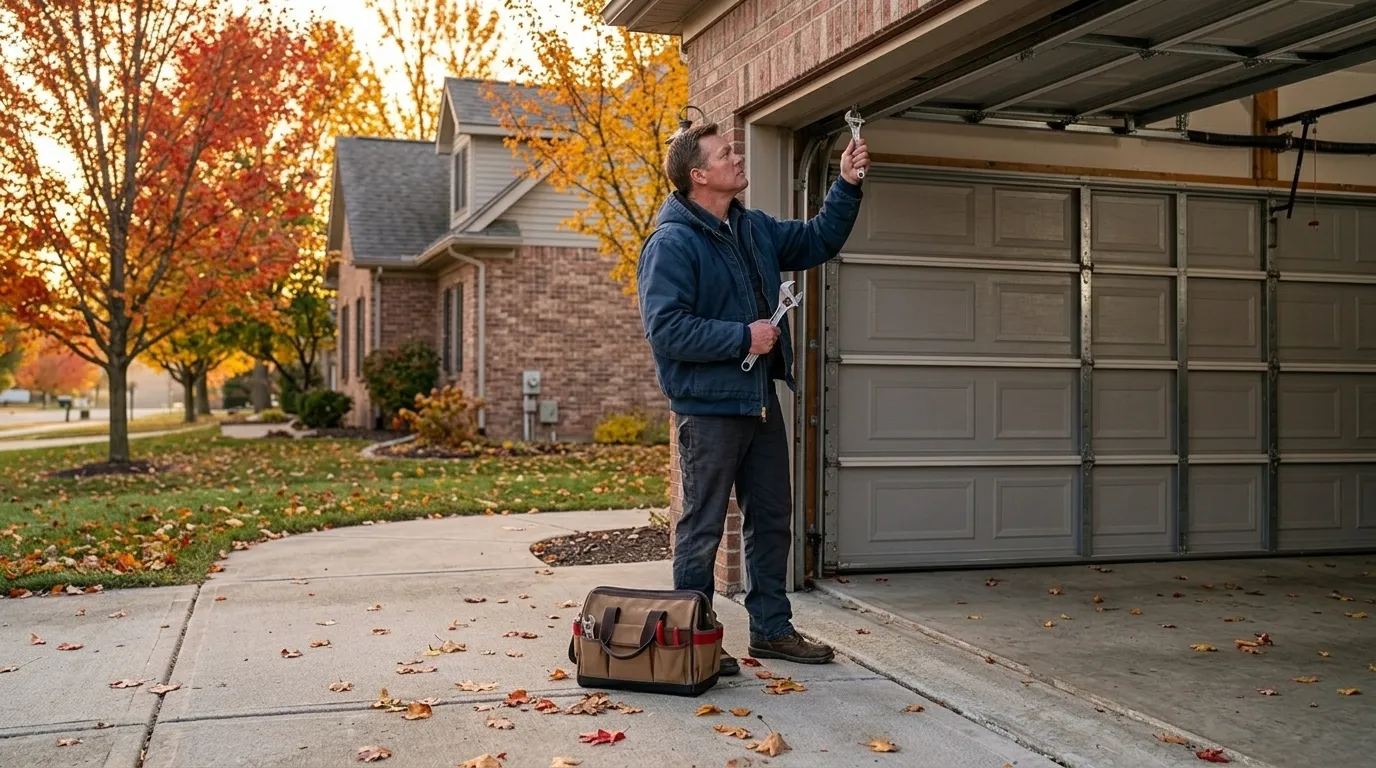
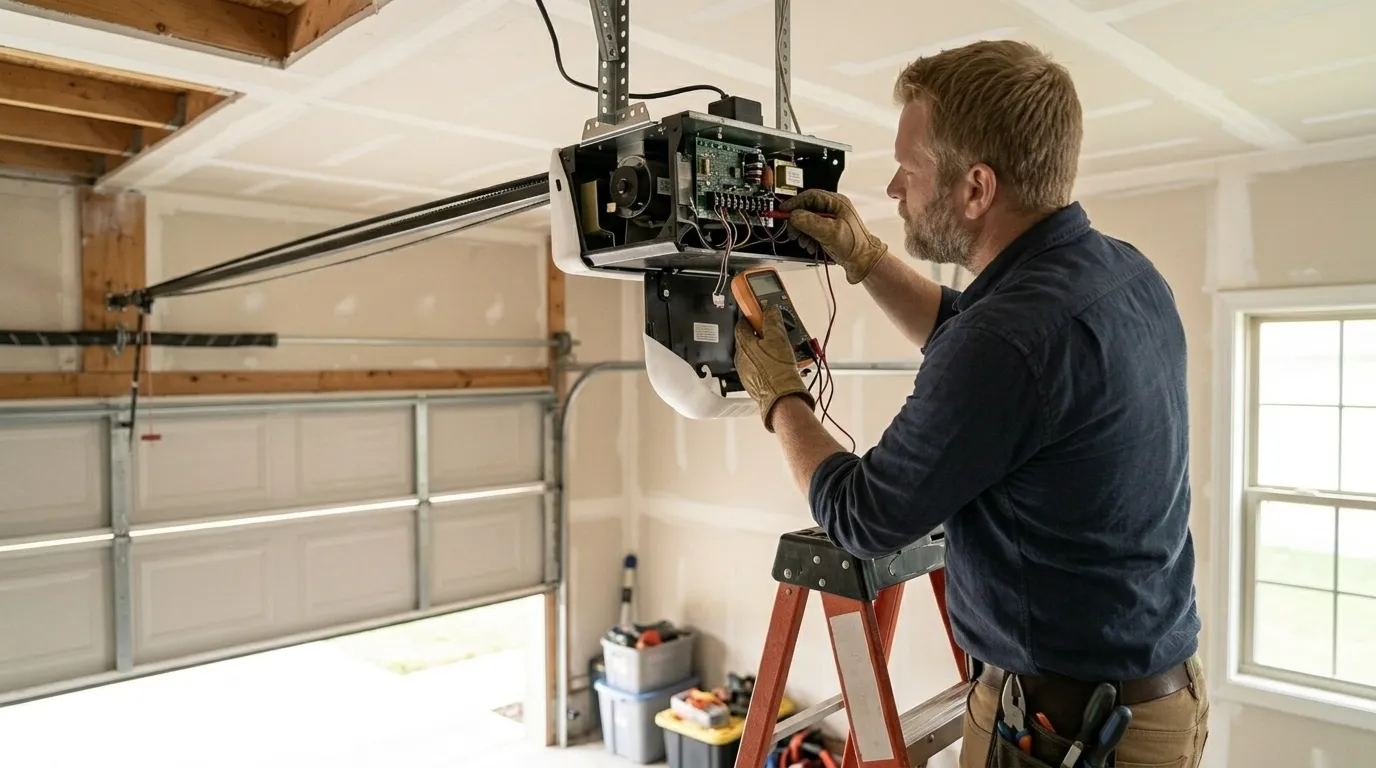
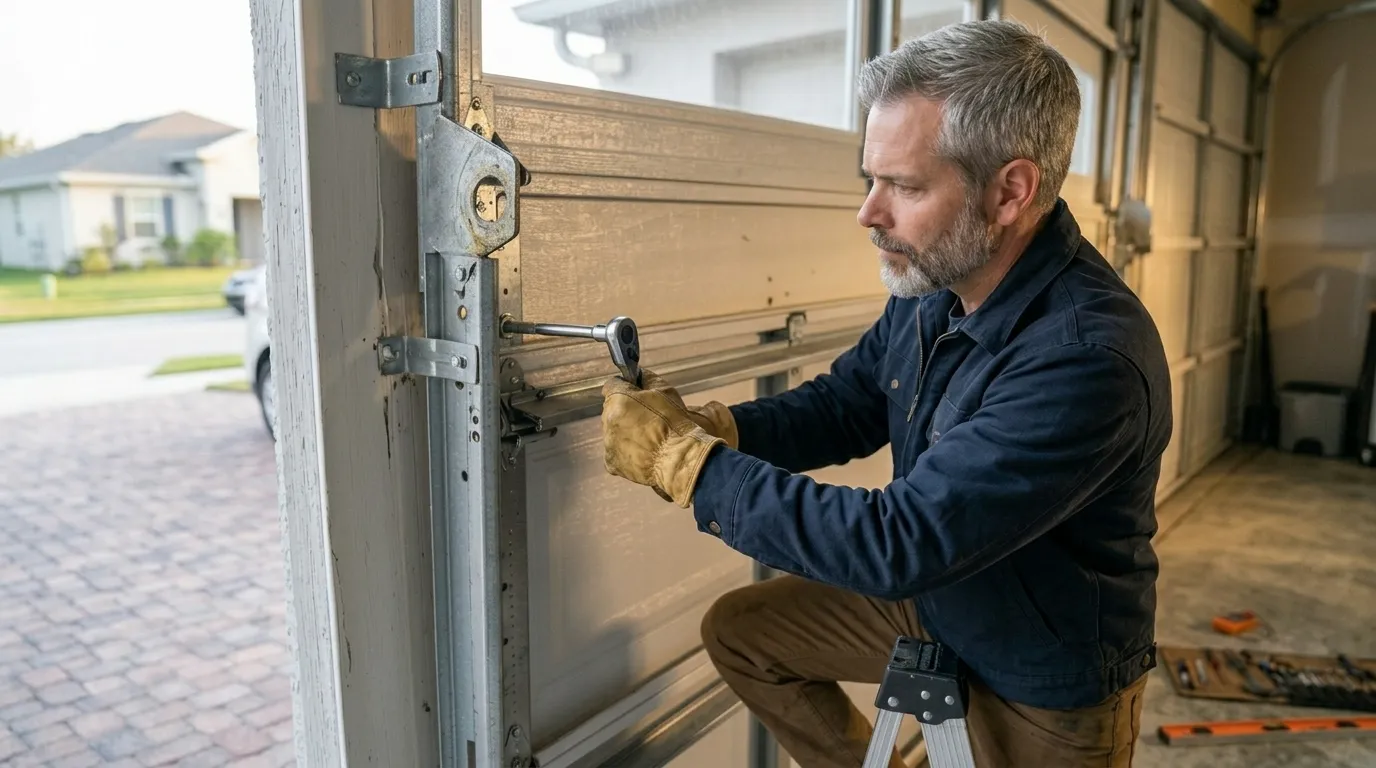
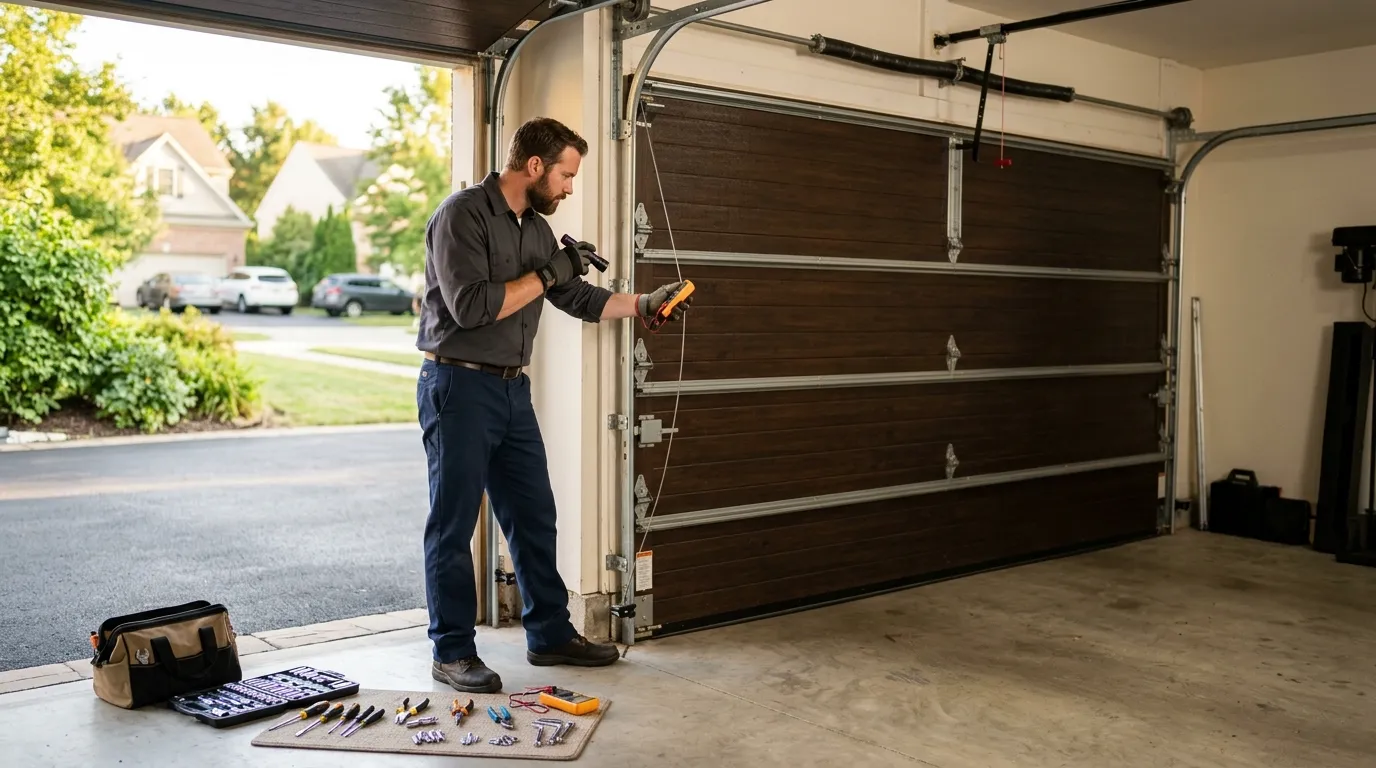
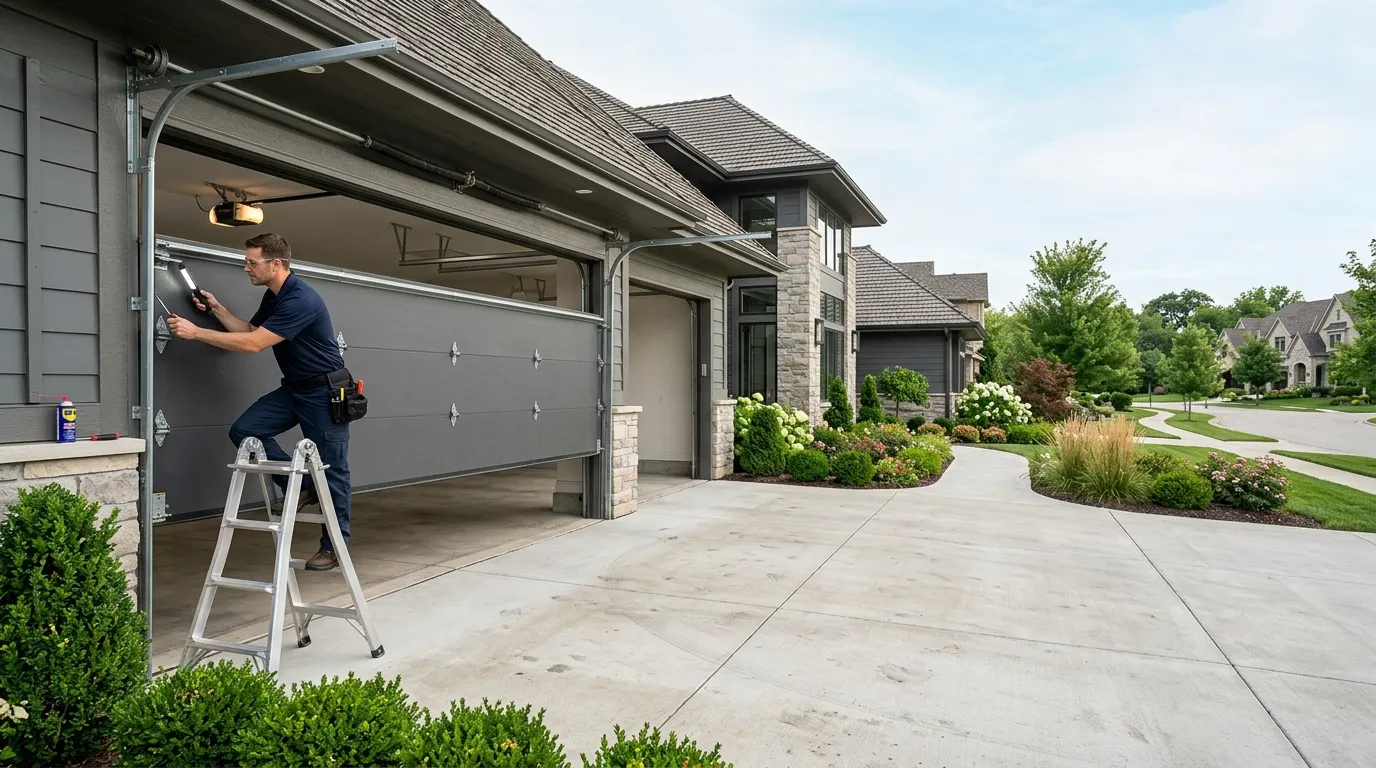
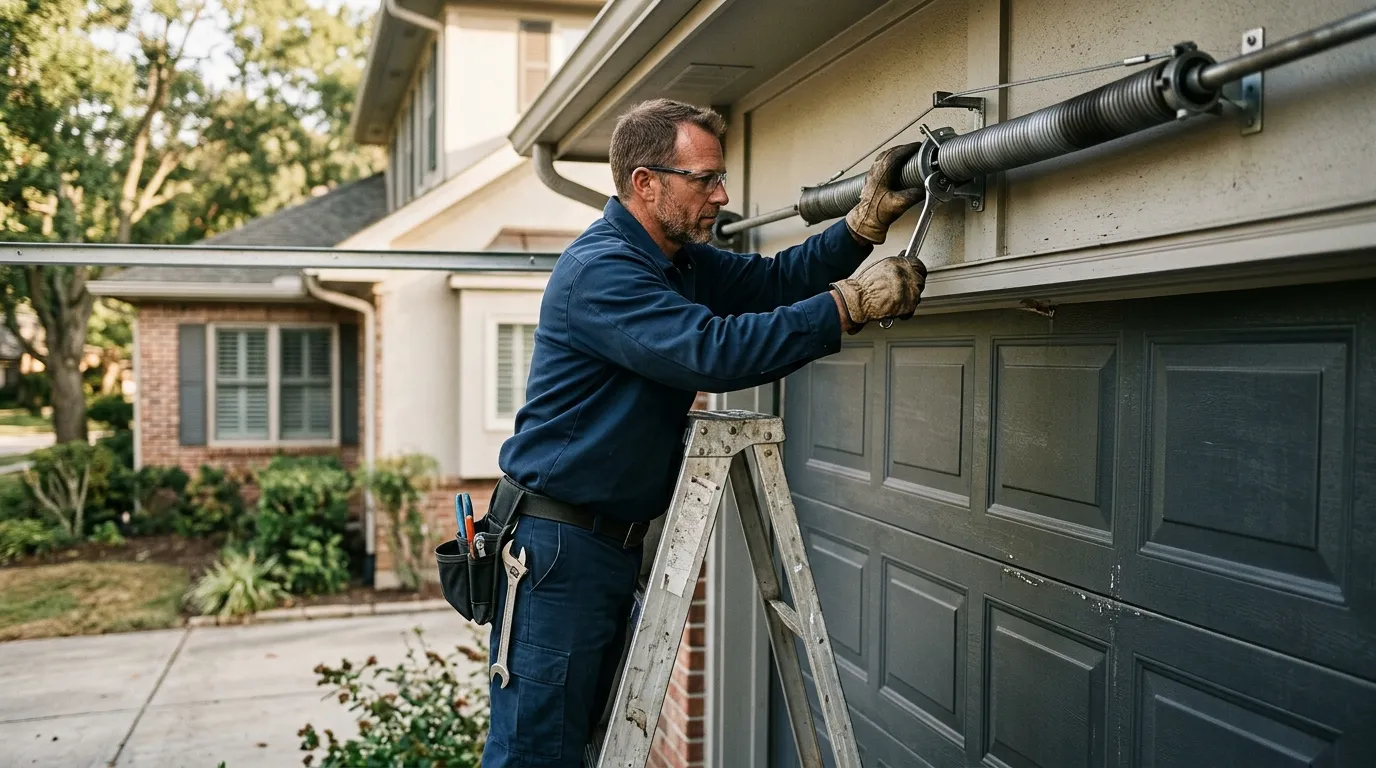
Most emergency calls break down into three jobs: a snapped torsion spring, a cable that's jumped the drum, or an opener that's stopped talking to the wall switch. We start by pulling the door manually to see if the track and rollers are square before we touch a spring - a bent track will burn out a new spring just as fast as the old one. On the housing stock common through this service area, built between 1938 and 2005 with a heavy concentration in the 1960s and 70s, we're usually dealing with original side-mounted torsion hardware or a first-generation replacement from a remodel. That gear wasn't built to the same spring cycle counts modern kits carry, so once it lets go, it tends to go hard - the door drops instead of easing down. We replace the spring to match the door weight and drum size rather than grabbing a universal one, because a mismatched spring on an older door puts uneven load on cables that are already older than they should be. If the opener's the problem, we check the logic board and the travel limits before we recommend swapping the unit - a $40 sensor or a chewed drive gear gets replaced, not the whole opener, if that's what's actually wrong.
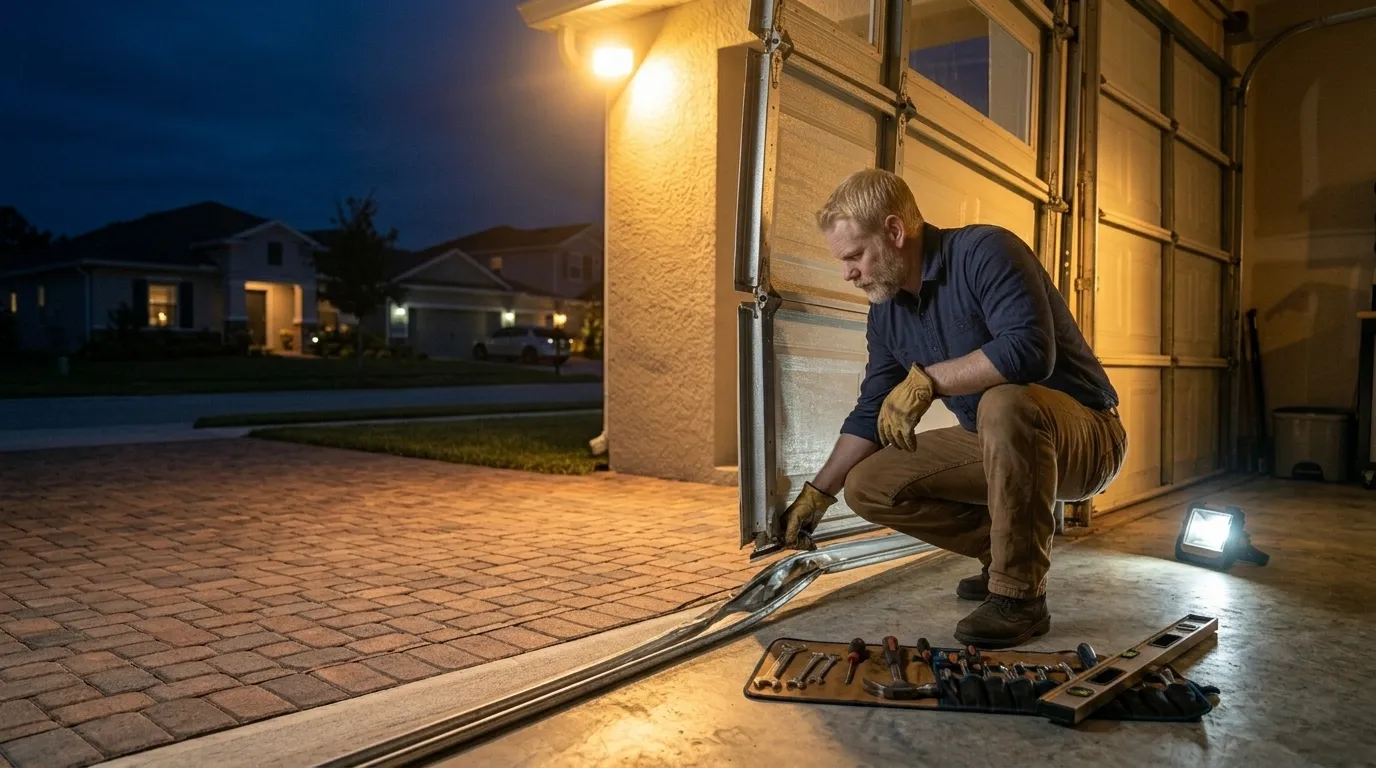
One honest limit here: if a torsion spring on an older custom-width door needs a size we don't stock on the truck, that part isn't same-day. We'll get the door safe and closed on the day of the call, then order the exact spring.
How Long You Are Without the Door
We don't quote a fixed turnaround here because it depends on what's actually broken and whether the part is a stock size or something we have to order for an older or custom door - and we'd rather tell you that up front than promise a number we can't back. A snapped cable or spring on a standard door is usually a same-visit fix once we're on site. An opener logic board failure, or a spring size that isn't common on the 16 areas we cover, means the door gets secured and locked down safely for the night while we source the part.
What matters most in the meantime is whether the door can be closed and secured by hand, even without power to the opener. In a cold-climate area like this one, a garage door stuck half-open isn't just a security problem - it's a heat-loss problem for anything living above or beside the garage, and a burst-pipe risk if the garage houses a water line or a water heater. We prioritize getting the door to a closed and locked state over getting it fully operational, then schedule the full repair around parts availability.
How It Shows Up
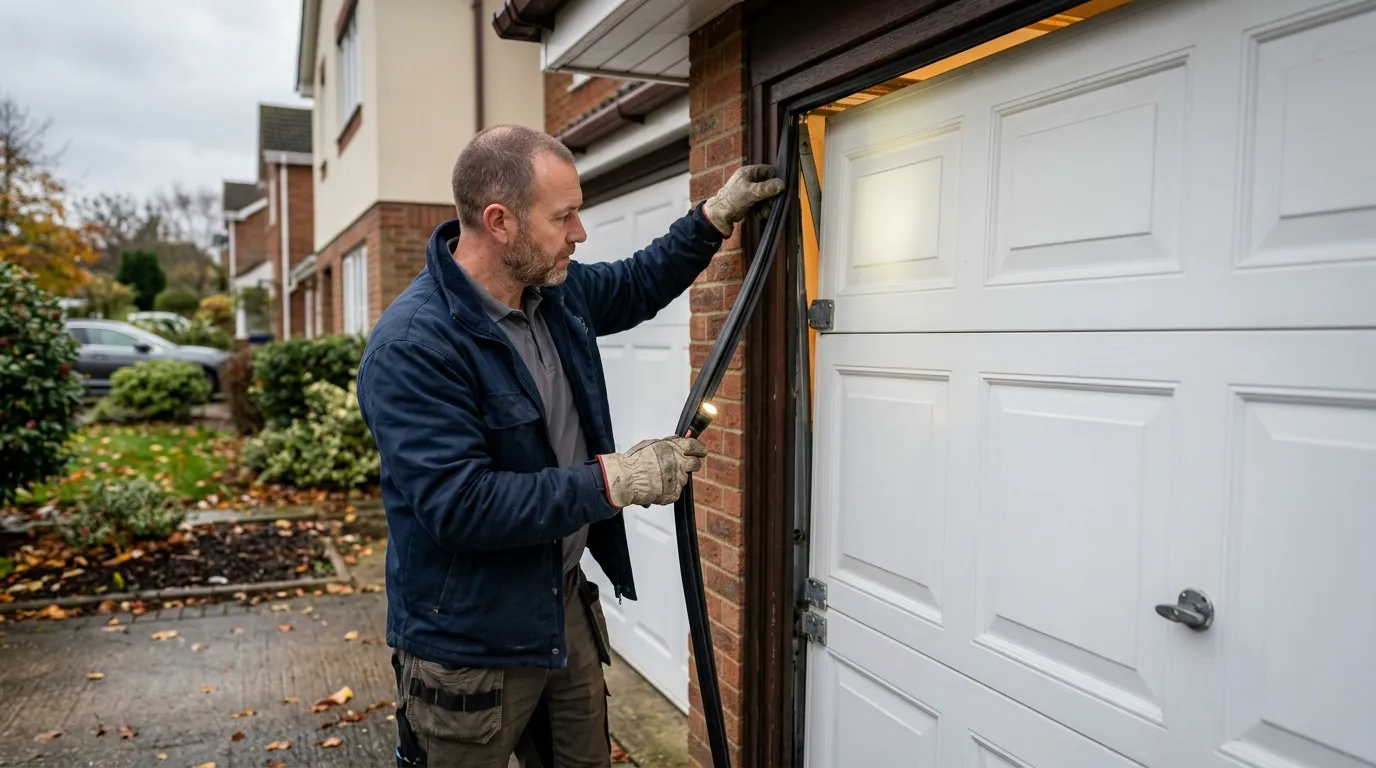
The classic sign is a loud bang from the garage followed by a door that won't budge, or one side that drops faster than the other when you try to lift it manually - that's a broken torsion spring, and the door is dangerously off-balance until it's fixed. A cable failure looks different: the door may still move but track crooked, or one bottom corner hangs lower than the other.
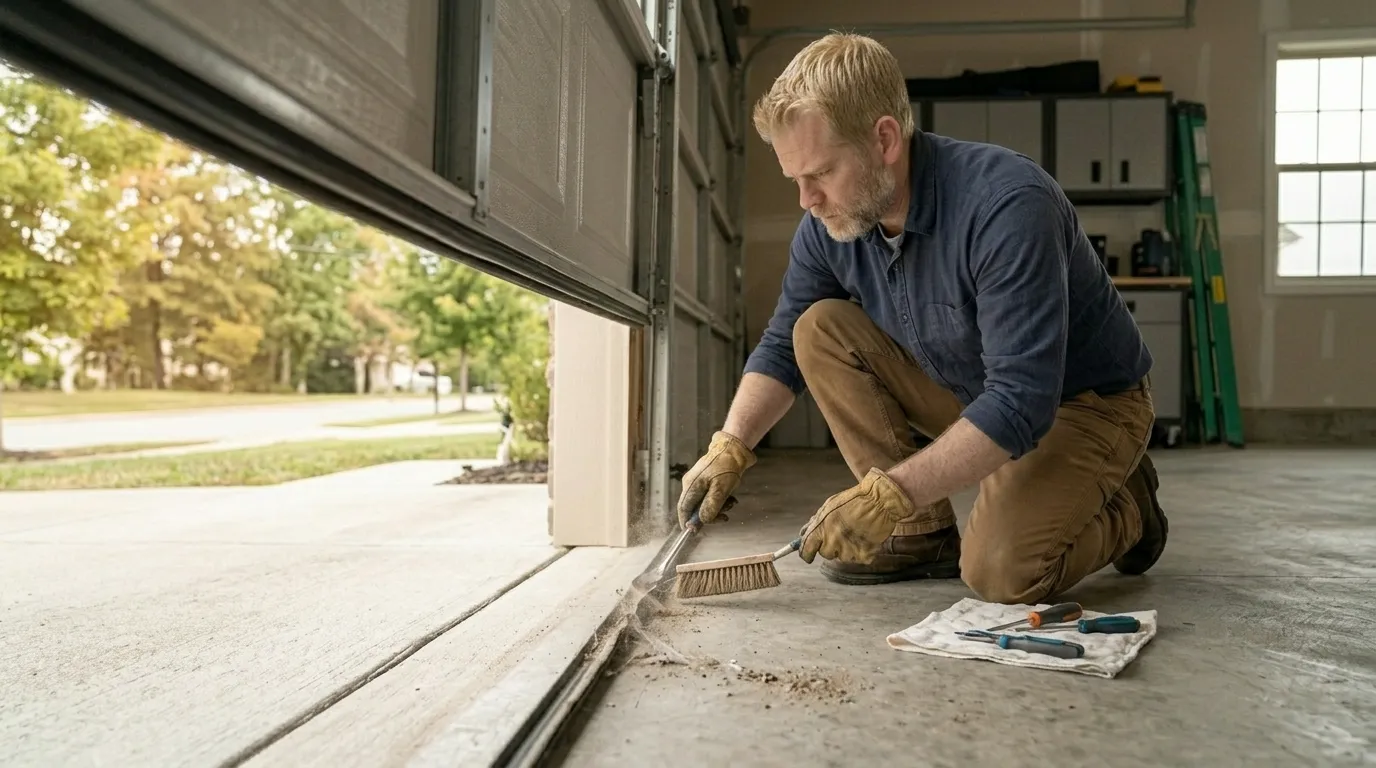
On the opener side, the symptom is usually a motor that hums but the door doesn't move, or lights that blink a fixed number of times when you hit the wall switch - most boards use that blink code to point at a specific failure, whether it's a travel sensor, a stripped gear, or a logic board that's given out after years of temperature swings in an unheated garage. If the door reverses on its own partway down, check the sensors first - dirt or a knocked-out-of-alignment eye is common and cheap to fix, but a door that won't stay down at all, especially on an older opener, usually means something in the drive train, not just the sensors.