How We Fix It
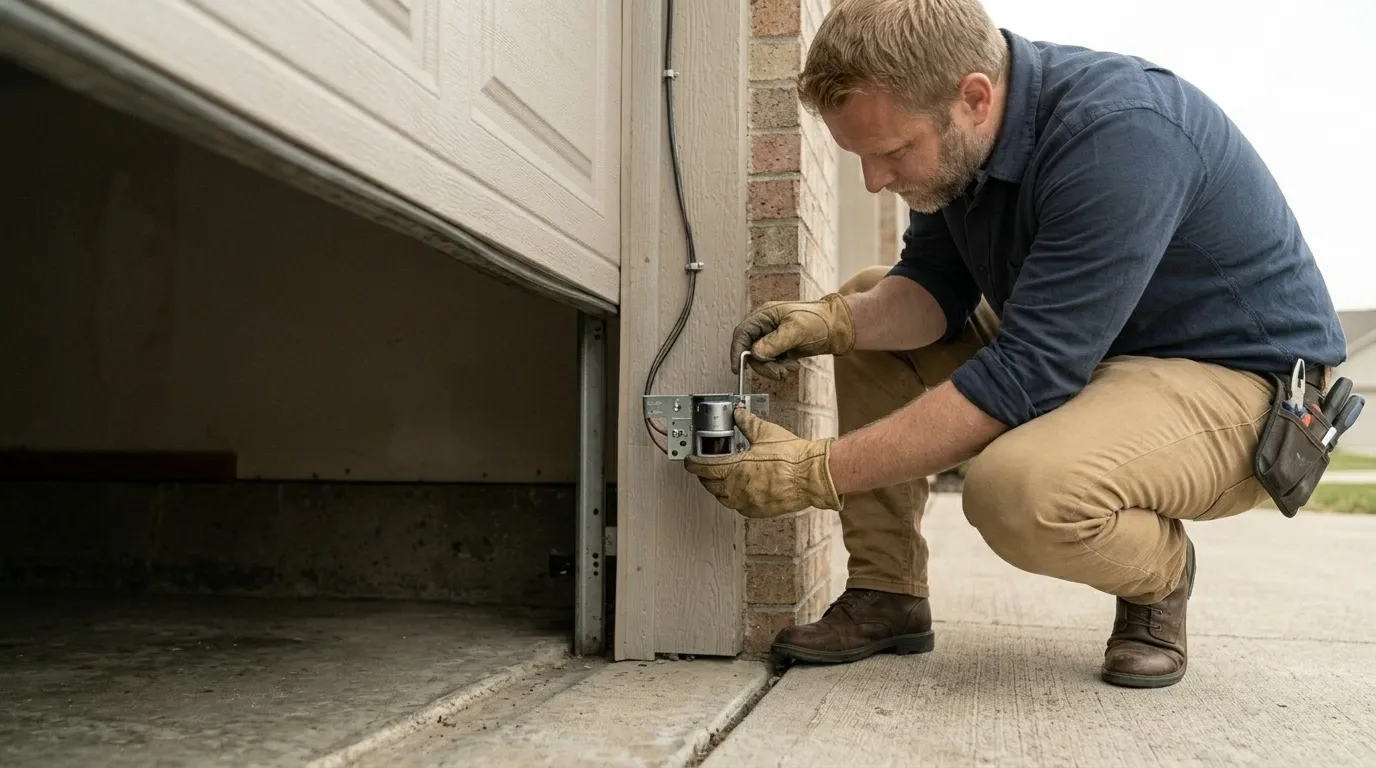
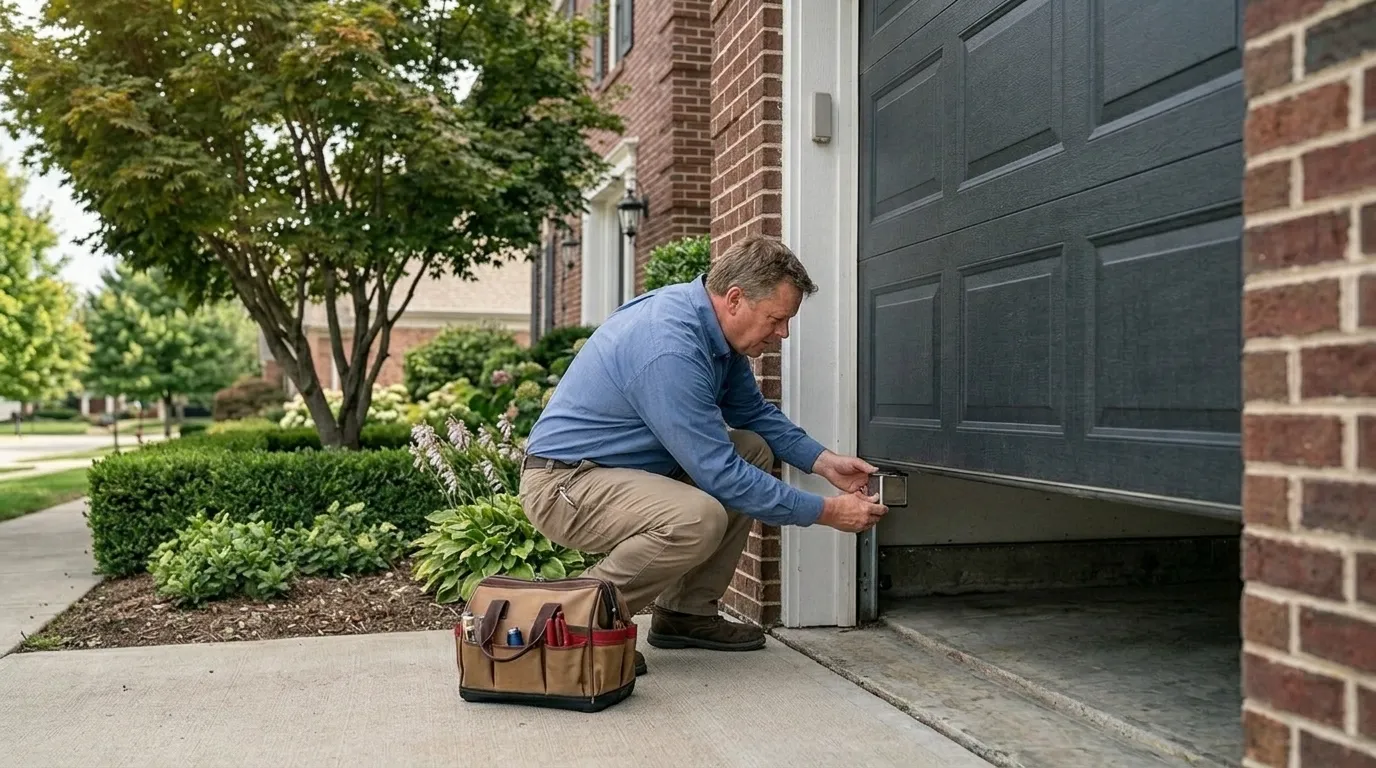
We start by figuring out whether the problem is the opener itself or something feeding it a bad signal - a misaligned safety sensor, a worn limit switch, or a logic board that's lost its memory after a power flicker. On the older chain and screw-drive units still running in a lot of Newark's houses built between 1938 and 2005, the failure is usually mechanical: a stripped gear, a worn sprocket, or a drive screw that's chewed through its nylon coupler. Those parts wear out on a schedule, not randomly, and once we know the age and drive type we usually know what's tired before we open the housing.
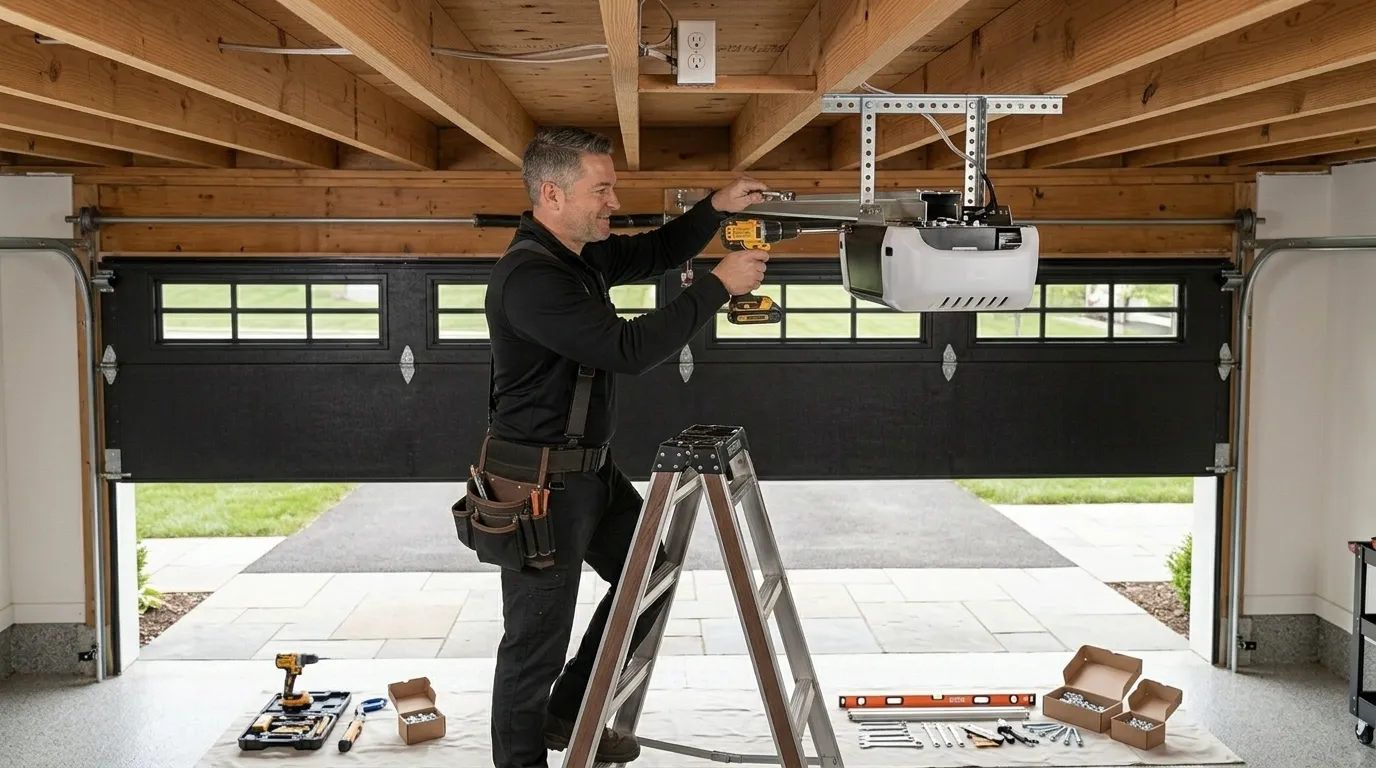
On newer belt-drive openers the problem is more often electronic - a dying capacitor, a failing motor start relay, or a circuit board that can't hold a charge in cold weather. We carry the common opener parts on the truck and test the unit under load before we call a repair finished, not just after it lifts once in the driveway.
One limitation worth saying plainly: if the motor windings themselves have burned out, or the unit is more than fifteen years old and parts are no longer made for it, replacement is the honest answer over a repair that won't hold. We'll tell you which situation you're in before we start charging for parts.
How Long You Are Without the Door
Most opener repairs are a same-visit fix - the truck carries logic boards, capacitors, drive gears, and sensor kits for the makes we see most in this area, so the door is usually working again before we leave. What stretches a job out is a part specific to an older unit that's no longer stocked anywhere close, which does happen with homes on the older end of Newark's 1938-2005 housing range still running their original opener. In that case we'll tell you straight that we're waiting on a part rather than let you guess.
We don't quote a fixed turnaround here because it depends on which opener you have and what's wrong with it - that's a conversation for the actual visit, not a blanket promise on a page. What we can say is that a dead opener with a working door isn't an emergency the way a broken spring is; you can usually still get the car out by pulling the manual release, so it's fair to wait a day if a part has to come in rather than force a rushed fix.
How It Shows Up
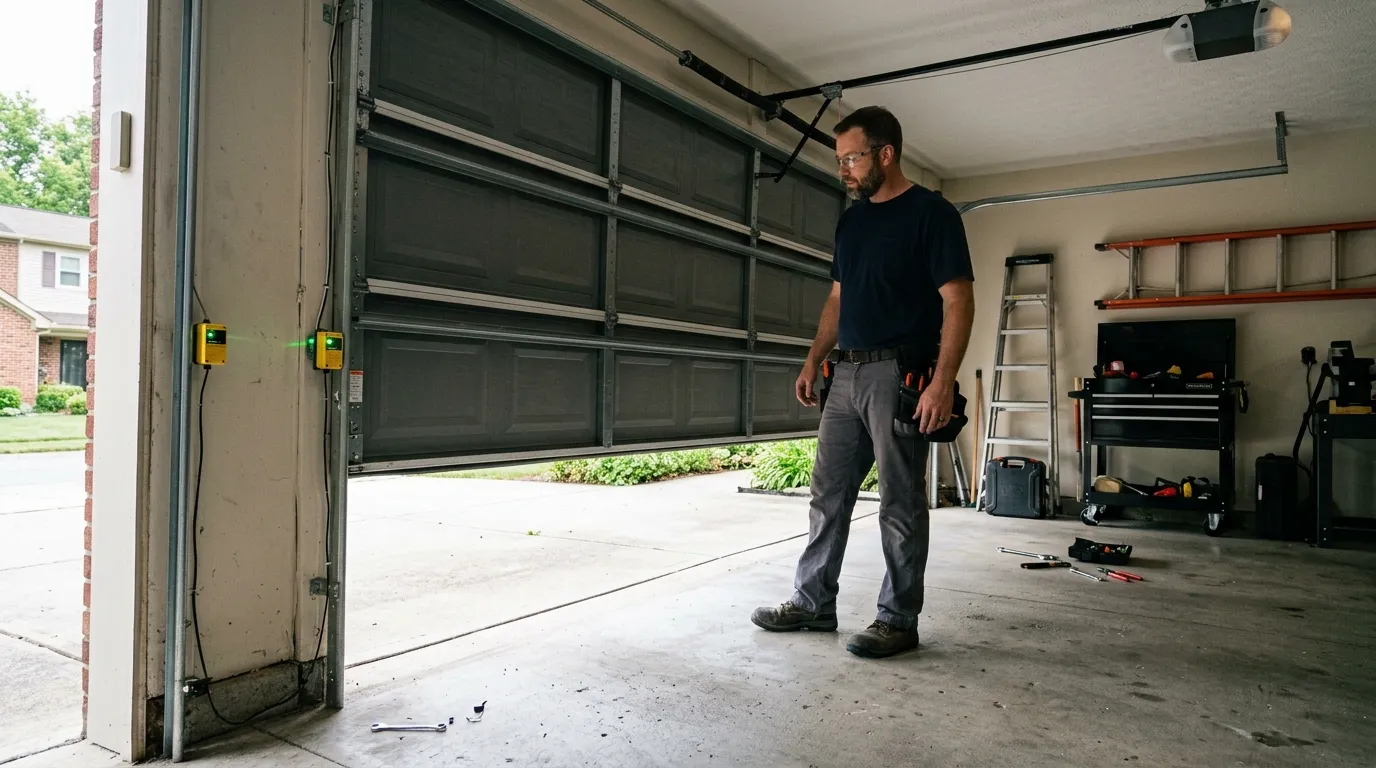
The most common call we get is an opener that runs the motor - you hear it - but the door doesn't move, which almost always points to a stripped gear or a broken drive coupler rather than anything electrical. Close behind that is a door that reverses partway up or down for no clear reason, which is often a sensor knocked out of alignment or a limit switch that's drifted out of setting after years of use.
A remote or wall button that stops responding intermittently is usually a logic board issue, not a battery, especially if it happens more on cold mornings than warm ones. And a door that opens fine on the wall switch but ignores the remote points to a receiver or antenna problem inside the unit itself. None of these are guesswork calls once we're looking at the actual opener - we're just listing the patterns so you know roughly what you're dealing with before we get there.