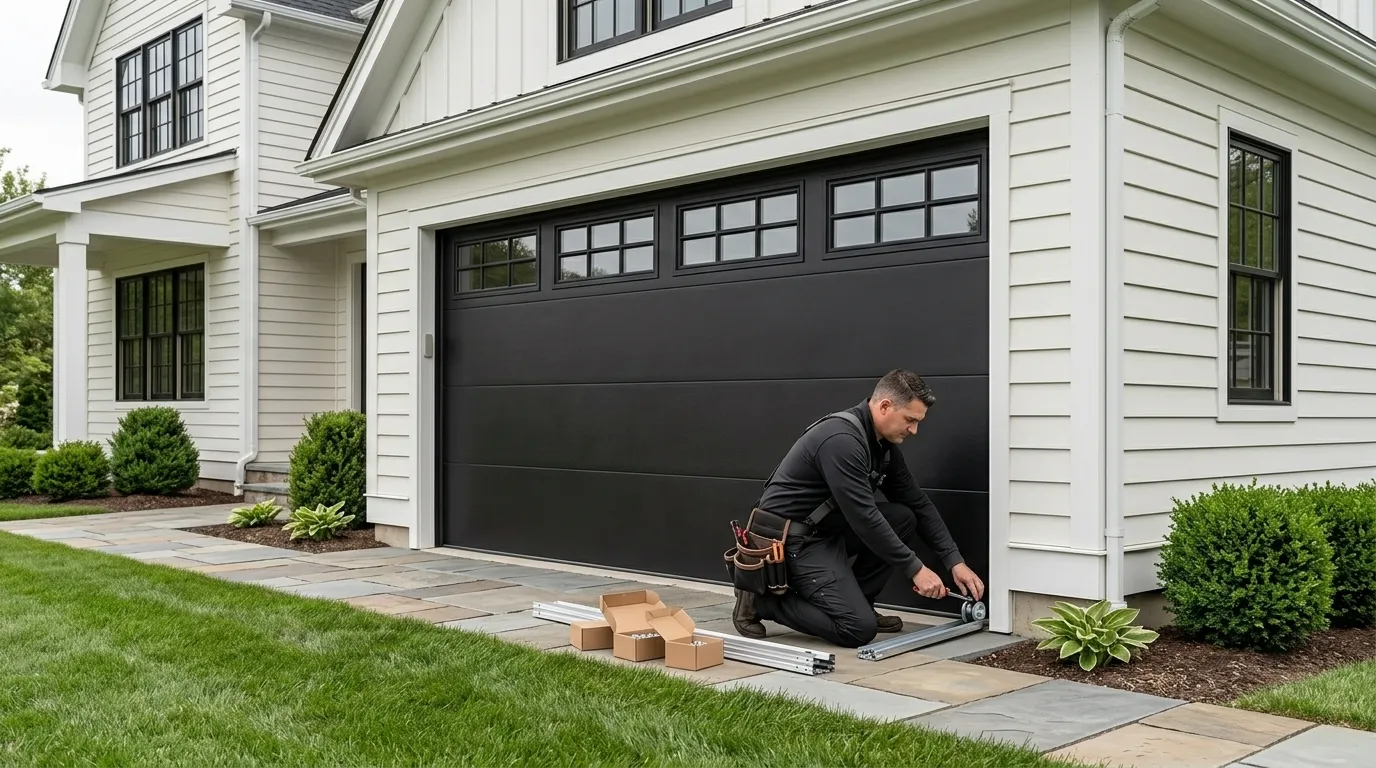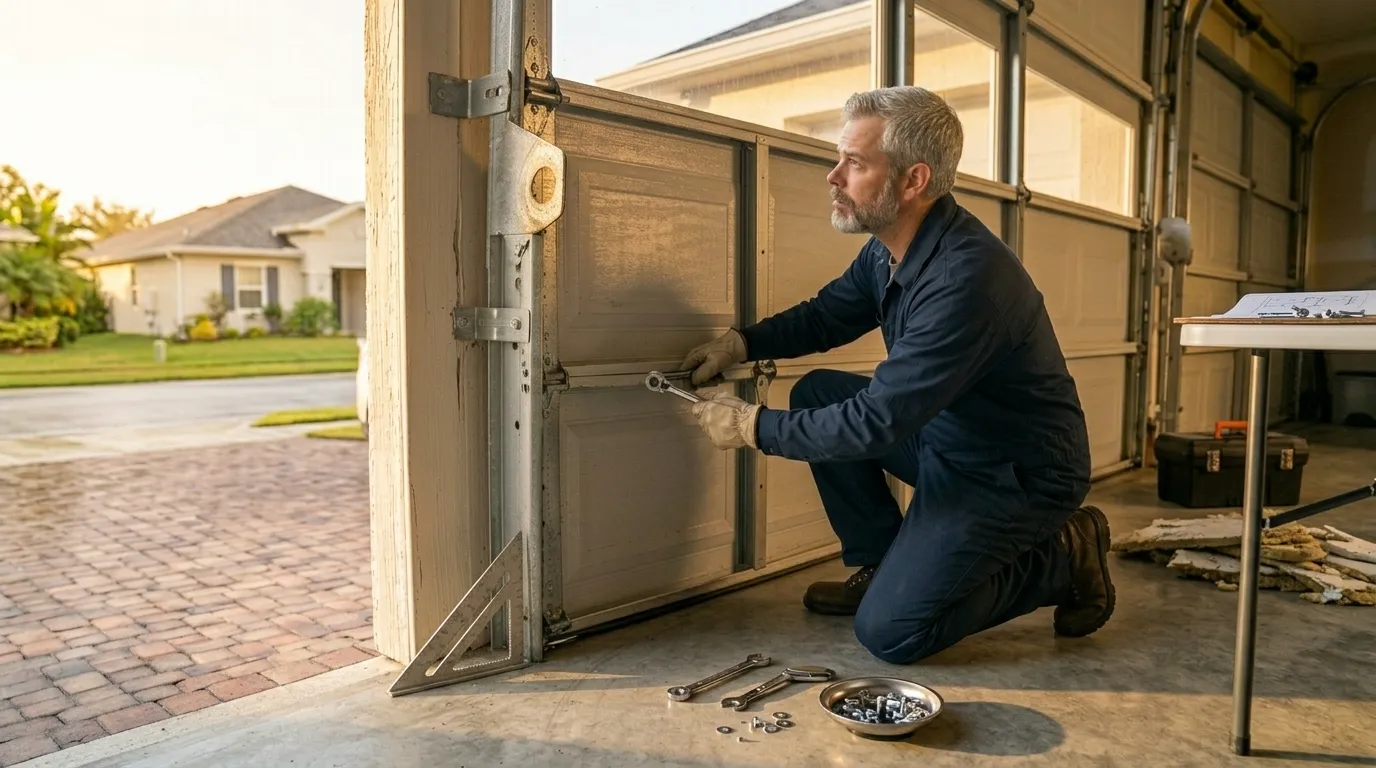
How We Fix It
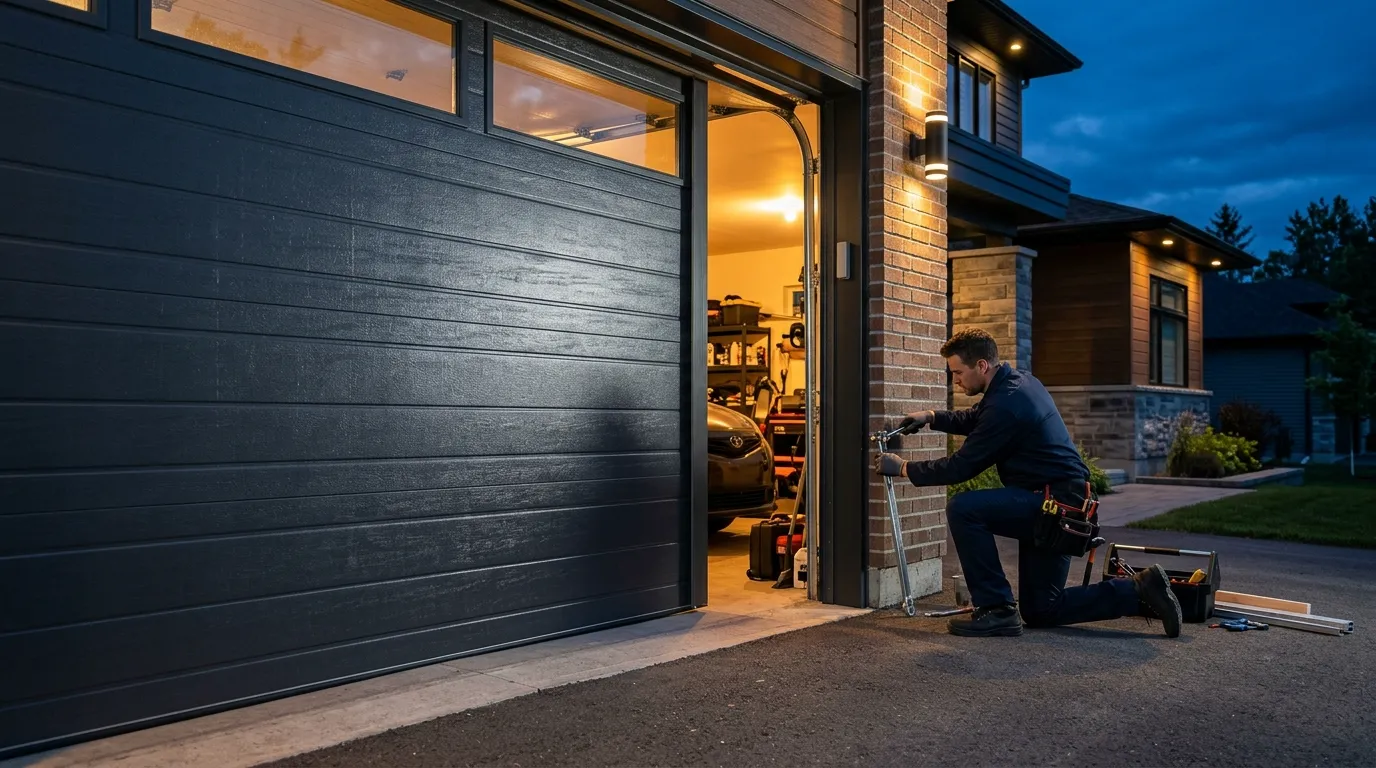
Most houses in Hebron went up around 1965, which puts a lot of doors here on hardware nobody builds new anymore: extension springs mounted along the horizontal track instead of a torsion bar over the header, and steel panel doors that have been repainted more than once. That era of door also tends to run a lighter-gauge track that bends easier when a roller jumps it, and openers that were swapped in later but bolted onto brackets sized for the original door weight.
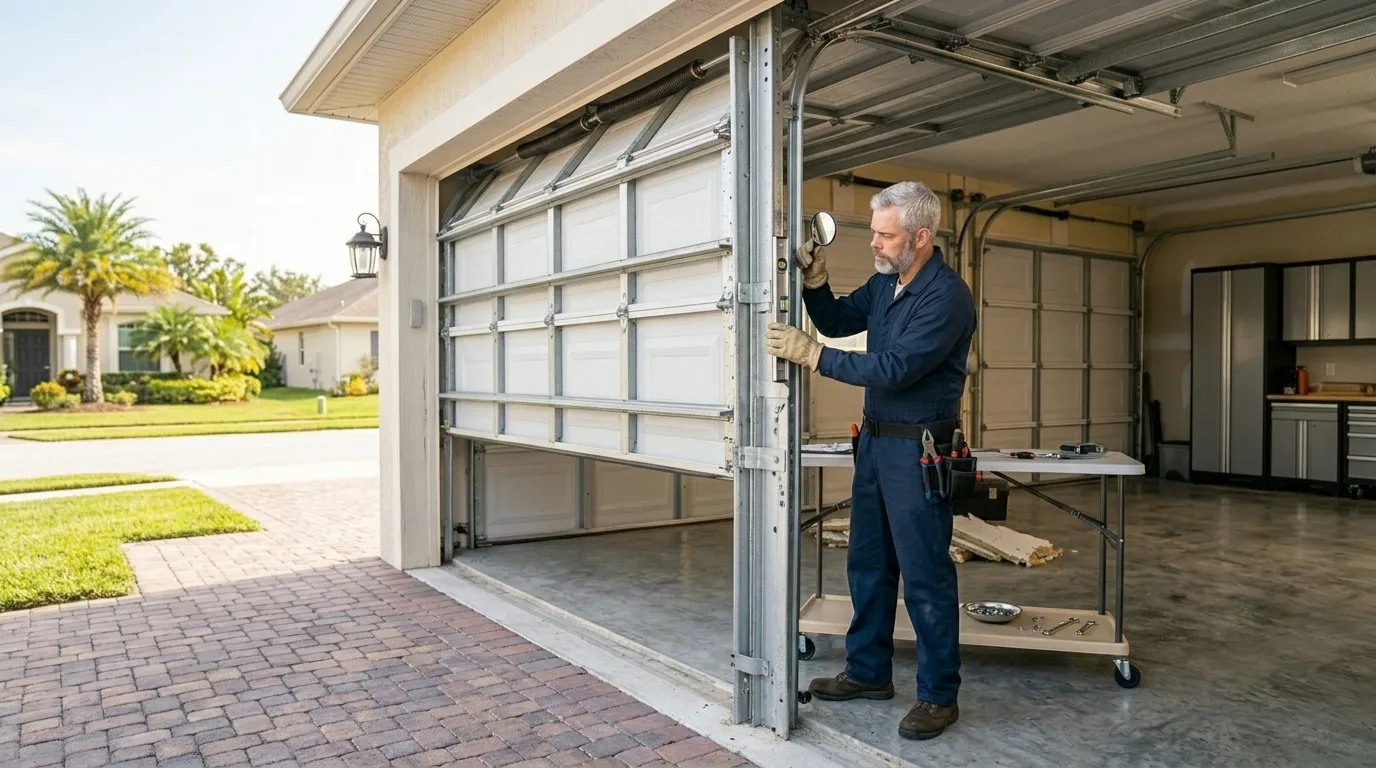
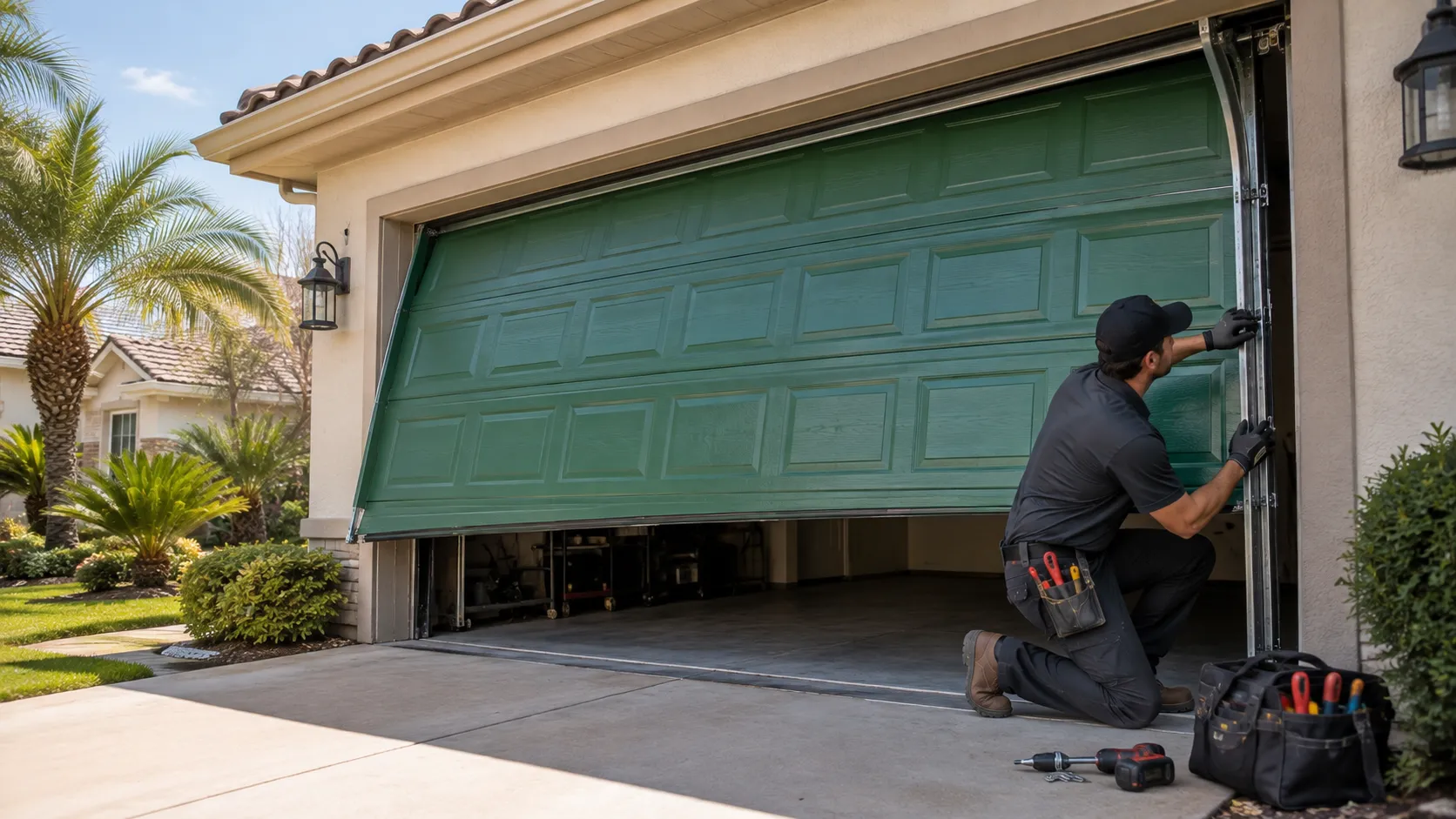
When we get a call from Hebron, the first thing we check is which spring system is actually on the door, because a lot of homeowners assume torsion when it's still extension, and the fix is different. Extension springs wear out on a schedule - they stretch, they lose tension unevenly side to side, and when one goes the door racks in the frame instead of dropping straight. We replace the pair together, not just the broken one, because a fresh spring paired with a tired one throws the door out of balance again inside a year.
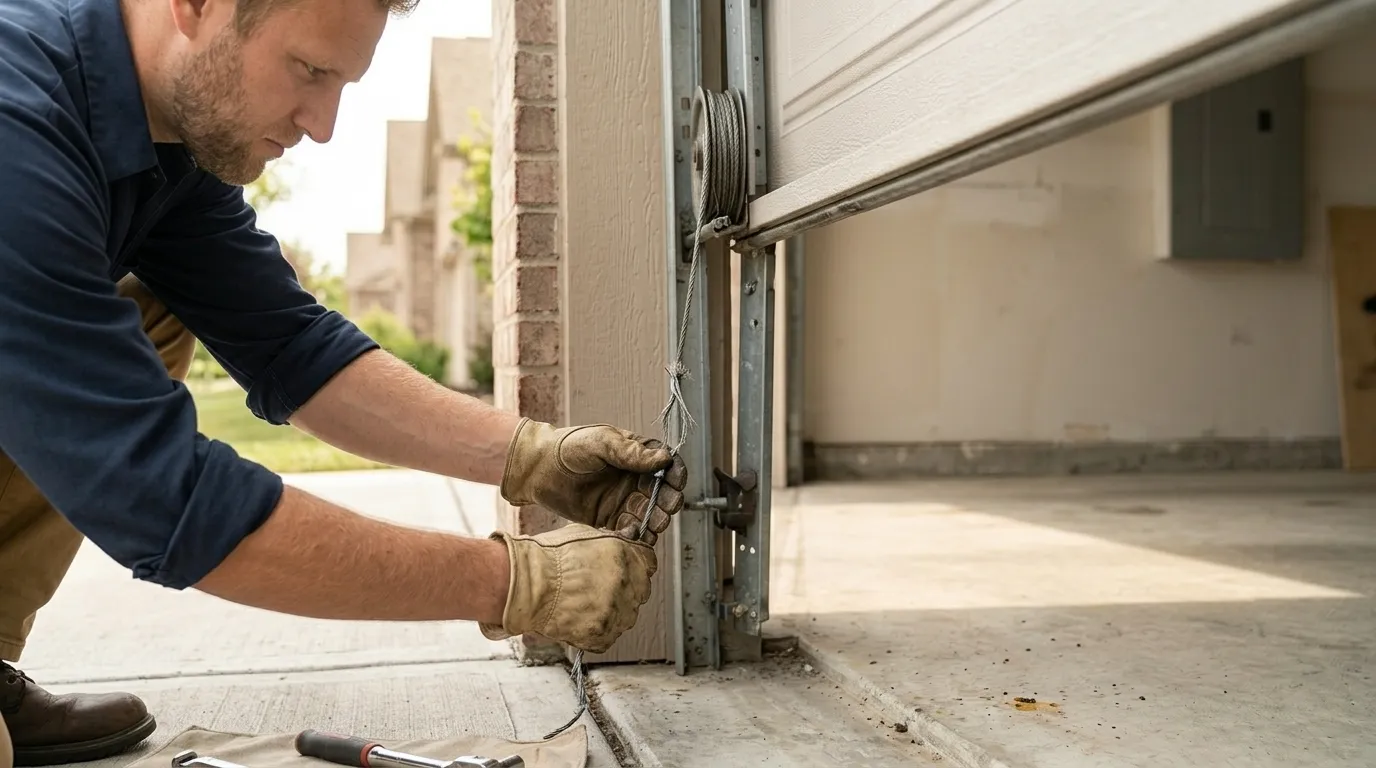
We also see cable fraying on these older setups more than we'd like, mostly from tracks that were never quite re-aligned after a bent-roller repair years back. If the door's original steel skin is still sound, we can often keep it and just rebuild the moving parts. If the panel's rusted through at the bottom, replacement makes more sense than patching it - we'll say so plainly instead of billing for a repair that won't hold.
Can You Do This Yourself
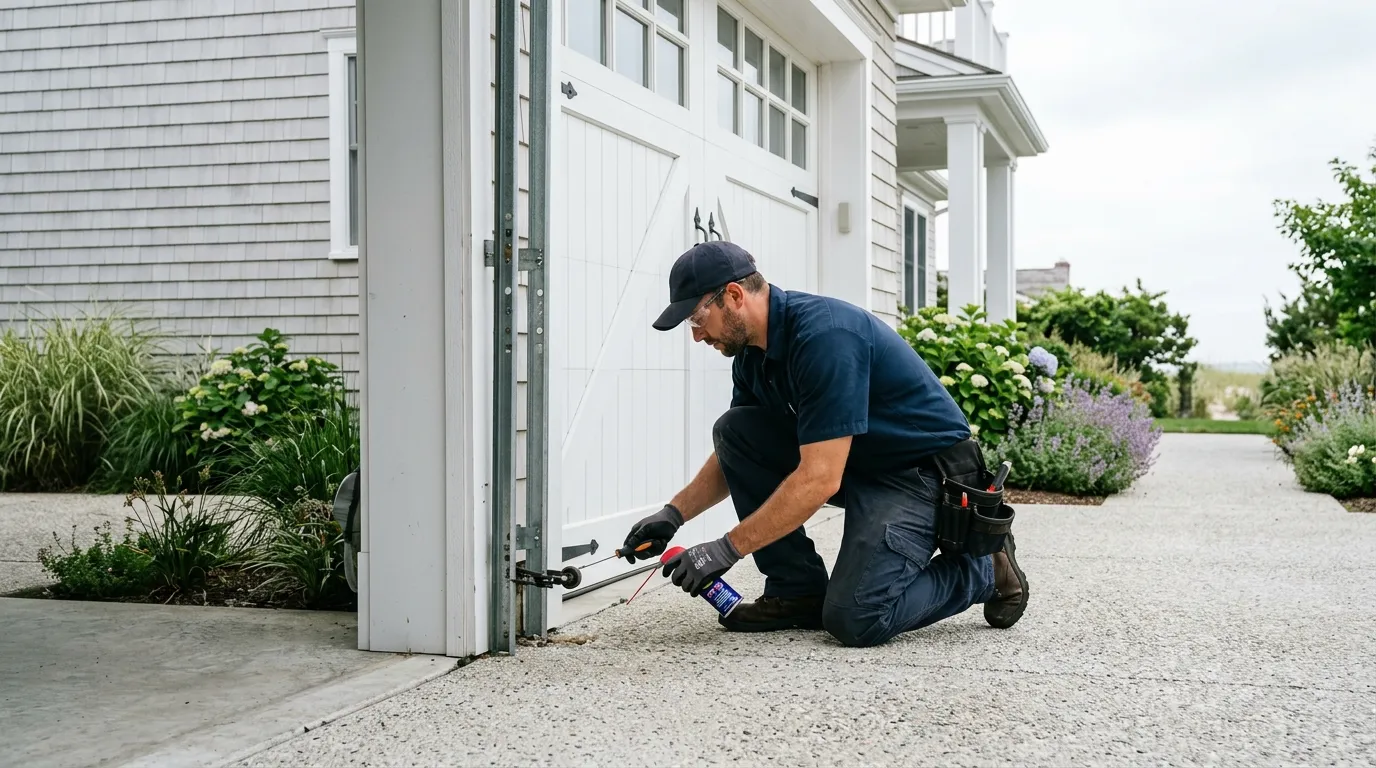
Some of it, yes. Lubricating rollers and hinges, tightening loose hardware on the track brackets, and clearing debris from the bottom seal are all fine for a homeowner to handle on a Hebron door, extension-spring or not. Replacing a frayed cable or a stretched extension spring is not - those springs are under real tension, and on an older door where the track brackets themselves may have loosened over 60 years of use, a spring that lets go while you're working on it can put someone in the ER.
If your door is one of the newer builds in the area on torsion hardware, the same rule applies but doubles - torsion springs store more energy per unit and the winding cones have hurt plenty of people who thought a socket wrench and YouTube video were enough.
What you can safely diagnose yourself: does the door open evenly on both sides, does it stay put when you disconnect the opener and lift it halfway, does the track have visible dents or gaps. Those checks help you describe the problem accurately when you call, and they might tell you it's a $20 roller instead of a $200 spring job. But don't pull the trigger cords or unwind anything under tension. That part isn't a DIY savings, it's a hospital bill waiting to happen.
What You Pay
We don't have a published price list to hand you here, and Hebron's median household income sits well below the wider service area's, which matters more to us than it might sound - it's part of why we tell you plainly when a repair isn't worth it versus a full door swap. A worn spring pair or a bent section of track on a 1965-era door is usually a repair, not a replacement. A steel skin that's rusted through at the bottom, or a frame that's shifted enough that the door won't square up no matter how many times you realign the track, is money better spent on a new door.
We price the job after we've actually looked at what's wrong, not off a phone description, because two doors with the same symptom - won't stay open - can have completely different fixes: a $30 sensor cleaning or a full spring and cable rebuild. What we won't do is quote a number before we've seen the hardware, because on a house this age, guessing gets it wrong more often than not.