How to Book
Call us and tell us what the door is doing - won't open, won't close, hanging at an angle, or making a bang when it moves. We dispatch out of Newark, four miles from Granville, so we're not sitting in a lot here waiting on work; we come when you call. Have the door's rough age and whether it's a single or double bay ready, since that changes which springs and cables we load before we leave the shop. We don't quote a fixed response window on this page because we don't have one to give you - ask when you call and we'll tell you what the day looks like. If the opener is dead but the door moves fine by hand, mention that too; it changes what we bring.
Most Granville calls we get are for houses built through the 1980s and 90s, which run steel sectional doors on torsion springs mounted over the header. That's a different repair than the older extension-spring setups still common elsewhere in the territory, so telling us the door won't budge versus won't reverse helps us grab the right spring stock before we're on the road.
How We Fix It
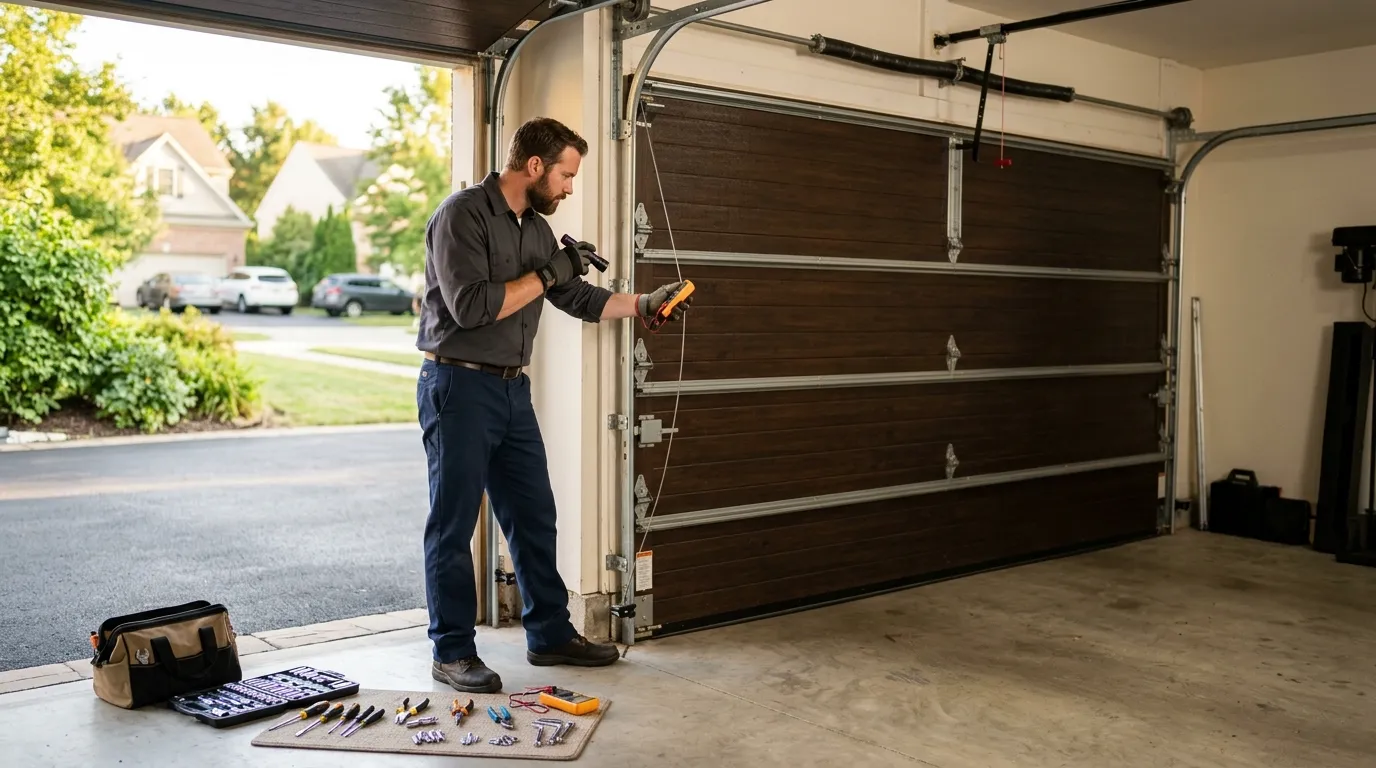
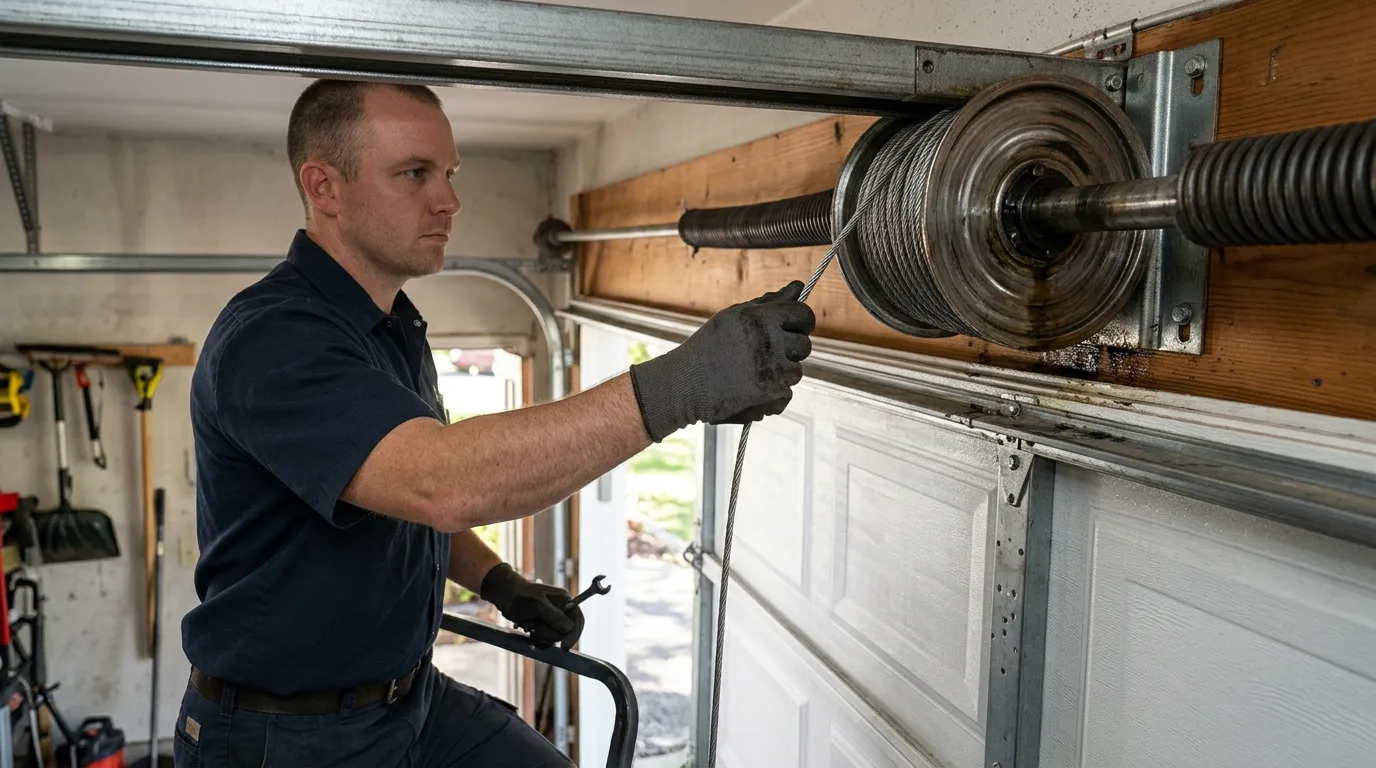
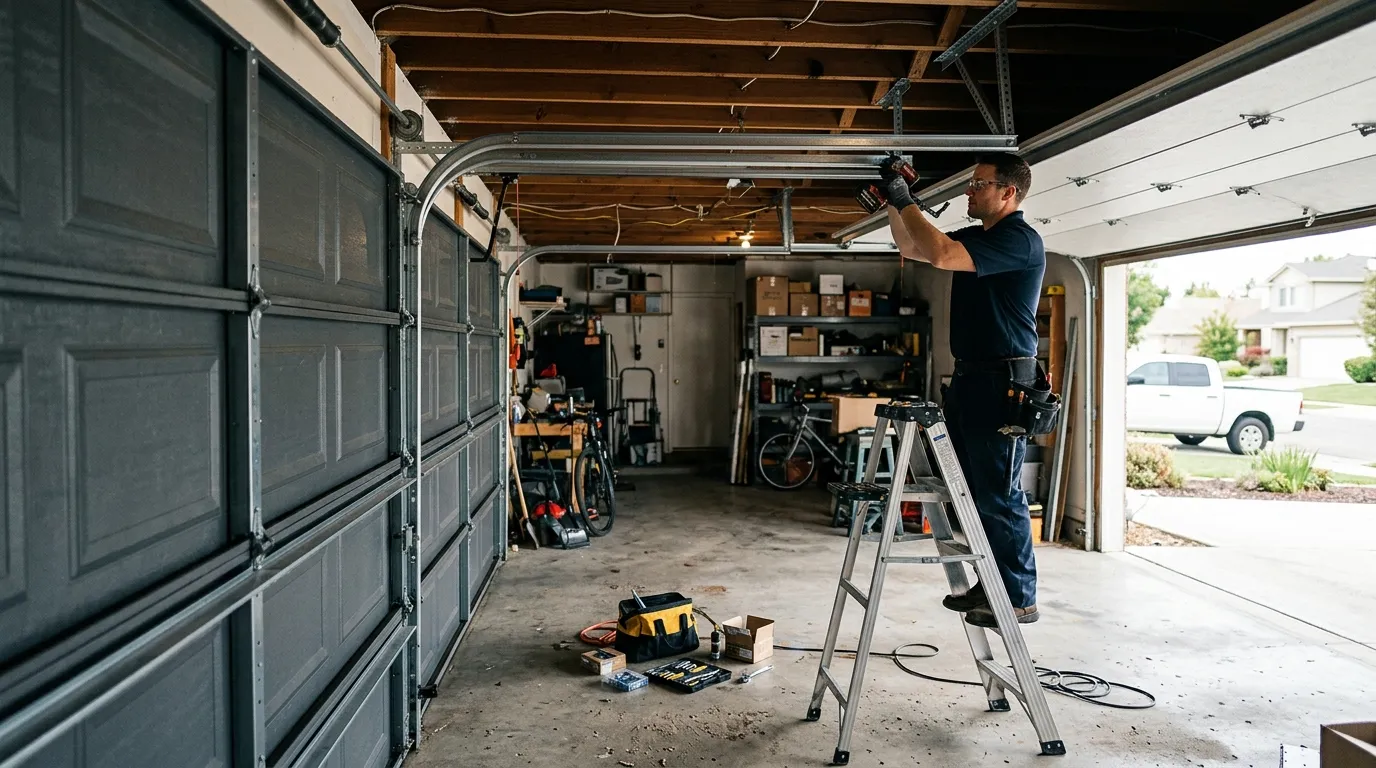
On a torsion spring failure - the most common emergency call from this part of the territory - we unload the tension safely, pull the wound spring off the header shaft, and replace it with a spring rated to the door's actual weight, not a generic stock size. Steel sectional doors built in the 1980s and 90s typically run 16x7 double or 9x7 single openings, and the springs for those sizes are what we carry as standard stock, so this isn't usually a special-order wait.
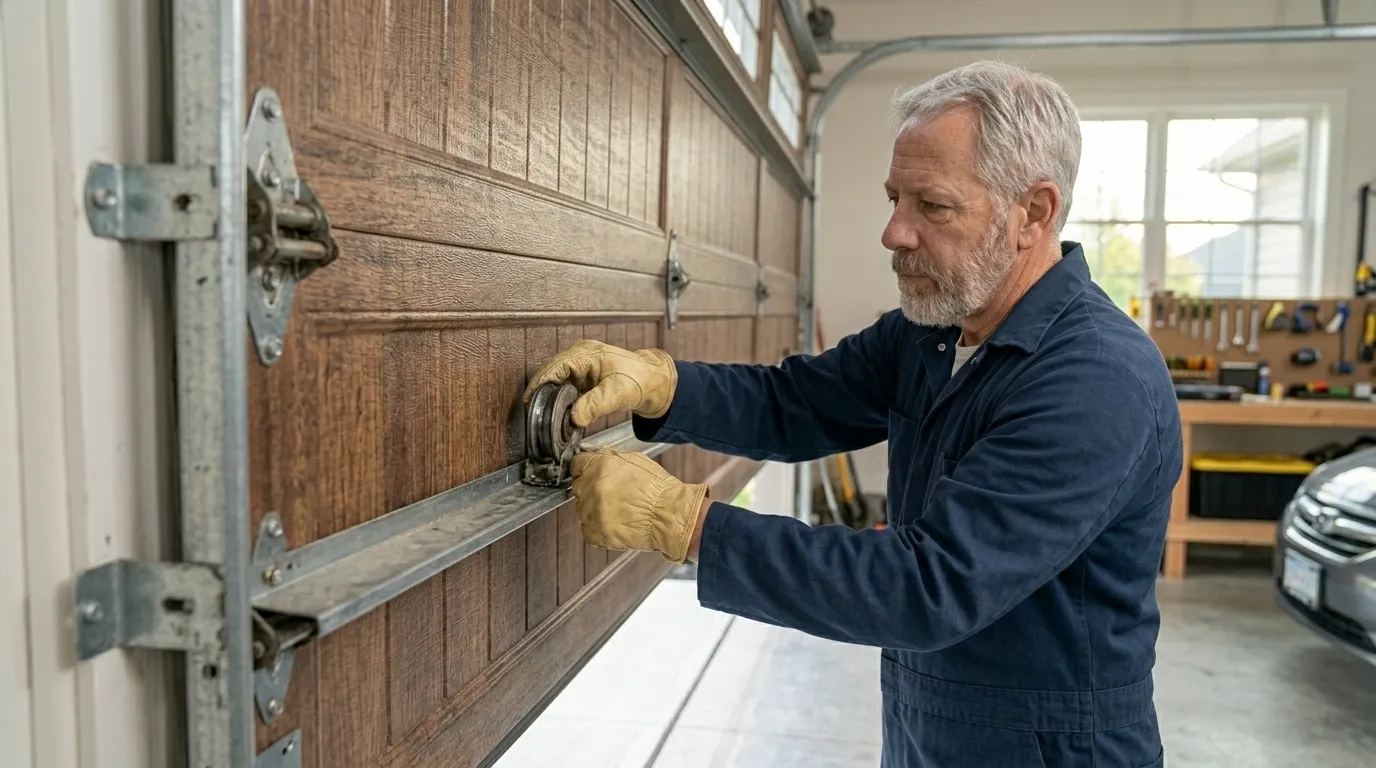
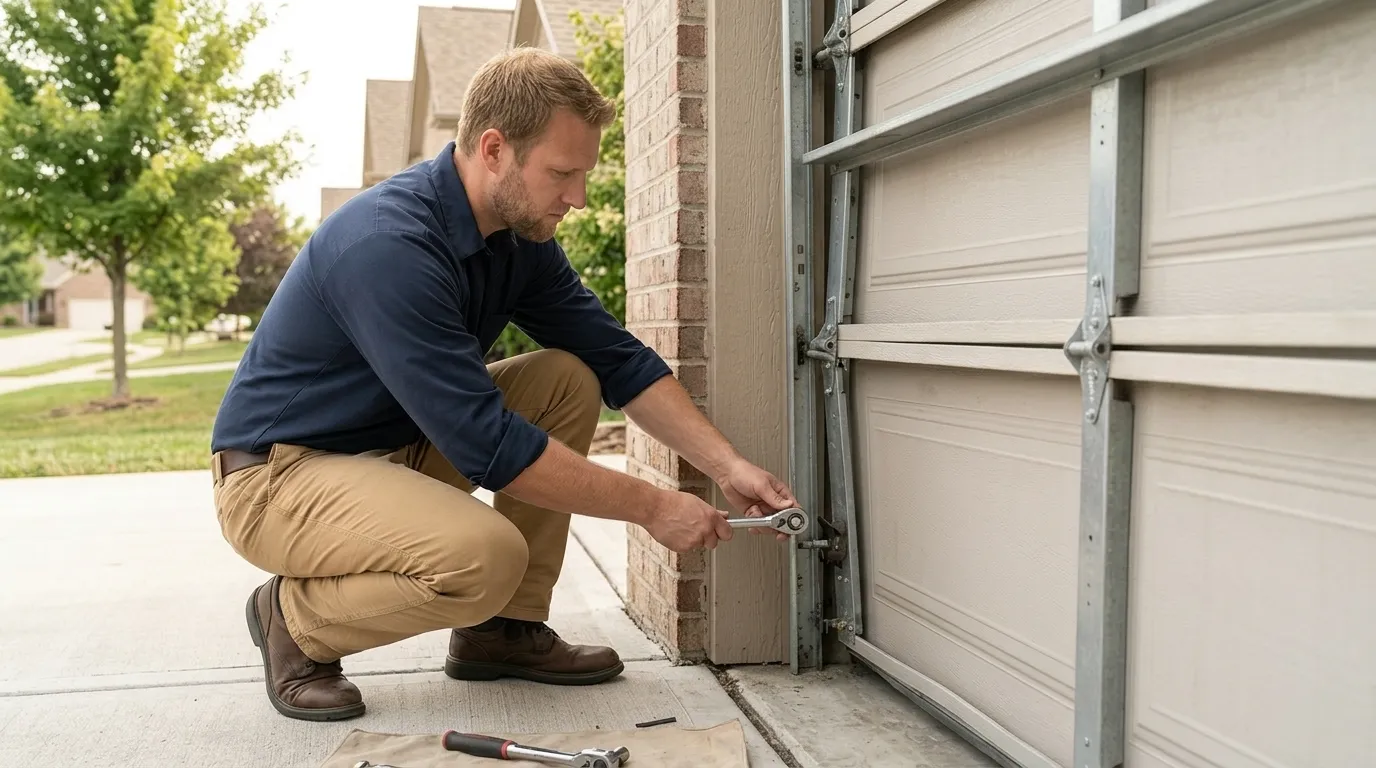
If the failure is a broken cable or a bent track instead, we check the rollers and hinges at the same time, since a cable snap on a door this age often means a roller has been dragging for months. We reset the track, re-tension, and test the door through a full open-close cycle with the opener reconnected before we call it done. We don't paper over a bent panel - if the section itself is cracked or caved in from the spring letting go, we'll tell you straight whether it's worth patching or whether the door needs a new section, and we won't push a repair that's going to fail again in a year.
Parts We Carry
We stock torsion springs sized for the 16x7 and 9x7 steel sectional doors that dominate Granville's 1980s-built housing, along with standard cables, rollers, and hinges for that same door class. That covers the majority of emergency calls we run this direction from Newark.
What we don't keep on the truck is anything custom - a nonstandard opening size, a decorative wood-look panel that's been discontinued, or an opener model old enough that the manufacturer's stopped making parts for it. Those jobs mean a special order, and we'll tell you the wait up front rather than promise a same-day fix we can't deliver. If your door is one of the newer builds in town with a more recent opener, replacement belts and circuit boards for current models are usually a quicker turnaround than the older gear-drive units.
What Causes It Around Here
Granville sits in the same severe-cold climate band as the rest of the territory we run out of Newark, and steel torsion springs lose a measurable amount of their working tension in hard cold - that's the mechanical reason so many spring failures here cluster on the first genuinely cold mornings of the year, not because the spring picked that day at random. A spring that's been fatiguing for months finally lets go when the metal contracts and the door's actual weight exceeds what's left of the spring's lift.
Because most of the housing here was built through the 1980s and 90s - later than the 1976 median across the rest of the service area - we're not seeing the very old extension-spring failures as often in Granville. We're seeing torsion hardware that's now thirty-plus years old failing on its own timeline: springs at the end of their cycle life, rollers that were never swapped out, and openers original to the house finally giving up their drive gear.