How to Book
We work out of Newark, and Granville sits about 4 miles down the road, so a panel job here doesn't turn into an all-day wait for a truck to cross town. What it does mean is we ask for photos before we load up. A dented or cracked panel on a door built in the mid-1980s is often a size or a rib pattern that isn't sold new anymore, and there's no point driving out twice - once to look, once to fix - when a phone photo of the panel and the label inside the door tells us most of what we need. Send the make, the panel width, and a shot of the damage, and we'll tell you honestly whether we can match it off the truck or whether it needs to be ordered. You can start that conversation through our Granville repair page, or if what you're really dealing with is the whole door rather than one panel, the Newark panel replacement page covers that broader job.
We don't keep a branch in Granville. Every job is a trip out from Newark, which is short, but it's also why we'd rather nail down the panel details on the phone than guess in your driveway.
How We Fix It
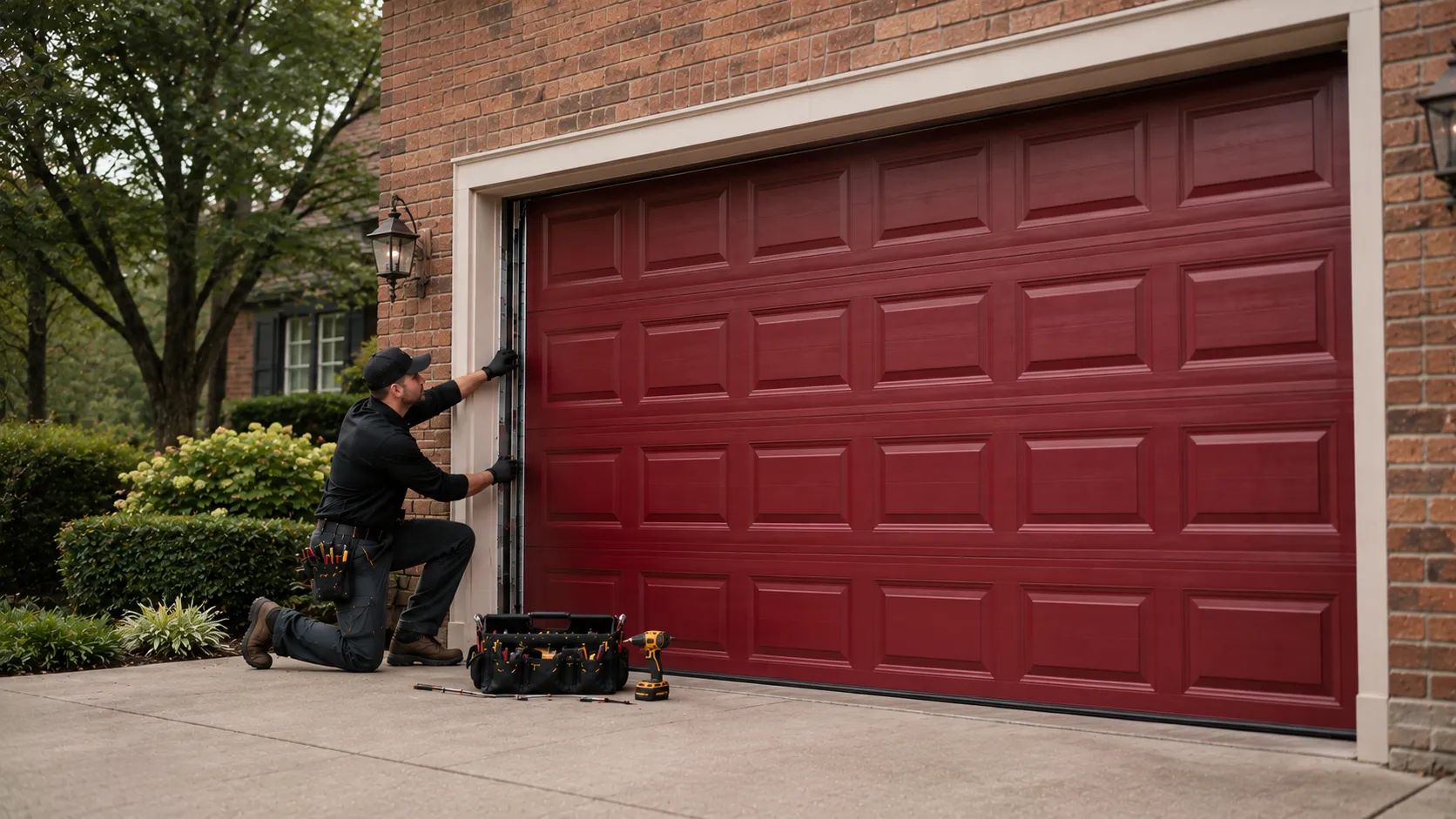
Panel replacement starts with matching, not tools. Granville's housing stock skews newer than a lot of the surrounding area - median build year here runs around 1986 - which puts most doors squarely in the era of steel raised-panel sectional doors sold by a handful of national manufacturers through local builders. The good news is these doors are common enough that we can often find a compatible panel in stock width and rib count. The catch is embossing and paint runs changed year to year, so a panel from a current catalog can be a close match in size and a visible mismatch in texture or color.
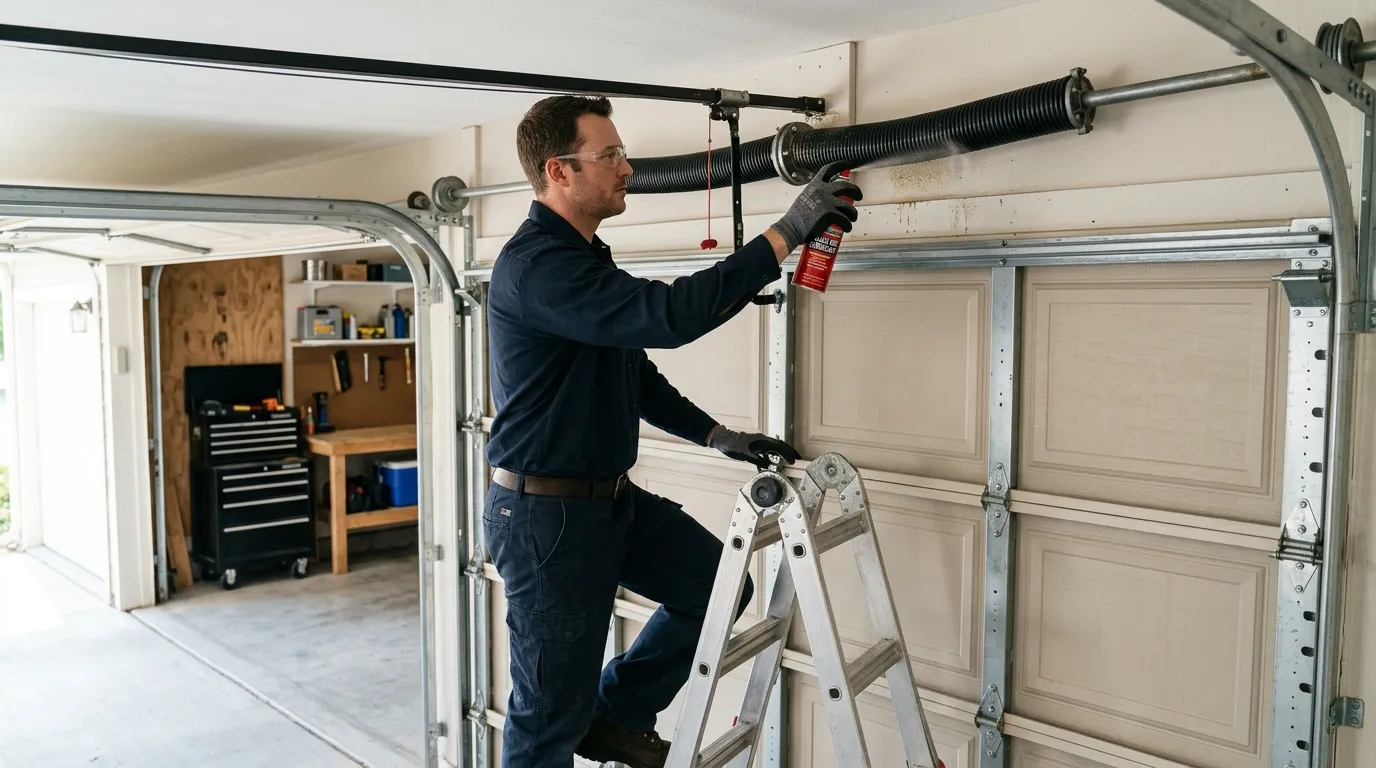
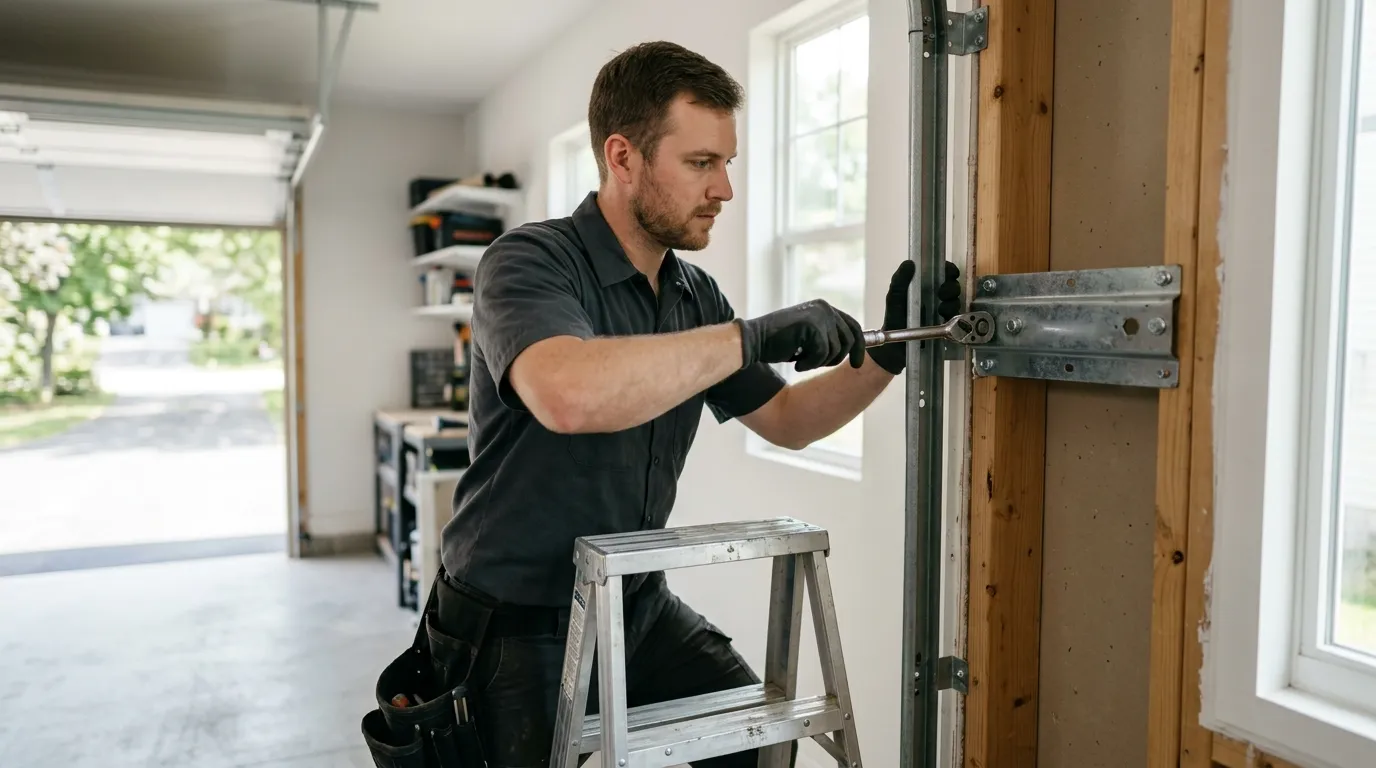
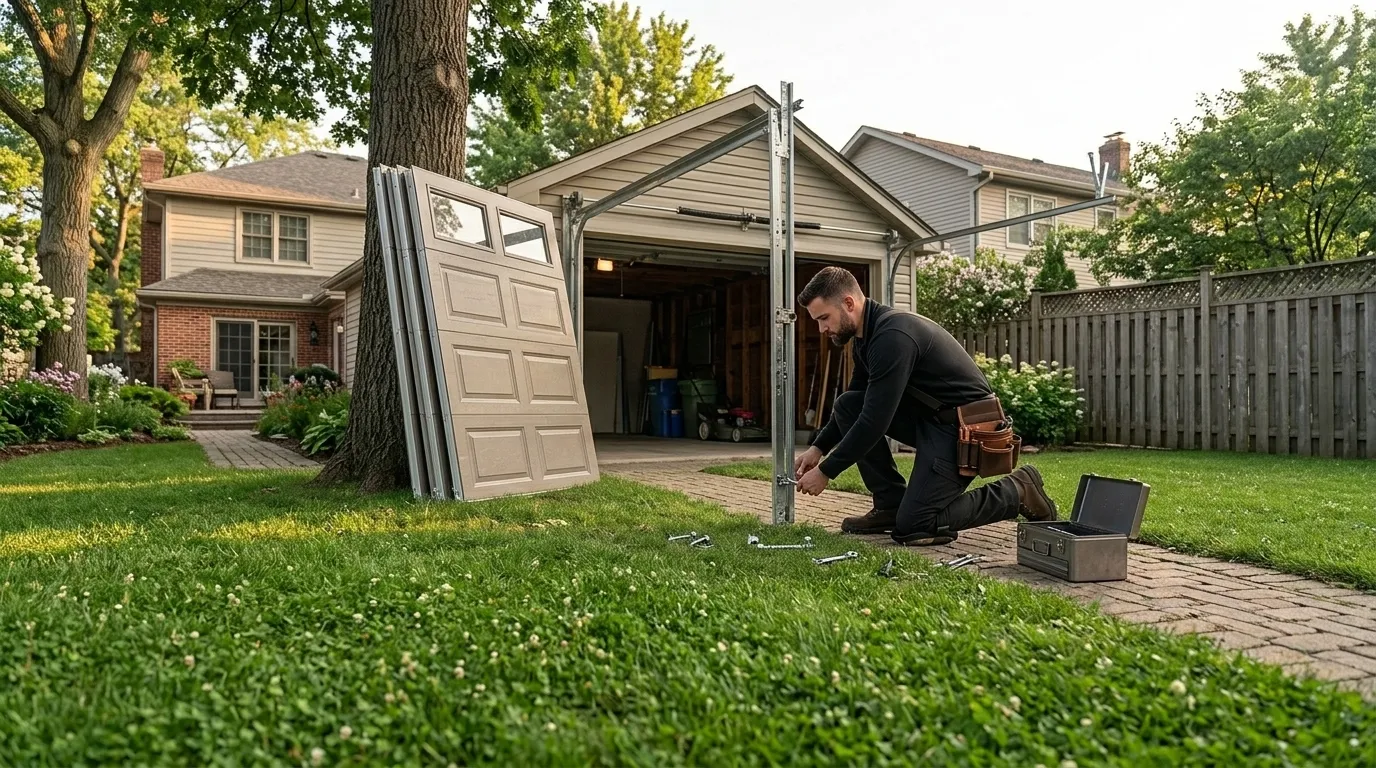
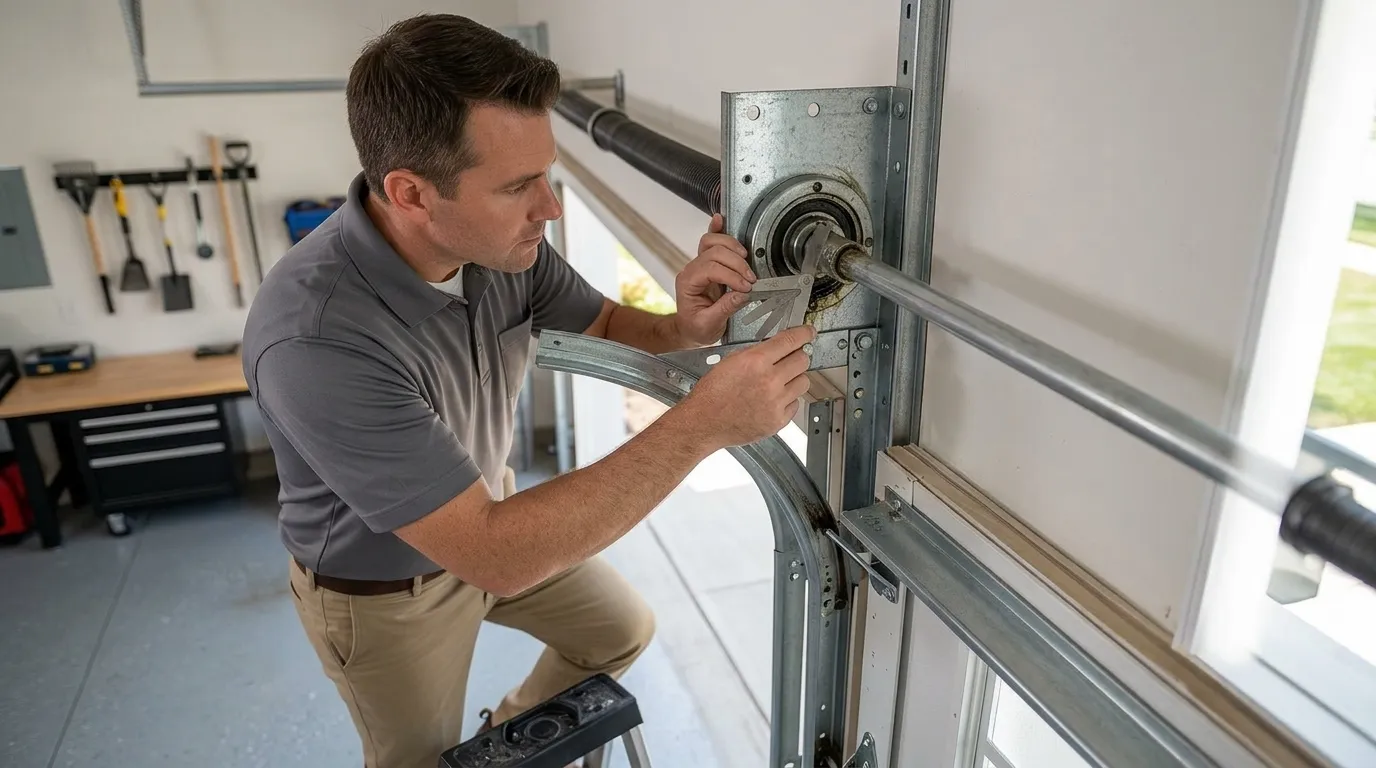
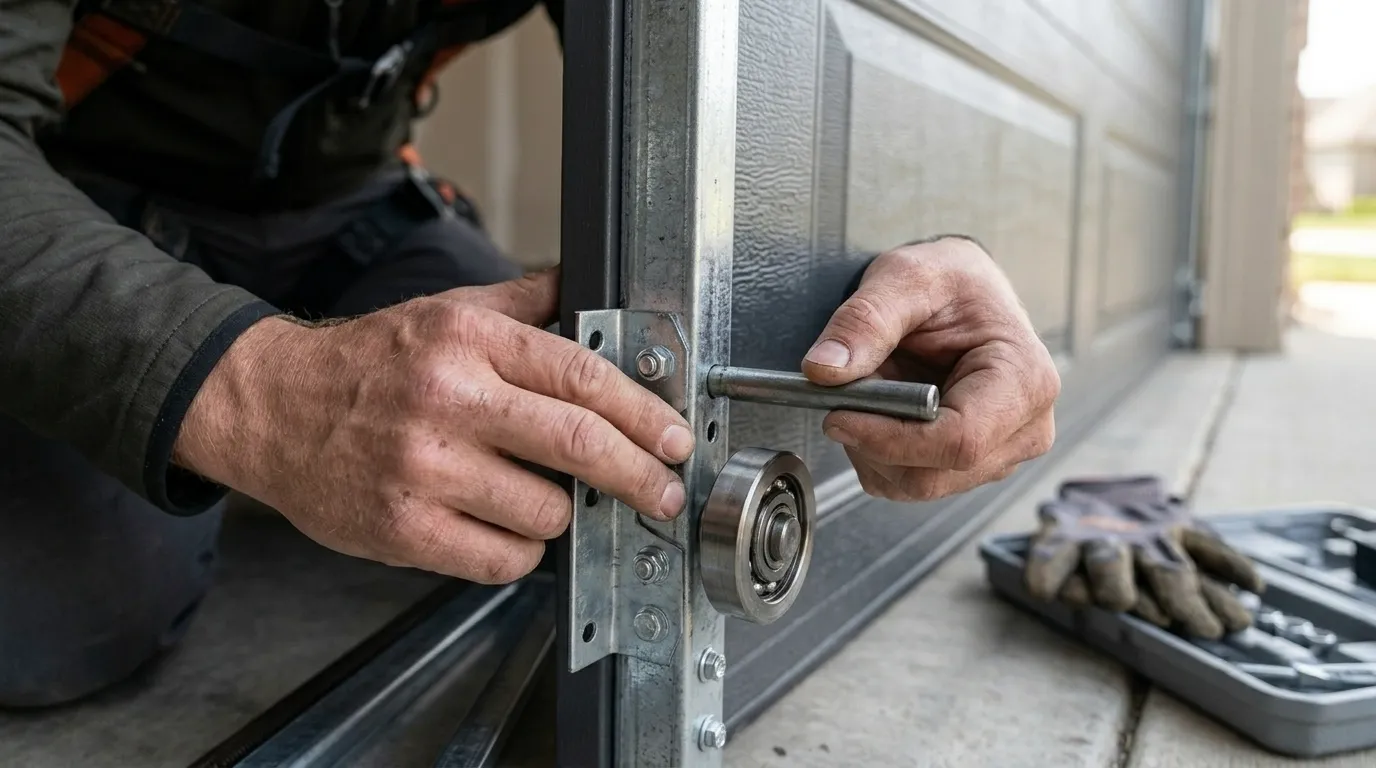
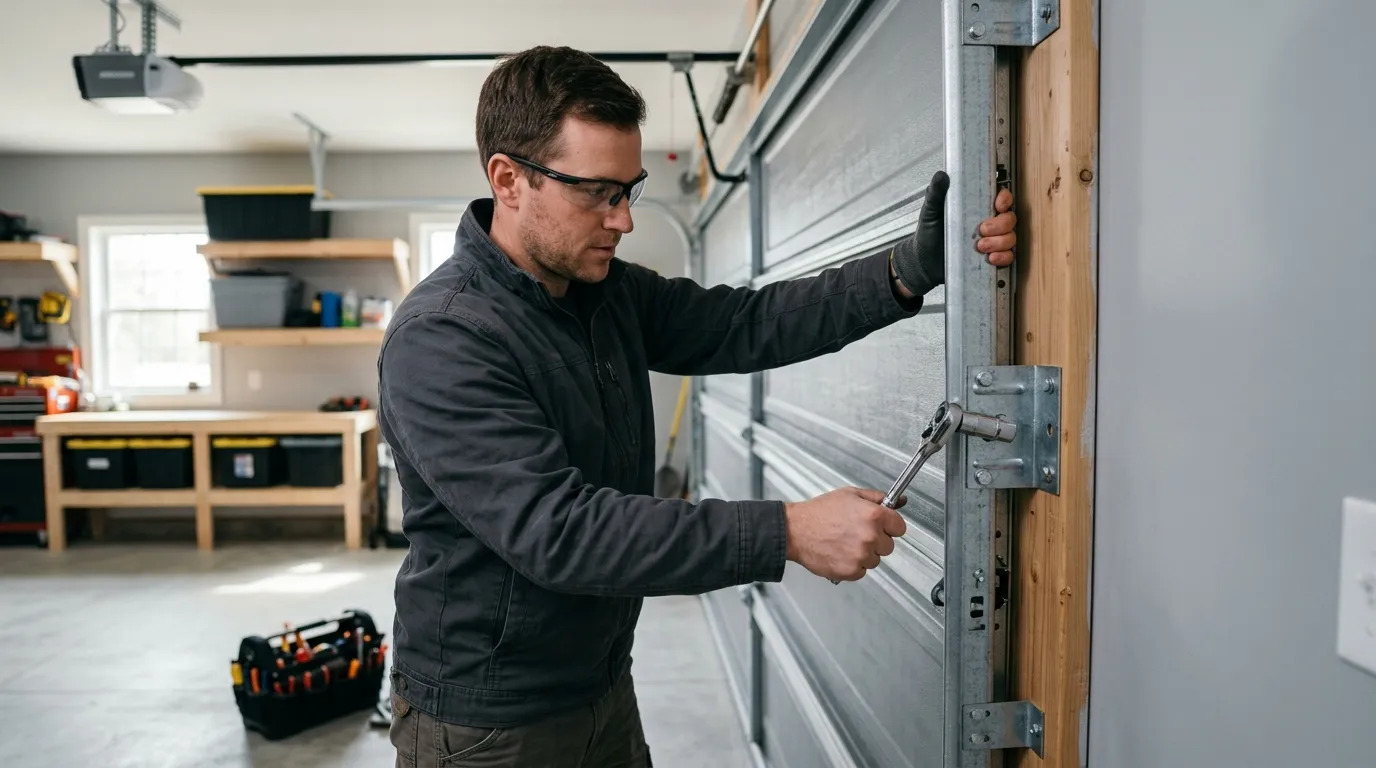
Once we've got the right panel, the swap itself is straightforward: we disconnect the section from the track, pull the hinges and rollers off the damaged panel, transfer them to the new one, and reset it into the door. On a double door with a spring under load, we don't touch the panel until the door is secured, since panel work on a loaded door is how people get hurt. If the panel we need has to be special-ordered, we'll tell you that up front rather than string the job out.
Parts We Carry
We stock common panel widths and standard steel gauges on the truck, which covers a good share of the doors we run into in this area. What we can't carry is every embossing pattern and every factory color a manufacturer has run since the 1980s - some of those runs are long discontinued, and a perfect match sometimes isn't possible without special-ordering direct from the manufacturer, which adds lead time we don't control.
When an exact match isn't realistic, we lay out the honest options: order the closest current equivalent and accept a slight difference in texture, repaint the new panel to blend closer, or replace the whole door if the mismatch would bother you every time you pull into the driveway. We'd rather tell you that before the job than have you notice it after. For a lot of homeowners here, given the income and upkeep level of the neighborhoods around Granville, a full door swap ends up being the choice anyway once they're looking at a patchwork repair - but that's a decision we lay out for you, not one we make for you.
What Causes It Around Here
Ohio's winters are the main driver. This region sits in a severe cold climate band, and steel panels contract and expand through repeated freeze-thaw cycles all winter long. That movement works on any weak point in the paint or seam, which is why panel failure here so often starts as a small chip that spreads rather than a single dramatic break.
Granville's own housing stock adds a second factor. With a median build year around 1986, most doors here are original or first-replacement steel sectional units from that builder-grade era, not the newer composite or vinyl-clad panels you'd see on more recent construction. Original steel from the 1980s doesn't hold up to forty winters the same way current coatings do, and once a panel starts rusting from the inside of a ding, cold weather accelerates it rather than causing it outright. It's less about one bad storm and more about decades of routine winter cycling doing its slow work on original hardware.