How to Book
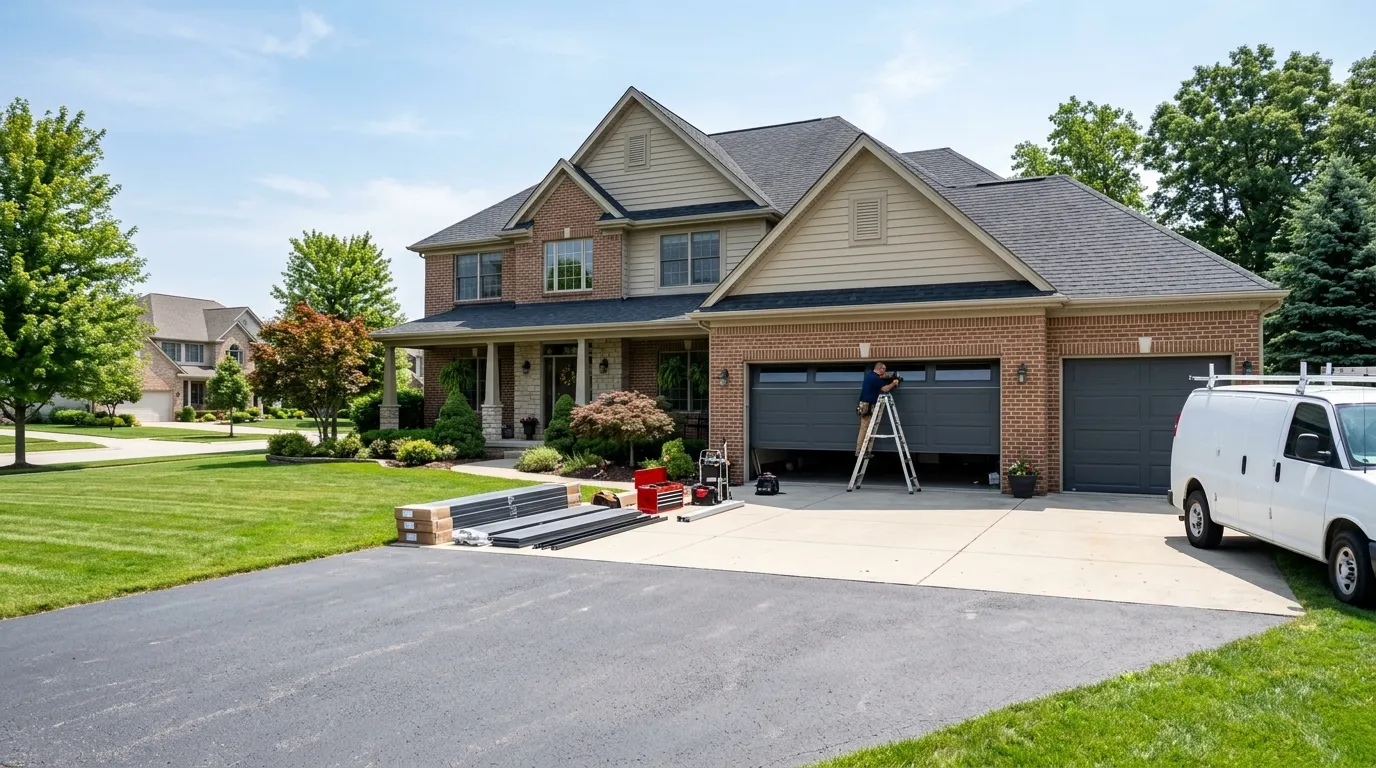
We work out of Newark, about 4 miles from Granville, and we don't keep a separate crew or depot in town - every job here starts with a truck leaving Newark. That's not a knock on the service; it just means we don't promise a same-day window we can't back up from this page, since that number lives on the Newark repair page, not here. What we can tell you is that Granville is close enough that it's a normal stop on a normal day, not a special trip.
If you're calling about a door that's stuck, off track, or making a noise you don't like, tell us the age of the house if you know it. Granville's housing stock runs newer than a lot of what we see elsewhere in the service area - median build year here is around 1986, versus 1976 across the wider territory - and that one detail changes what we expect to find before we even open the panel.
For the booking form and contact details, use the Granville garage door repair page. If you want to see the full range of what we handle out of Newark, that's a separate page and a separate conversation.
How We Fix It
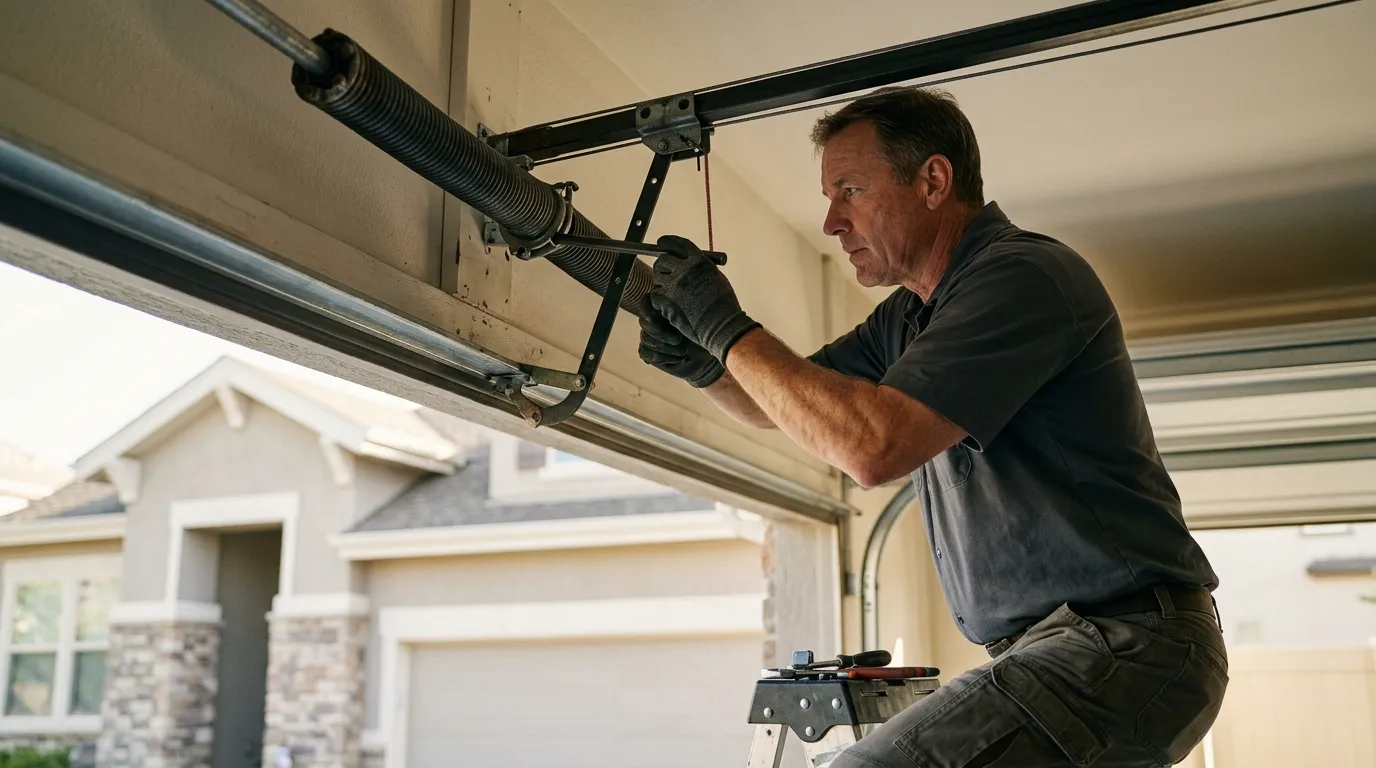
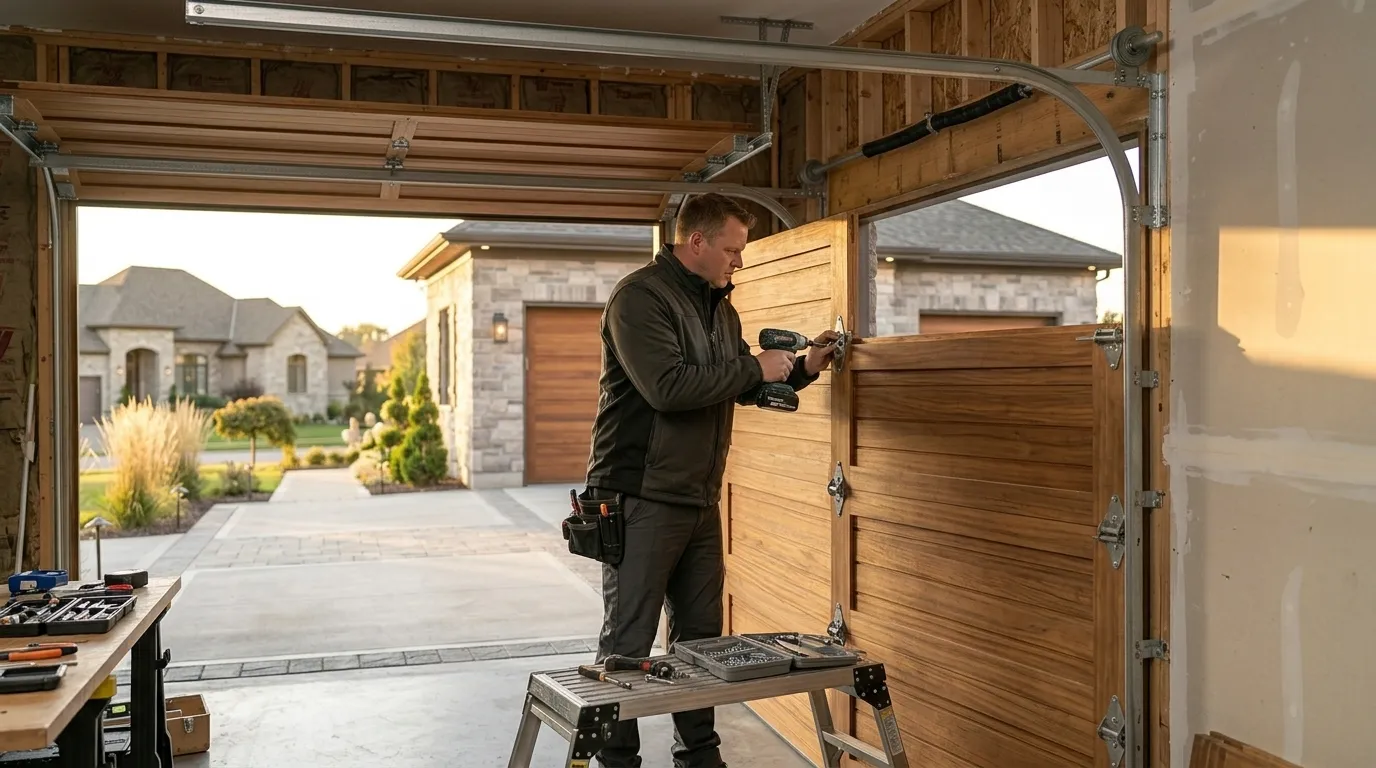
A 1986-built door is a different animal from the 1965 door we're fixing three miles away. By the mid-80s, most builders had moved to steel sectional doors on standard torsion springs mounted above the opening, not the side-mounted or extension-spring setups that dominate the older 1960s-70s tracts making up much of the rest of the area. That means Granville jobs skew toward spring replacement, opener failures, and worn rollers rather than the track-geometry problems and obsolete hardware we chase down in older neighborhoods.
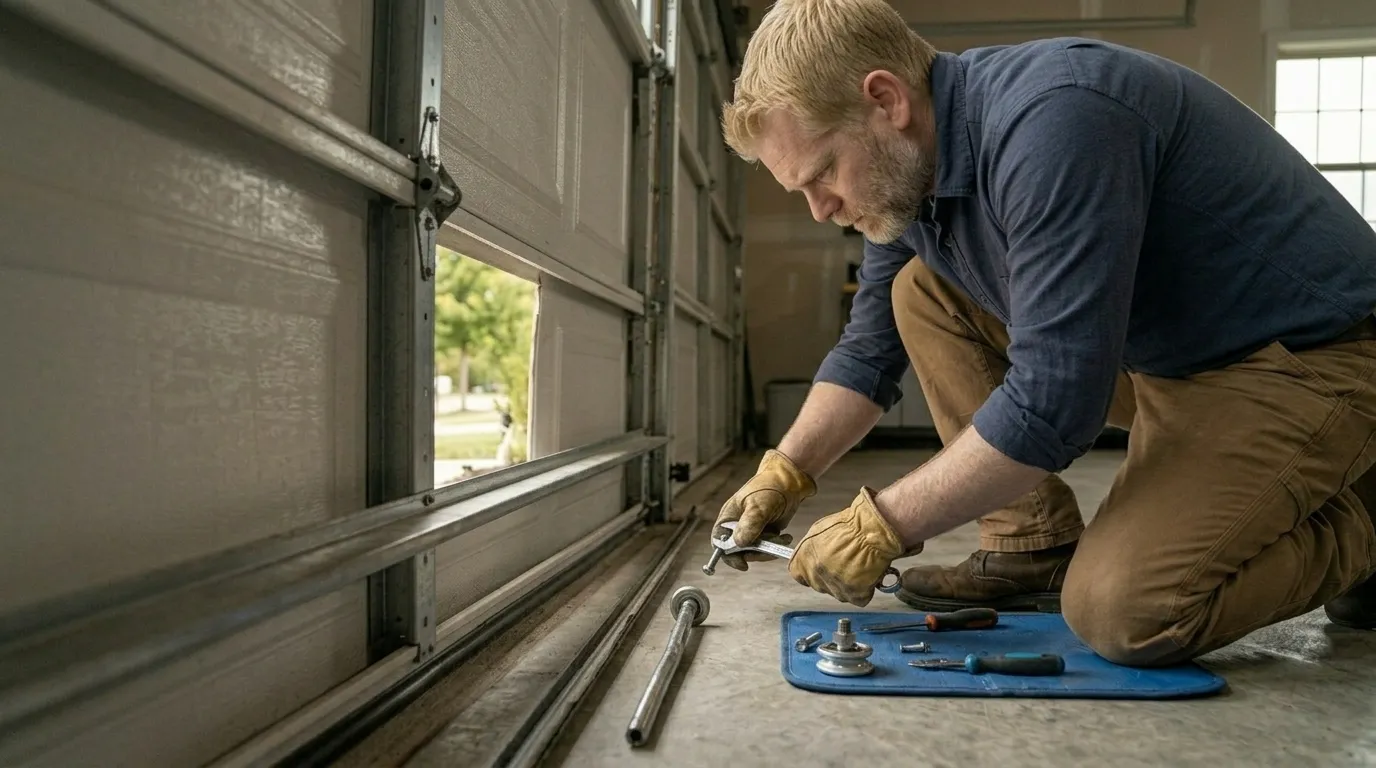
We test the door under load before we touch anything - balance first, then the opener, then the moving parts. If a torsion spring's gone on a door this age, it's almost always a straight swap with parts we already carry on the truck, not a hunt for a discontinued bracket. Openers from this era are more likely to be a straightforward chain-drive or early screw-drive unit, and those parts are still easy to source.
The honest limitation: if the house has since been upgraded - a newer opener bolted onto old track, or a mismatched panel from a prior repair - we treat it as its own case. We don't assume 1986 hardware just because the house was built in 1986.
Parts We Carry
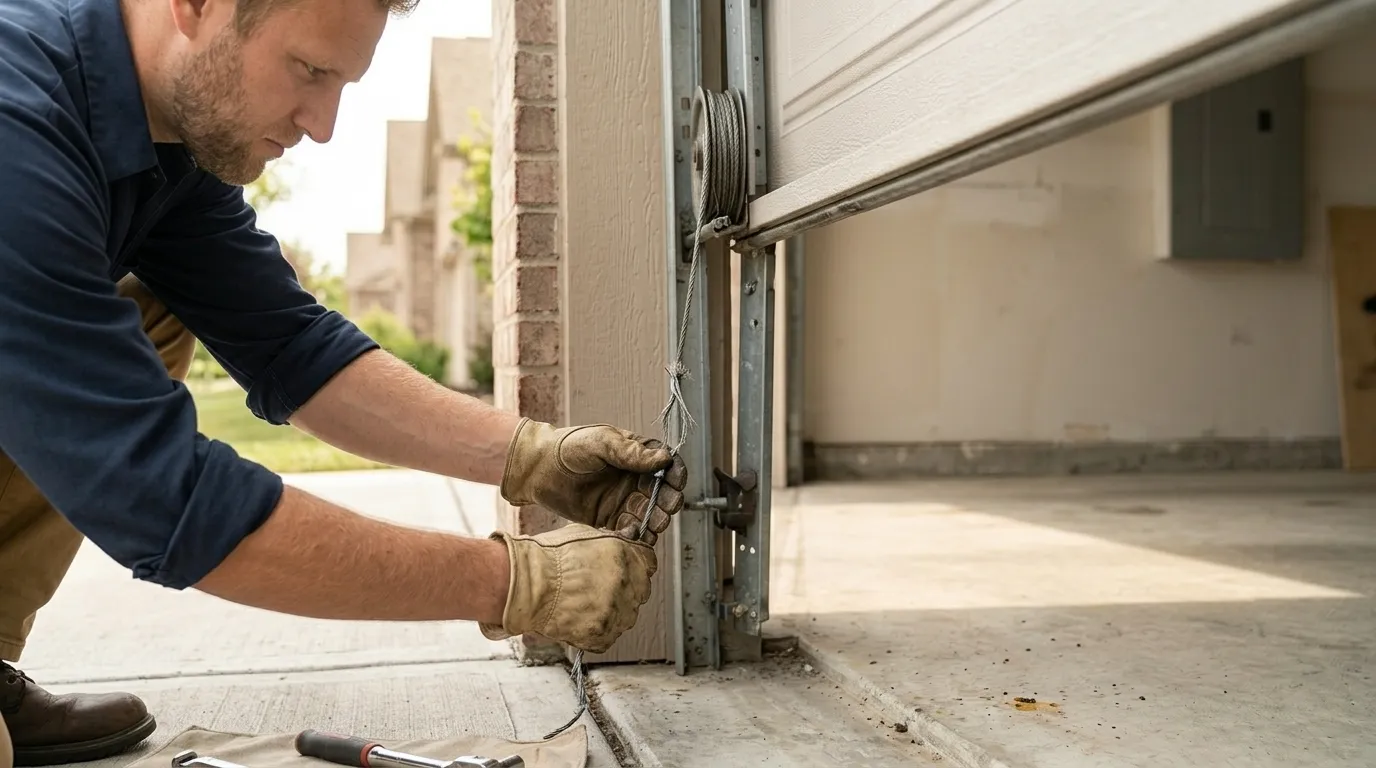
For a door built in the torsion-spring, steel-sectional era that covers most of Granville's housing, we carry standard torsion springs in common wind and wire sizes, ball-bearing rollers, galvanized lift cables, and the hinges and end bearing plates that wear out on a 30-to-40-year-old door. Chain-drive opener parts - sprockets, drive gears, safety sensor pairs - are also standard truck stock, since that's the dominant opener type from this build era.
What we don't stock on the truck: parts for older extension-spring systems or side-mounted torsion setups, which are more common in the 1960s-70s tracts elsewhere in the service area. If a Granville house has been retrofitted with older salvage hardware, or if it's one of the exceptions built well before or after the neighborhood's typical run, that part may need to be ordered rather than pulled off the shelf.
One honest limitation: we're not going to promise we can match a rare panel color or a specific manufacturer's discontinued track profile on the spot. If your door needs a full panel replacement rather than a hardware fix, that's usually a scheduled order, not a same-visit job.
What Causes It Around Here
Granville sits in the same COLD-severe climate band as the rest of the area, which means steel doors and their hardware go through the same freeze-thaw cycling every winter - metal contracts, lubricant thickens, and springs work harder to lift a door that's stiffer in the cold. That part isn't unique to Granville.
What is more specific to this area is the household profile behind the calls: median income here runs meaningfully higher than the broader service area's $91,819, at $123,860, and the housing is newer on average. In practice that means more owners replacing worn parts proactively - an opener that's merely getting loud, not yet broken - rather than waiting for a full failure. We get more preventive-maintenance-style calls out of Granville than emergency ones, relative to older, lower-income tracts nearby.
The cold is still the main mechanical driver of spring failure and opener strain across the whole territory, including here. Age of the hardware just determines whether that stress shows up as a snapped spring or a tired opener motor.