What You Pay
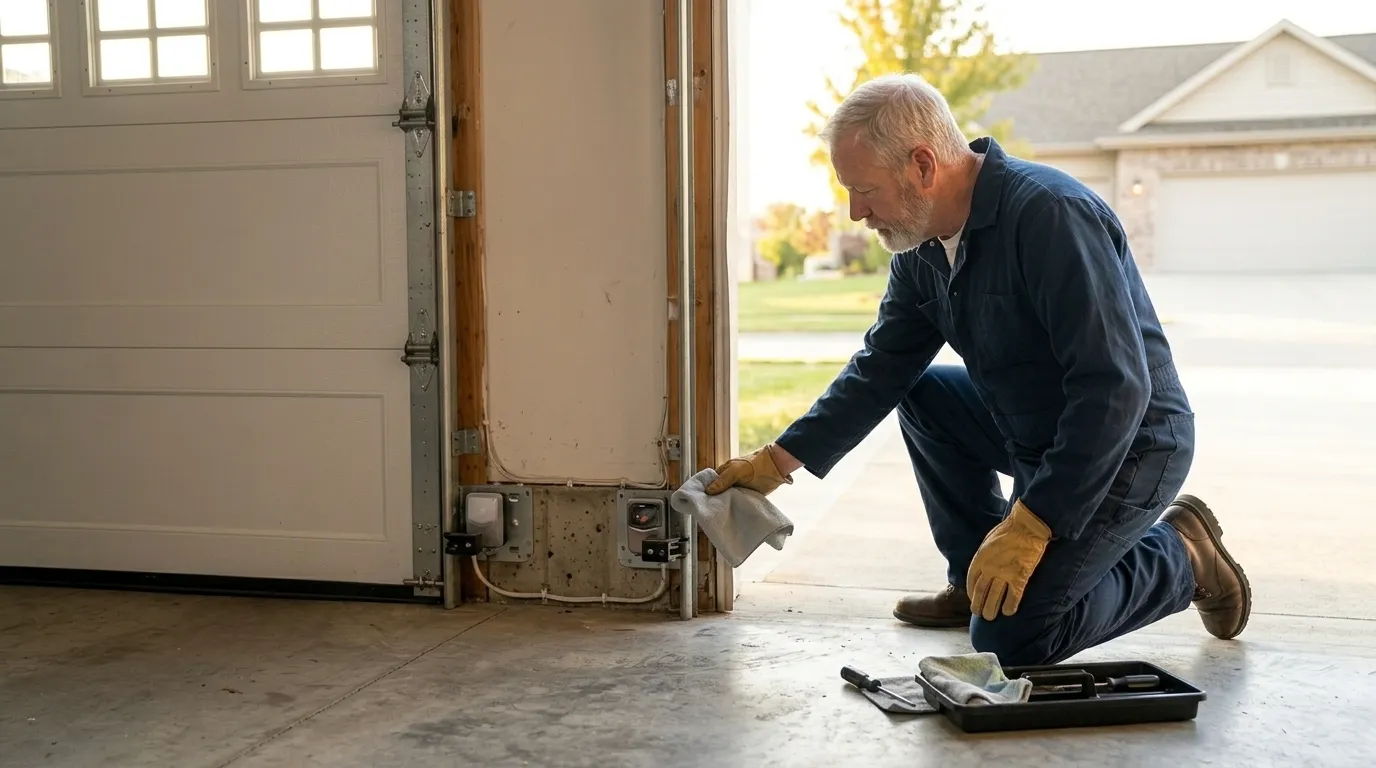
We don't post a flat number here because what a Granville South job costs depends on what's actually on the door. A lot of the doors in this pocket of the county went up around 1976, and that means original springs, original track, and openers that have usually been swapped once already by a previous owner. Parts for a 1970s torsion setup aren't always the same size as what a big-box store stocks today, so the first thing we do on a call is measure the spring wire and the track width before we quote anything. Homes here run a higher median income than a lot of the surrounding area, and we see that reflected less in fancier garage doors and more in owners who want the job done right the first time rather than patched twice. We'll tell you straight if a repair is cheaper than a replacement, and we'll tell you the opposite too - a door held together with three past repairs sometimes isn't worth a fourth. No number gets quoted over the phone with any confidence until someone's looked at the actual hardware.
Can You Do This Yourself
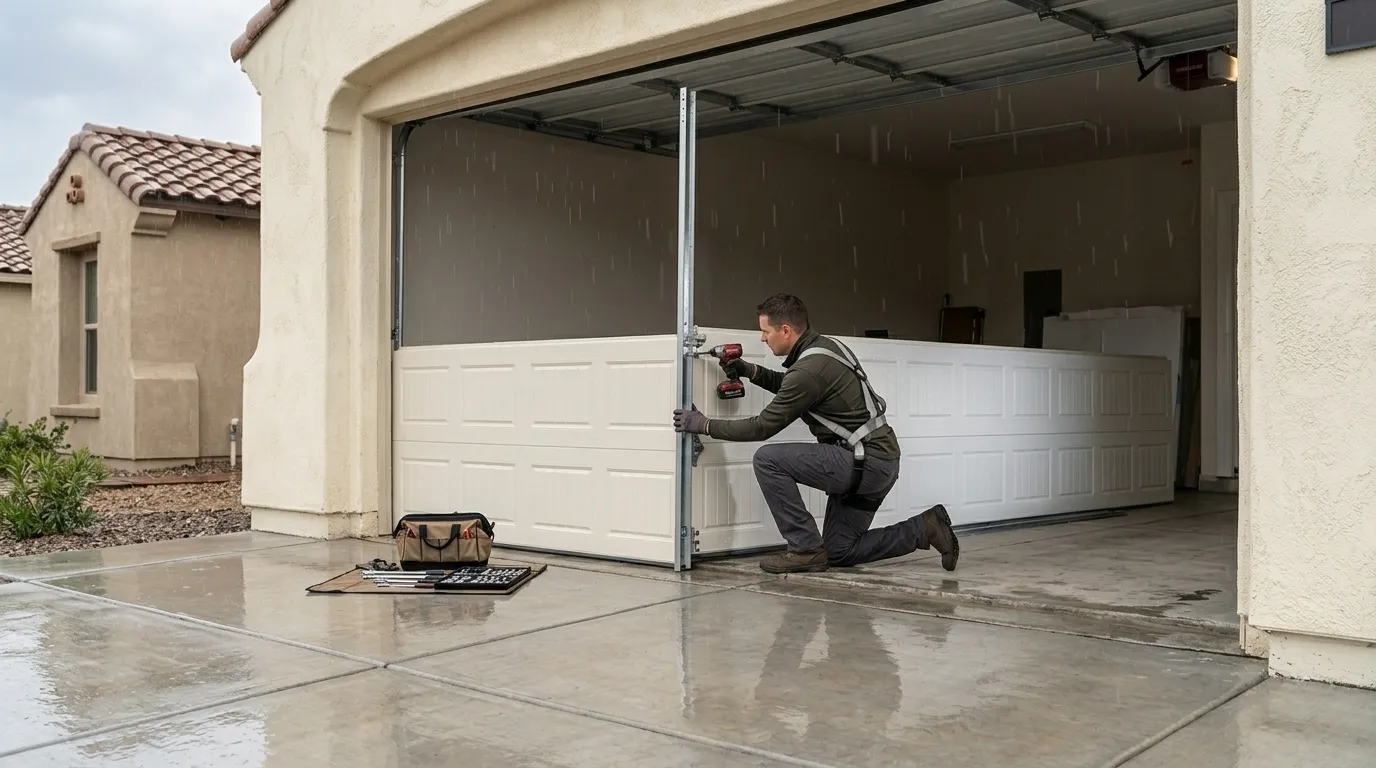
A torsion spring under full tension can break a hand or worse, and that's true whether the door is five years old or fifty. If your Granville South door won't open and you can see a spring coiled tight above the door with a gap in it, stop there - that's not a DIY afternoon, that's a call. Roller replacement, a bent bottom bracket, or a track that's pulled loose from the wall are jobs a handy homeowner can sometimes manage with the right tools and the door secured. Where it gets riskier in a house this age is the cable and drum setup - a lot of 1976-era doors still run the original cable routing, and cable under load behaves the same way a spring does when it lets go. If you're not sure which category your problem falls into, that uncertainty itself is the answer: get someone out to look at it first.
What Can Go Wrong
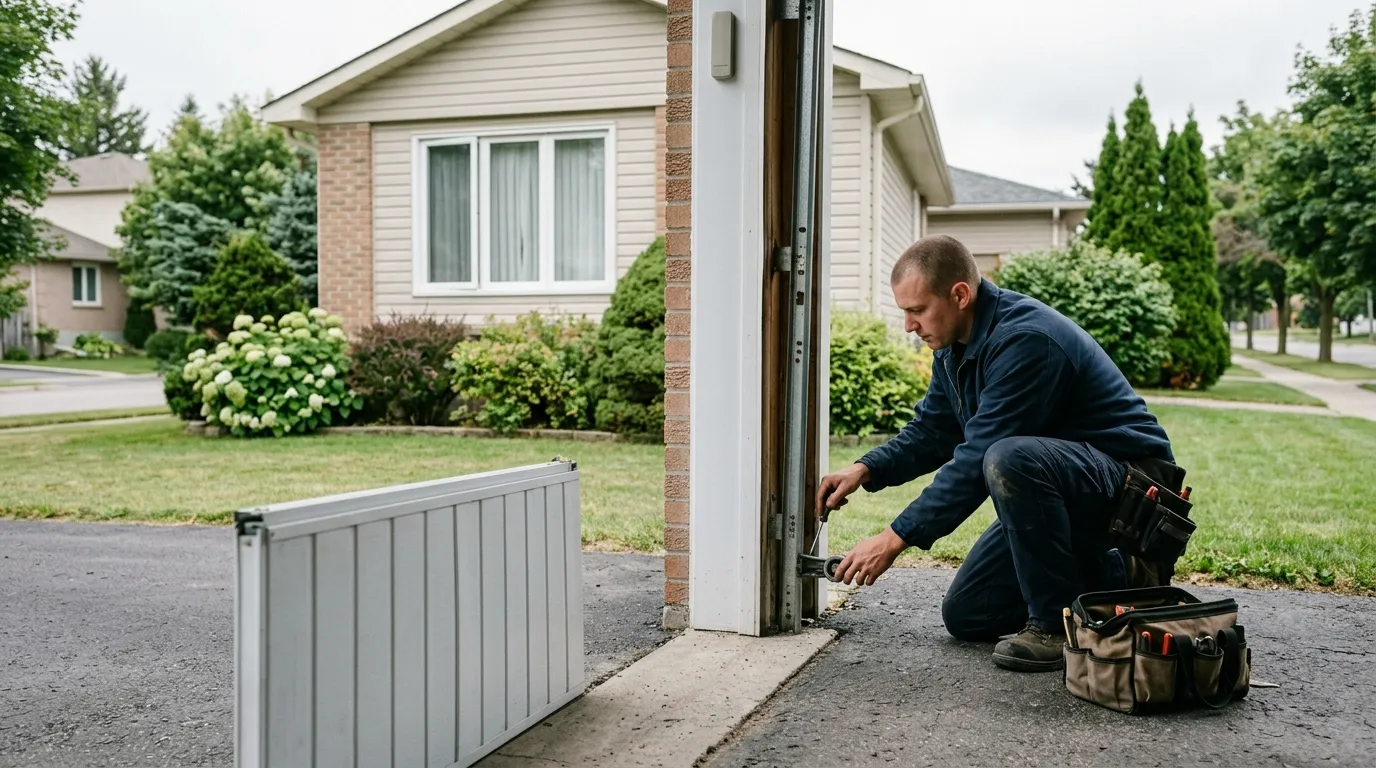
This area sits in a severe cold climate band, and cold does specific things to garage door hardware that a mild-climate town never deals with. Steel springs lose some flex in deep cold, so a spring that's already fatigued from 45+ years of cycles is more likely to fail on a January morning than a July afternoon. Nylon rollers from an earlier hardware generation get brittle in the cold too, and a roller that cracks can bind the whole track. On the original-hardware side of things - the brackets and header mounts still dating to 1976 in a lot of these houses - rust and metal fatigue from decades of freeze-thaw cycles are the failure we see most, usually at the point where the track bolts to the frame. None of this is dramatic until the day it is, and that day tends to land on the coldest morning of the stretch.
How Long You Are Without the Door
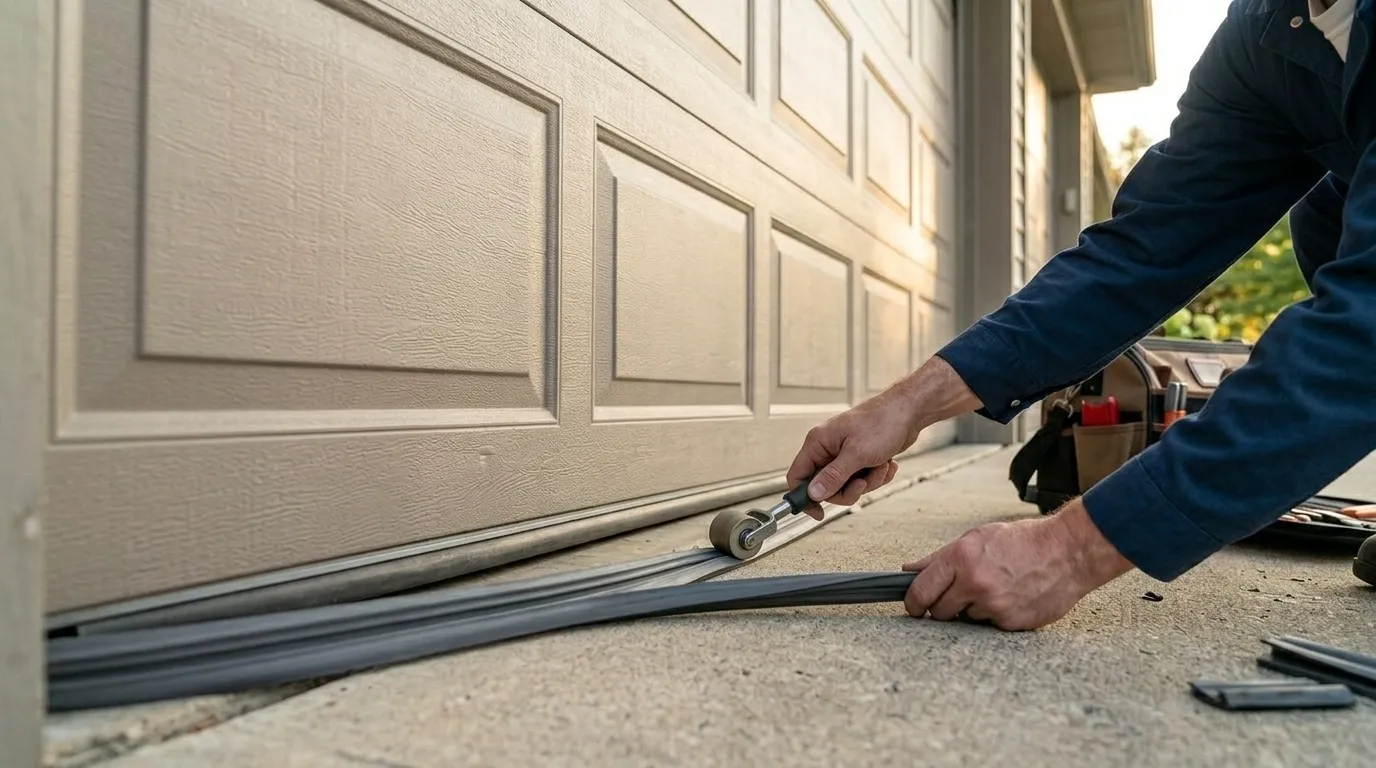
We're honest about this: we come from Newark, about 6 miles out, so we're not sitting on your street already. That's a short drive, not a same-neighborhood depot, and we won't promise a response time we can't back up. What we can say is that once we're on site, most of the repairs common to this housing stock - spring replacement, bracket work, roller swaps - don't require a special order part in every case, because the sizes are known quantities for a house this age. Where you can be waiting longer is if the door itself needs replacing rather than repairing, since a specific panel or full unit isn't something we carry pre-stocked in every size. We'll tell you up front, at the door, which category your job falls into.