What You Pay
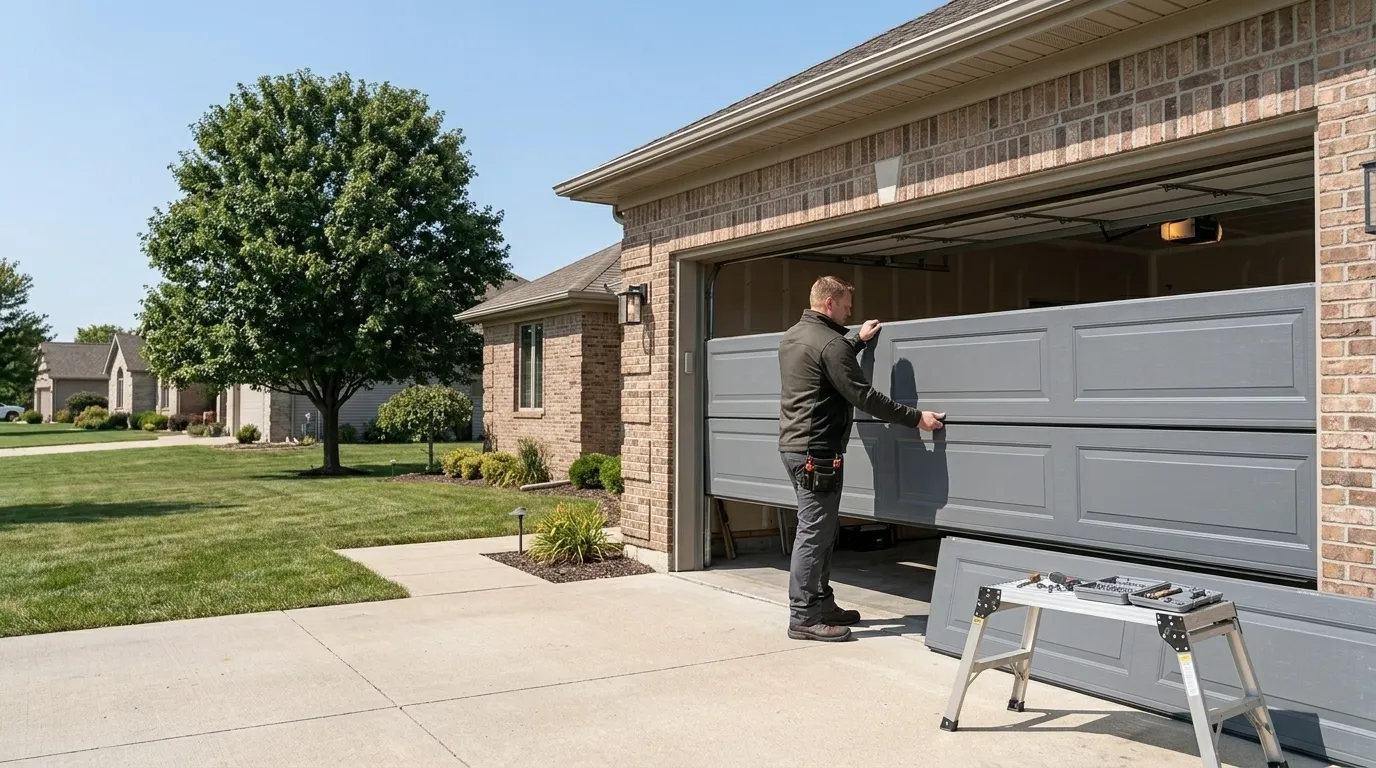
Granville South is small - about 481 households, tucked six miles from our shop in Newark. That size means we're not swapping out doors on a new subdivision every month; most of the calls here are for a single, well-built house that's been standing since somewhere around 1976, when the code called for less insulation and thinner steel than what's sold today. What you pay for a new door here isn't about a location premium. The town's median household income of $129,716 - well above the $91,819 median across the wider Newark service area - means we see a wide range of door grades ordered here, from bare steel to full foam-core insulated panels. The number that actually moves the price is the opening itself: width, header clearance, and whether the old track spacing matches a modern operator. We measure before we quote. If your opening is out of square from forty-plus years of settling, that adds labor we can't guess at over the phone.
Can You Do This Yourself
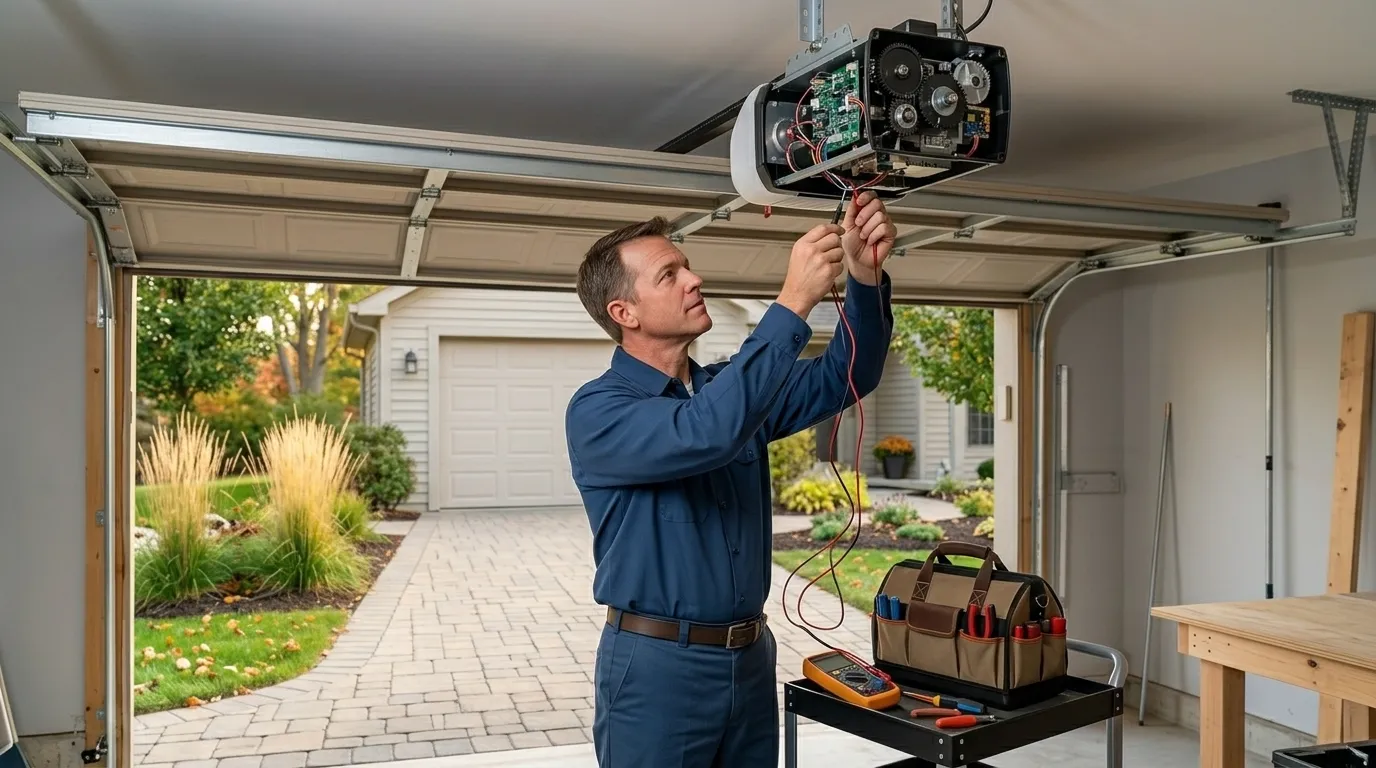
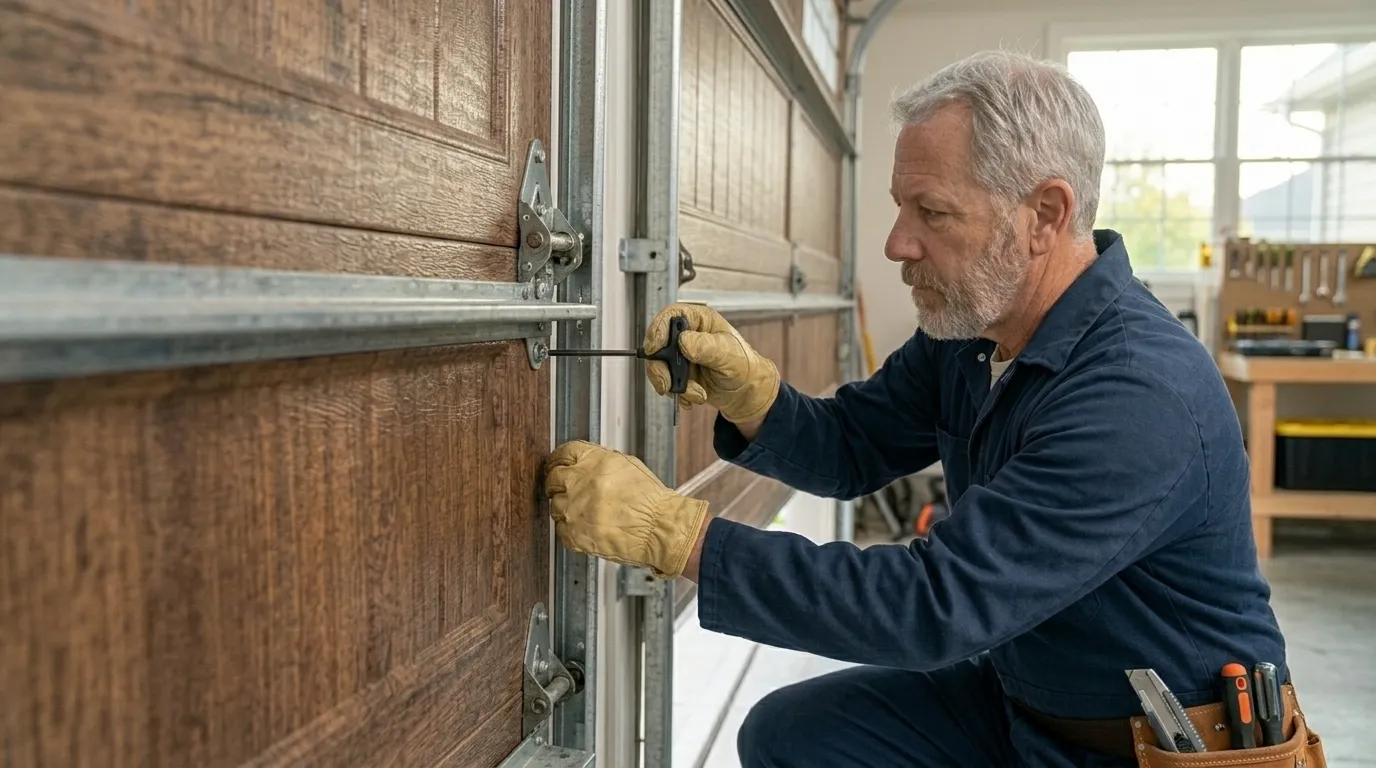
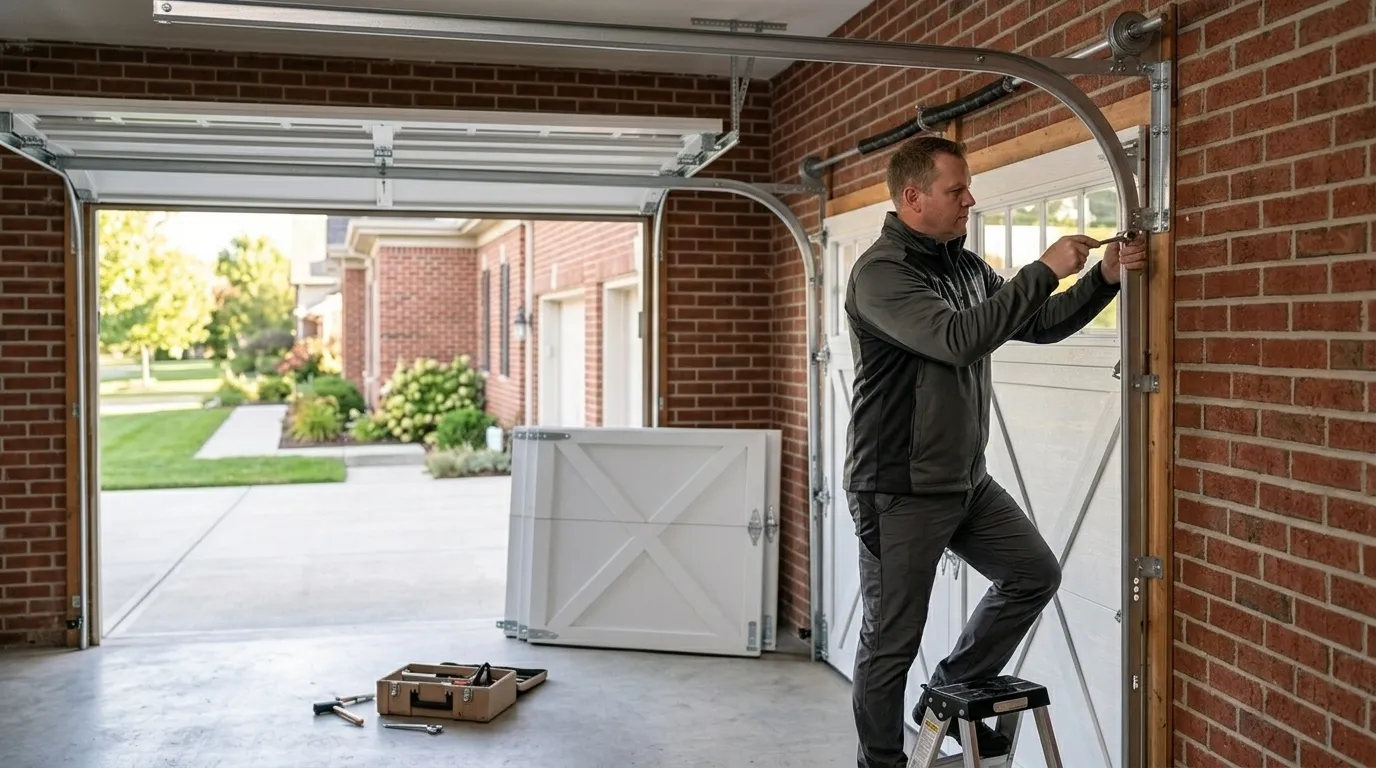
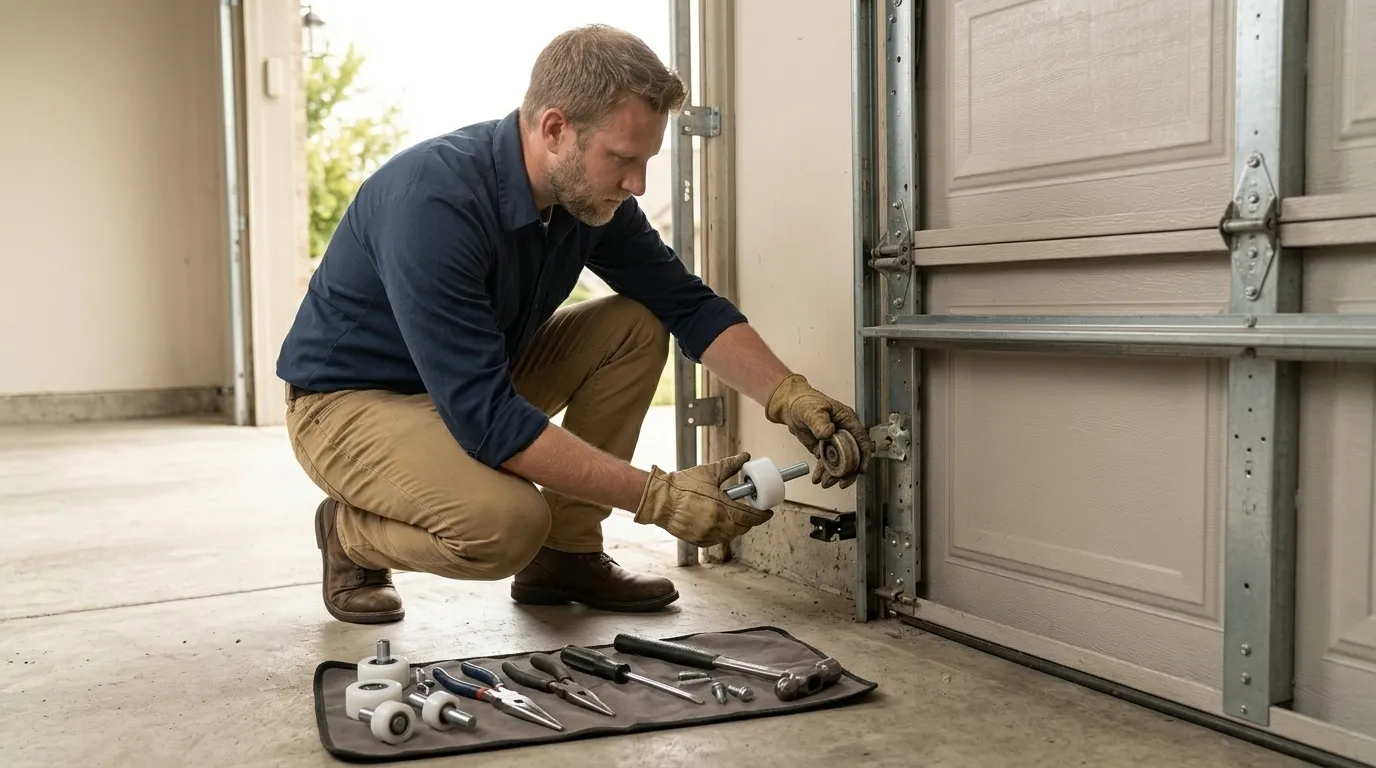
A new garage door isn't a weekend project the way a storm door is. The panels are heavy, the torsion spring is wound under enough tension to break a bone if it lets go wrong, and the track has to be plumb on both sides or the door binds within a month. If you're comfortable with a torque wrench and you've done this kind of work before, the opener install itself is the easier half. The part that gets people hurt is the spring and the cable drum. We'll say plainly: if you've never wound a torsion spring, don't start on this one to save the labor line. Where a homeowner can help is prep - clearing the opening, pulling old weatherstrip, checking that the header framing hasn't shifted. That saves us time on the day, and it's the honest way to trim the bill without taking on the part that can put you in the hospital.
What Can Go Wrong
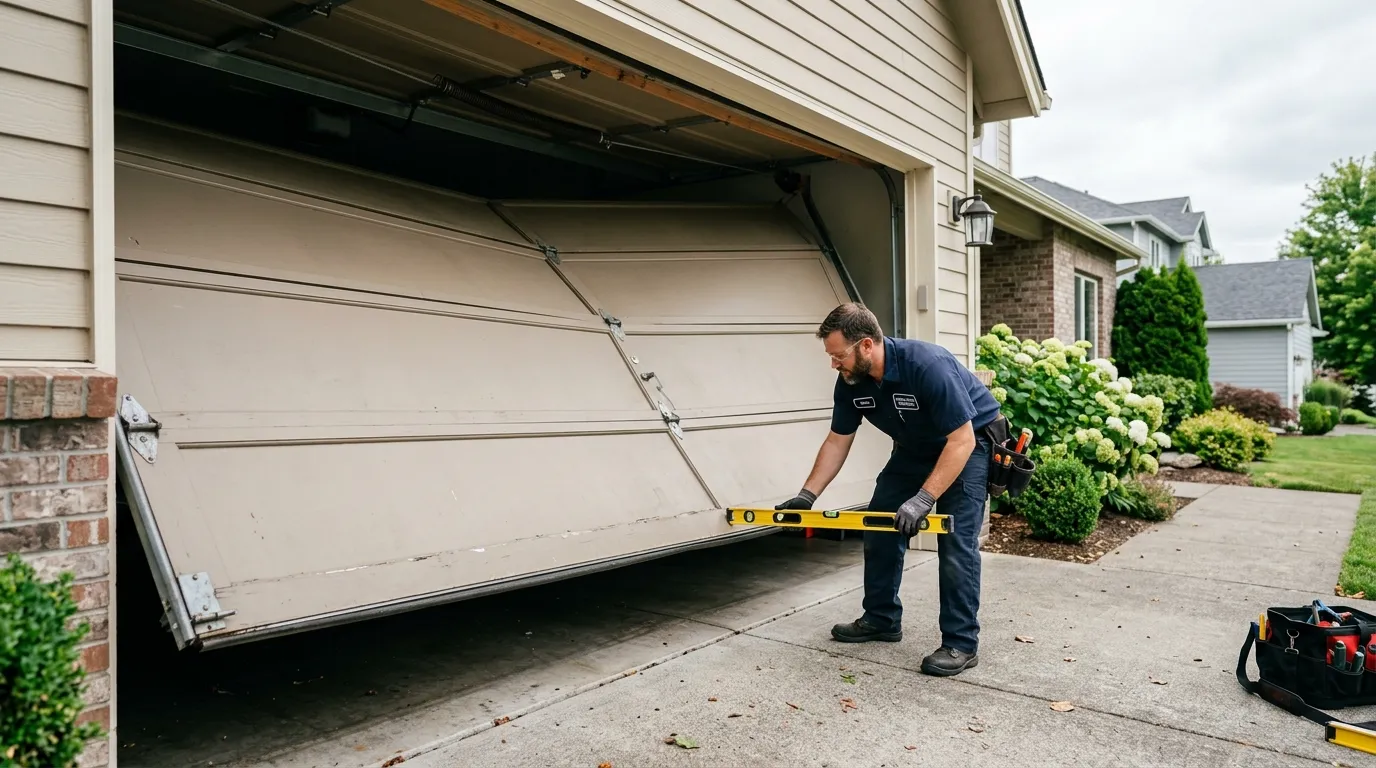
The most common surprise on a 1976-era opening is a header that isn't deep enough for a standard insulated door's spring assembly - you find that out after the old door is already off, not before. Second most common: track brackets lag-bolted into framing that's shifted enough over the decades that a plumb track needs new backing, not just new screws. Neither of those is a five-minute fix once we're mid-install, and neither shows on a walk-around inspection from the driveway. We flag both when we measure, but sometimes framing hidden behind trim doesn't reveal itself until the old door's off the hinges. The honest limitation here: if what we find behind the old door needs a header rebuild, that's a second visit and added lumber cost, not something we can fold into a same-day install quote.
How Long You Are Without the Door
We run out of Newark, six miles from Granville South, so this isn't a branch with a truck sitting idle waiting for a local call - it's a job we build into a route. Once your door's ordered and on the truck, install day itself runs the opening: pull the old door and track, check and reframe the header if the 1976 framing needs it, set new track plumb, hang panels, balance the spring, and program the opener. A straightforward swap on a square opening moves fast. One that needs header work runs longer, and we won't promise a finish time until we've seen what's behind the old door. Ordering the door itself - especially a nonstandard width - is the part that takes the longest and it happens before a truck ever leaves Newark.