What You Pay
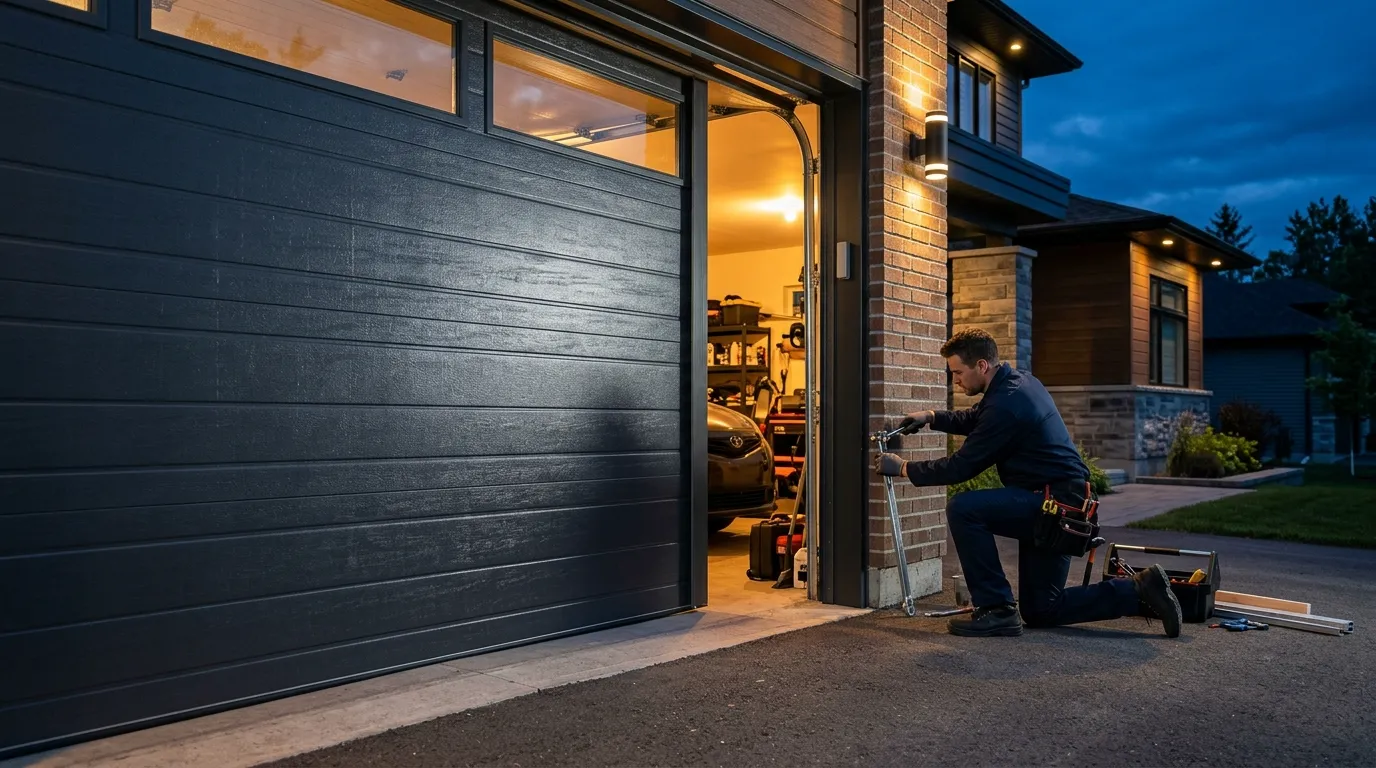
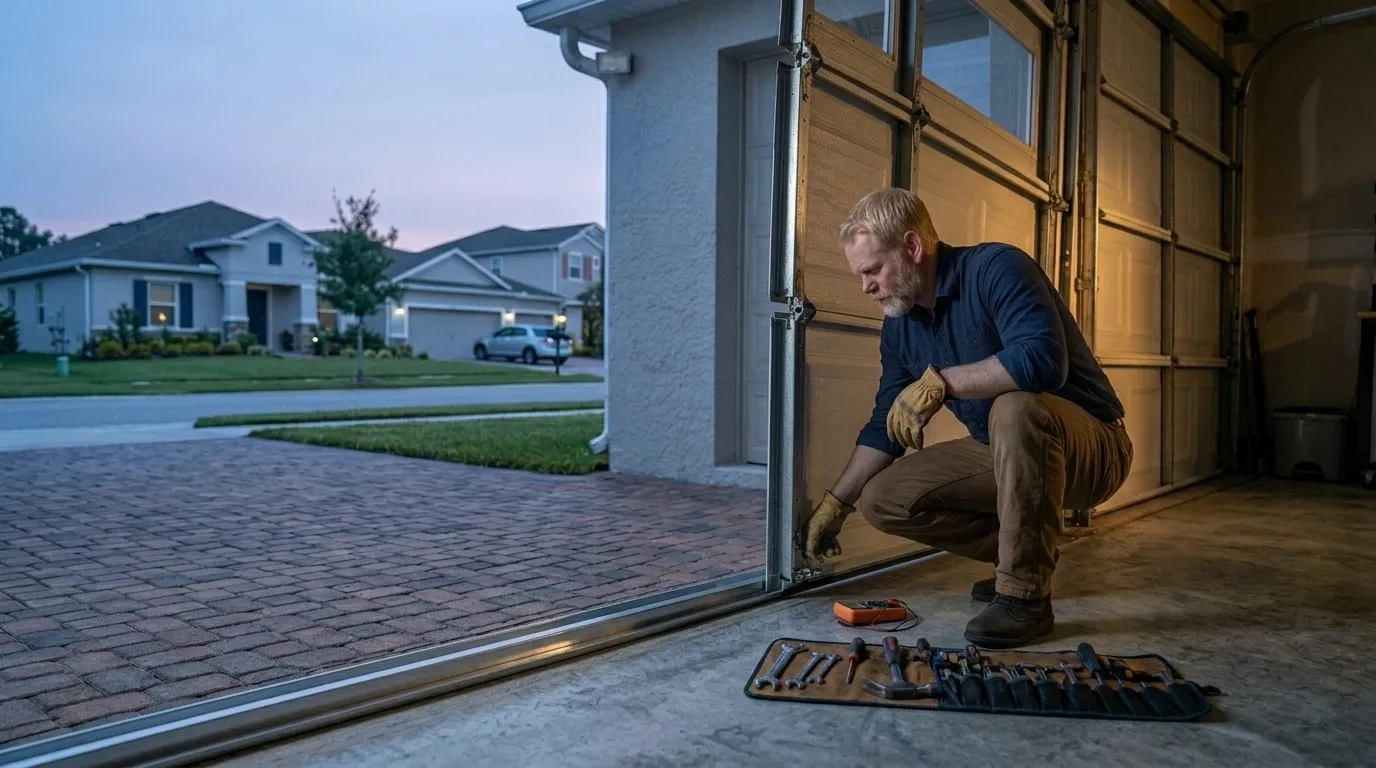
Granville South's houses mostly went up in the 1970s, same build wave as most of the wider Newark service area. Doors from that era were single-layer steel, no foam core, built to profiles that a lot of manufacturers don't stock anymore. That's the number that drives the estimate here, not a flat rate: what a matching panel costs depends on whether we can still get your exact groove pattern and color, or whether we have to order a full section, or in some cases replace the whole door because the panel line was discontinued years back. We don't have a set price to quote you here - it depends on what's actually on your garage - but the first thing we check on-site is whether your panel style is still in production before we talk numbers. Homes in this neighborhood tend to have carried higher household income than the wider Newark area, and we've found some owners here prefer paying for a color and grain match over a mismatched patch, even when a cheaper stock panel would technically fix the dent. That's a call you get to make once you know both prices.
Can You Do This Yourself
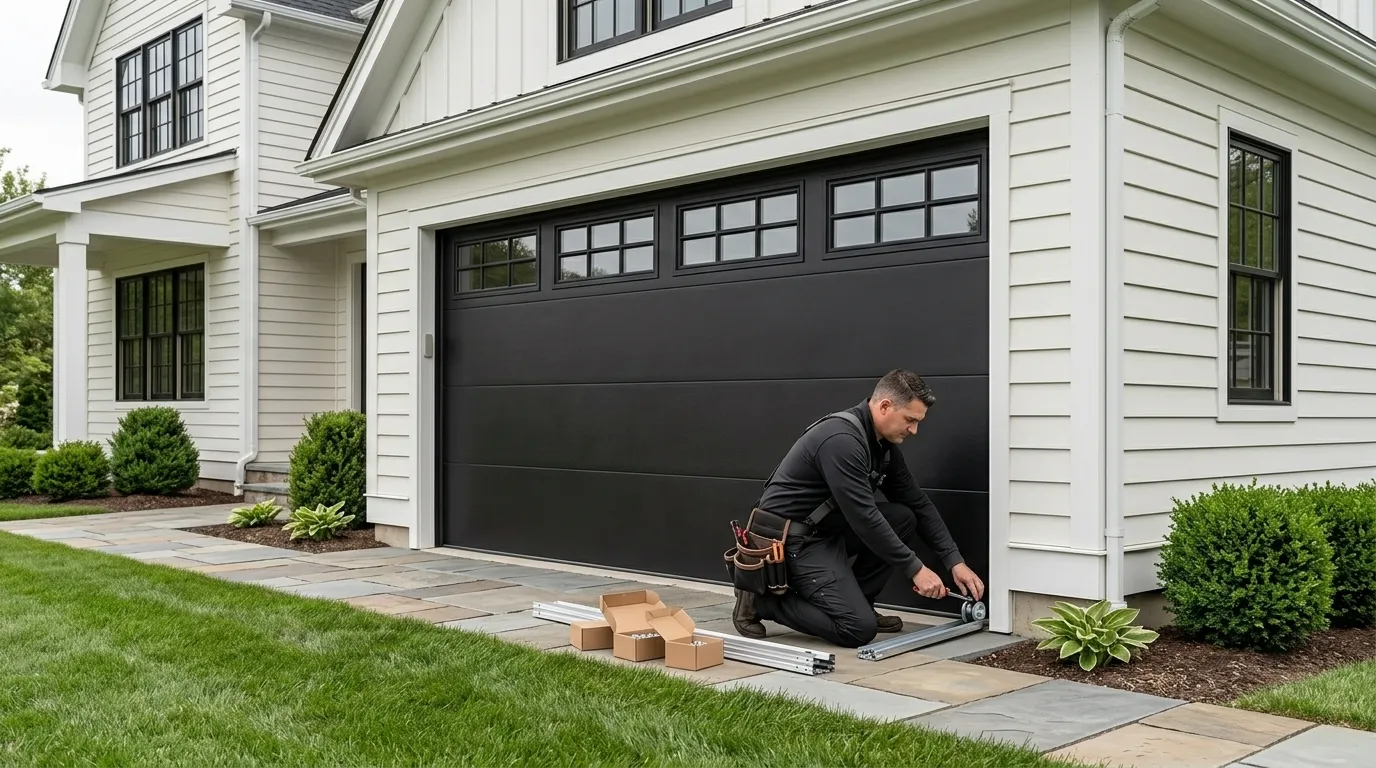
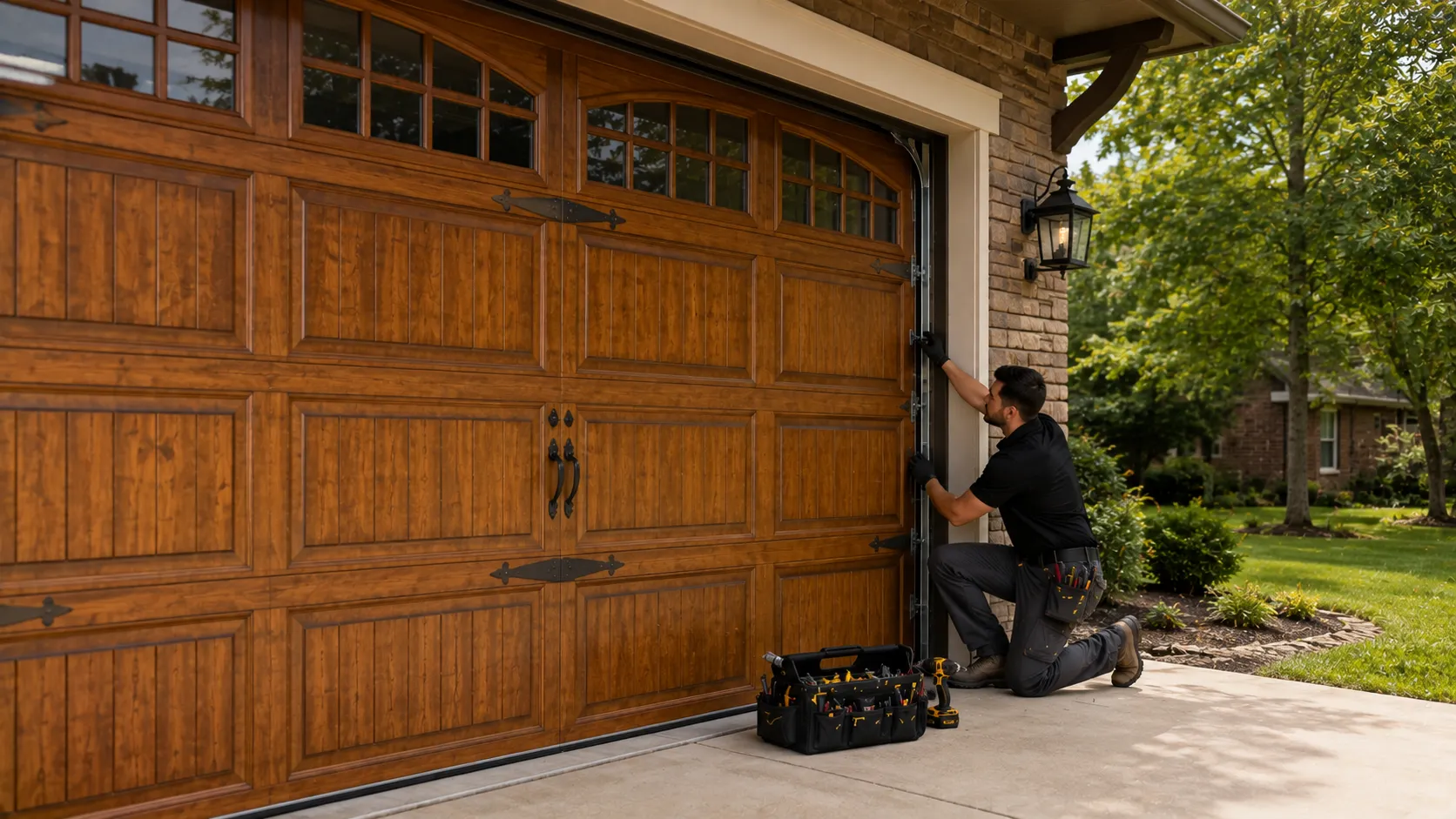
If the dent is cosmetic and the panel doesn't affect the track or hinge alignment, a determined homeowner can pop a section and bolt in a replacement - assuming you can find the right one. The catch for a 1976-era door is sourcing: home improvement stores stock current-year panel widths and hole patterns, not what shipped on a garage built when this stretch of the county was still filling in with new subdivisions. You may spend more time hunting a match than doing the swap. We won't talk you out of trying on a single non-structural panel. Where we'd stop you: if the damaged panel is one of the bottom two sections carrying the spring and cable load, or if the door is out of square after the hit, that's not a bolt-in job - the door can come off the track while you're working on it. That's the one limitation we're upfront about: we don't sell single replacement panels over the counter for people to install themselves, because on an older door the fastener pattern is rarely a clean match and a bad reinstall strains the opener.
What Can Go Wrong
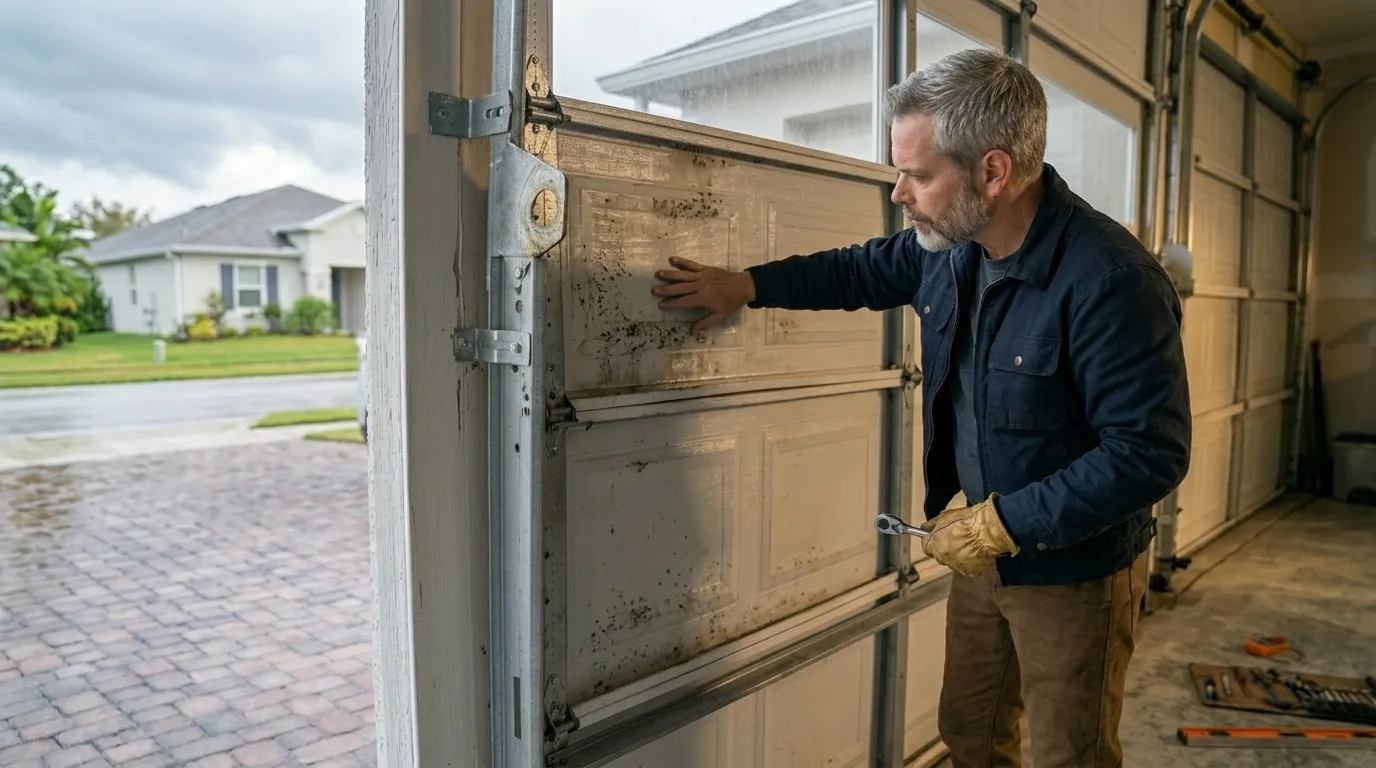
A dented panel isn't just cosmetic once it's been sitting for a while. On these older doors, the panel sections carry part of the door's rigidity - there's no foam core bonding it to a second skin like a newer insulated door has - so a bad dent can throw the whole door out of flat. That changes how it rides in the track, which puts uneven load on the rollers and, on a double door, on the center stile. Ignore it long enough and you're not replacing one panel, you're replacing the hardware that panel was straining. The other failure we see: a homeowner orders a panel online without matching the exact groove count and end-stile mounting, gets it delivered, and it doesn't fit the track width on the older frame. That's wasted money and another week's wait for the right one.
How Long You Are Without the Door
We can't give you a same-day promise on this one, and we won't pretend otherwise. A single non-structural panel that's still in production can sometimes be swapped in one visit once we've confirmed the match. A discontinued 1970s profile is a different timeline - we have to source a compatible section or, if nothing matches close enough, price out replacing the full door instead. Either way, the door stays operational in the meantime unless the damage is structural; we can usually secure it so you're not left with an open garage while parts come in. Coming from Newark, about 6 miles out, we schedule the on-site look first, then give you a real parts timeline instead of a guess - there's no way to know if your panel's obsolete until someone's standing in front of it.