What You Pay
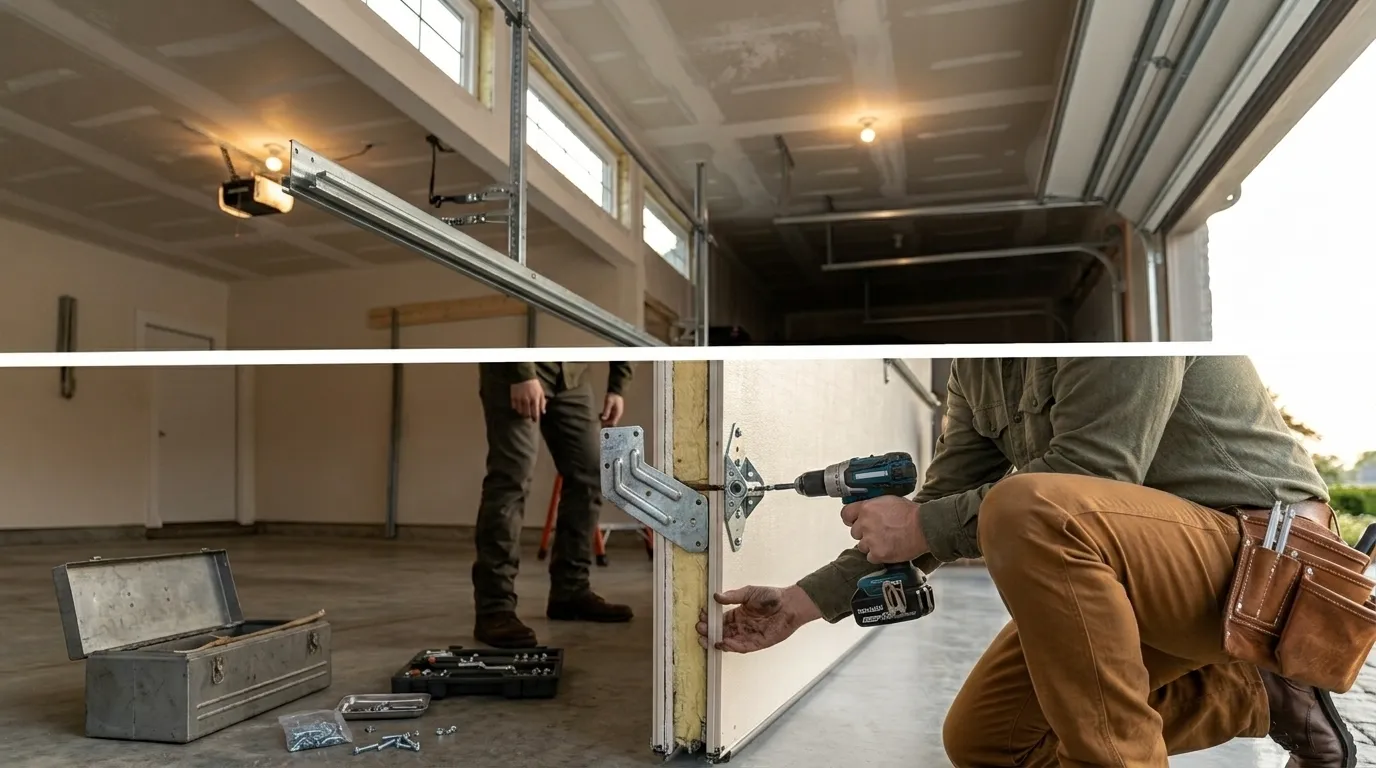
We don't have a fixed price sheet to hand you here, and we're not going to make one up. What we can tell you is what shapes the number when we do quote a job in Granville South: the door and hardware era, not the address. Homes in this pocket of the service area cluster around 1976 construction, same as the wider Newark territory, so most jobs are working with torsion or extension spring setups and openers that have already been swapped once or twice by a previous owner. A job on original 1976 hardware runs different parts than a job on a 2005-era door, and we won't know which one you've got until we're standing in front of it. Median household income out here runs well above the rest of our territory, and that shows up less in what we charge and more in what people ask for - full opener replacements over patch repairs, insulated panels over the bare steel option. We quote the door in front of us, not the zip code, and if a repair isn't worth doing against a full replacement, we'll say so before you spend money on the smaller fix.
Can You Do This Yourself
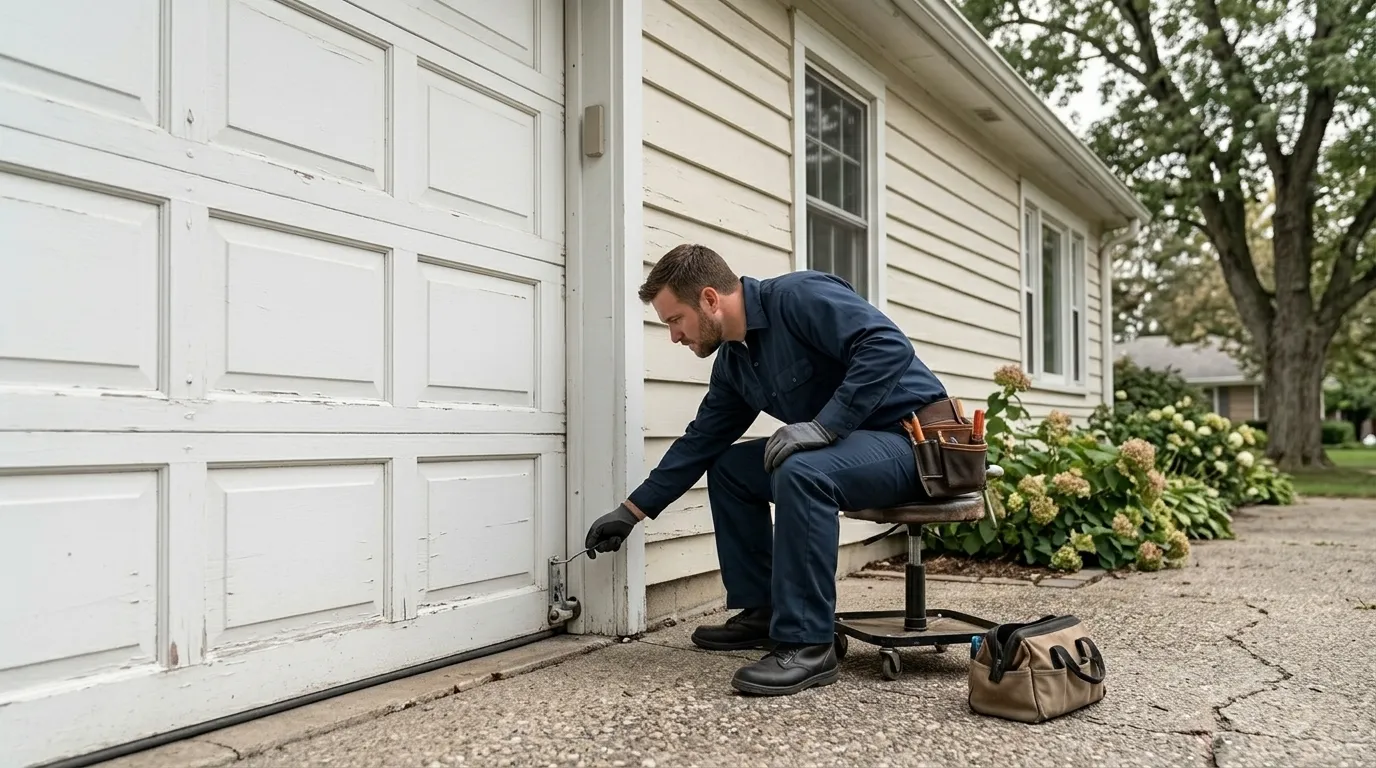
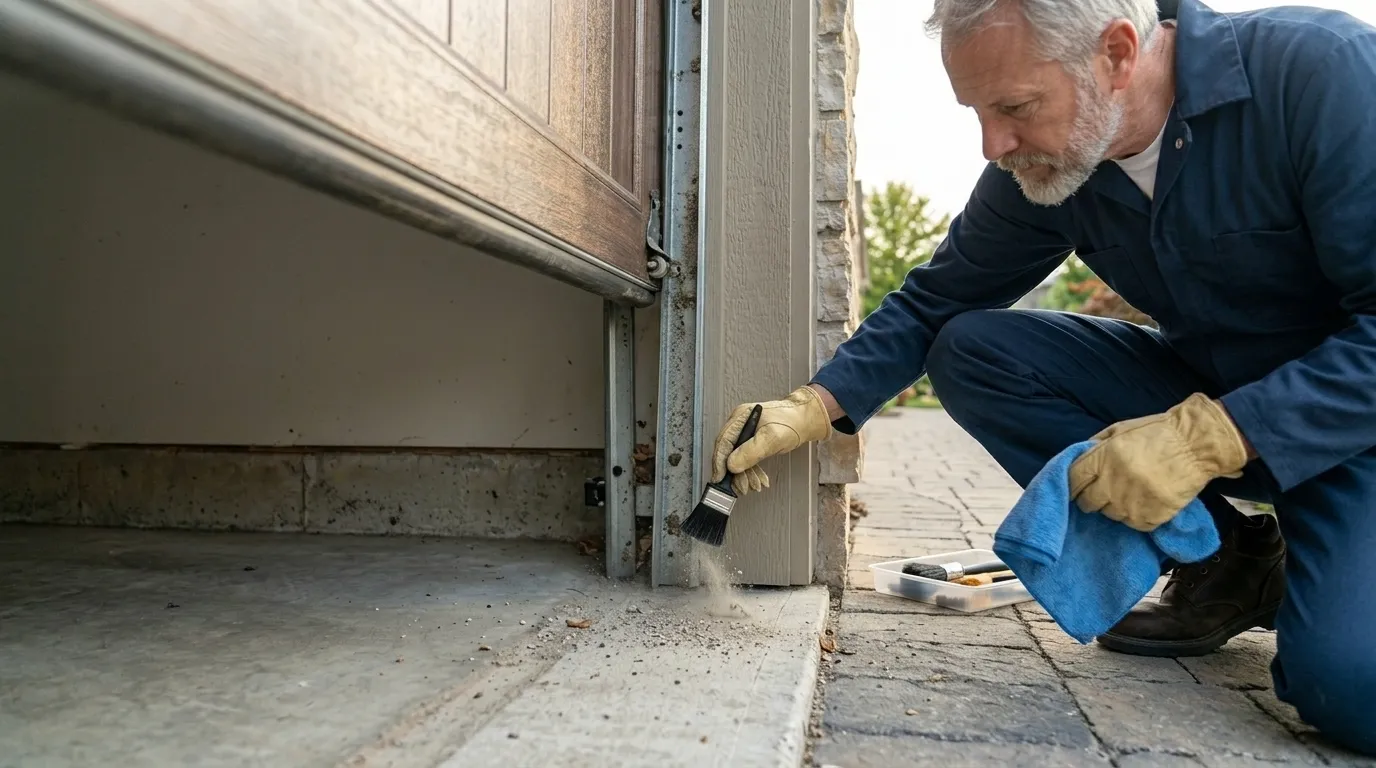
Some of it, yes. Lubricating rollers and hinges, tightening loose bolts on the track brackets, testing the auto-reverse safety feature - none of that needs a truck. What doesn't belong in a DIY afternoon is anything touching the torsion spring. A door built in the 1976 range likely has its original spring sizing on record nowhere, which means guessing the wind count on a replacement is a real way to get hurt, not a minor risk. Cable work is the same story - under load, a cable is not a weekend project. If your opener is original to a mid-1970s install, the logic board and safety sensors are almost certainly not, which tells you the door has already had at least one non-factory repair somewhere in its life. That's useful to know before you start pulling panels apart looking for the fault yourself.
What Can Go Wrong
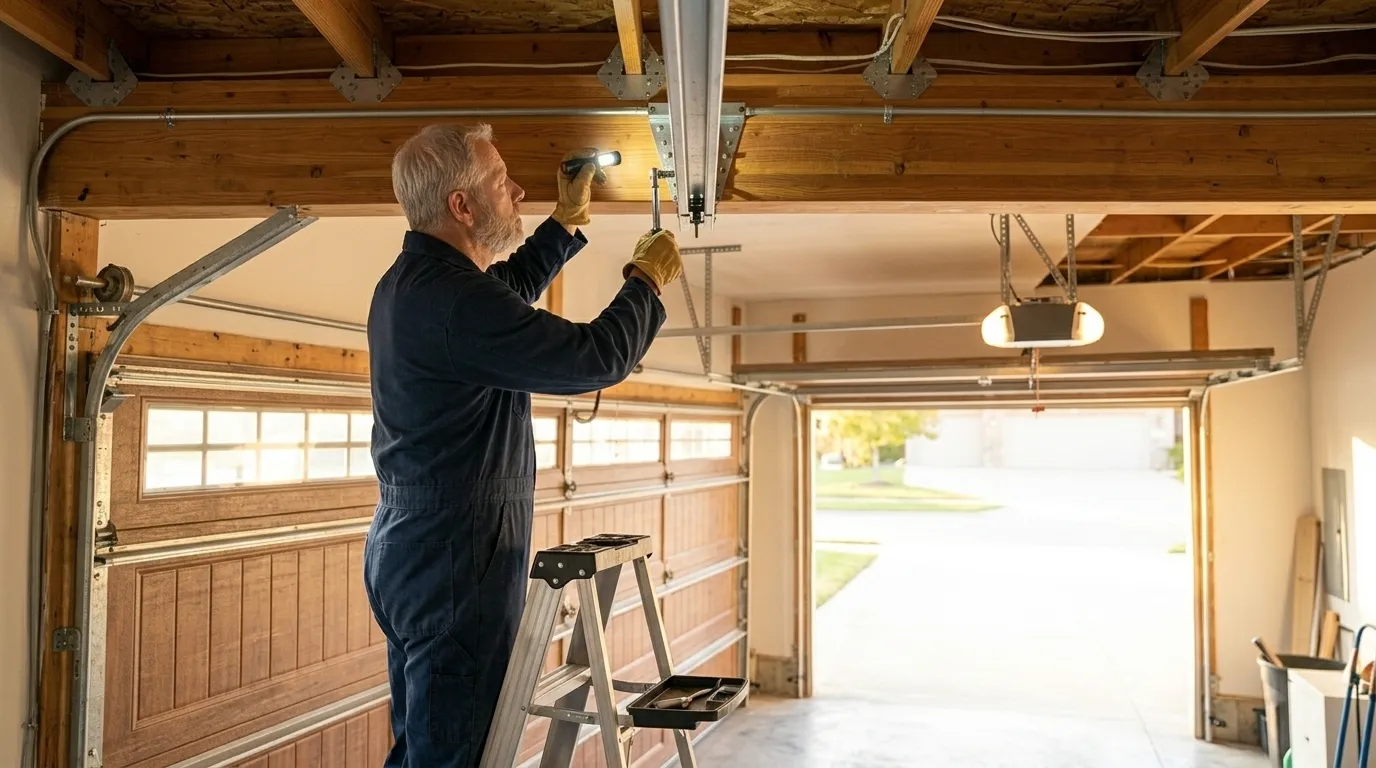
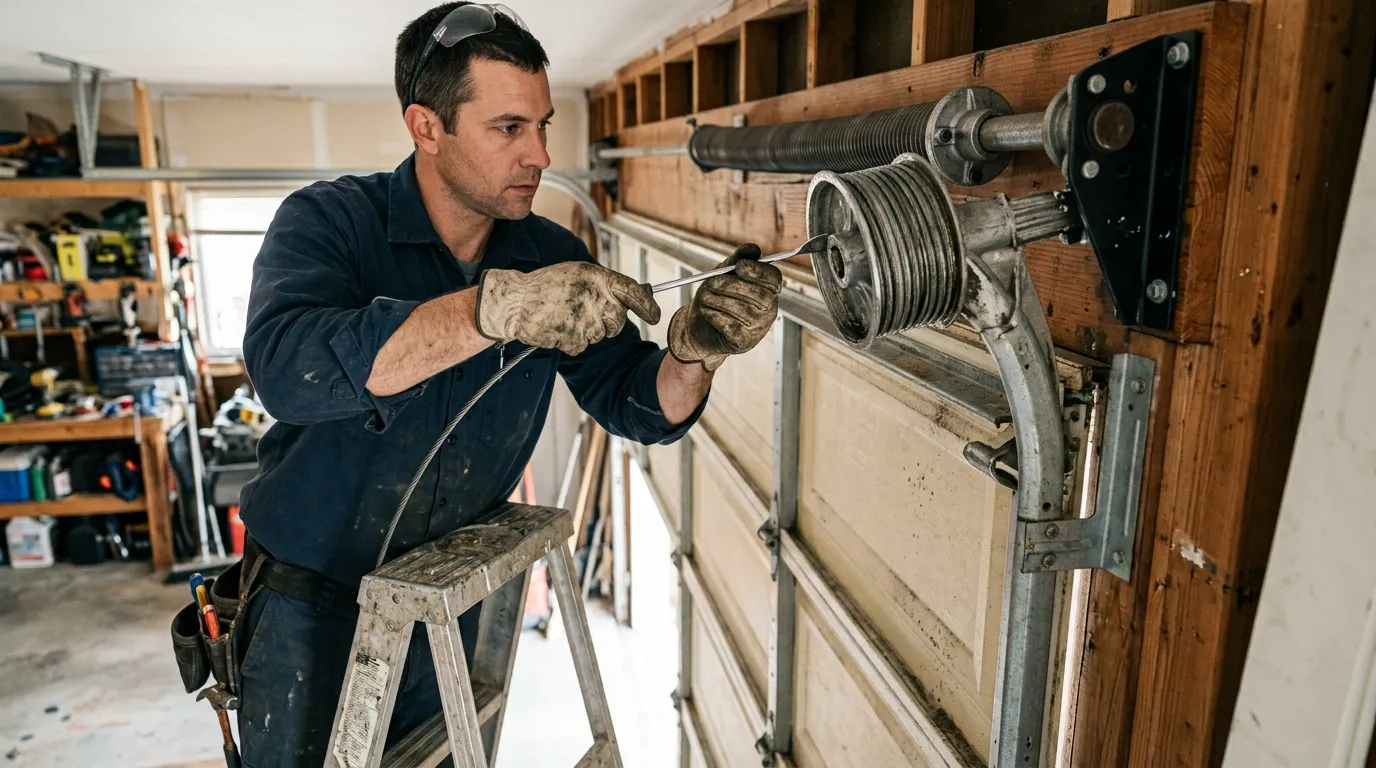
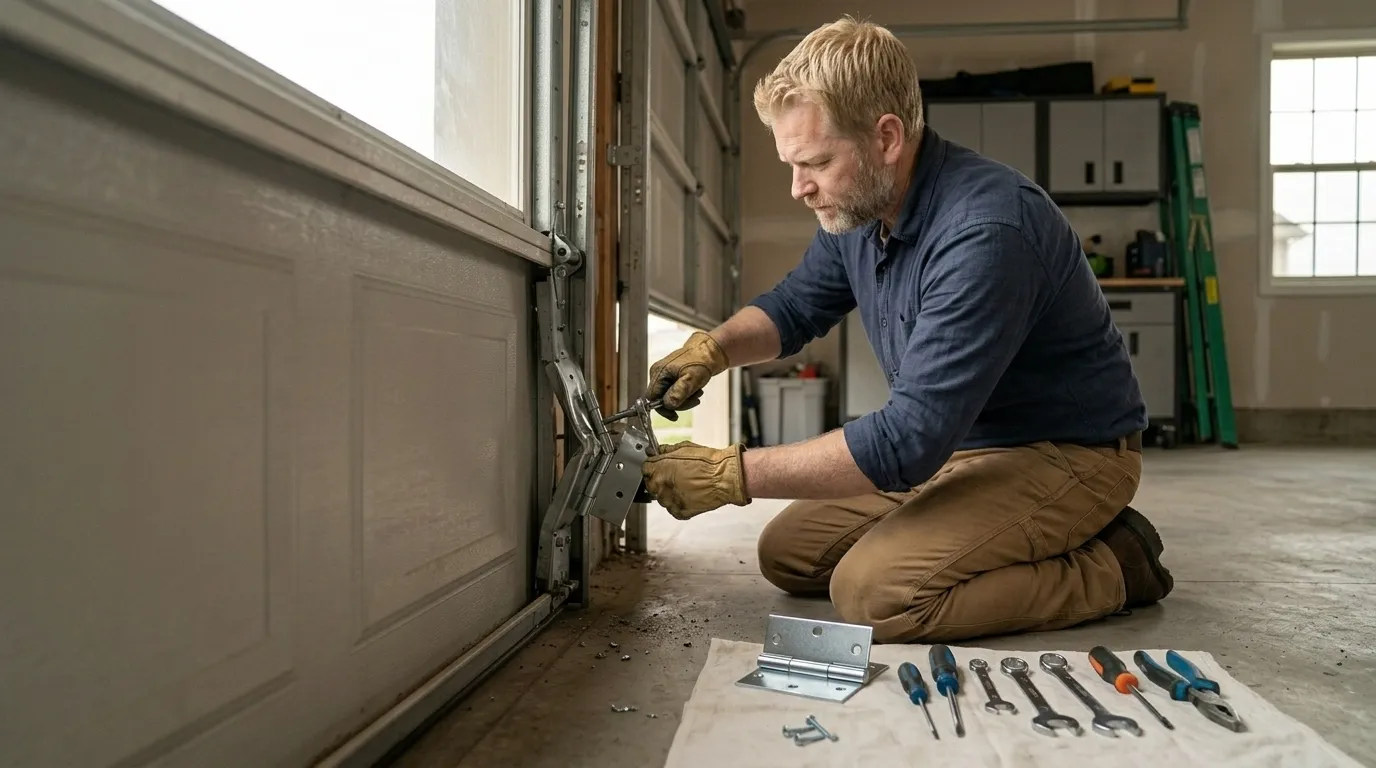
On a door from this era, the two most common failures are a snapped torsion spring and a stripped or worn drive gear inside an opener that's been replaced once already but not upgraded to match the door's actual weight. A cable that's frayed at the drum is the third, usually found only after it lets go. None of these are dramatic until the moment they are - a spring under tension failing is loud and can put a garage door down hard and fast, which is why we don't recommend homeowners force a stuck door open manually to see what's wrong. We also see rollers seized from age rather than from any single incident, which just shows up as grinding and a slow door long before it fails outright. If you're hearing a new noise on a door you know is original to the house, that's worth a call before it's an emergency call.
How Long You Are Without the Door
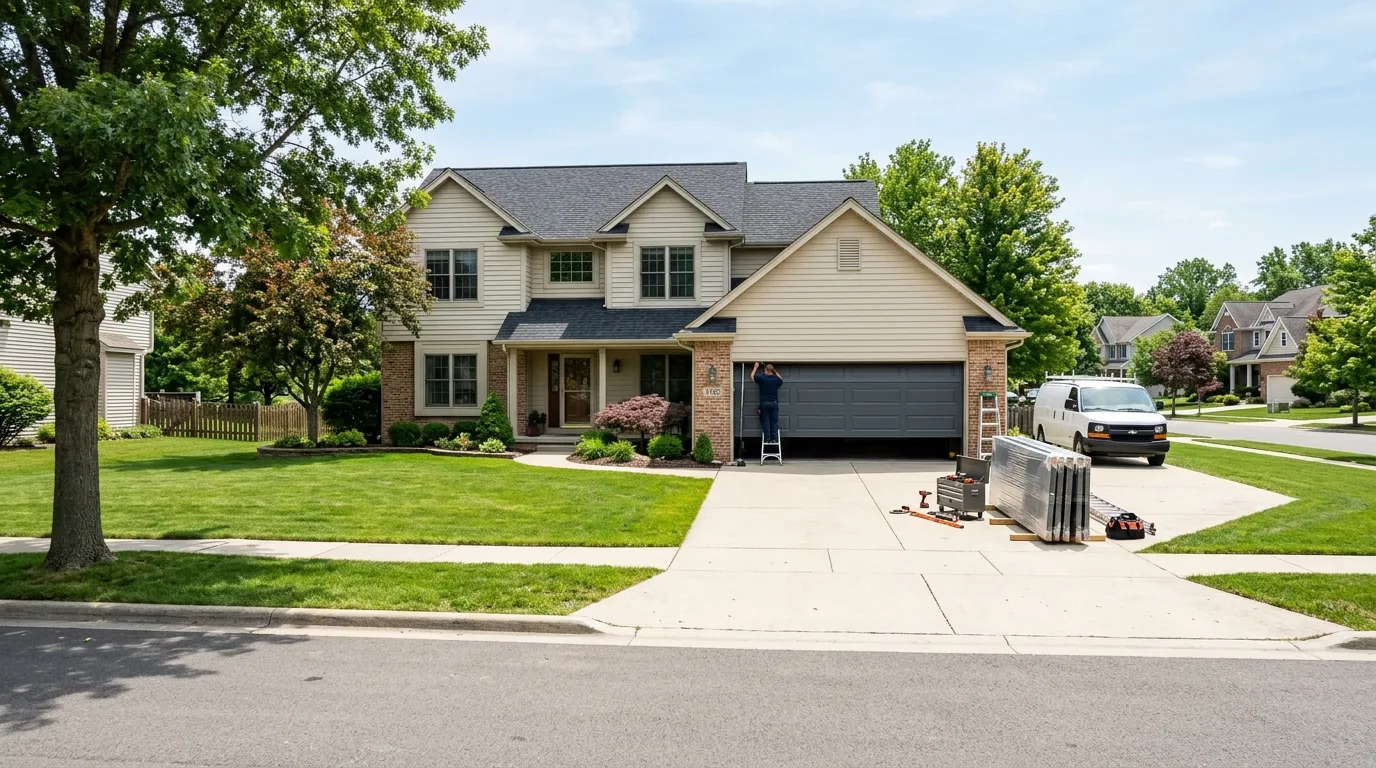
Granville South sits about six miles from our Newark base, which is a short enough run that it doesn't change scheduling much on its own - it's closer than several other towns we cover. What it does mean is honesty about sequencing: we're driving from Newark for every call here, we don't have a branch or a standing truck in Granville South, so if you're mid-emergency at the same time as three other calls in the territory, the six miles isn't what determines when we get there - the queue is. Parts availability matters more for how long the door itself stays down. A common torsion spring or roller, we typically carry stock for. A less common opener part for an older 1976-era install sometimes has to be ordered, and that's the honest limitation: we'd rather tell you a part is a few days out than promise same-day and miss it.