Can You Do This Yourself
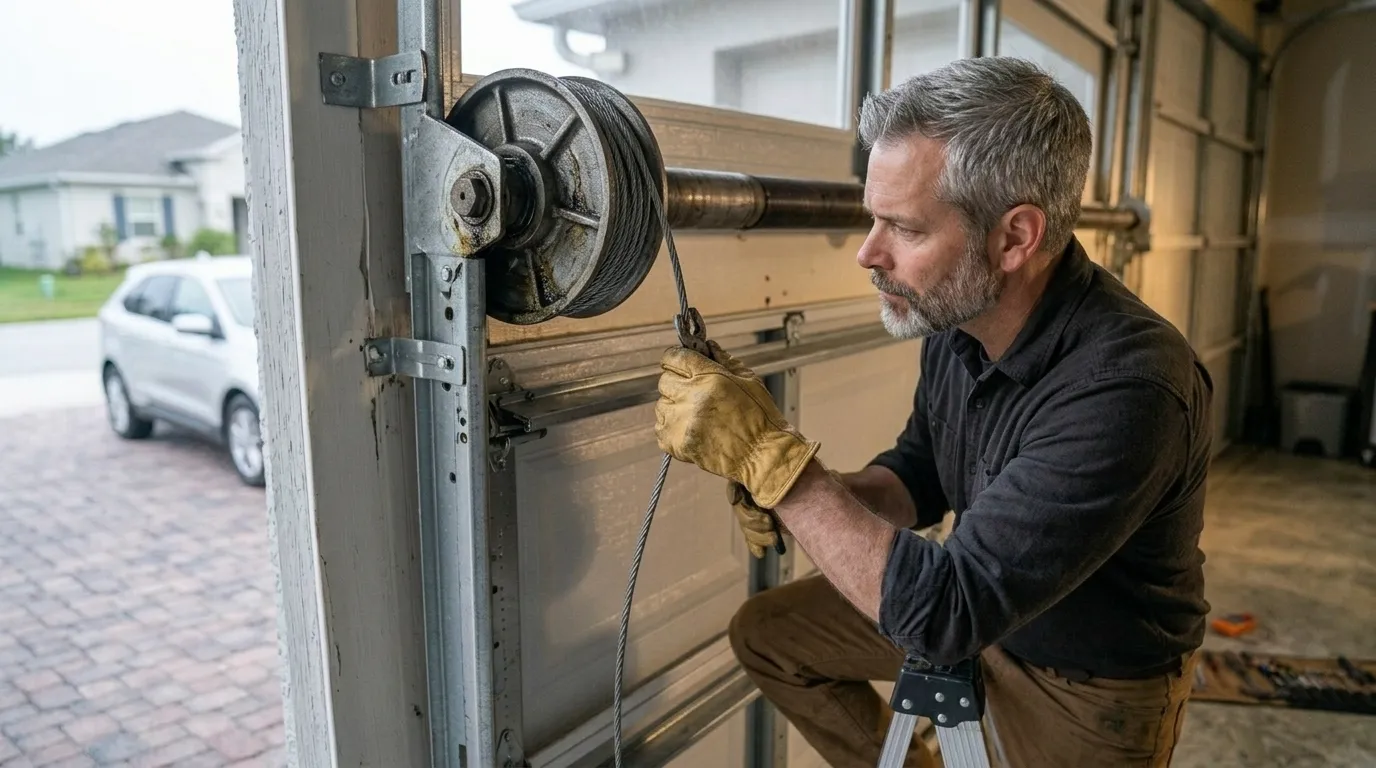
A torsion spring holds a door's full weight on a bar over your head, wound tight enough to snap a wrist bone if it lets go while you're working on it. That's true everywhere, but it matters more in a town like Johnstown, where a lot of the housing stock is younger - built around 1992 on average - and still has its original factory spring. That spring has never been touched. Nobody in the house has ever had to guess at the wind count or the wire gauge, because it's never failed before now.
If you've got two torsion springs on a double door and one just went, the other is close behind it - they wear on the same clock. Swapping one and leaving the other is a decision, not a shortcut, and it should be one you make on purpose, not by accident because you didn't know.
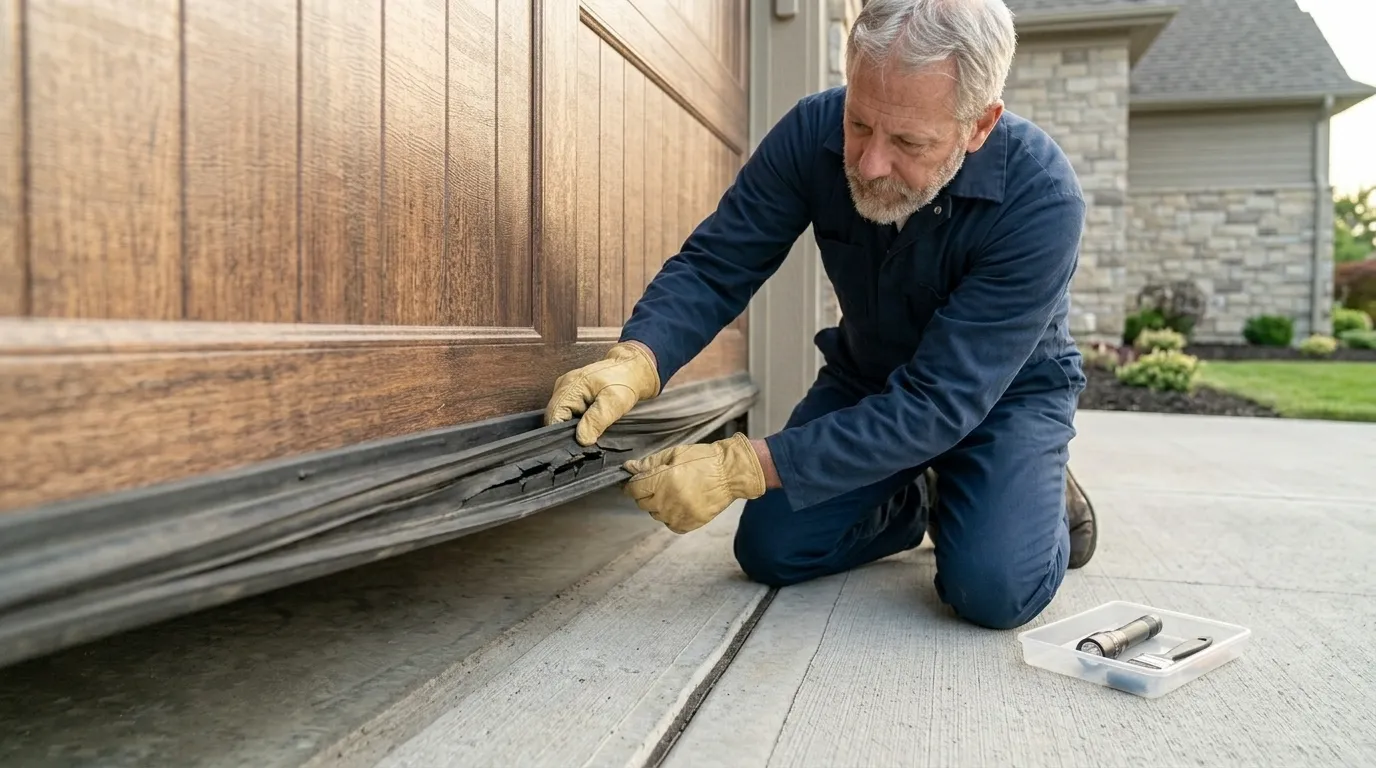
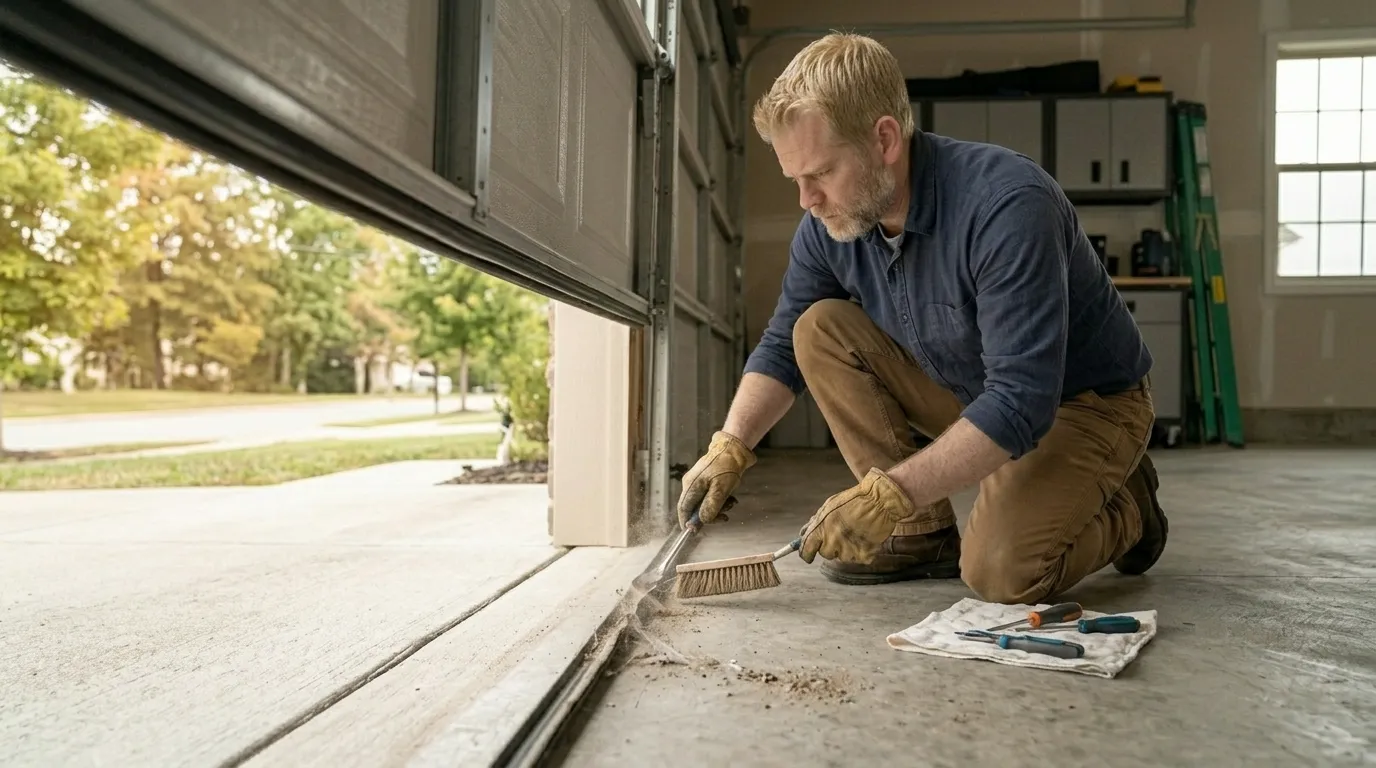
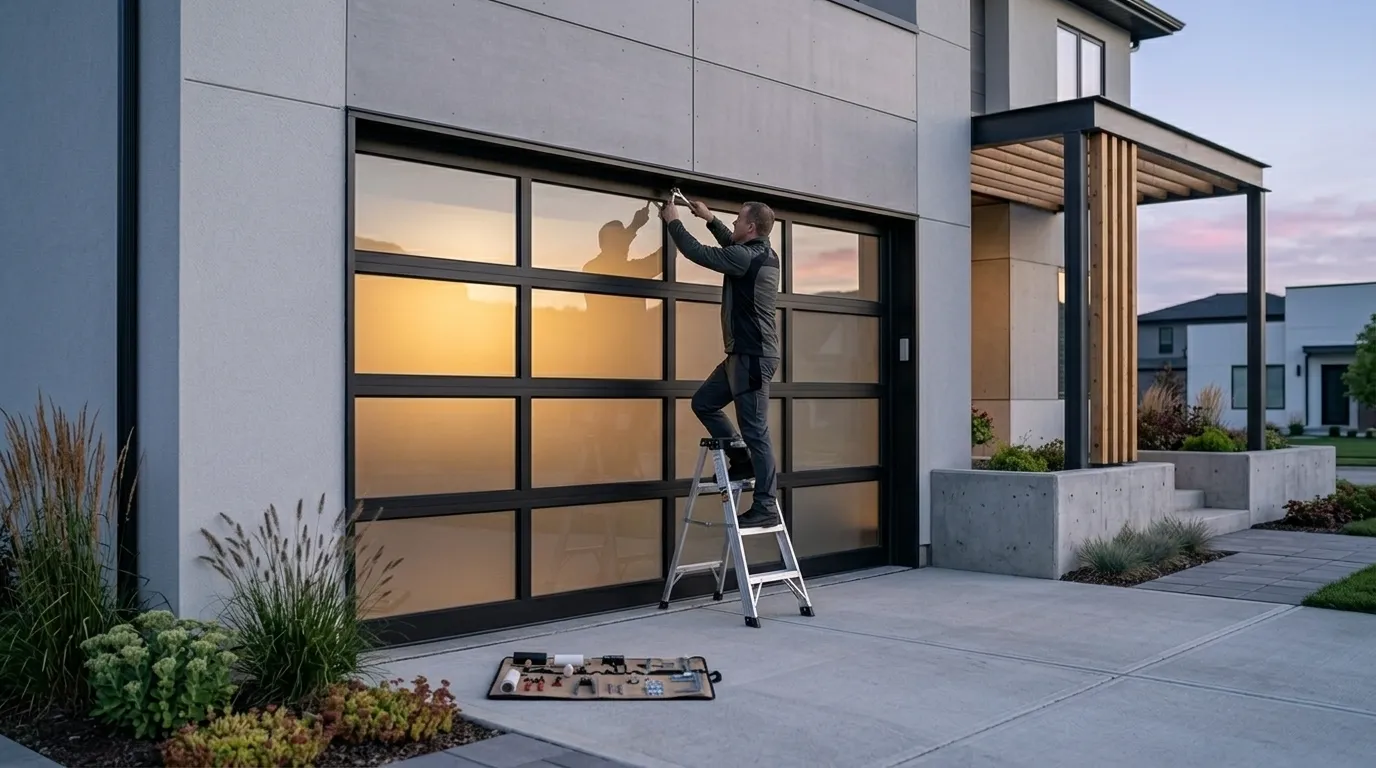
We'll say plainly what we tell people on the phone: if you don't already own a winding bar sized to your spring and you've never wound one down under tension, this is not the repair to learn on. Cable work, spring work, and anything on the torsion tube is where most garage DIY injuries happen. Everything else on a door - sensors, weatherstrip, a slipped remote code - is fair game to try yourself.
What Can Go Wrong
With roughly 1,913 households in Johnstown, spread out rather than packed into dense blocks, most of the springs on this side of the county are still in their first or second decade of use, since the neighborhood itself is younger than the 1976 median for the wider service area. That's a different failure pattern than we see on older streets: fewer surprise finds under a rotted panel, but more first-time snaps on springs that were never inspected because nothing gave anyone a reason to look.
A spring that lets go usually takes something with it. The cable can jump the drum, the door can drop crooked and jam a track, or the opener - trying to lift a dead weight it was never built to move alone - can strip a gear or burn out a motor. None of that is covered by a spring repair, and we're not going to pretend it is. If the drop bent a track or cracked a panel, that's a separate job, and we'll tell you straight when it's cheaper to replace the section than force it back into square.
What Causes It Around Here
Springs fail on a cycle count, not a calendar, but the two track together closely enough. With a median build year around 1992 for Johnstown, a lot of these original springs are now thirty-plus years old - well past the point where metal fatigue from repeated winding and unwinding starts to matter, especially through winters in a climate the federal data classifies as severe cold.
The area's median household income runs a bit above the wider Newark service territory's $91,819, and that shows up less in why springs fail and more in what people do about it: fewer patched-together fixes, more people replacing both springs on a double door at once instead of waiting for the second one to go too. We're not local to Johnstown - we run out of Newark, about 15 miles off - so there's no same-day drop-in the way there might be for a call closer to the shop, but the run itself doesn't change how the repair gets done once we're there.