
Parts We Carry
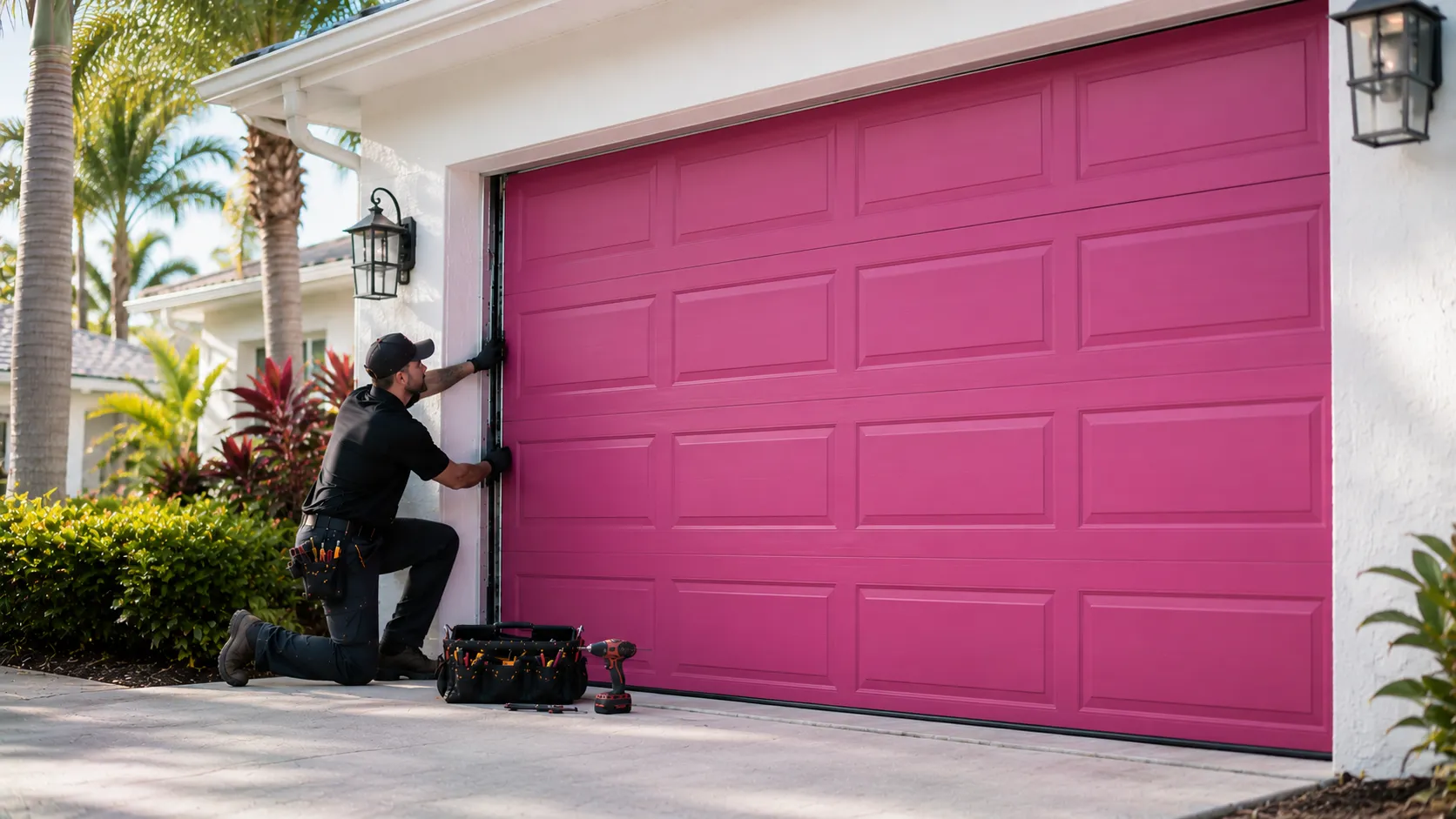
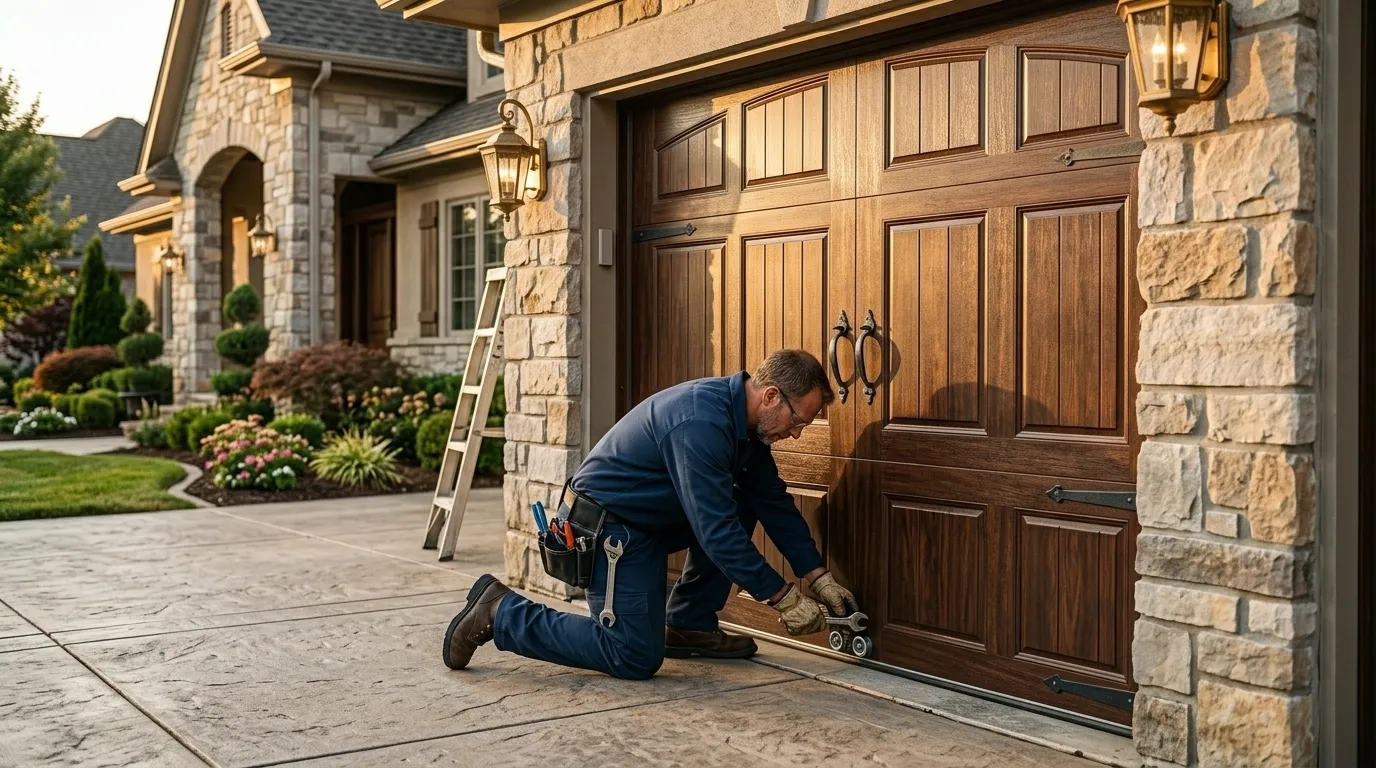
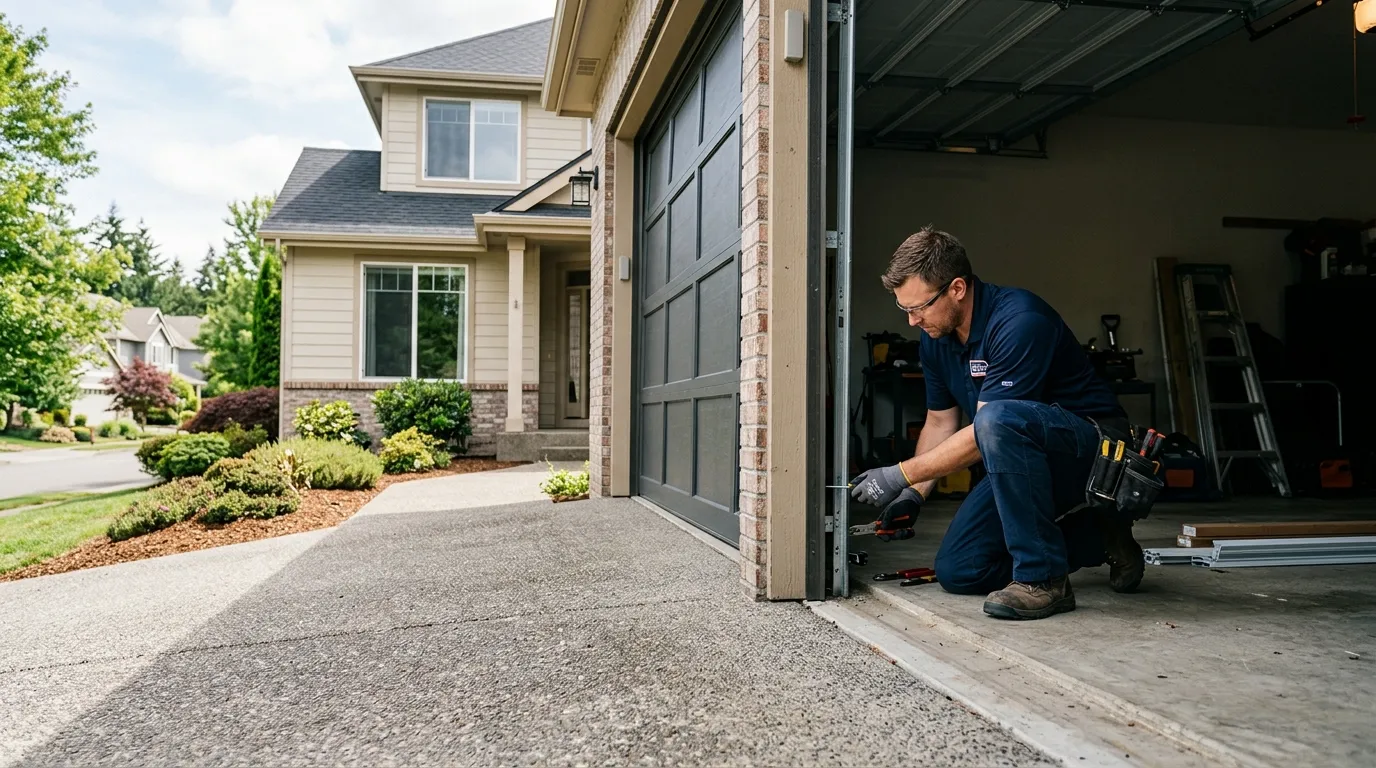
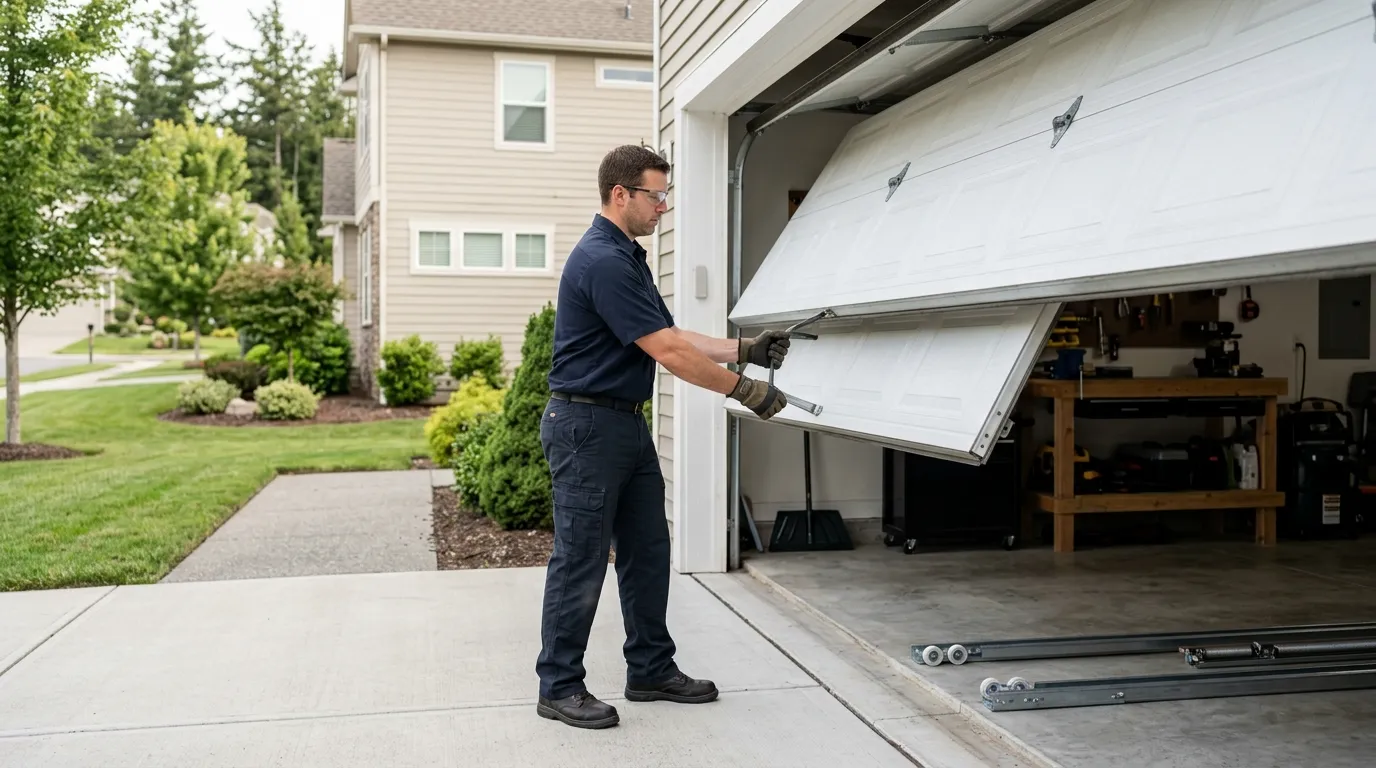
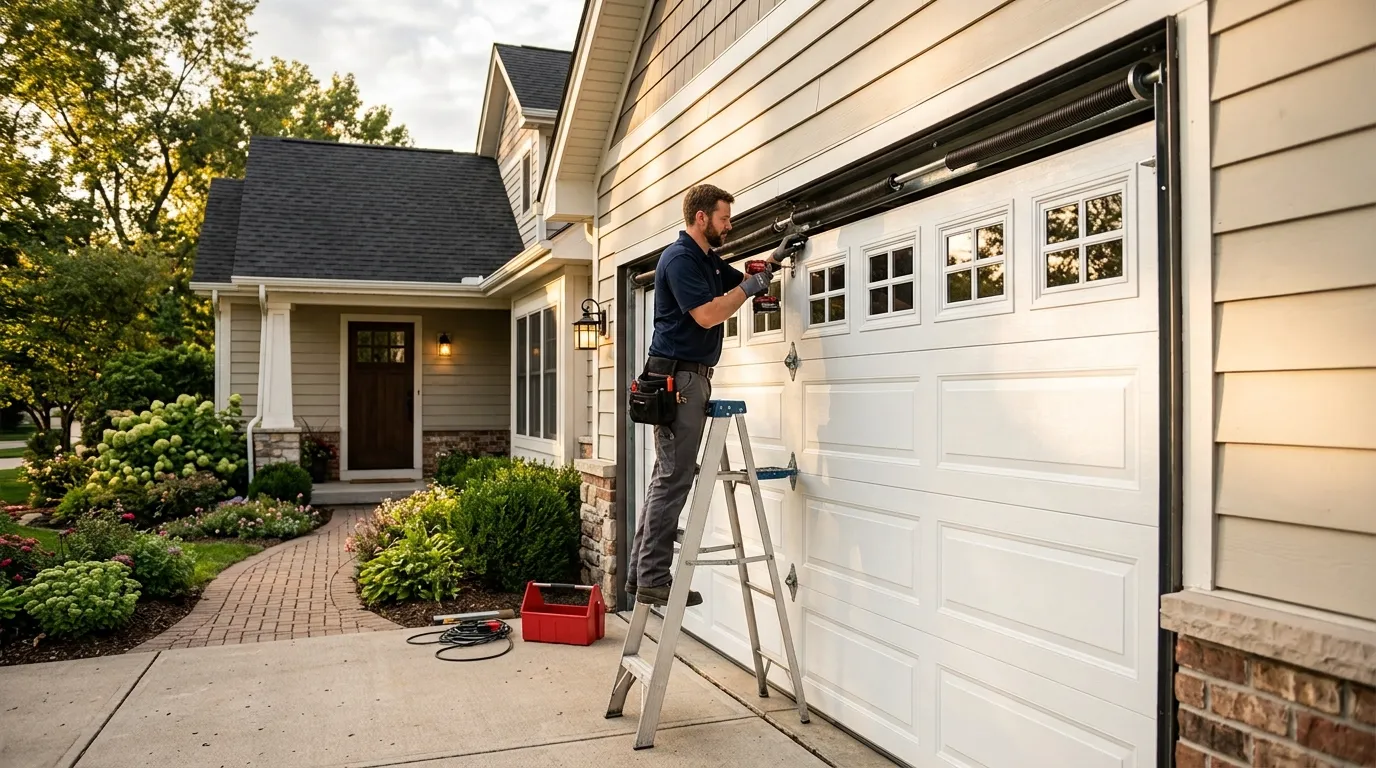
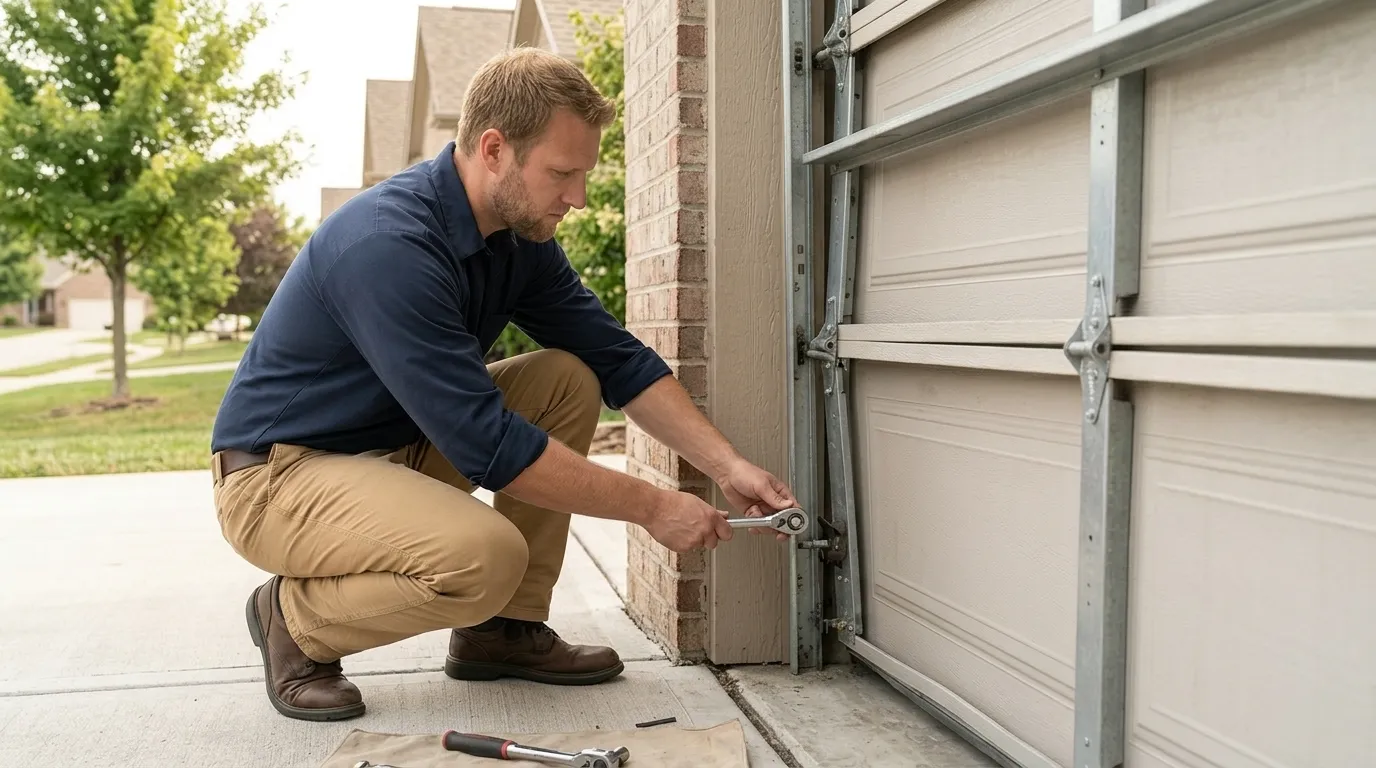
New Albany's housing stock is young for this area - median build year 2005, decades newer than most of what we service closer to Newark. That matters for what breaks and what we bring on the truck. Homes from this era almost always shipped with factory torsion springs sized to standard steel sectional doors, not the older extension-spring setups still common in older neighborhoods nearby. We carry torsion springs in the common cycle-rated sizes, drums, cables, and rollers that fit this generation of door. We also carry logic boards and receivers for the circuit-based openers that became standard around this build era, since a lot of what fails on a 2005-and-newer door is electronic, not mechanical. One honest limit: if a home has a specialty door - oversized, custom wood-look steel, or an odd track configuration - we may not have that panel or exact-match hardware on the truck, and the job becomes a return trip once the part's ordered.
Can You Do This Yourself
A torsion spring under full tension can put someone in the ER, and that risk doesn't change because the house is newer. If the door won't open and you can see a spring that's separated or coiled wrong above the header, stop - don't try to release it, wind it, or force the door up by hand. That's a call, not a DIY project, regardless of the door's age.
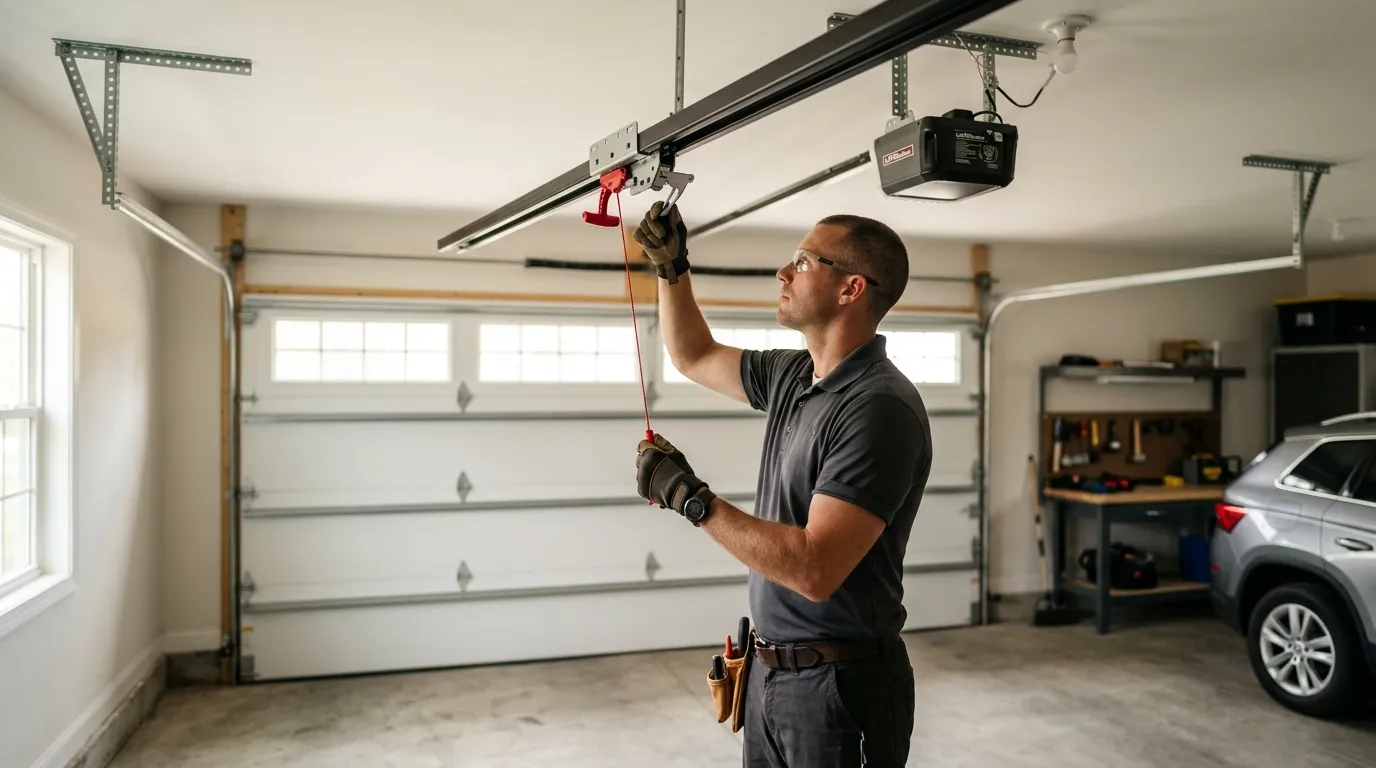
What you can safely check first: the wall switch and any wall-mounted sensor for a blinking light, the safety-eye sensors near the floor track for a stray box or misalignment, and whether the opener has power at all. Homes built around 2005 often have opener logic boards that fail quietly - no grinding, no snapped cable, just a door that won't respond. If flipping the breaker and re-syncing the remote doesn't fix it, that's a board or sensor issue, not something to keep testing blind.
How It Shows Up
In a neighborhood built mostly in the 2000s, the failure pattern skews electronic and cosmetic wear rather than the rotted panel or rusted-through track you'd find on a 1970s door. What we see most: a door that reverses immediately on close (misaligned or dirty safety sensor), an opener that runs but the door doesn't move (worn drive gear or a slipping belt/chain), or a torsion spring that's simply reached the end of its cycle life and snapped - audible, sudden, and the door won't budge either direction.
New Albany's median household income here, over $232,000, is well above the roughly $91,800 median across our broader service area - worth noting only because higher-end finish doors (insulated steel, custom panel inserts) sometimes use proprietary hardware. If that's the case with your door, tell us the make when you call so we bring the right part the first trip.
What Can Go Wrong
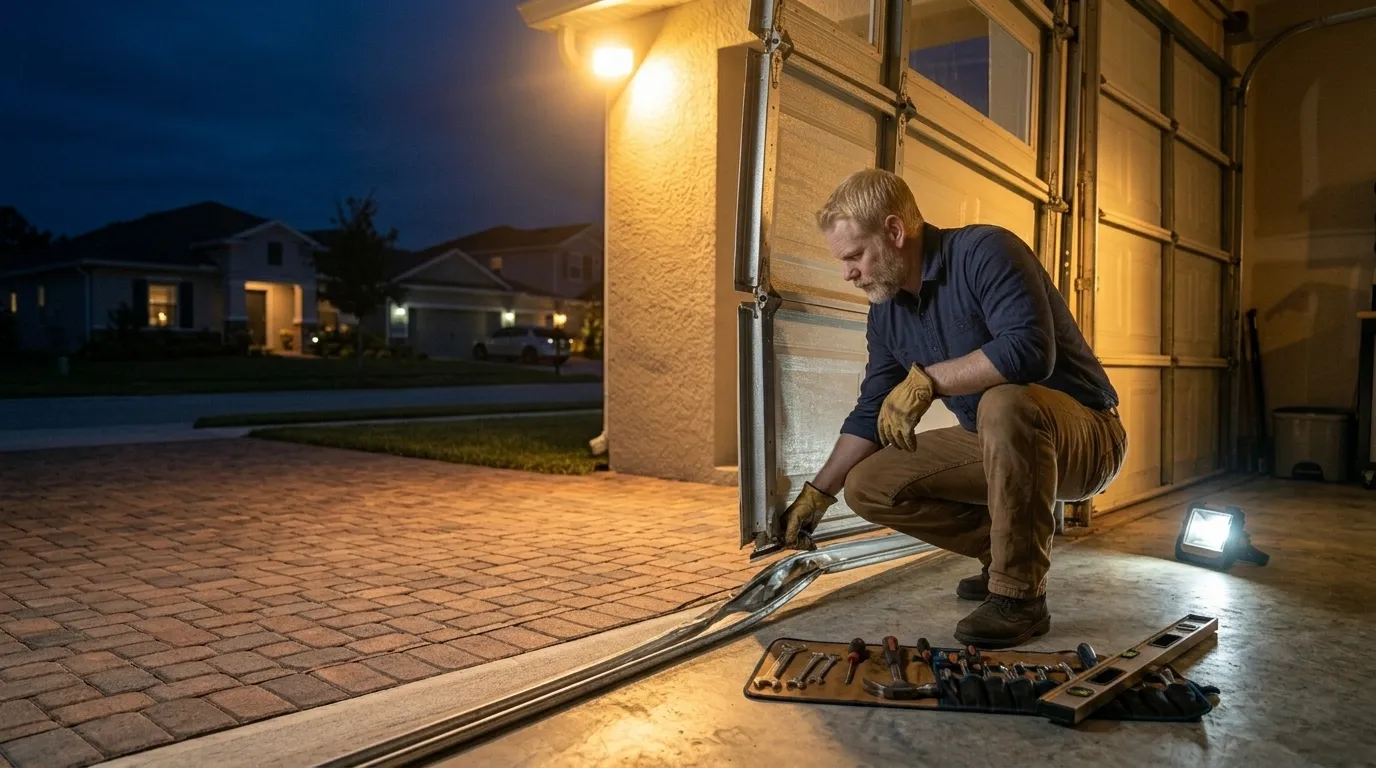
The two failures that actually strand a car in the garage are a broken torsion spring and a snapped cable - both sudden, both dangerous to touch, and both fixable in one visit if we're carrying the right size. Behind those, the more common New Albany call is an opener that's lost its mind electronically: a fried logic board after a power surge, a safety sensor knocked out of alignment by a stored bike or bin, or a remote that's stopped syncing.
What doesn't usually go wrong here: the wood rot, rusted track, and warped panel failures that show up on the older housing stock elsewhere in our service area. With a median build year of 2005, New Albany's doors are still within the working life of their original steel panels and tracks - the wear we see is in the moving parts and electronics, not the structure of the door itself.