Parts We Carry
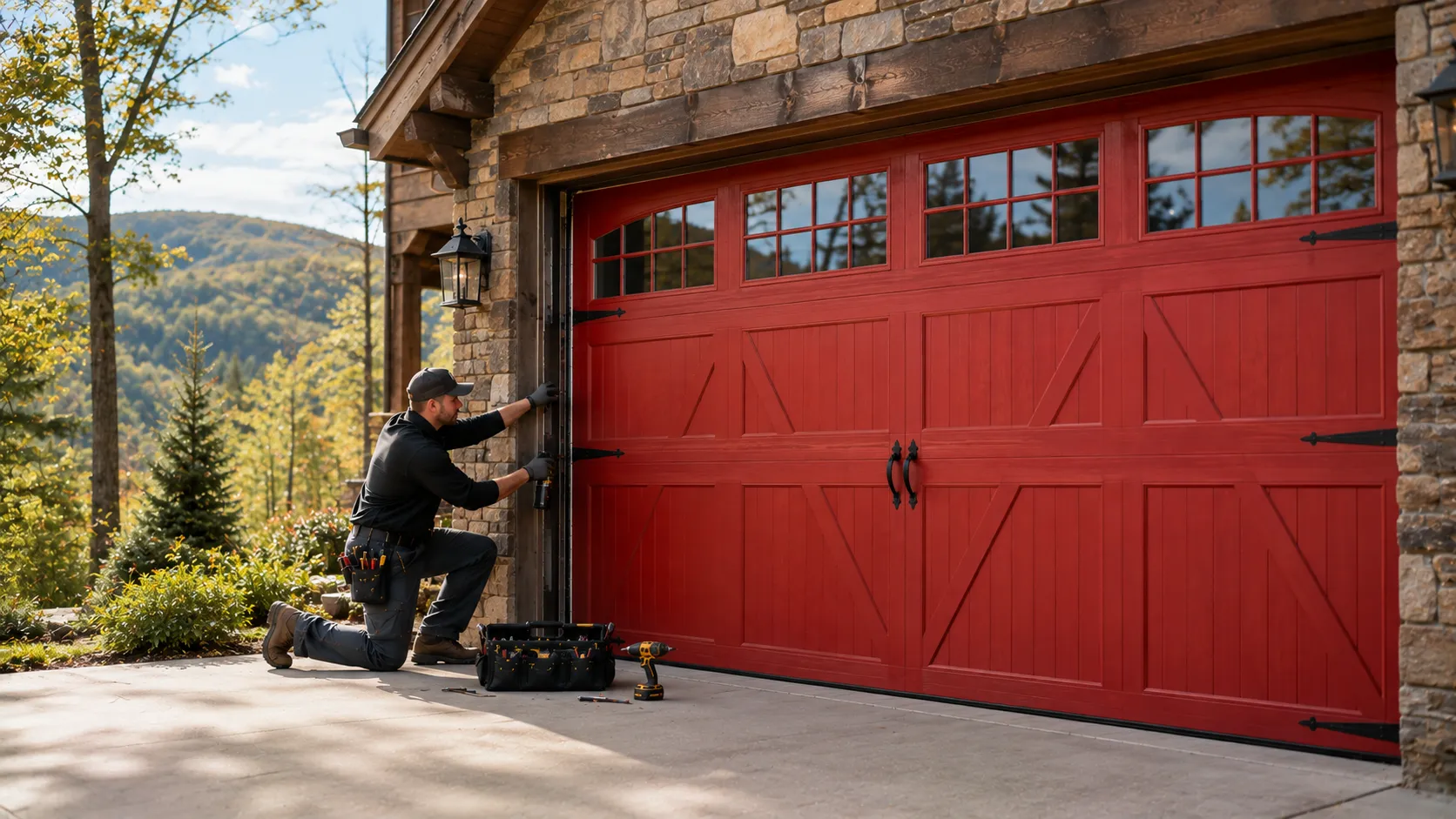
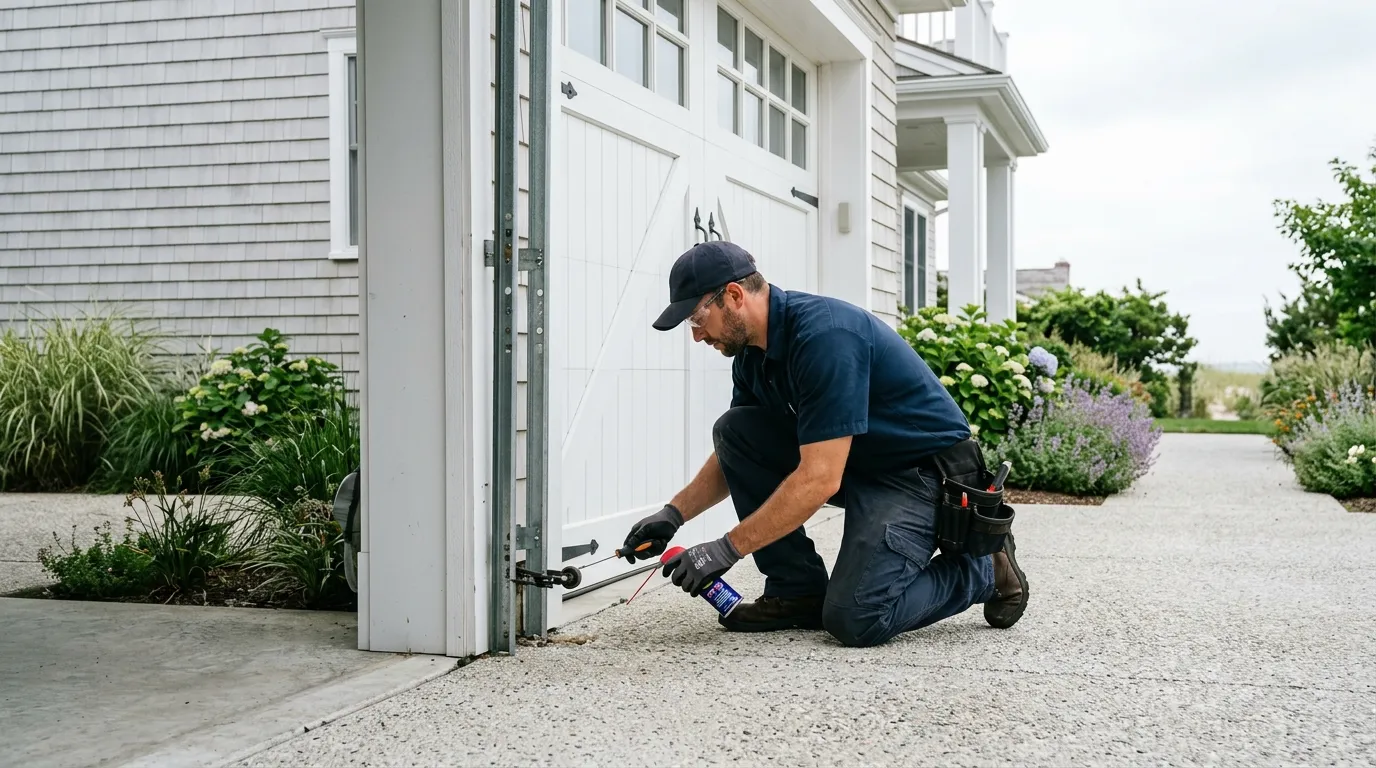
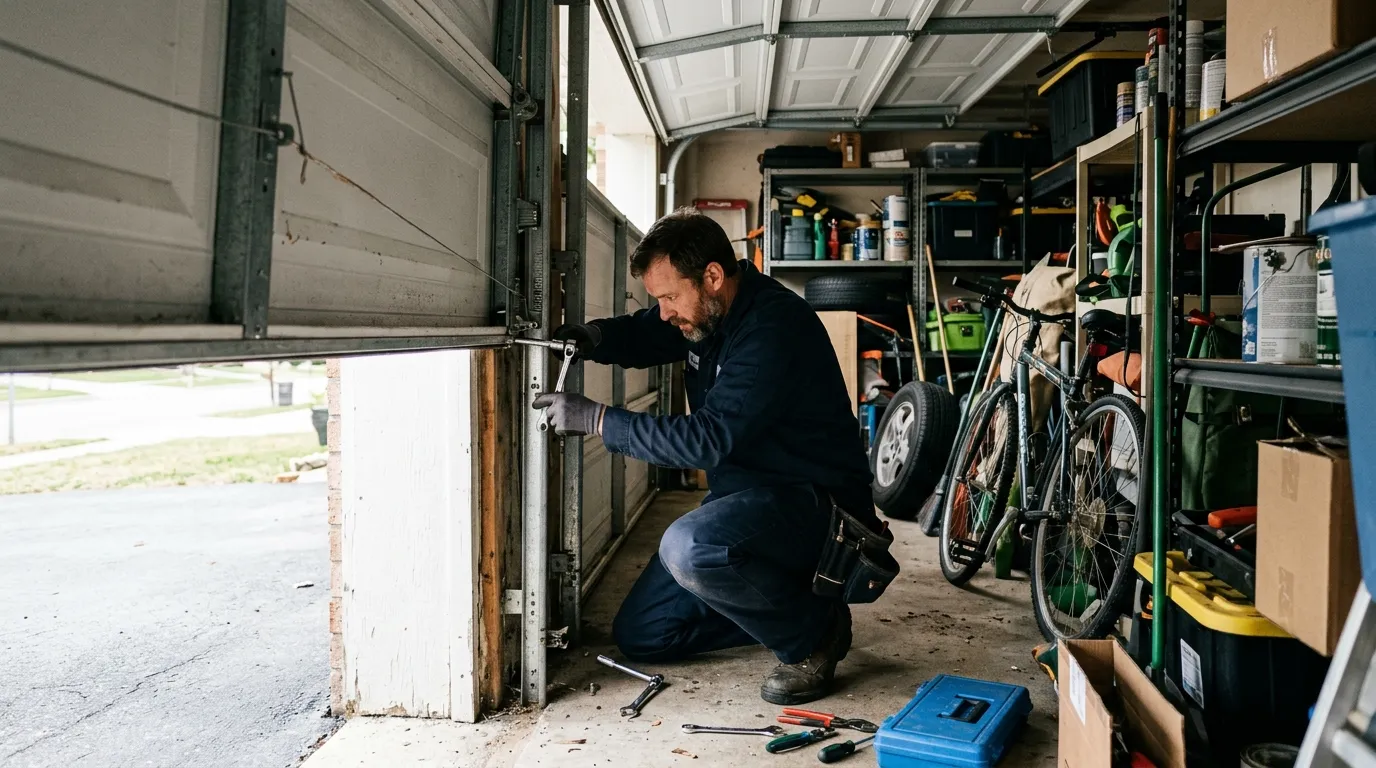
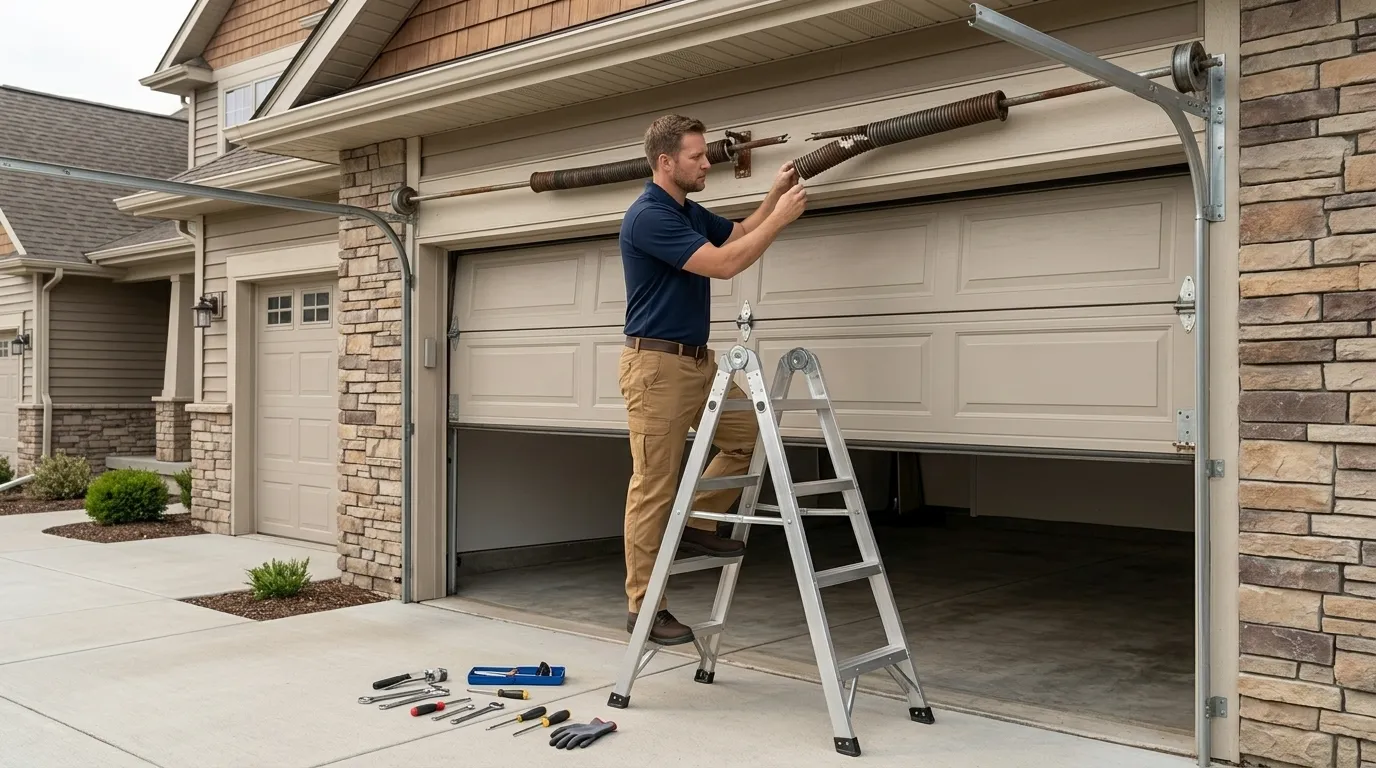
New Albany's median build year sits around 2005, which is much newer than the 1976 median across the rest of our territory. That gap matters for parts. Houses built in this window almost always shipped with torsion springs mounted on a single shaft above the door, not the older side-mounted extension springs you'd find on a house from the 60s or 70s. We stock standard torsion springs sized for the door widths common in newer subdivisions, plus the drums and cables that go with them. What we don't carry on the truck is the oddball extension-spring hardware that shows up in older housing stock elsewhere in the area - if a New Albany house happens to be an older outlier with that setup, we may need a day to get the right part. We won't guess on spring wire size over the phone; a torsion spring that's even slightly wrong for the door weight will fail again inside a year, so we measure the door and the drum before we order anything.
Can You Do This Yourself
A torsion spring under tension can break a hand or worse, and that risk doesn't change because the house is newer. What does change here is the door itself - homes built around 2005 tend to run wider, heavier insulated steel doors, especially double-wide two-car openings, which means more stored energy in the spring than you'd find on an older single-car door. That's not a job for winding bars and a stepladder unless you've done it before and have the right cable clamps and vise grips set at the right spot on the track. If your door has one spring in the middle instead of two, or the door came with hardware you don't recognize, that's a sign it's not a standard setup - stop and call rather than improvise.
How It Shows Up
The first sign is usually the door not fully closing, stopping partway and reversing, or the opener straining and making a grinding noise it didn't make before. On a torsion spring, you'll sometimes see a visible gap in the coil sitting above the door - that's a clean break, not a slow wear-out. Because New Albany's median income runs well above the rest of our service area at over $232,000, we also see more two-car and oversized doors here, and a heavier door puts more load on a spring that's already fatigued, so the failure often comes on suddenly rather than with much warning.
What Can Go Wrong
Cold matters here the same as everywhere else in this climate band - severe winter cold makes steel springs brittle and more likely to snap on a cold morning than in July. That part doesn't change house to house. What can go wrong that's specific to newer construction is an opener that's more tightly integrated with the spring setup than older units were; some newer systems won't let the door run at all if the opener senses uneven tension after a spring failure, which is actually a safety feature but it means the whole system needs checking, not just the spring itself. We'll tell you straight if a spring swap is enough or if the drums, cables, or opener logic need attention too - replacing just the spring and leaving worn cables in place is a callback waiting to happen.