Parts We Carry
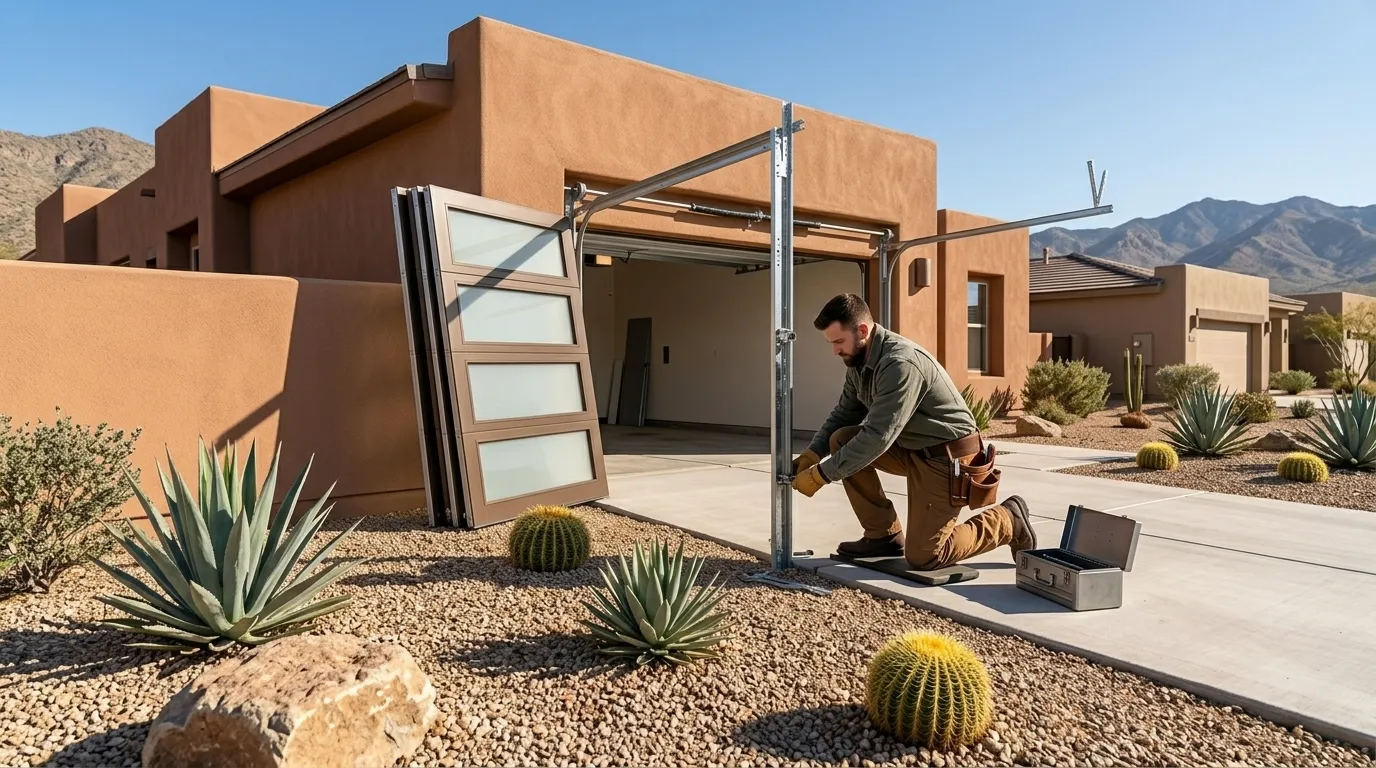
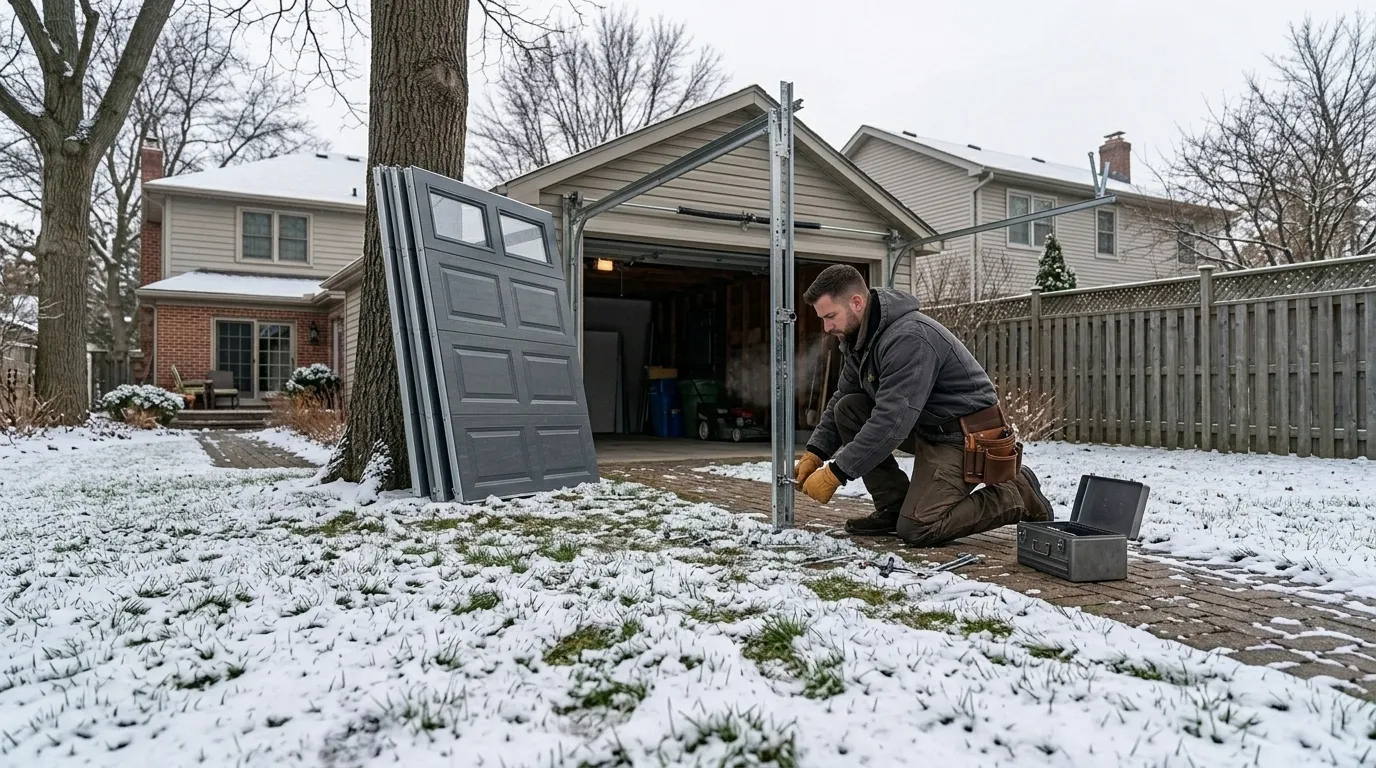
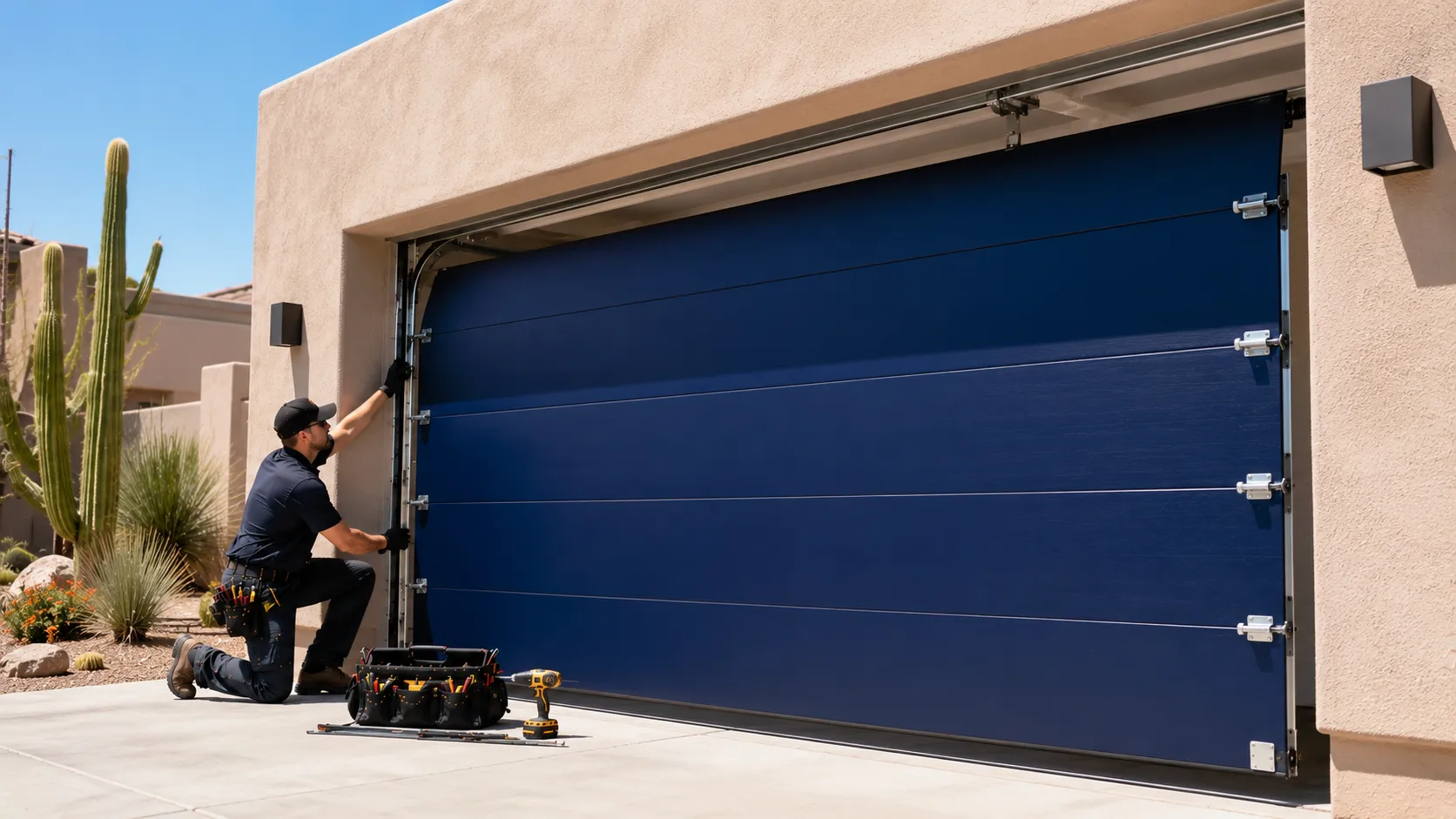
New Albany is a smaller service area for us - about 3,495 households - which means the panel jobs that come up here cluster around a narrower band of doors than we see on the older streets closer to Newark. With a median build year around 2005, most garage doors here are factory steel sections in a handful of standard widths, not the odd custom sizes you find on a house built in the 1970s. That's good news for repair: current-production steel panels in common widths are easy to match without a special order, and we bring stock sizes on the truck rather than guessing. Where it gets slower is color and insulation match - newer builds here often run higher-end insulated steel with a specific finish, and getting an exact color match sometimes means ordering from the door's original line rather than pulling a generic panel off the shelf. We carry standard 24-, 25-, and 27-inch panel heights in steel, and we can source foam-backed insulated sections to match an existing door's R-value. What we don't stock is wood composite or custom-clad panels - those go on order, and we'll tell you the lead time before you commit to the job.
Can You Do This Yourself
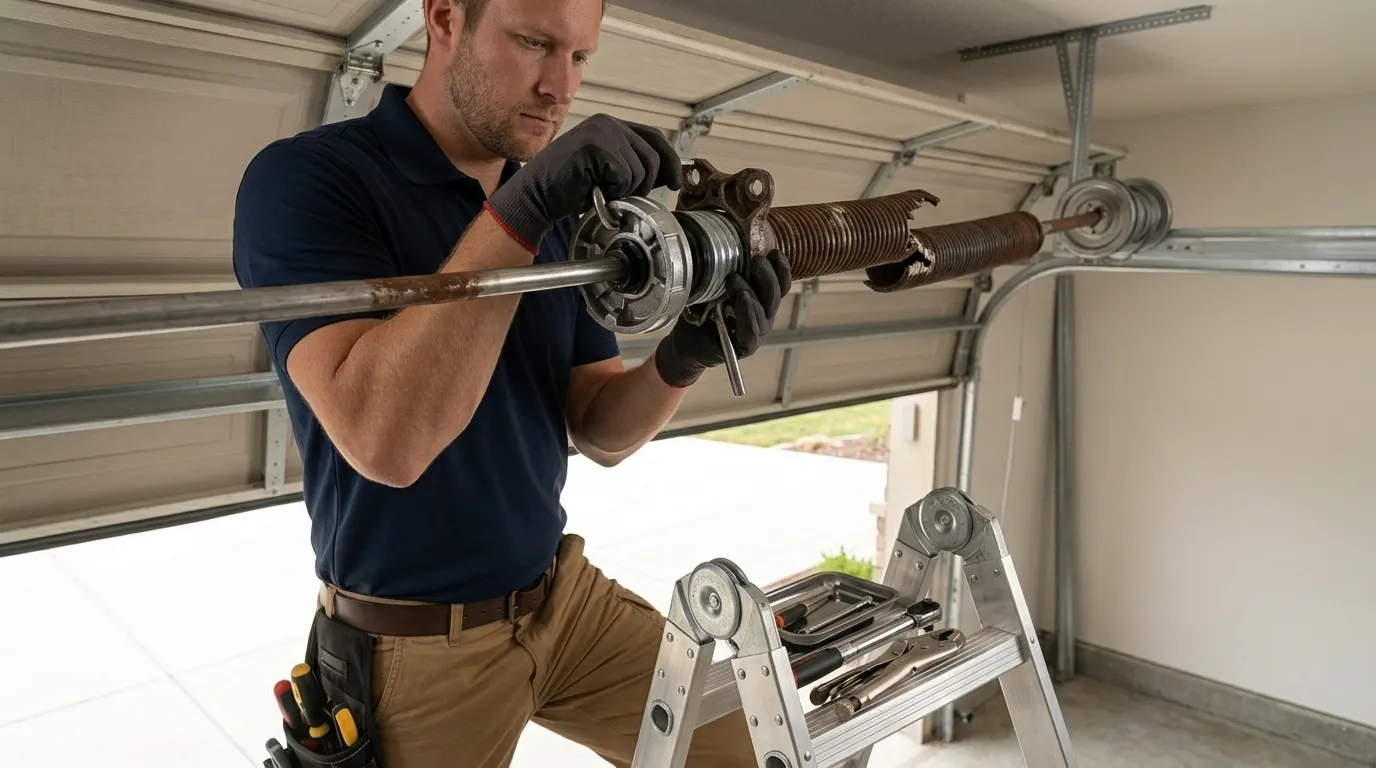
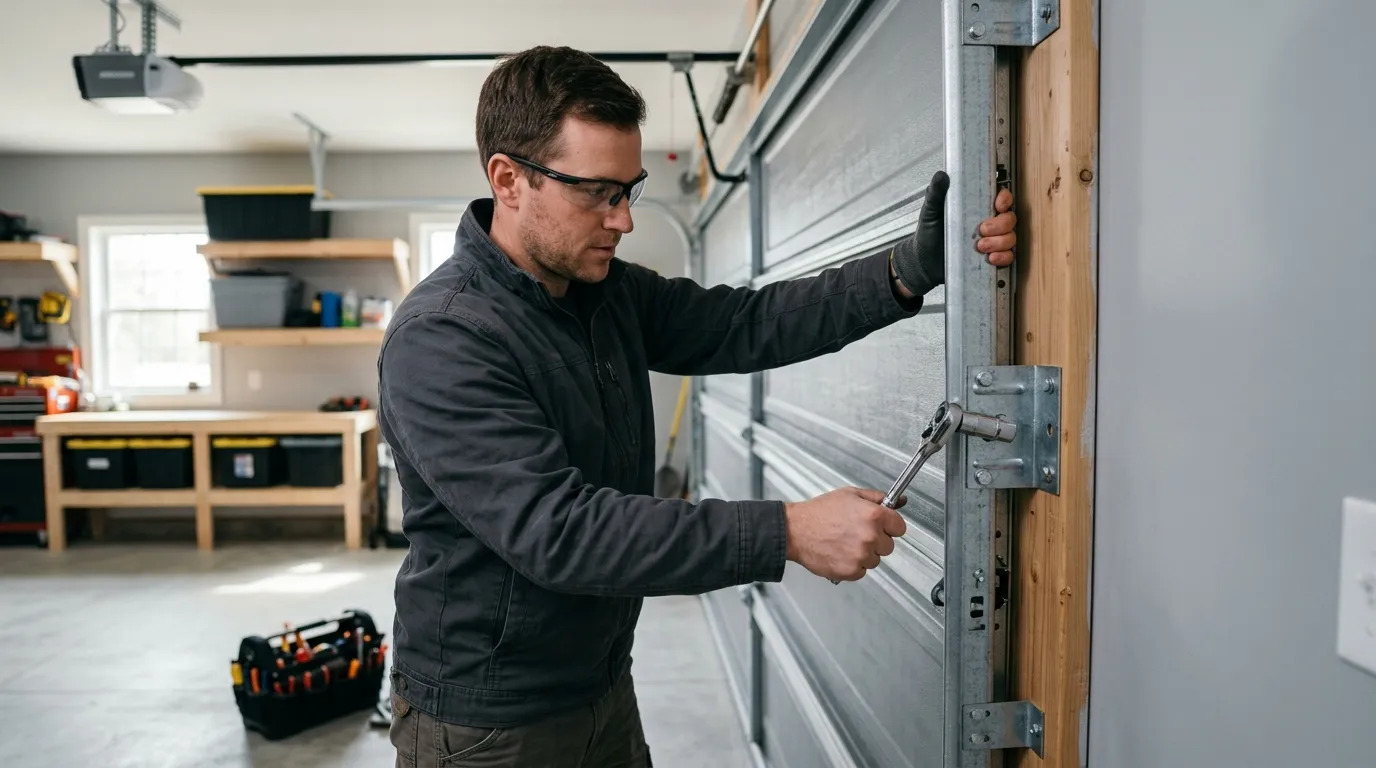
A single dented or cracked panel section is a bolt-off, bolt-on job if you can match the part and you're comfortable on a ladder with the door disconnected from the opener. On a door this age - most of New Albany's stock is post-2000 - the section brackets and hinges are usually in good shape, so the swap itself is mechanical, not a fight with rust or stripped screws. Where people get into trouble is the bottom panel, because it carries the astragal seal and often the sensor brackets, and getting the alignment wrong there throws off the whole door's travel. If the damaged panel is anywhere but the bottom or top section, and the door is a standard steel sectional, a careful homeowner can do it with the right part in hand. We'd stop you before you touch anything if the door uses a torsion spring under tension near the panel you're replacing - that part of the job isn't a panel question anymore, it's a spring question, and that's not a DIY repair regardless of the town.
How It Shows Up
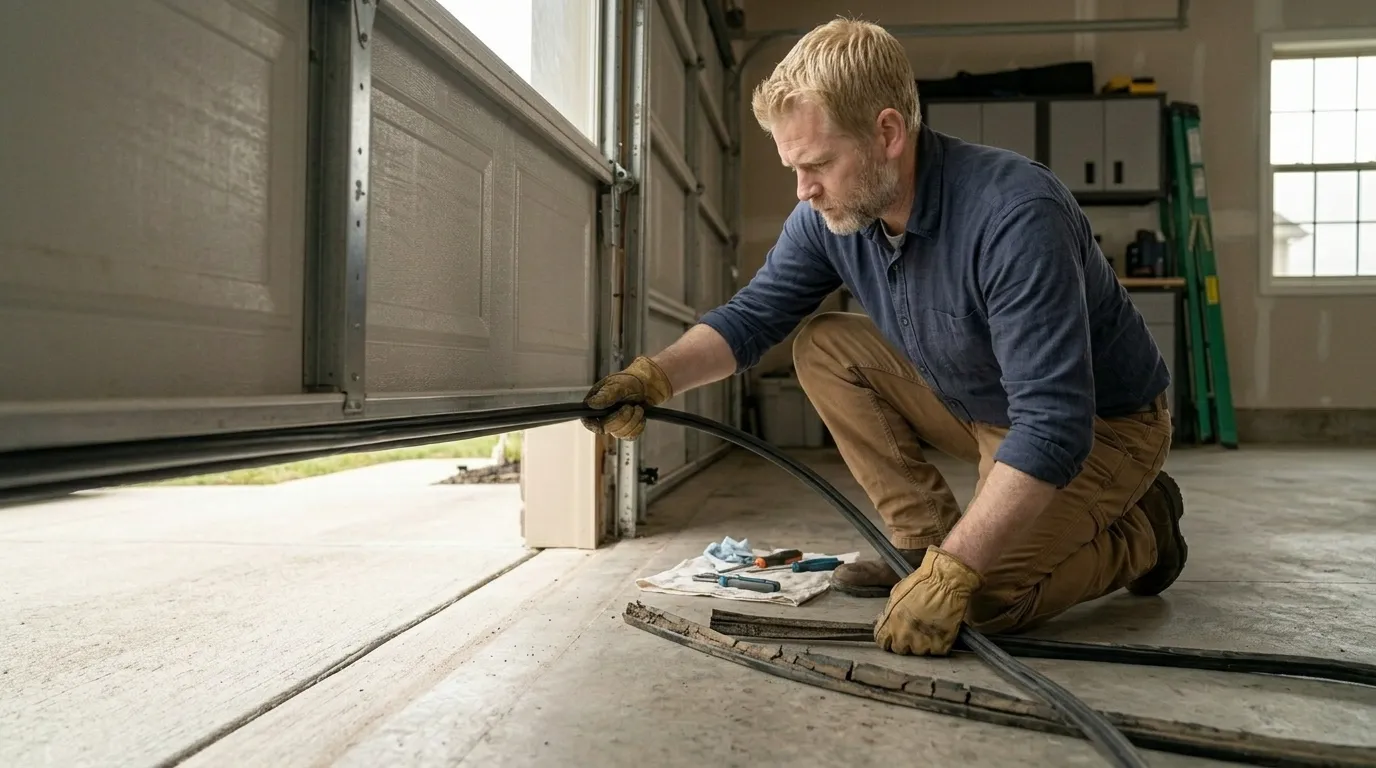
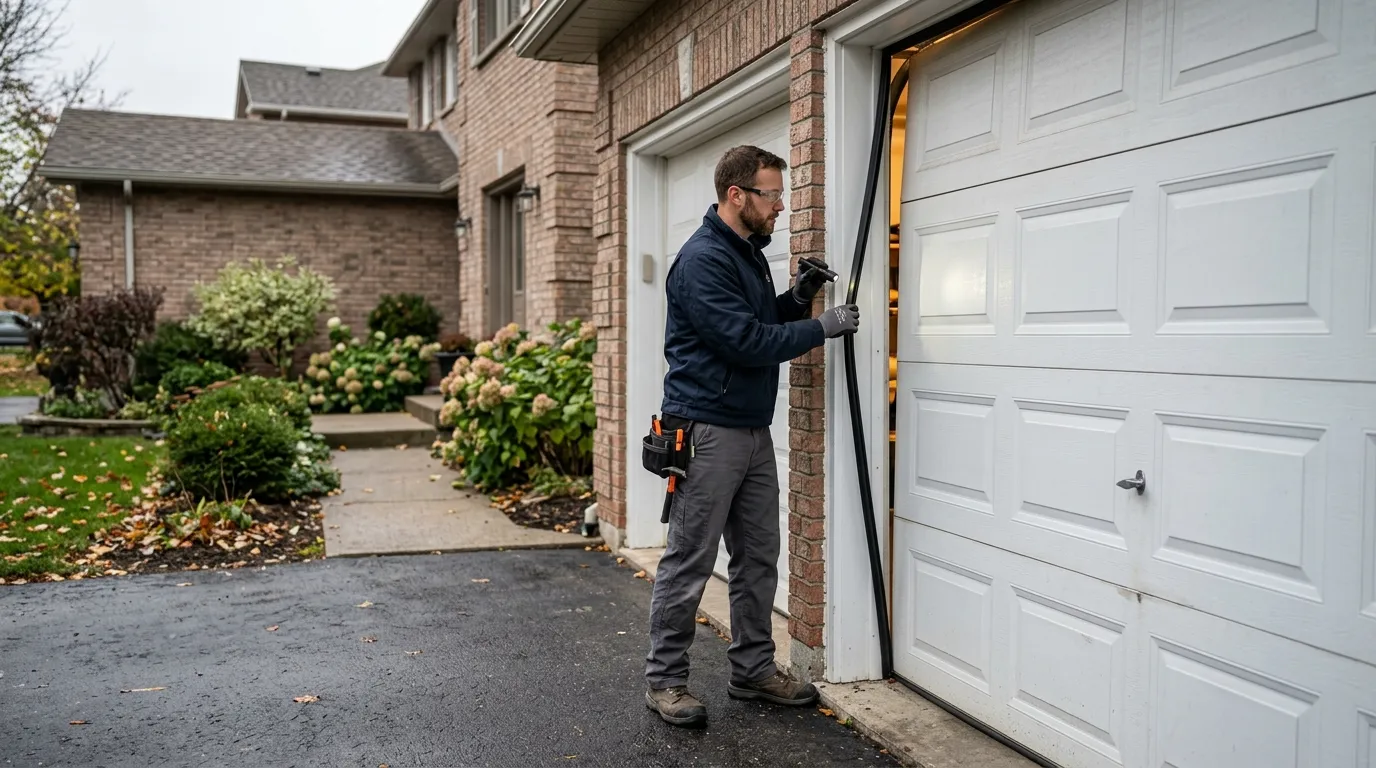
On a garage door built since 2000, the most common thing we see isn't wear - it's impact. A car bumper, a bike, a trailer hitch backing in wrong. The steel dents rather than cracks, and because these doors are newer, the panel underneath is usually still square, so the damage stays contained to the one section instead of racking the whole door out of alignment. Cold-weather cracking, which is common on older, thinner steel elsewhere in the service area, shows up less here simply because newer stock tends to run heavier-gauge insulated panels built for a cold climate from the start. What we do see on these newer doors is seal failure at the bottom panel - the foam gasket between sections dries and shrinks faster than the steel itself ages, so you get a gap you can see daylight through well before the panel itself needs replacing. That's a seal repair, not a panel job, and it's worth ruling out first.
What Can Go Wrong
The panel swap itself is straightforward, but a mismatch is the real risk on a newer, higher-spec build like most of what's in New Albany. Order the wrong insulation profile and the new section sits thicker or thinner than its neighbors, and you'll see the seam even after paint. Order the wrong color code and it's obvious in daylight, less so under a garage light - which is exactly how people end up calling us back a second time. We also won't force a panel swap onto a door where the real problem is the track or the opener's force settings; putting a new section on a door that's already fighting its hardware just moves the failure point somewhere else. And we'll say plainly: if more than two sections on the same side are damaged, replacing the whole door often costs less than sourcing three or four matched panels one at a time - we'll tell you that math instead of selling you parts you don't need.