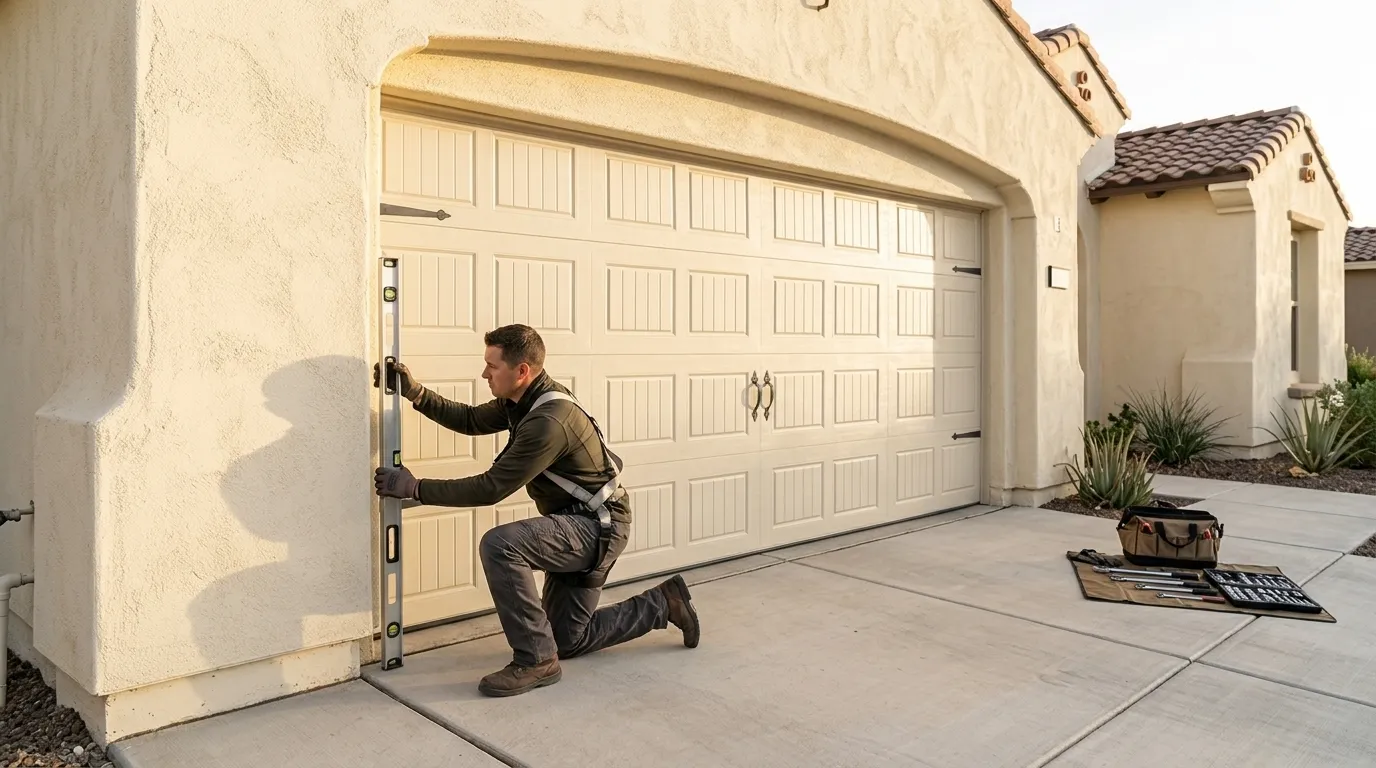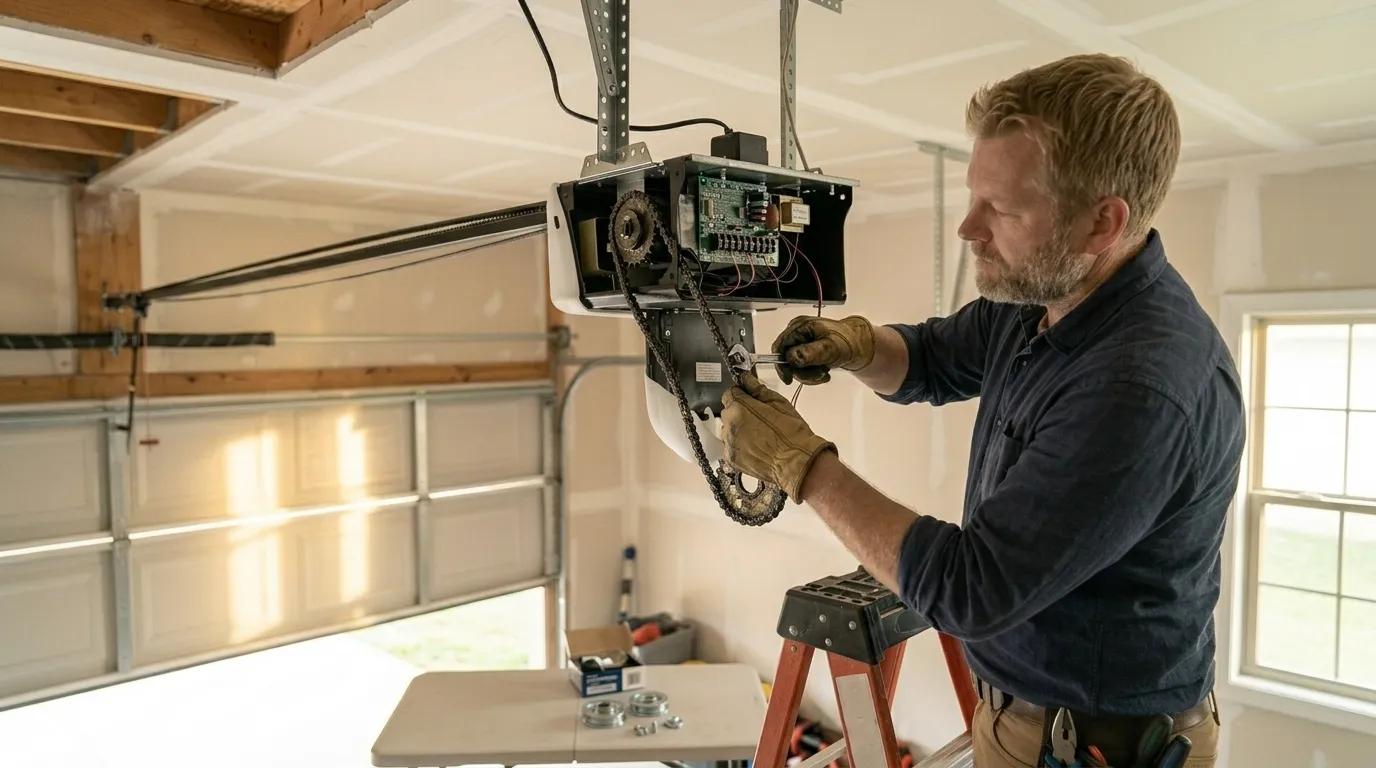
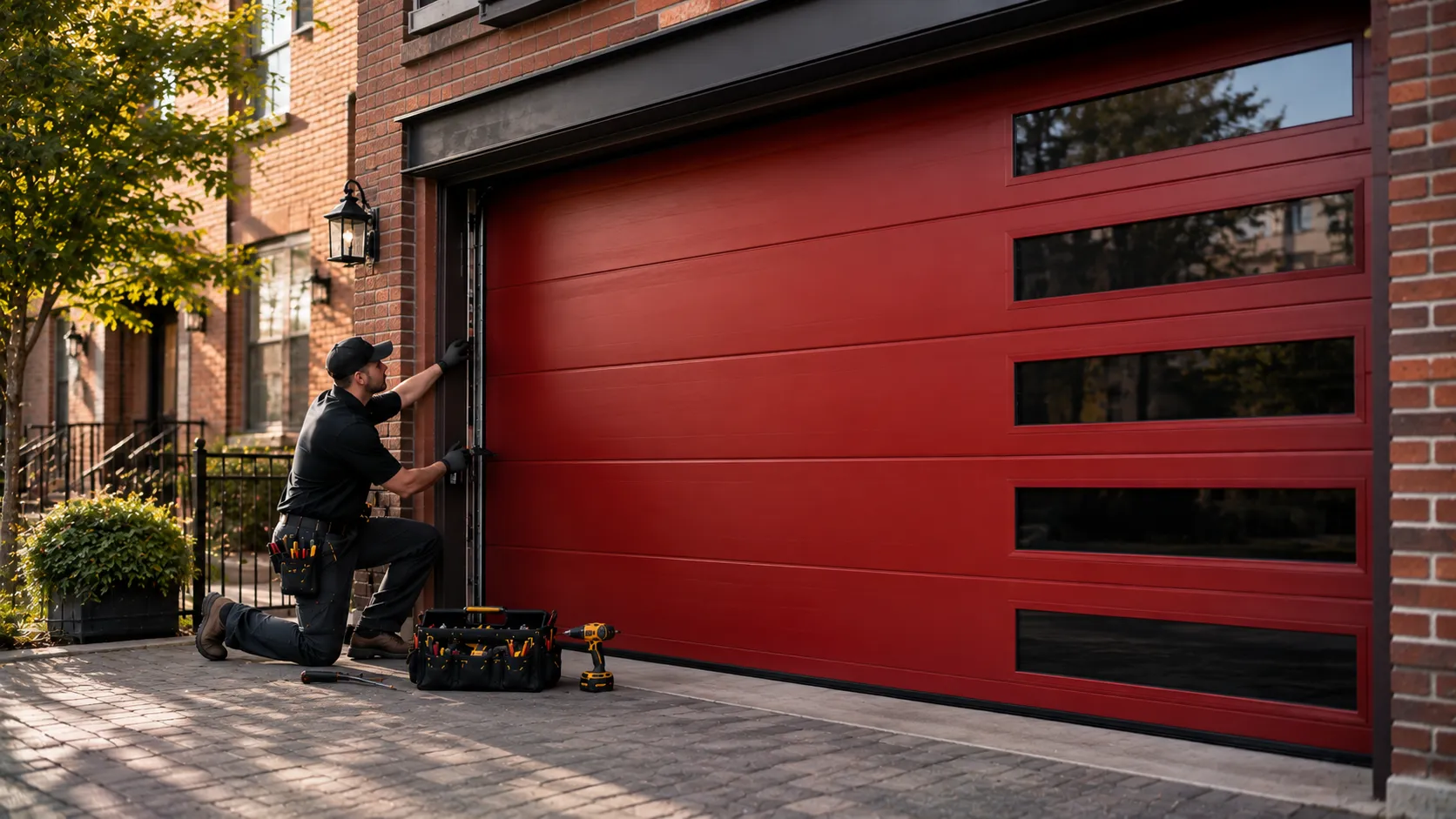
Parts We Carry
Most of the houses we go out to in New Albany were built around 2005, decades newer than the typical stock we see closer to Newark, where the median sits around 1976. That gap matters for what's actually hanging in the opening. You're not dealing with a narrow single-car bay and a bare steel slab from the 70s - you're looking at wider two-car and three-car openings, taller ceiling clearance, and doors that were built with insulation already in the panel rather than bolted on after the fact.
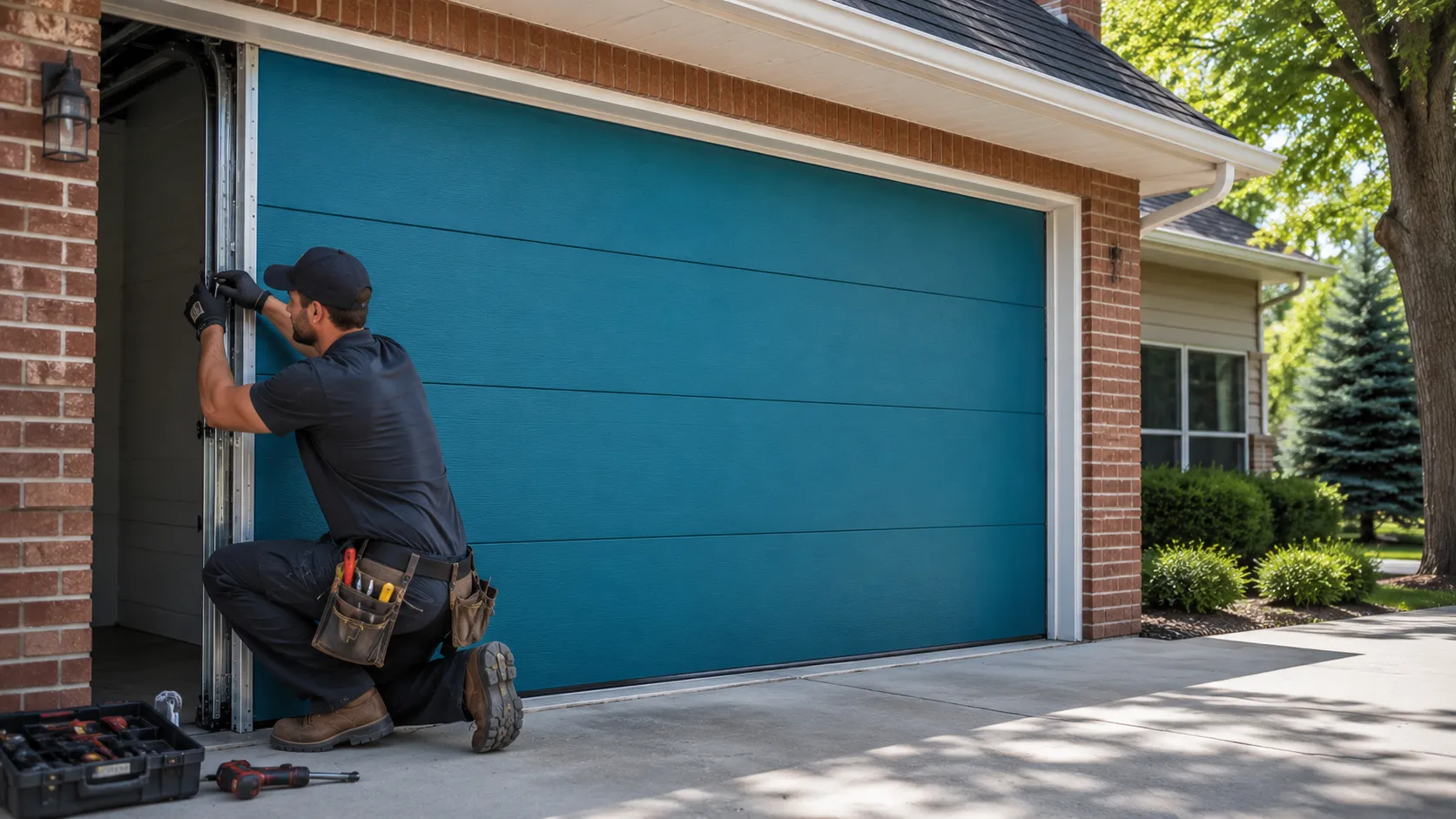
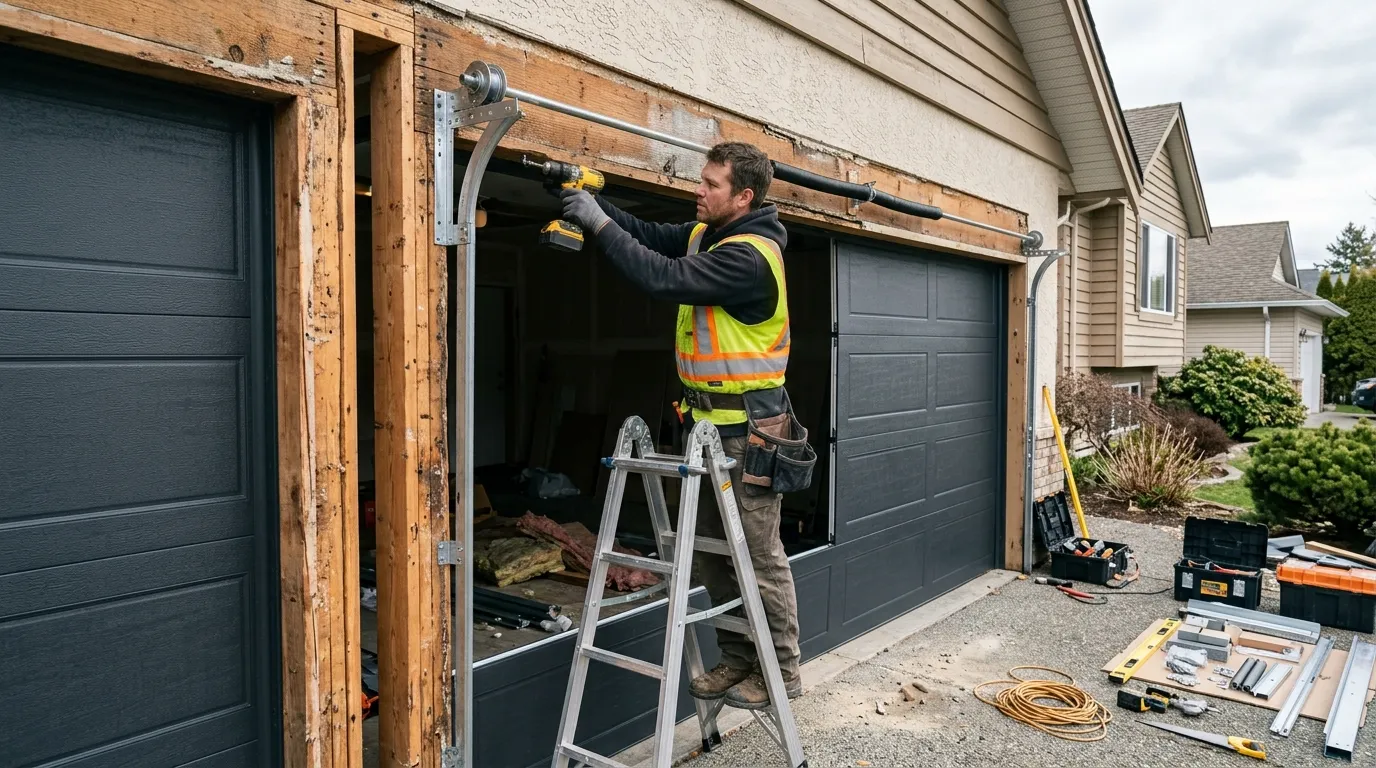
We stock steel doors in the widths and insulation ratings that match that era of construction - 16 and 18-foot double doors, R-value cores rated for a cold climate, and torsion spring setups sized for the heavier insulated panel rather than the lighter single-layer slab you'd find in an older place. If your opening runs non-standard for some reason, we tell you that up front rather than forcing a stock size into it.
One honest limit here: specialty finishes, glass-panel inserts, or custom wood-look composite doors aren't something we keep on the truck. If you want one of those, we can order it, but it's not a same-week install - plan on a lead time we'll quote once we know the exact door.
Can You Do This Yourself
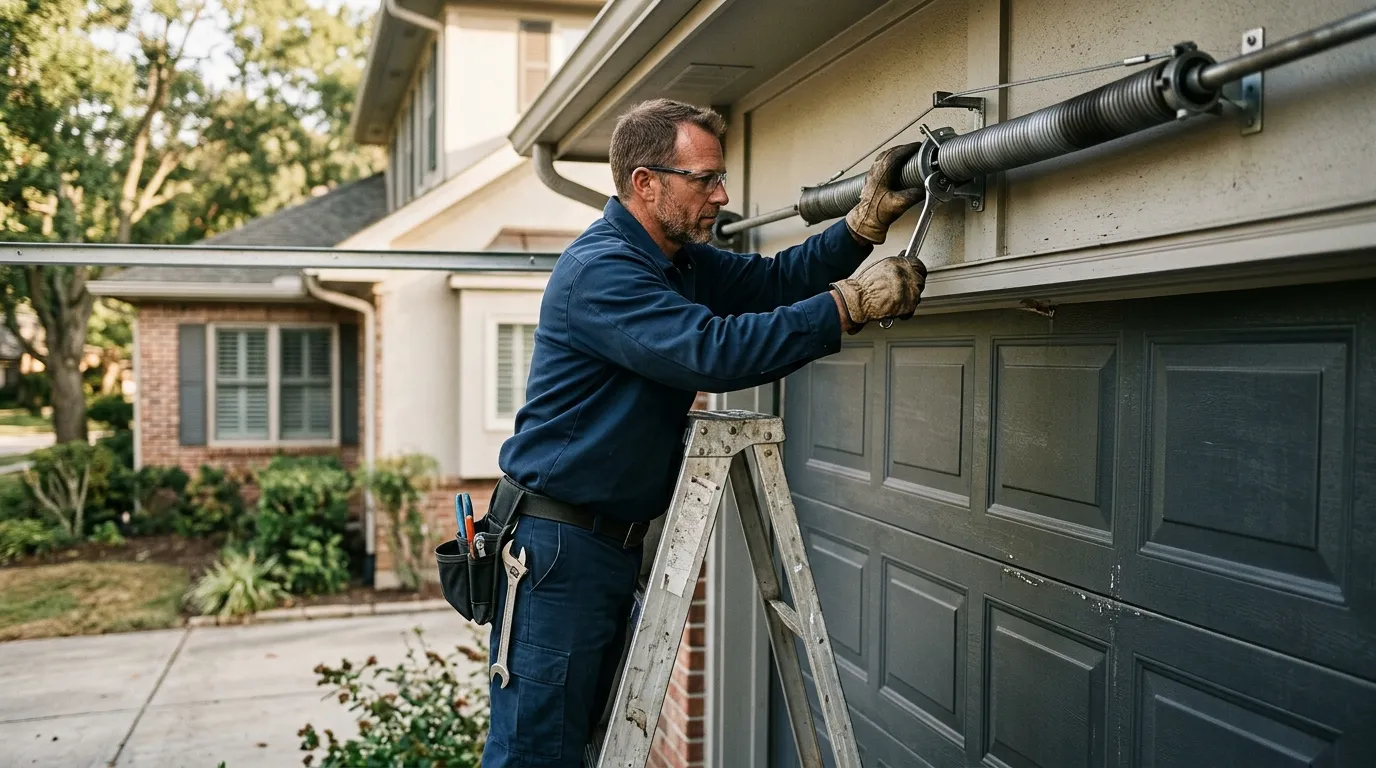
A homeowner can hang a lightweight single-car door with help and the right tools. A newer, insulated double door - the kind common in New Albany's 2005-median housing - is a different job. The panels weigh more, the torsion spring has to be wound to a higher tension to lift that weight, and getting the tension wrong on a spring that size is how people end up in the ER, not just with a bent track.
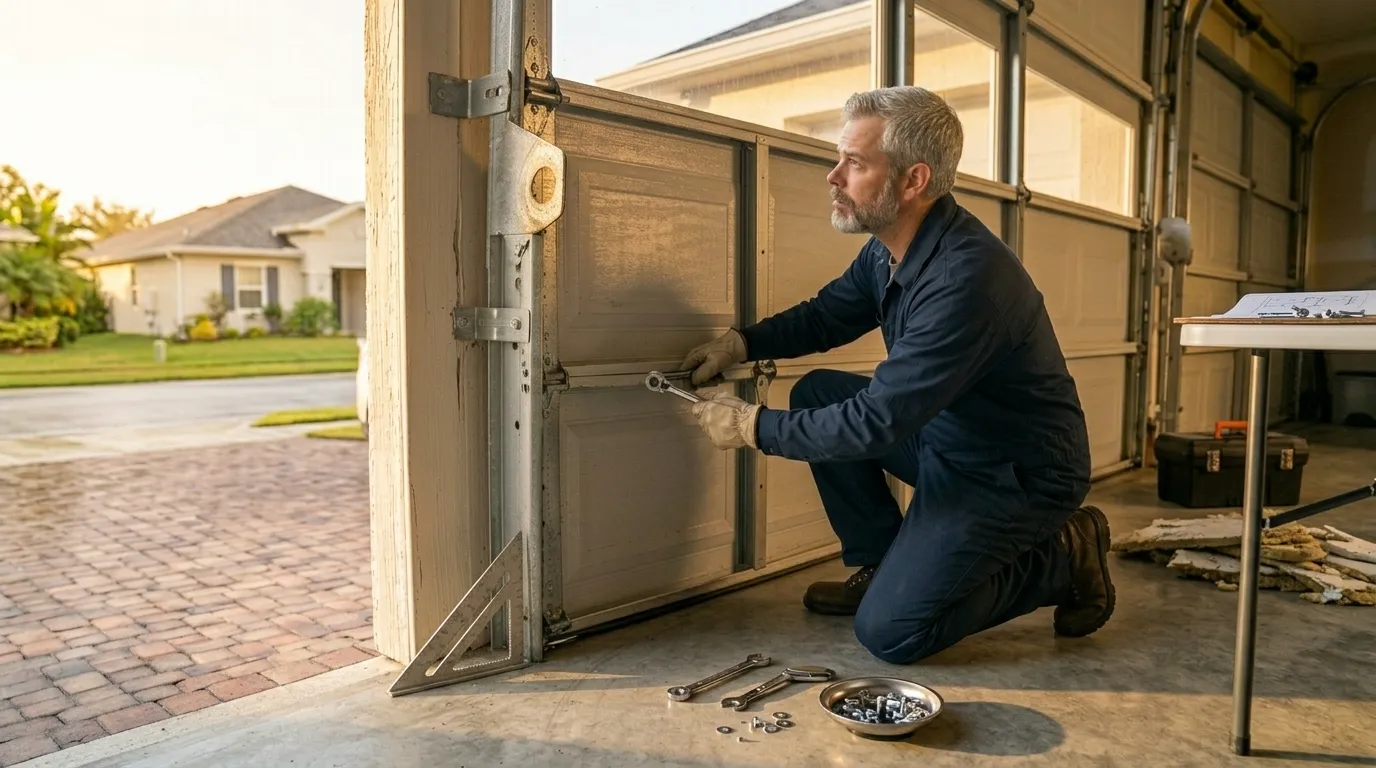
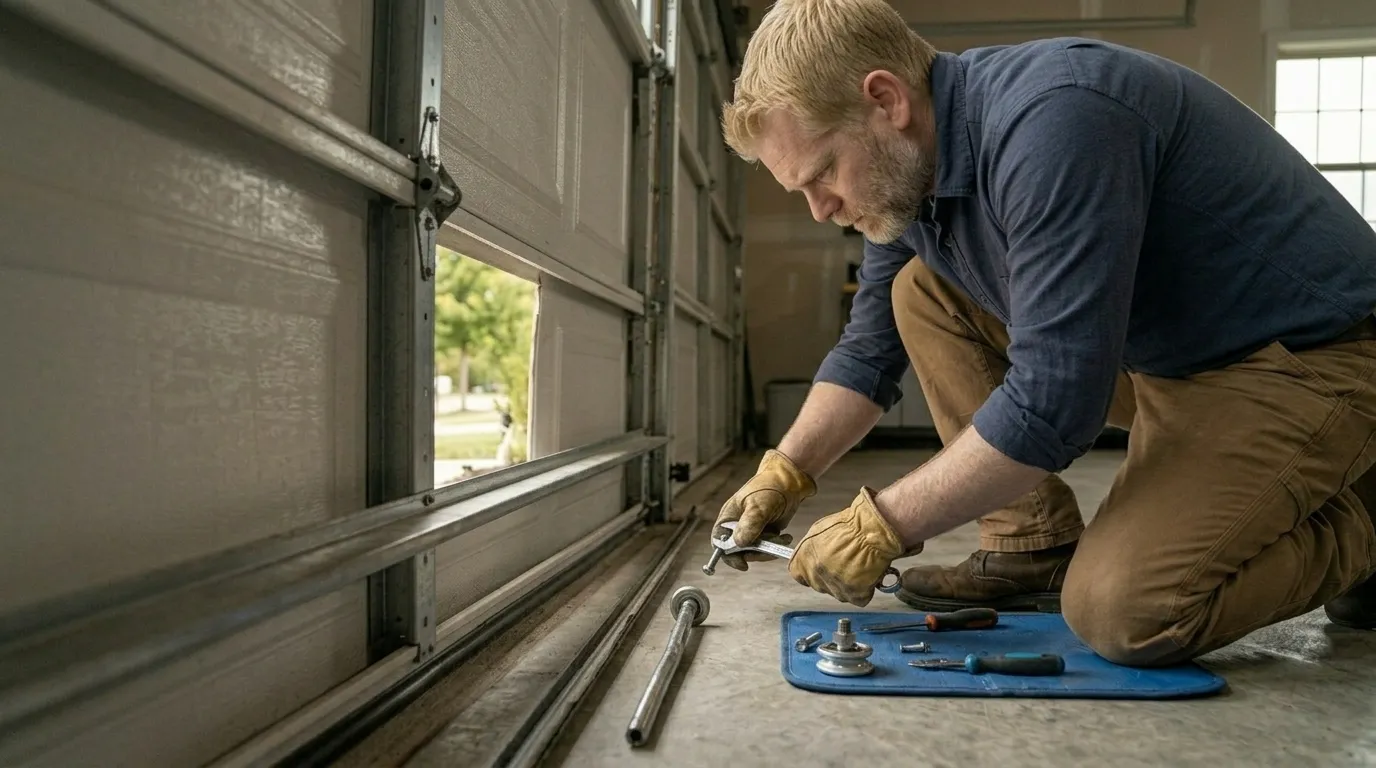
We're not going to tell you it's impossible. We're telling you that on a door this size and weight, the margin for error on spring winding and cable tension is thin, and the tools to do it safely (winding bars, a properly rated ladder, clamps) aren't things most garages have lying around for a one-time job. If you're comfortable with the electrical side - running a new opener, wiring a wall control - that part's more forgiving. The spring and cable work on a door this heavy is where we'd say call someone.
How It Shows Up
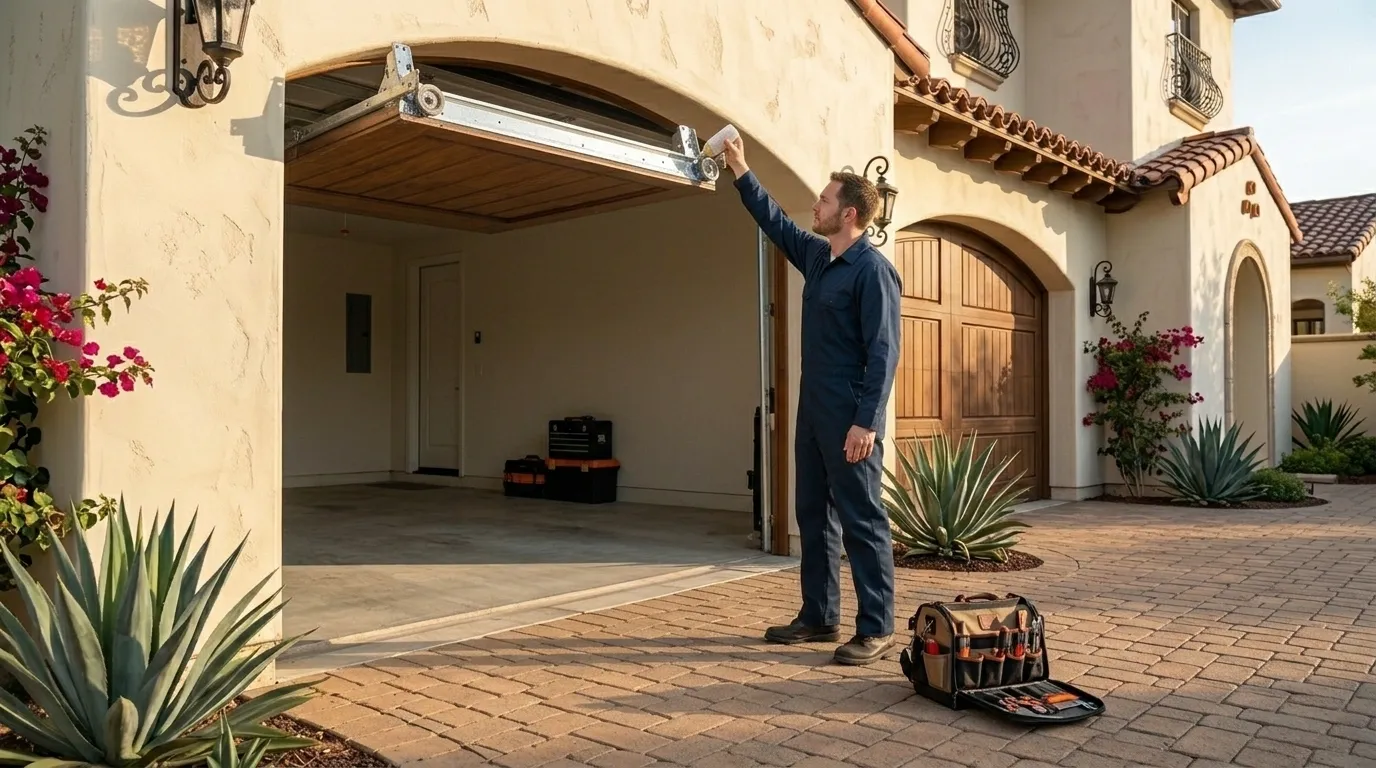
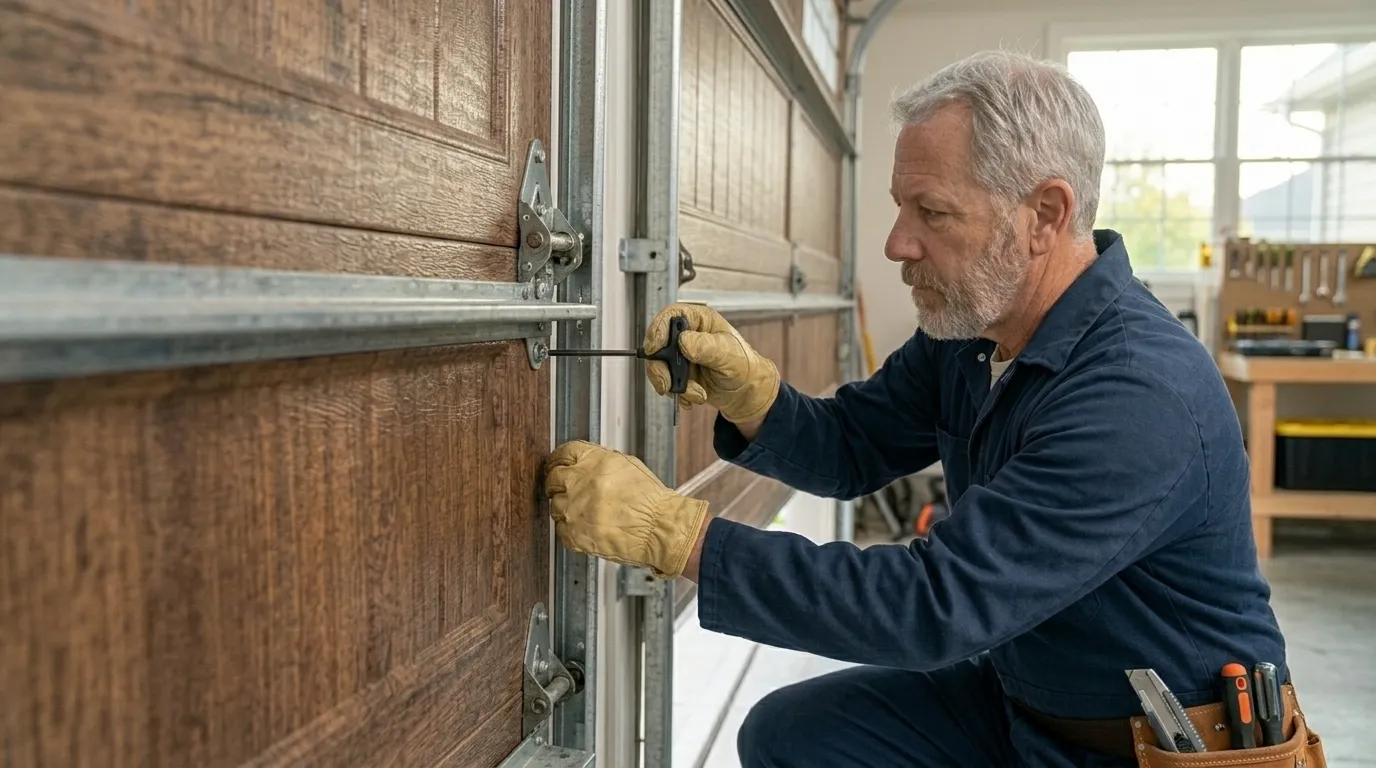
In a house this age, the failure we see most isn't rust-through or a rotted panel - it's wear on hardware that was builder-grade to begin with. Rollers that were nylon but not sealed, an opener that was the base model the builder installed and never upgraded, a spring rated for the door's original weight now stretched thin after years of daily cycles. None of that is dramatic. It shows up as a door that's noticeably louder than it used to be, that hesitates a half-second before it lifts, or that one side visibly dips before the other catches up.
Because New Albany's median household income runs well above the wider Newark service area's $91,819 figure, we also see more calls where the homeowner wants a straight upgrade - quieter opener, better insulation, smart-phone control - rather than a bare repair. That's a different conversation than a fix, and worth having before you commit to just patching the old one.
What Can Go Wrong
On a newer, heavier insulated door, the two things that go wrong most are spring mismatch and opener mismatch. If a replacement door goes in with the old spring left in place because it