How to Book
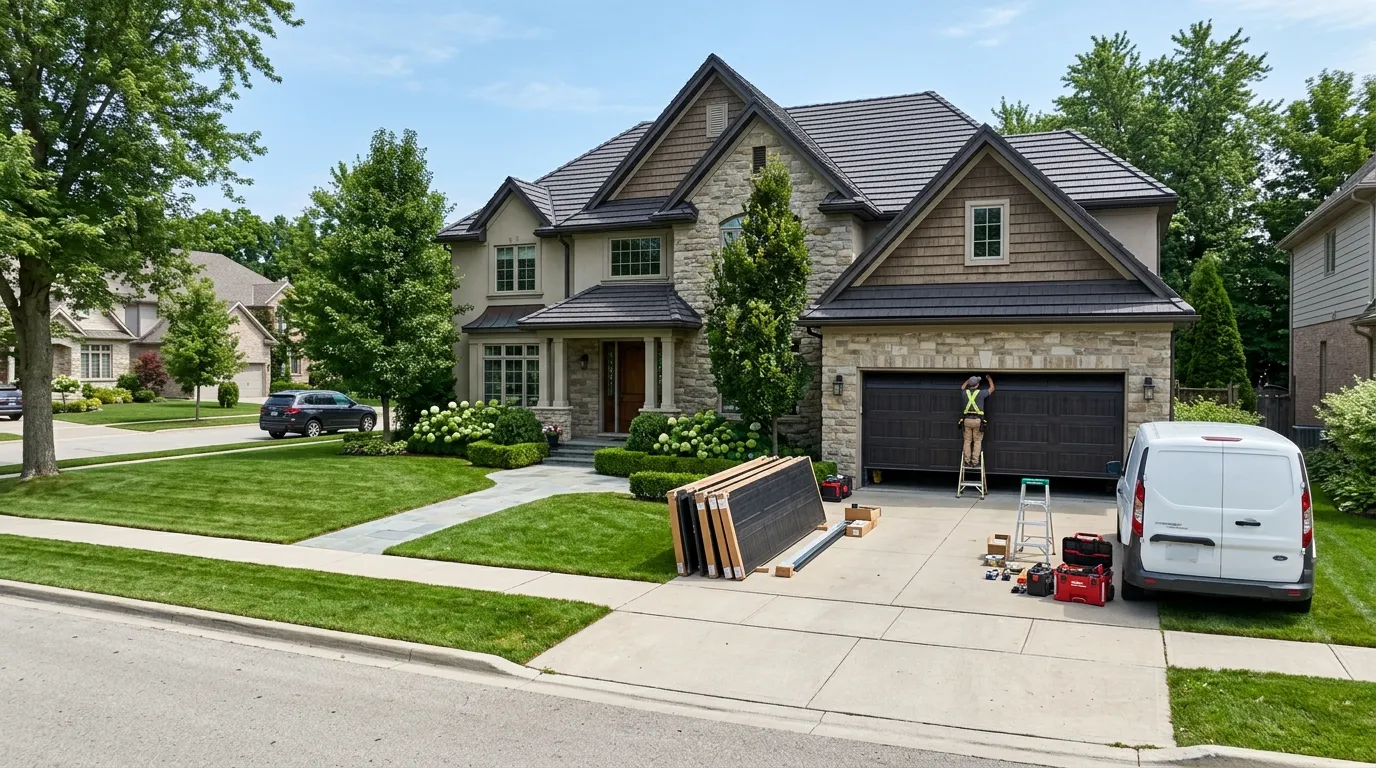
Buckeye Lake is a small place - about 1,087 households total, nothing like the 25,638 across our whole service area. That matters for how a call gets handled: there's no dispatch queue built around a dense neighborhood here, just a truck coming from Newark, roughly 10 miles up the road. Call in, tell us what the door is doing (or not doing), and we'll get a truck routed out. Have your address ready and know whether the door is stuck open, stuck shut, or making a noise it shouldn't. If it's a broken spring or a cable off the drum, say so - that changes what gets loaded on the truck before anyone leaves the shop. We don't run a branch or a drop box in Buckeye Lake, so the call goes to Newark first, then out to you. That's a real limitation: we can't promise a faster window here than the trip allows, and we won't pretend otherwise. What we can promise is that the truck comes stocked for the kind of hardware this area actually has, not a generic assortment. Book the call, describe the fault plainly, and let the trip time be what it is.
What Causes It Around Here
Housing in this part of the service area mostly went up in the 1960s and 70s, and Buckeye Lake's own median build year lands around 1975. That's older gear than a lot of homeowners realize - extension springs and single-run cable setups that were standard then, not the dual-cable torsion systems you'd see on anything built in the last fifteen years. Add a climate band that's officially cold-severe, and you get metal parts that go brittle and grease that gums up when temperatures swing hard between fall and winter. A spring that's been flexing since the Ford administration doesn't fail gently - it goes on a Tuesday morning when the door's halfway up. Cables on those older single-cable setups also fray at the drum without warning, especially once winter cold has already stiffened the coil a few cycles. None of this is exotic. It's just what happens to a 1970s-era door system that's never had the springs or cables swapped, sitting in a climate that stresses steel twice a year instead of once.
How It Shows Up
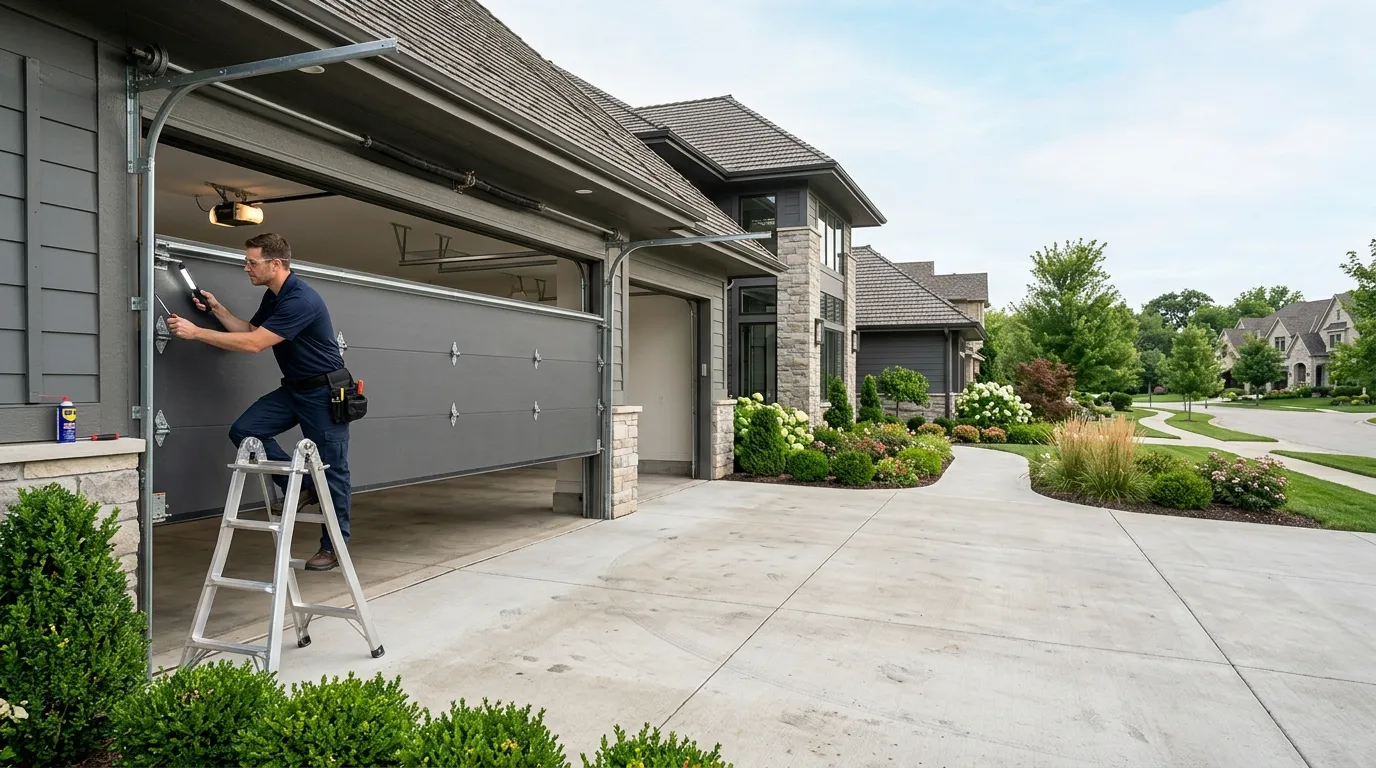
The call usually starts one of two ways. Either the door won't move at all - spring's gone, and the opener is straining against dead weight - or it moves partway and stops, which on these older extension-spring setups usually means a cable's slipped the drum or snapped outright. Sometimes it's quieter: a door that used to run smooth now grinds or bangs on the way up, which on 1970s-era track hardware often means a roller has worn through its bearing after decades of cold-weather cycling. Less common but real: an opener that hums but doesn't lift, which points to a capacitor that's given up rather than the door itself. Because Buckeye Lake is a small area with older, similar-vintage housing, we see the same handful of failure patterns repeat rather than a wide spread of newer-door problems. That's useful - it means when you describe the symptom on the phone, we usually already know which two or three parts to bring.
What Can Go Wrong
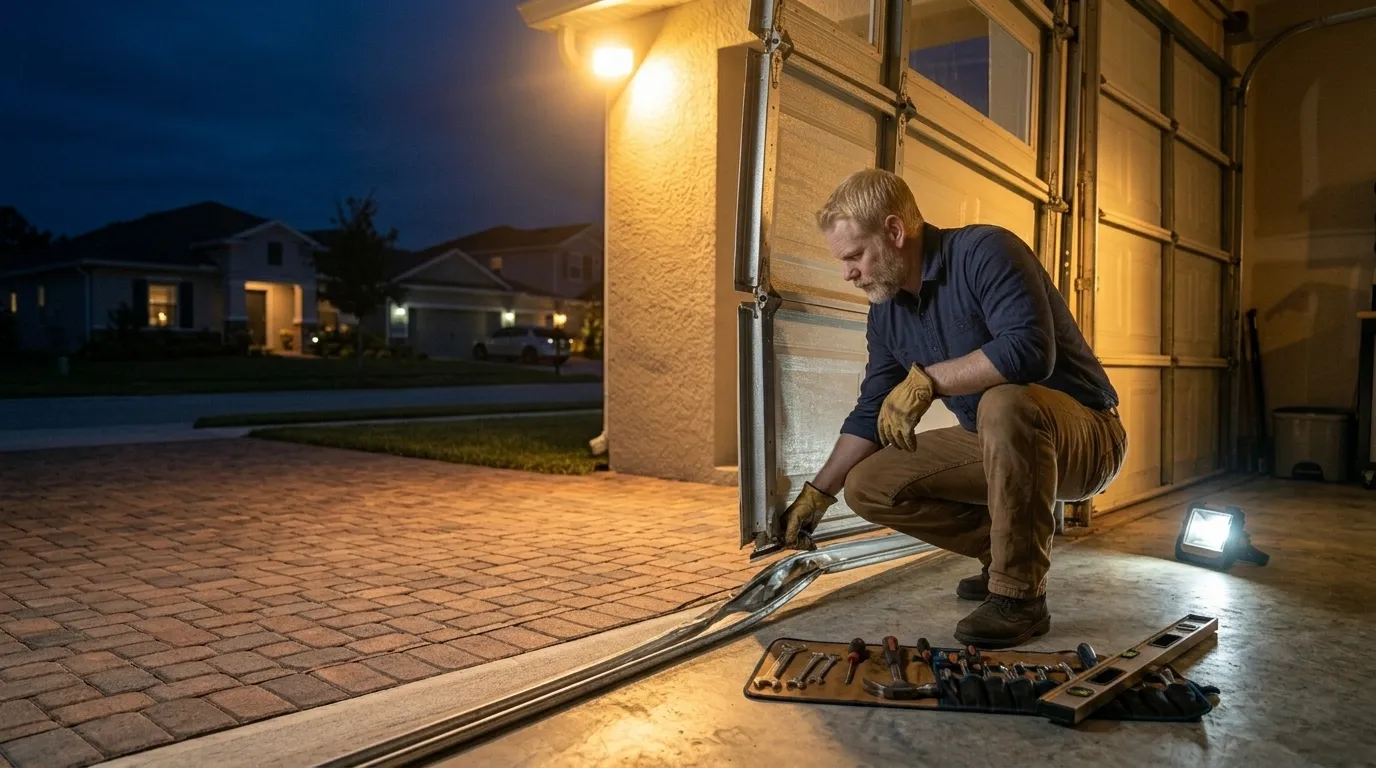
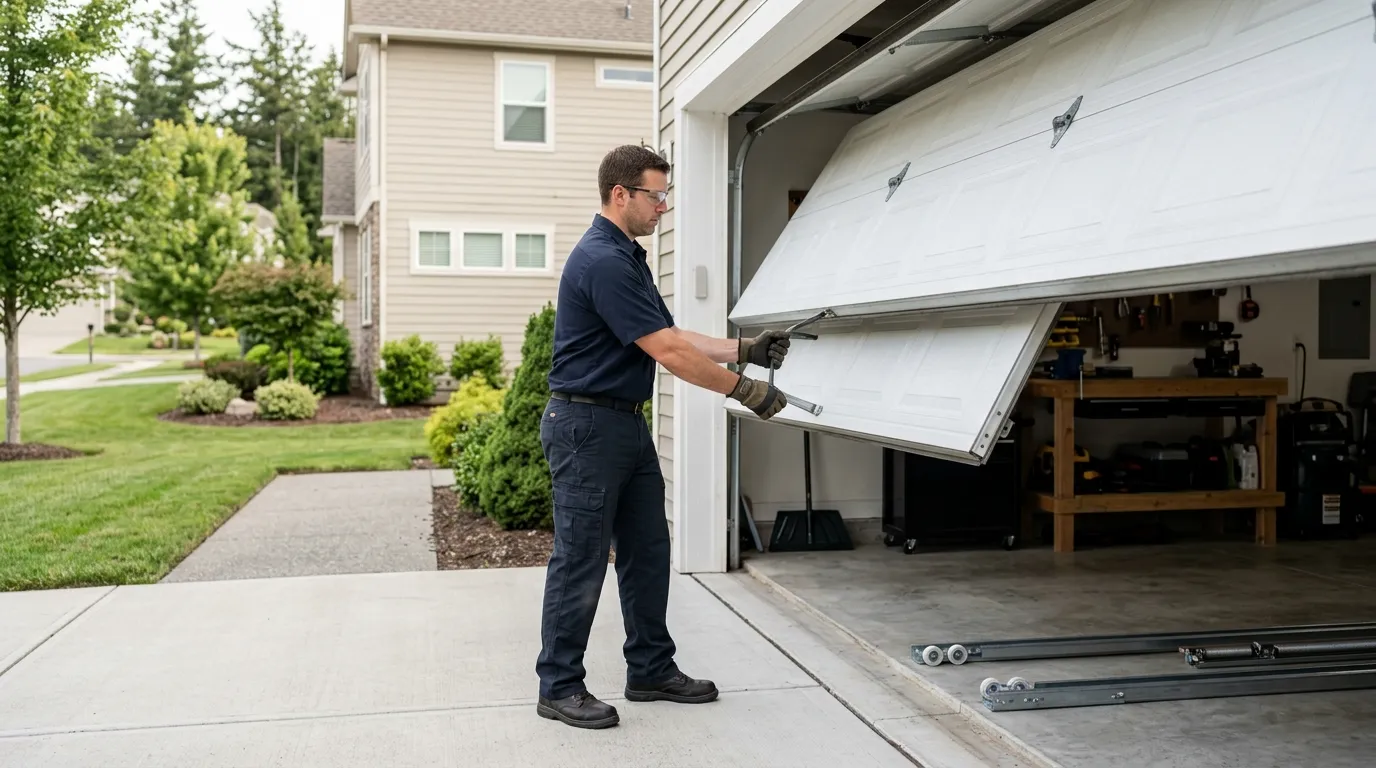
A stuck spring under tension is not a weekend project, and on an extension-spring system from the 1970s, the tension is stored differently than on newer torsion setups - enough that guessing wrong gets someone hurt. If a cable has already snapped and the door dropped, don't try to lift it back into the track yourself; the door's weight is doing exactly what a broken cable can no longer control. On the parts side, some older extension-spring hardware and first-generation opener logic boards for doors this age aren't something we can grab off a shelf same-day - a real lead time can run a few days if the part isn't common stock. We'll tell you that up front rather than promise a fix we can't deliver. The other risk is cosmetic patch jobs: bracing a cracked panel or re-tensioning a worn spring might get the door moving again, but on hardware original to a mid-70s build, that's often borrowed time rather than a real fix.