How to Book
Buckeye Lake's median household income sits at $75,179, meaningfully lower than the $91,819 median across the wider Newark service area, and that number decides more opener calls than people expect. On a $75,179 household budget, a $300 logic board swap makes sense; a $600 full unit replacement on a door that's otherwise sound often doesn't. We look at both sides of that math before we quote anything.
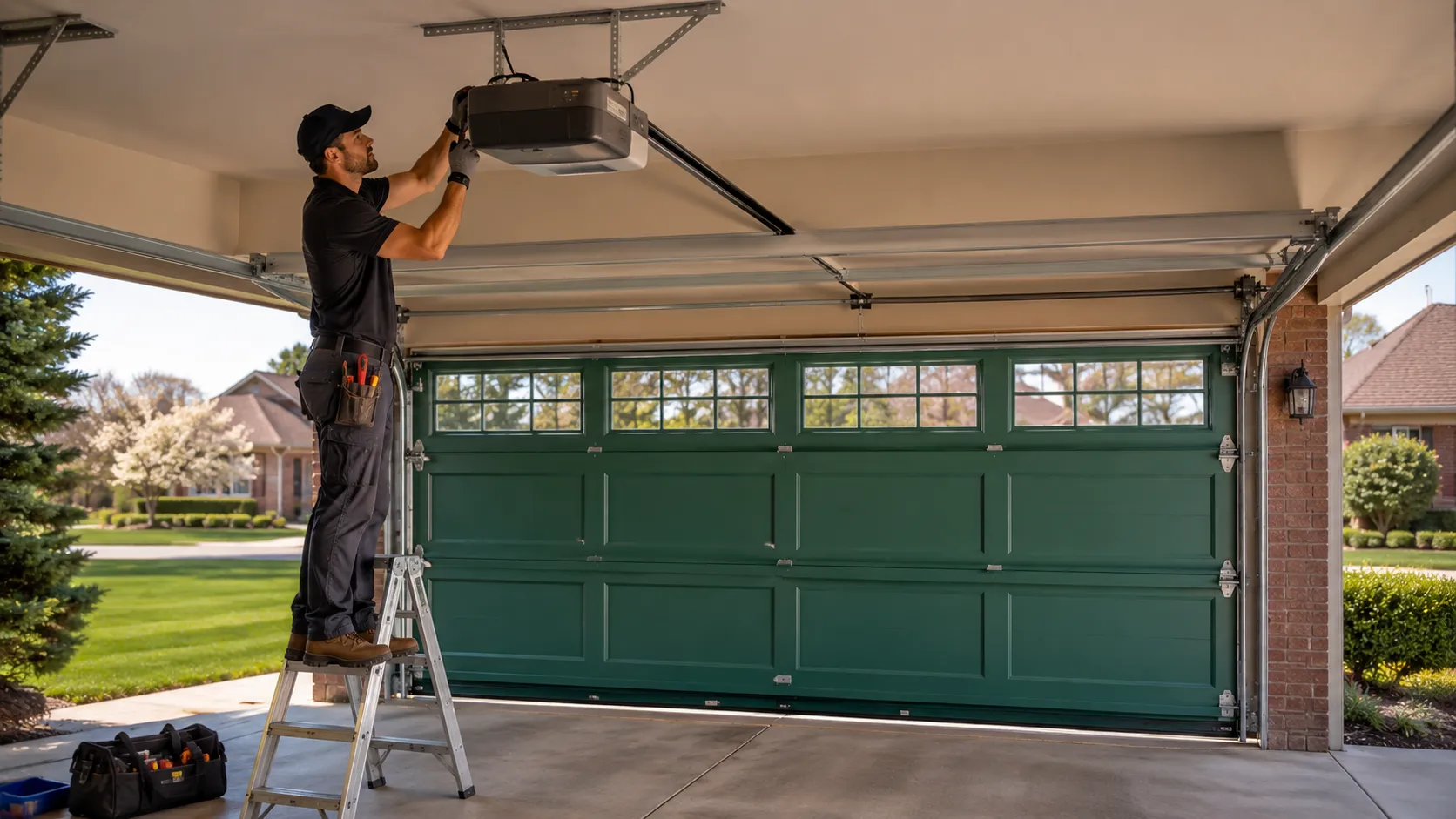
We run out of Newark, about 10 miles up the road, so opener calls here get scheduled around other stops on that stretch rather than dispatched from a depot in town - there isn't one. Call and tell us what the opener is doing: won't close, reverses on its own, clicks but the door doesn't move. That narrows the diagnosis before the truck leaves, which matters more on a longer haul than it does for a job five minutes from the shop.
We don't do same-day guarantees for Buckeye Lake specifically - we're honest that the drive is part of the job, and we'd rather set a real window than promise a fast one we can't keep from ten miles away.
What Causes It Around Here
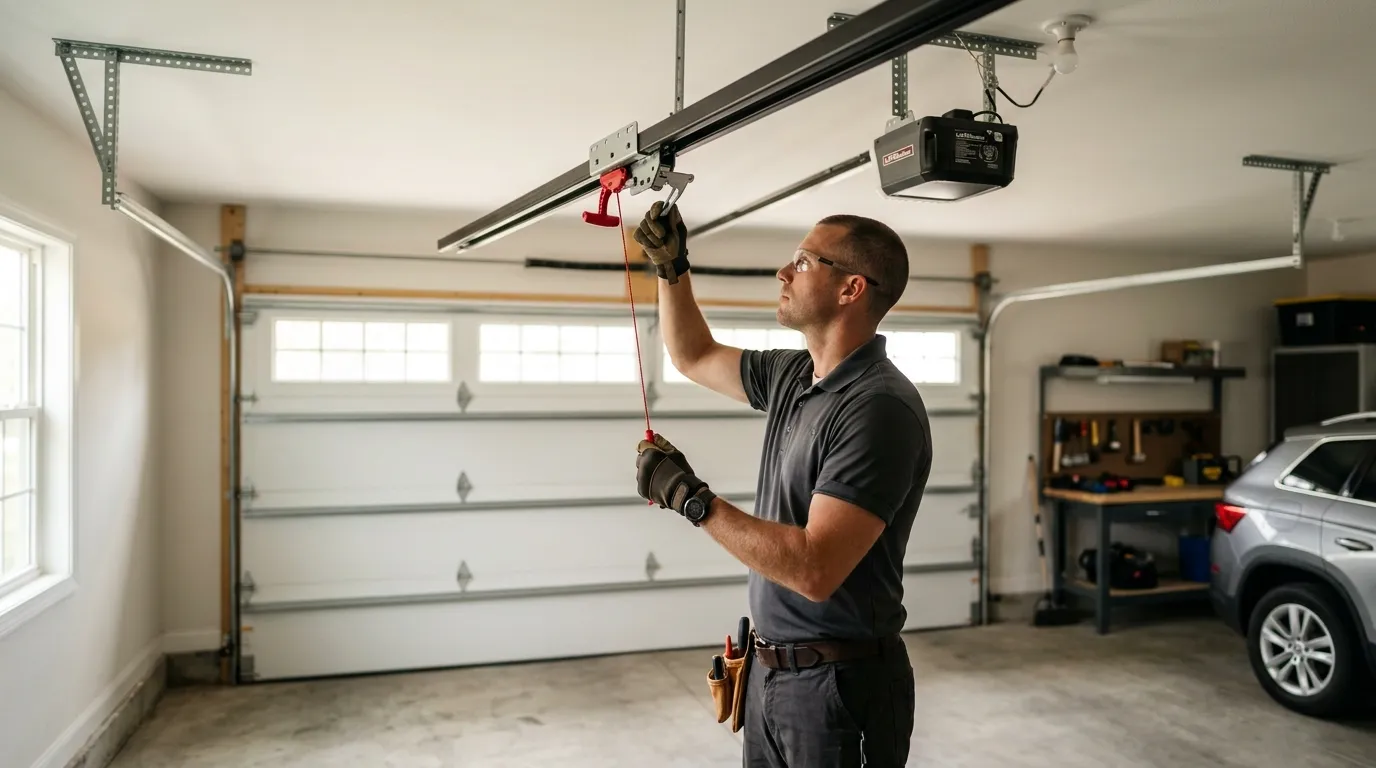
Buckeye Lake's housing centers on a median build year of 1975, which puts most openers here at the tail end of the chain-drive, screw-drive first generation or the early belt-drive units that replaced them. That build era matters more than the model name: houses from the mid-70s were framed with headers and rafters that assumed a lighter, simpler opener than what's sold today, and retrofits sometimes fight the original bracket spacing.
Winters here sit in the severe end of the cold climate band, and cold is harder on openers than most owners think. Grease in an old gear set stiffens below freezing, drawing more current through the motor every start. Capacitors in units from that build era weren't rated for decades of that cycle. We see more dead start capacitors and stripped nylon drive gears out this way in January and February than any other months, and it's almost always tied to age plus cold, not one bad part out of nowhere.
Humidity off the lake itself can also work rust into steel gear housings faster than it would inland, though we don't have a number on that difference specifically.
How It Shows Up
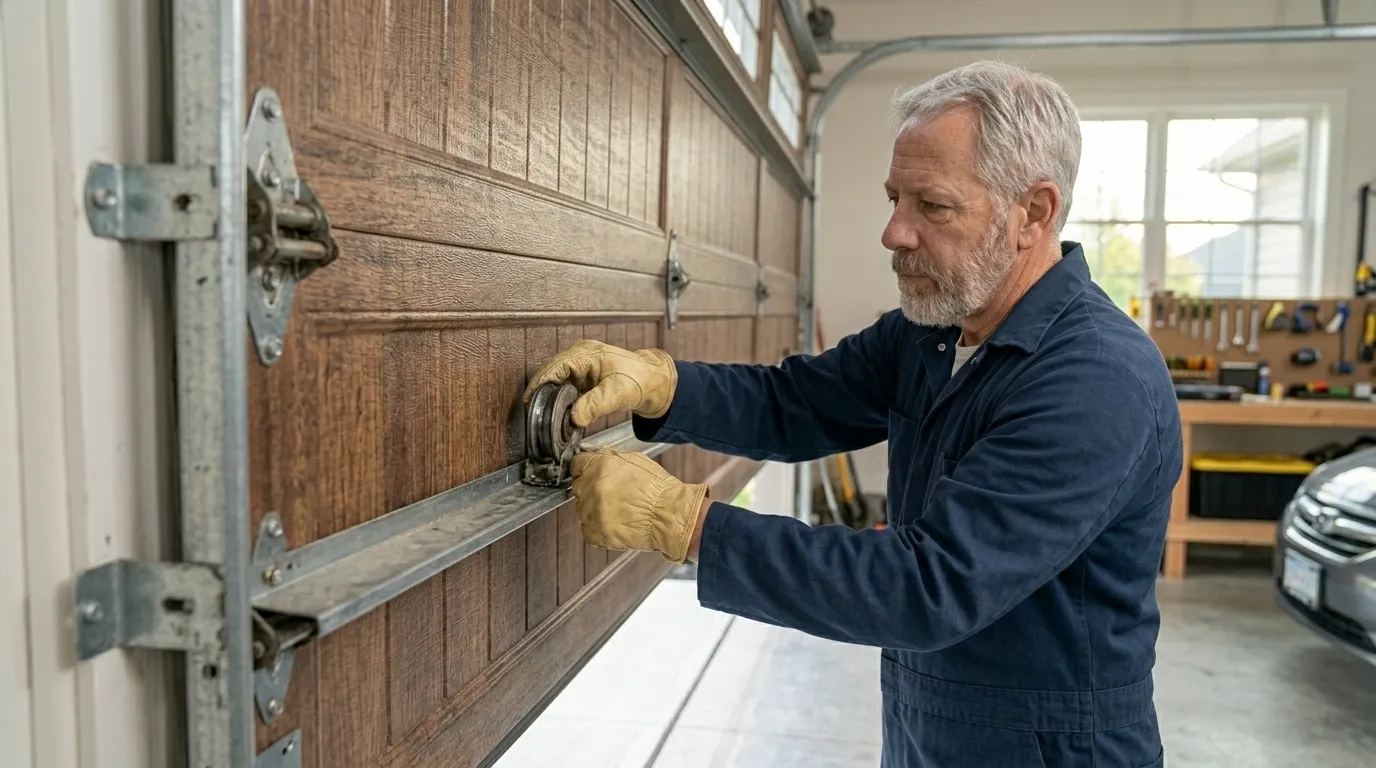
The most common call out here is an opener that runs but the door doesn't move - the motor hums, the light comes on, nothing lifts. That's almost always a stripped gear, and on units matching this area's mid-1970s median build age, it's the single most repeated fault we see.
Second most common: the door reverses partway up or down with no obstruction in sight. That's usually a failing limit switch or a logic board losing its memory of travel distance, both common once a unit's been through a decade or more of severe cold cycles.
A third pattern, less frequent but real: the opener trips the breaker on start, which points to a capacitor pulling far more current than it should. That one's worth calling in fast - a capacitor that's failing hard enough to trip a breaker is close to taking the motor with it.
What Can Go Wrong
Left alone, a stripped gear doesn't stay a small problem. The motor keeps trying to drive a gear that isn't catching, and the extra load and heat eventually take out the motor windings too - turning a $150 gear job into a $400 motor-and-gear job.
A failing capacitor is the more urgent one. It draws more current every start until it either fails outright, stranding the door open or shut, or it overheats enough to damage the motor. If your opener has started tripping a breaker, that's not a coincidence to wait out.
On houses near this area's median build year, we also see owners keep patching a unit that's simply past its working life rather than face a full swap. We understand the instinct, especially against a $75,179 median household income - but three service calls a year on a 20-year-old opener usually costs more than one replacement would have.