Serving Newark, OH & nearby
(220) 239-4920
Newark, OH

Garage Door Repair for Buckeye Lake's 1970s Housing Stock

Buckeye Lake homes mostly went up around 1975, meaning aging torsion springs and older openers. We travel from Newark to fix what that era's hardware throws at you.

Garage Door Repair for Buckeye Lake's 1970s Housing Stock
Newark, OH
8 services
7 service areas
Diagnosis first, then the fix

How to Book

We're based in Newark, about 10 miles out, and we run trucks to Buckeye Lake on scheduled routes rather than keeping a branch here. Call and tell us what the door is doing - grinding, stuck, off the track, dead opener - and we'll give you a real window, not a vague afternoon. Because we're not sitting in Buckeye Lake full-time, the more detail you give us up front (door age if you know it, whether it's a single or double, torsion or extension spring), the faster we can roll with the right parts already on the truck. That matters more here than in a newer subdivision: with median construction around 1975, a lot of doors still carry original or near-original hardware, and guessing wrong on the spring size means a second trip. If it's an emergency - spring snapped, door won't close, car trapped - say so when you call; we prioritize those over routine tune-ups.

What Causes It Around Here

Buckeye Lake's housing mostly dates to the mid-1970s, which puts a good share of doors and openers well past the point where original parts are still made. Doors from that era typically ran on torsion springs sized for lighter, thinner steel panels than what's sold today, and a lot of openers from later retrofits were chain-drive units installed sometime in the 80s or 90s - now old enough to have worn drive gears or dying capacitors. Add a cold-band climate with real winter swings, and steel torsion springs that have been cycling for decades lose tension unevenly, which shows up as a door that closes crooked or binds on one side. Wood jambs from that construction period have also had 45+ years to shift, so track alignment drifts even when nothing's broken outright - it's just settled a few degrees off square.

How We Fix It

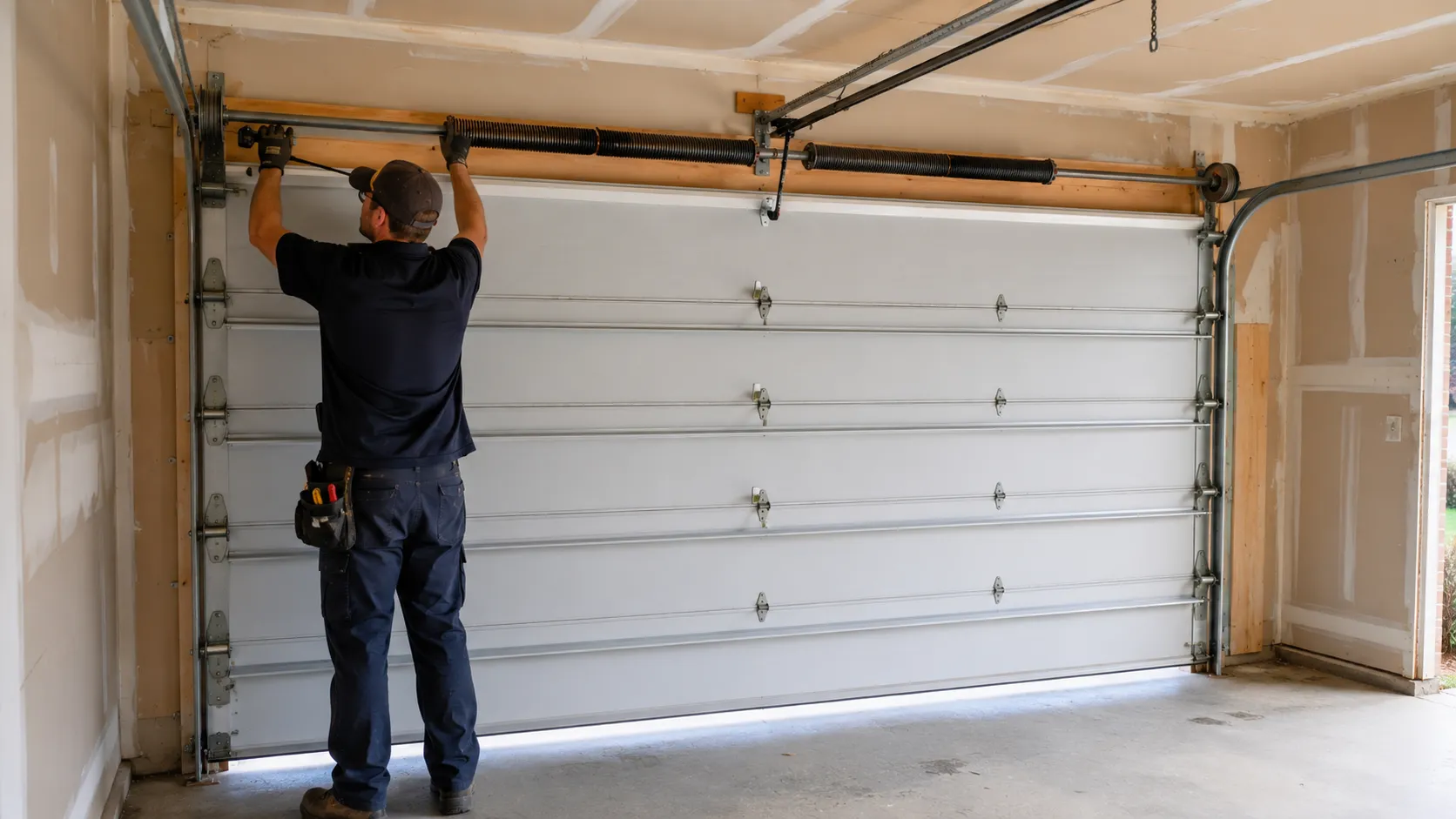
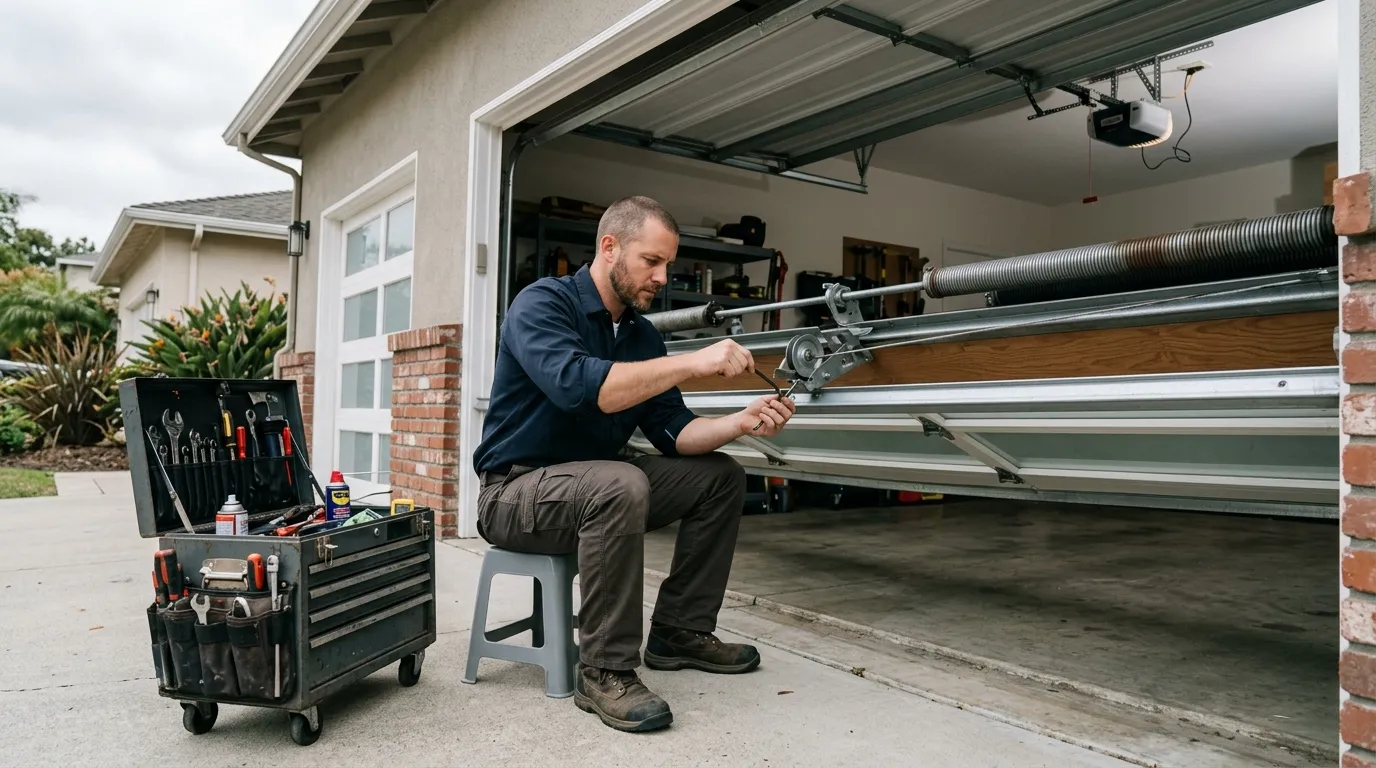
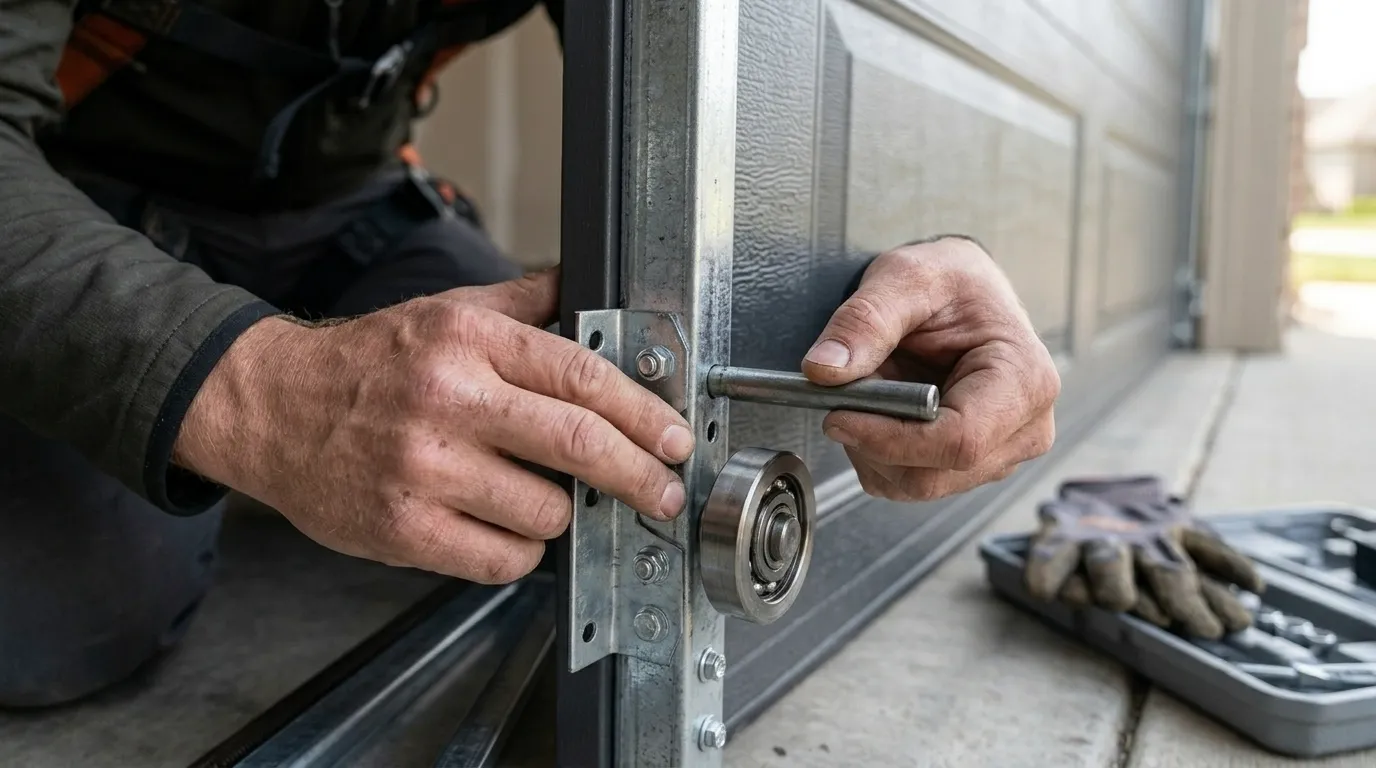
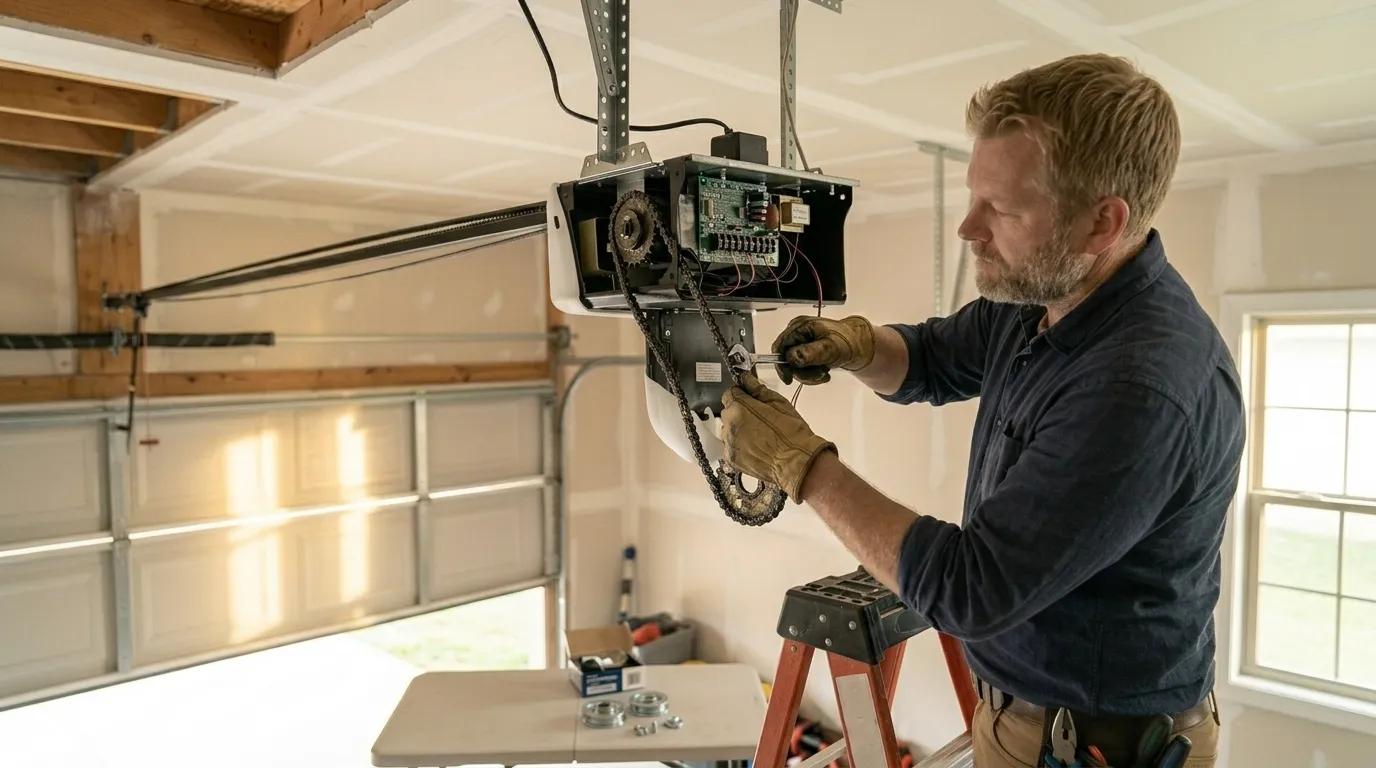
On original-era torsion springs, we replace in pairs even if only one side has failed - mismatched springs on a door this old wear unevenly and you'll be back to a second failure within a year. For openers from the chain-drive generation, we check the gear kit and capacitor before recommending a swap; sometimes a $30 part buys another few years, sometimes the motor housing itself is cracked and replacement is the honest call. Track realignment on a house that's settled since 1975 isn't a five-minute tightening job - we shim and re-square the jamb-side bracket, not just crank the bolts back down, or it drifts again in a season. We carry standard torsion spring sizes for the era on the truck; anything non-standard or a discontinued opener model may mean a return trip while we source it.

How It Shows Up

The most common call from this stretch is a door that slams the last six inches instead of settling - classic sign of a torsion spring that's lost tension, common on hardware pushing 45-plus years old. Second most common: a door that reverses itself partway down, which on an older chain-drive opener is usually the down-limit switch or a worn sensor rather than anything with the door itself. You'll also hear a distinct grinding or popping on cold mornings, more noticeable here than in newer construction because original tracks weren't lubricated with today's synthetic greases and steel contracts more in a hard freeze. Less common but real: a cable that's frayed near the drum, which on a door this vintage often means it was never replaced since installation.

What Can Go Wrong

Ignore a torsion spring that's clearly weakening and the opener starts doing the spring's job - straining the motor to lift weight it wasn't built for, which burns out gears faster and can eventually strip the drive mechanism entirely. On original hardware from the 1970s, a spring failure without warning (no gradual weakening, just snaps) is more likely than on newer, better-monitored equipment, and a door in free-fall on a snapped cable is a real injury risk, not a scare tactic. We won't try to patch a rusted-through torsion tube or a track bent from an impact - those get replaced, not repaired, because a patch job on structural hardware fails again and costs you two service calls instead of one. If your opener predates safety reversal sensors, we'll flag that; we don't install around a missing safety feature.
What You Pay

We don't have a published price list to quote here, and giving you a number without seeing the door would be a guess dressed up as a quote - a torsion spring swap costs differently than an opener gear kit or a full track realignment. What we can tell you is that we price the job after diagnosis, not before, and we'll tell you on-site if a repair doesn't make sense against replacement - a 45-year-old door with a warped panel and a dying opener is sometimes better replaced outright than nursed along piece by piece. Ask for the breakdown before we start; we'll walk you through parts versus labor so you know what you're paying for.

How it works

From “it’s stuck” to “it’s fixed”

Tell us what’s wrong - Newark garage door service

Tell us what’s wrong

Describe the symptom - won’t open, loud bang, opener runs but the door won’t move.

On-site diagnosis - Newark garage door service

On-site diagnosis

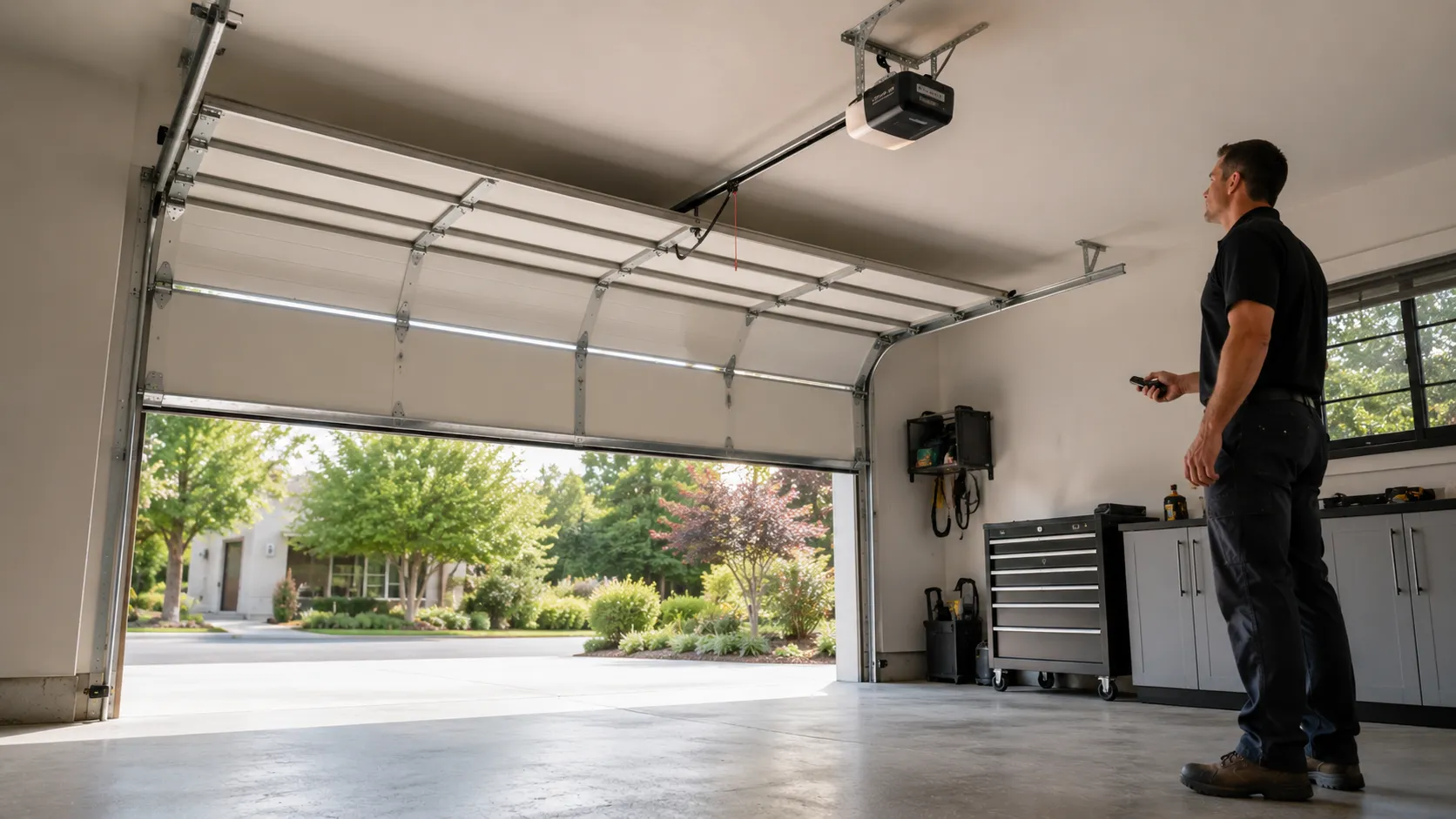
A technician tests the door under power and by hand and finds what actually failed.

Clear, up-front plan - Newark garage door service

Clear, up-front plan

You get the fix that’s needed and what drives the cost - before any work starts.

Repaired & tested - Newark garage door service

Repaired & tested

The repair is done, the door is set true and tested, and the work area left clean.

Serving Newark, OH - tell us what your door’s doing and we’ll take it from there.

How we work

What to expect

Diagnosis firstEvery visit starts by finding what actually failed - not a pre-written parts list.
The right part for the doorSprings and openers matched to the door’s weight and age, so the fix holds up.
Straight answersWhen a repair makes more sense than a replacement - or the reverse - you hear it plainly.
Clean, careful workTension released safely, hardware set true, the door tested under power before we leave.
47,986Residents in Newark
8Garage door services
7Neighborhoods & suburbs
OHServing Newark, OH
Questions

Frequently asked

Straight answers about garage door repair in Newark. Still unsure? Ask us directly.

Why does my garage door in Buckeye Lake feel heavier than it used to?

If your house dates to around the mid-1970s like most in the area, the torsion spring is likely original or close to it, and springs lose tension gradually over decades. A door that's gotten noticeably heavier to lift by hand, or that no longer holds itself halfway open, usually means the spring needs replacing, not the opener.

Do you have a repair shop in Buckeye Lake?

No - we run out of Newark, about 10 miles away, and travel to Buckeye Lake on scheduled service calls. We don't keep a local branch here, so give us a call ahead rather than expecting a walk-in counter.

Is it worth fixing an opener from the 1980s or 90s?

Sometimes. If the gear kit and capacitor are the only failures, a repair can buy several more years cheap. If the motor housing is cracked or it lacks modern safety reversal sensors, replacement is usually the better call - we'll tell you which situation you're in before we start work.

Ready to get your garage door sorted?

Tell us what it’s doing and where you are in Newark - we’ll take it from there.

Request a QuoteCall