How to Book
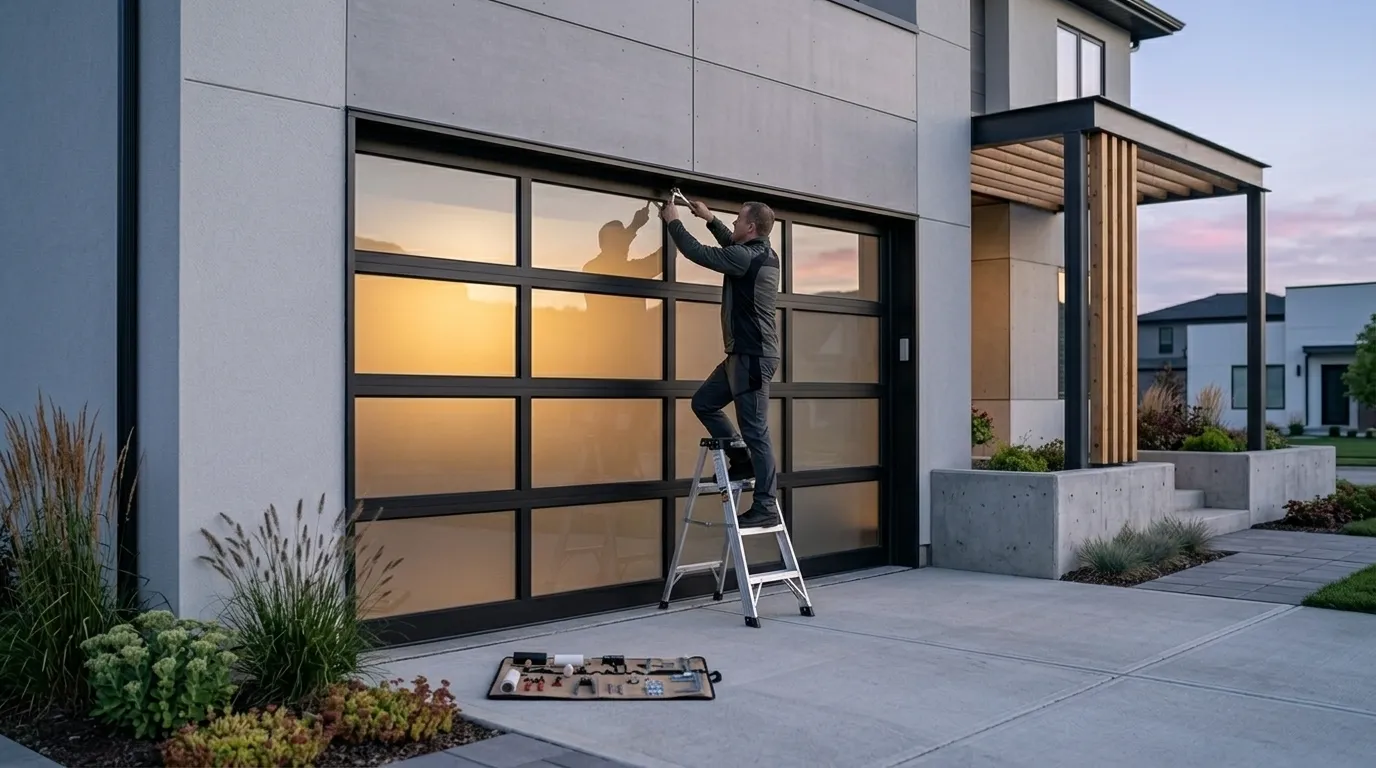
We run out of Newark, about ten miles west, so a roller job in Buckeye Lake isn't a same-block call - it's a scheduled trip. Tell us the door's age and whether it's grinding, jumping the track, or just loud, and we'll bring the right roller stock the first time instead of guessing on-site. Steel ball-bearing rollers and nylon rollers aren't interchangeable with the hardware on every door, and a lot of the doors out here still carry their original tracks from the 1970s, so we ask a few questions up front. We don't keep a branch in Buckeye Lake - we're a Newark-based crew that covers this area, which means the fastest booking is one where you've already checked which side of the door is making the noise (front rollers versus back rollers near the springs) before you call. That one detail saves a second trip more often than anything else we ask.
Use the link below for the roller-specific job, and see our general Buckeye Lake repair page if you're not sure a roller is actually the problem.
What Causes It Around Here
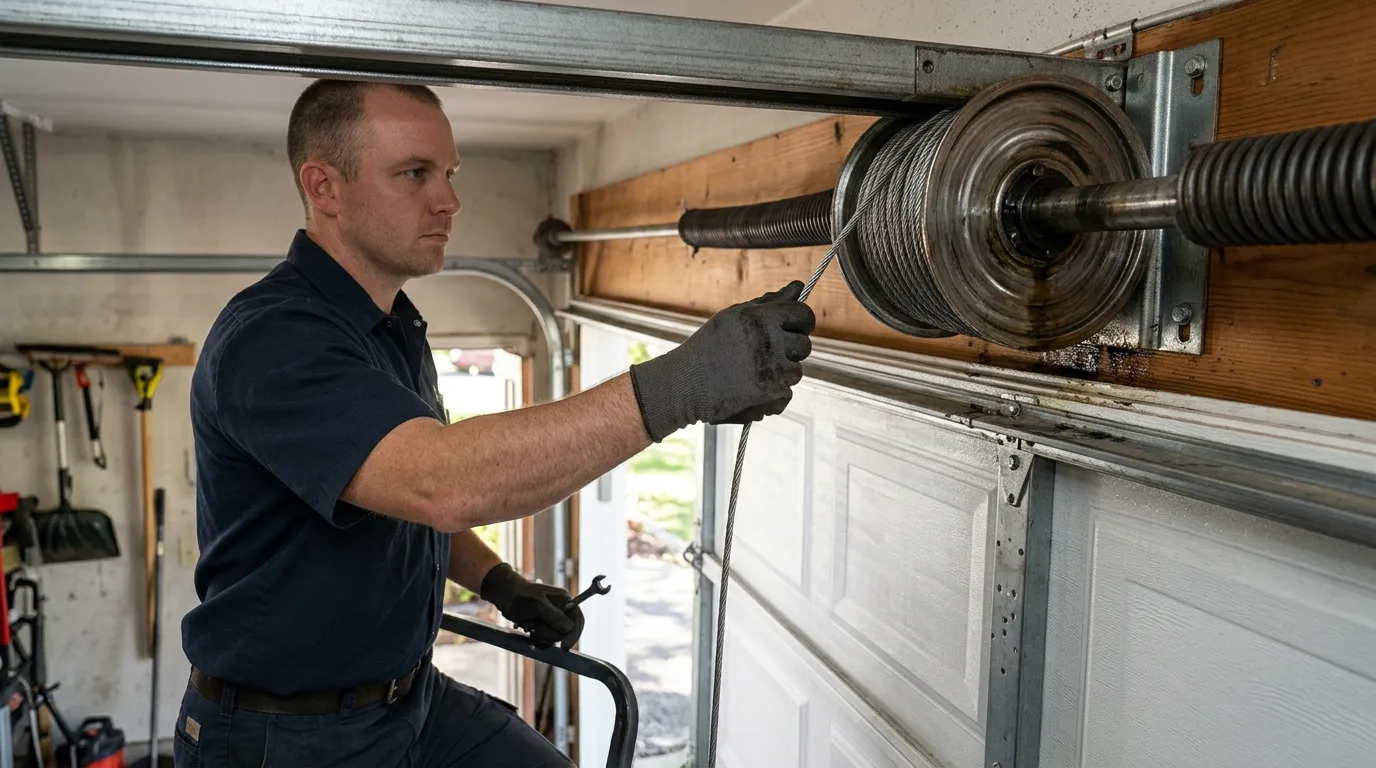
The fault we see most in this pocket is worn or cracked rollers on doors that are pushing fifty years old. With a median build year of about 1975 here, a lot of these garages still have their original steel rollers on plain (not sealed) bearings - the kind that were standard before nylon became the norm. Steel-on-steel rollers wear the track groove itself over decades, not just the roller, so by the time the roller is visibly chewed up, the track often needs attention too.
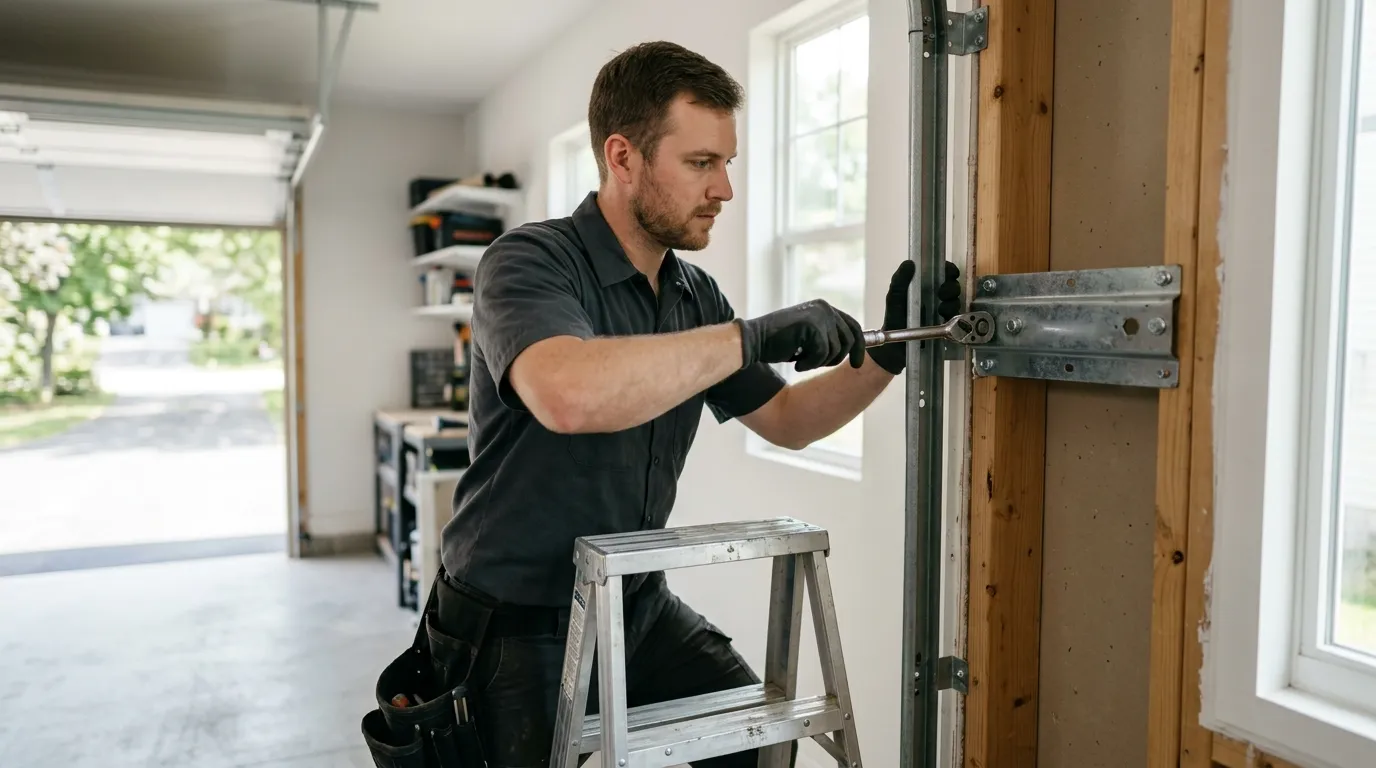
Ohio's cold winters make it worse. In a severe cold climate, steel rollers stiffen and the grease inside the bearing thickens, so the door drags hardest on the first cold mornings of the season - that's usually when we get the call. Nylon rollers installed as a later upgrade have their own failure mode: they get brittle and chip at the edges after enough winters, especially if they were never lubricated. Either way, the age of the housing stock out here means we're rarely swapping one roller in isolation - the hinges holding the roller stem are usually worn to match.
How It Shows Up
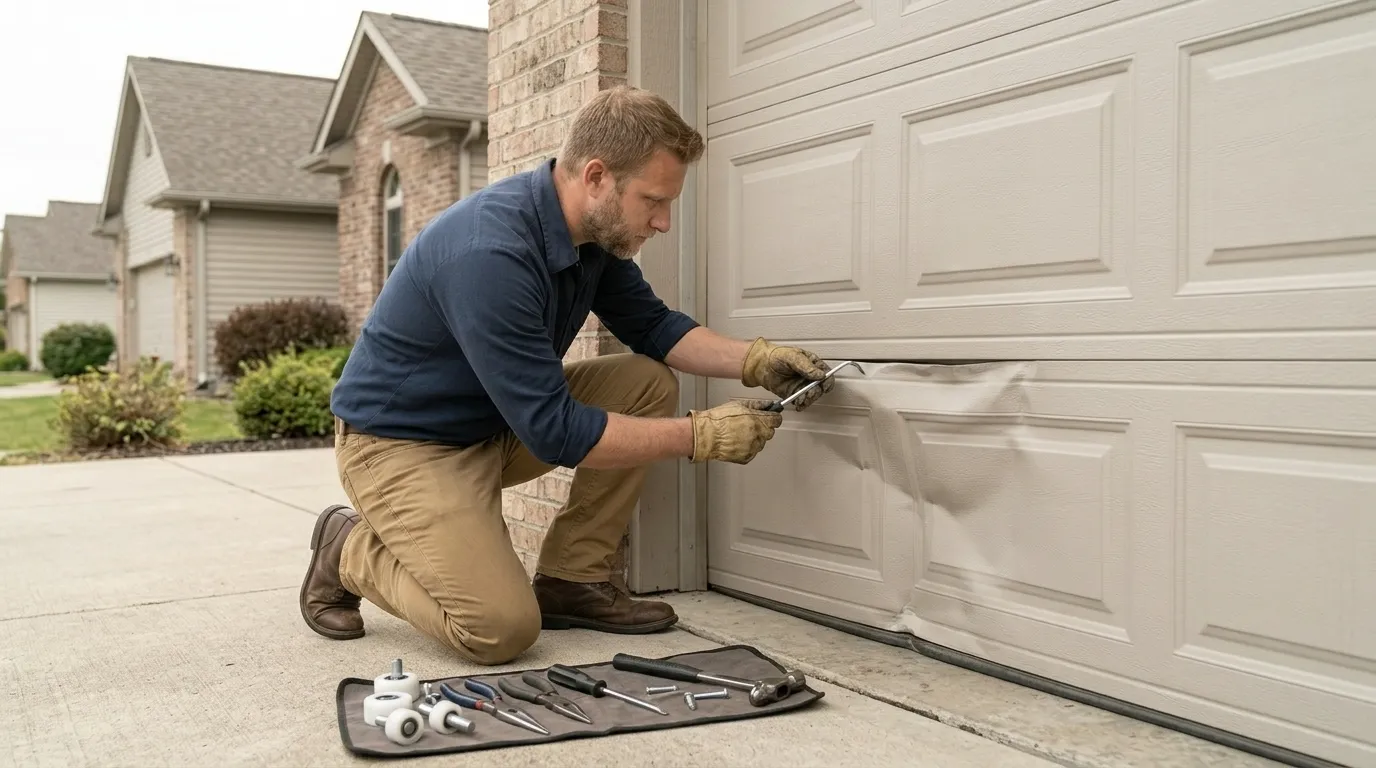
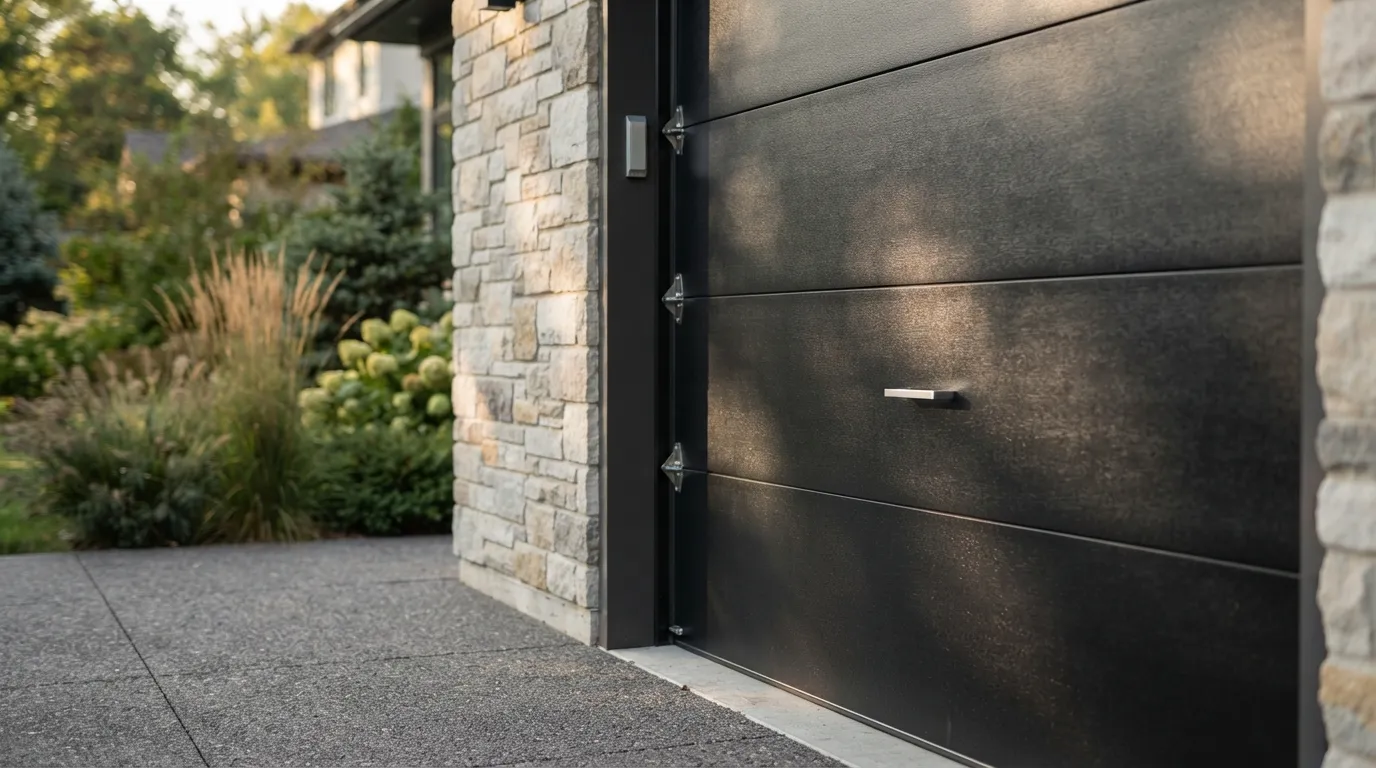
Most owners notice it first as noise - a grinding or popping sound as the door travels, worse on cold mornings when the bearing grease has stiffened. Some describe a jump or hesitation at a specific point in the track, which usually marks the exact spot where a roller has flattened or cracked. Others see it visually: a roller sitting at an angle in its bracket instead of straight, or a track that's visibly gouged where metal has worn against metal.
On the older doors common to this area's mid-1970s housing stock, the symptom often shows up together with a stiff opener - the opener motor works harder to pull a door that's dragging on worn rollers, and some owners assume the opener itself has failed. It hasn't; it's compensating. If the door only complains in the first cold snap and then quiets down some as it warms, that's a strong sign the rollers are the issue rather than the springs or cables, which tend to fail regardless of temperature.
What Can Go Wrong
Waiting on a bad roller usually turns a small repair into a bigger one. A roller that's fully seized can bind in the track hard enough to bend the roller stem or crack the section of door panel it's mounted to - at that point you're paying for a panel repair on top of the roller. A cracked roller can also derail from the track entirely, and if that happens while the door is under spring tension, the door can drop unevenly and put stress on the opposite side's hardware too.
We'll be honest about the limit here: if the roller failure has already gouged the track badly, or if the door is old enough that matching hardware is hard to source, roller replacement alone won't quiet the door for long. In that case we'd rather tell you a full hardware refresh or a new door makes more financial sense than patching around wear that's already spread. We don't push a bigger job when a clean roller swap will hold, but we also won't sell you a roller fix on a door where the track is the real problem.