Serving Newark, OH & nearby
(220) 239-4920
Newark, OH

Garage Door Repair for Buckeye Lake Homes

Garage door repair for Buckeye Lake, OH homes built around 1975 - torsion springs, worn rollers, and openers on doors ten miles from our Newark shop.

Garage Door Repair for Buckeye Lake Homes
Newark, OH
8 services
7 service areas
Diagnosis first, then the fix

How to Book

Buckeye Lake sits about 10 miles from our shop in Newark, so we schedule the drive as part of the job rather than promising a same-hour arrival we can't back up out here. Call and tell us what the door is doing - grinding, hanging on one side, opener clicking but not lifting - and we'll get a truck routed out. Because the trip out from Newark is part of every job here, we ask for a good phone number and a description of the door (single or double, wood or steel) so the tech loads the right spring and roller stock before he leaves. There's no local branch in Buckeye Lake itself; every call here is dispatched from Newark, which is worth knowing if you're expecting a walk-in counter or a drop-off drive.

What Causes It Around Here

The typical Buckeye Lake garage door dates to around 1975, which puts most of them on steel sectional doors from an era before foam-core insulation was standard. A lot of these are single-layer steel panels, 16x7 for the two-car openings, running on torsion springs sized for a lighter, uninsulated door. Forty-plus years of Ohio winters is hard on that hardware. Cold-band temperature swings shrink and expand the steel skin and stress the spring's coil, which is why torsion springs from this era fail more often than the newer double-loop springs on insulated doors. Rollers on these older doors are usually the original steel or nylon rollers without sealed bearings, and by now most have shed their lubrication years ago, so the door labors and the track wears unevenly. If your opener is original to the door, it's a chain-drive unit with a mechanical limit switch that drifts over time - that's a different fault from a spring problem and gets diagnosed separately.

How We Fix It

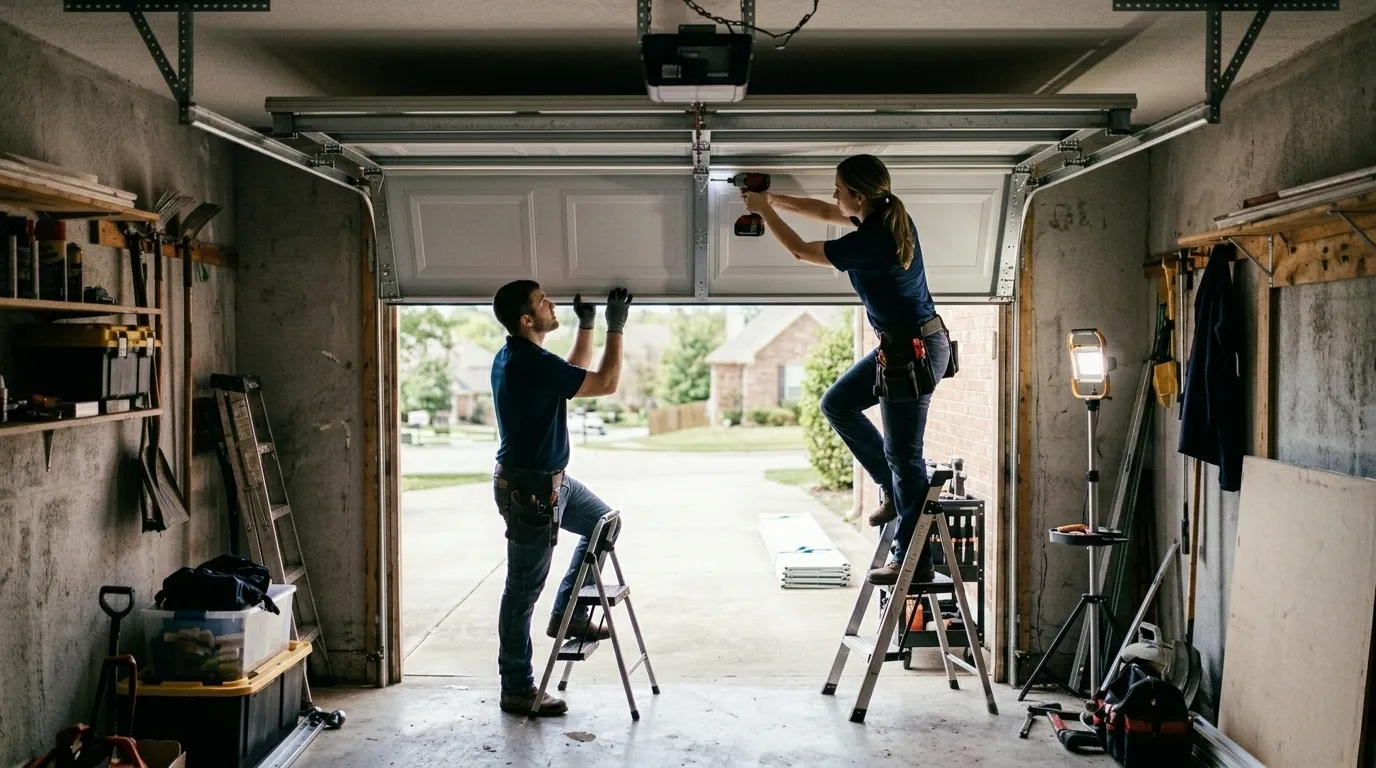
We start by watching the door move before we touch anything - a jerky lift, uneven side-to-side motion, or a bang on close each point somewhere different. On a 1975-era door, the torsion spring is almost always the first thing we check, since the coil gauge on these older doors was sized lighter and doesn't hold up as long as current stock. We replace rollers in full sets rather than one at a time, because a mismatched roller on an old track just moves the wear problem down the line. Cable fraying near the bottom bracket is common on doors this age and we replace both cables together even if only one shows wear - it's cheaper than a second trip. Track alignment gets checked with a level, not by eye, since decades of settling shift the jamb on older framing. We carry spring and roller stock sized for both older uninsulated doors and newer insulated ones, since Buckeye Lake has a mix of both by now.

How It Shows Up

On a door this age the symptoms tend to be mechanical, not electronic. A torsion spring going bad on an uninsulated steel door usually shows up as the door feeling heavy right at the opener - it strains, stutters, or reverses partway. A broken cable shows as one side of the door dropping faster than the other, sometimes with a loud bang. Worn rollers sound like a grinding rattle that gets louder as the door travels, especially near the top of the track where the curve is tightest. If the opener is the original chain-drive unit, you'll often hear the motor run but see the door not move at all - that's the drive gear stripped, not the spring. None of these are subtle once you know what to listen for, and on a house built around 1975 the odds favor spring, cable, or roller over anything electronic.

What Can Go Wrong

A torsion spring under tension can whip the winding bar out of your hand hard enough to break a wrist or worse - this is not a Saturday project, full stop, and we mean that whether you called us or not. On doors this old, sometimes the track itself has rusted or bent enough that a roller replacement won't hold; we'll tell you straight if the track needs replacing too rather than patching around it. Occasionally a door this age has been repaired with mismatched parts over the years - a newer spring on an old drum, or a roller size that doesn't match the track gauge - and that mismatch is often the real reason for the noise or binding, not whatever failed most recently. We won't put a new spring on a track we don't trust; that's the honest limitation here, and it sometimes means a bigger estimate than you expected.

What You Pay

We don't have a posted price list for Buckeye Lake calls specifically, since parts vary by door age and the trip adds to the estimate compared to jobs inside Newark itself. What we can say is that a torsion spring or roller-set job on an original 1975-era steel door is usually a more contained repair than on a newer insulated door, since the parts themselves are simpler and cheaper to stock. If the track or the opener drive gear needs replacing alongside the spring, that adds to the job - we quote it before we start, not after. We'll always tell you if replacing the whole door makes more sense than repairing a forty-plus-year-old one with a bad track and a stripped opener gear; sometimes the honest number is a new door, not a repaired one.

How it works

From “it’s stuck” to “it’s fixed”

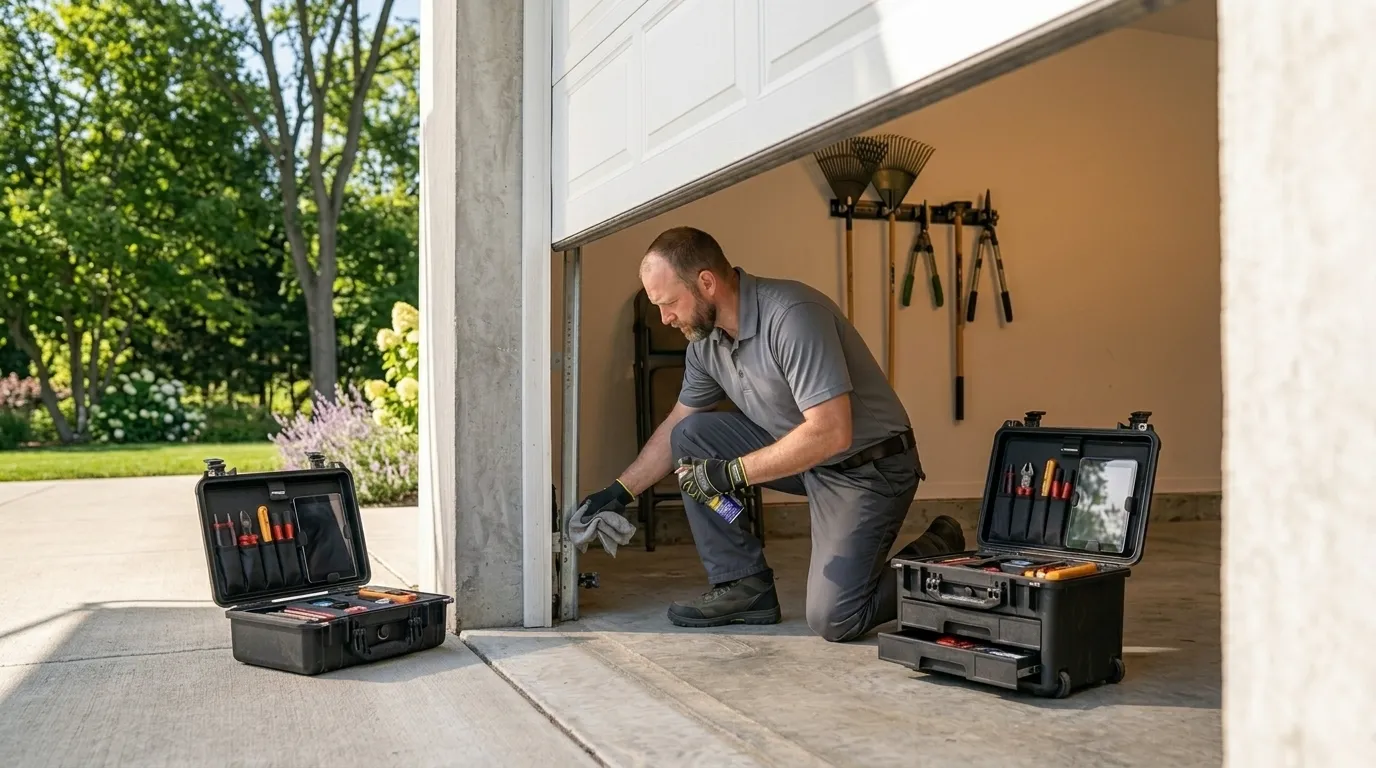
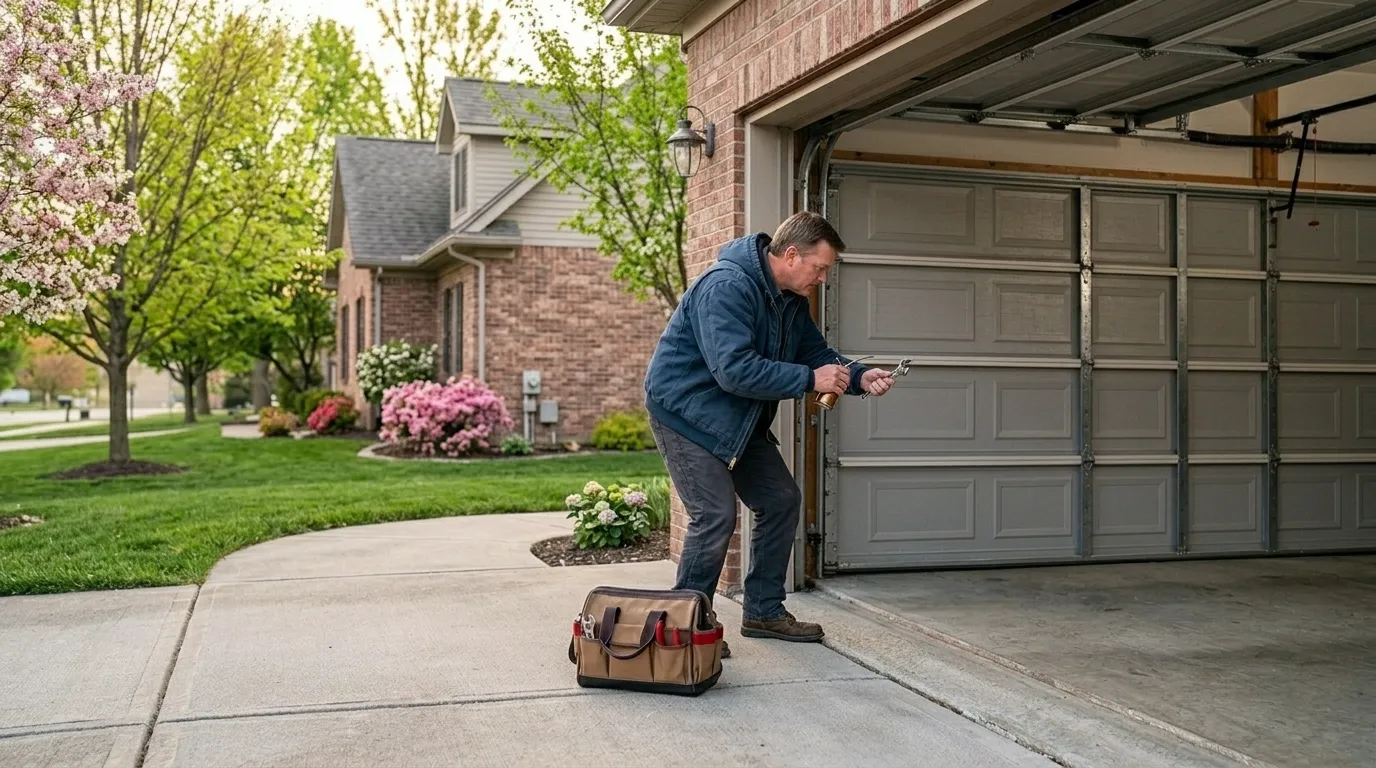
Tell us what’s wrong - Newark garage door service

Tell us what’s wrong

Describe the symptom - won’t open, loud bang, opener runs but the door won’t move.

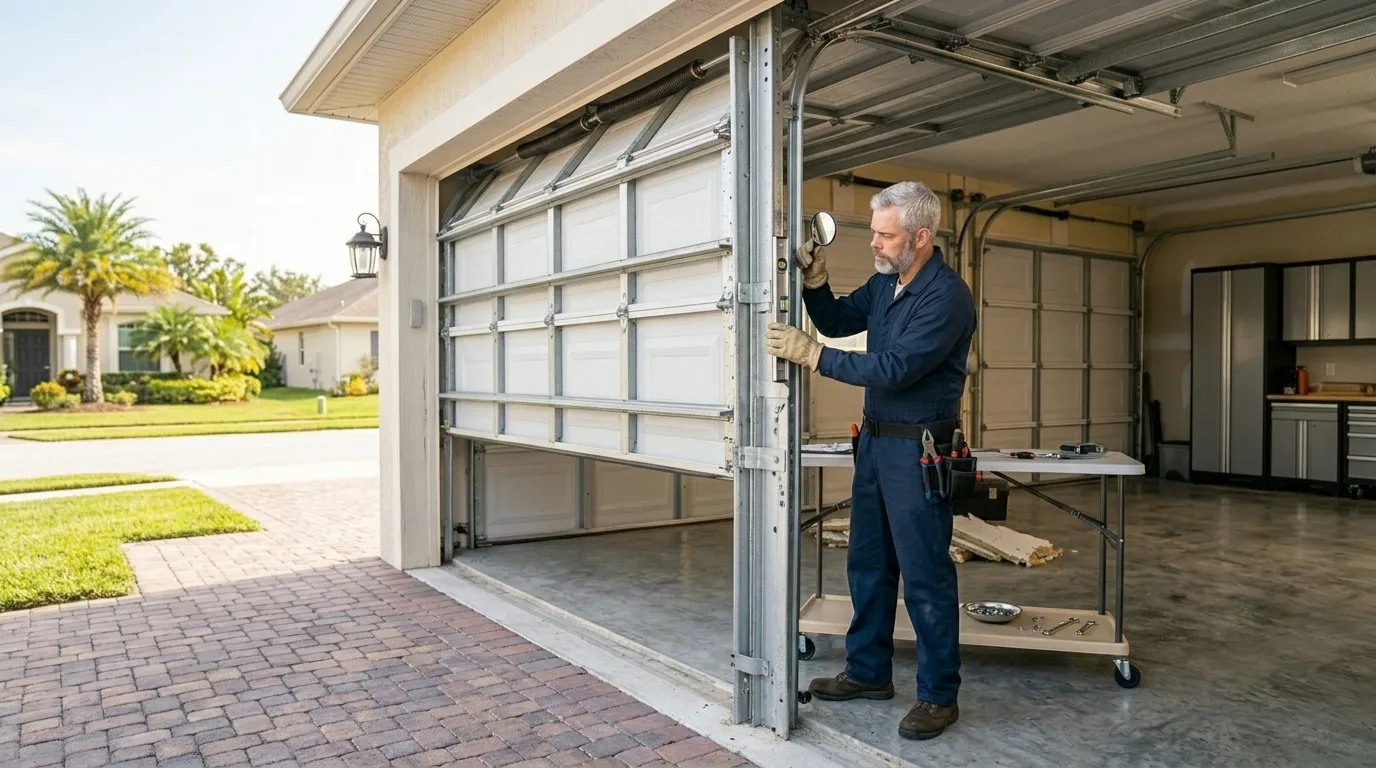
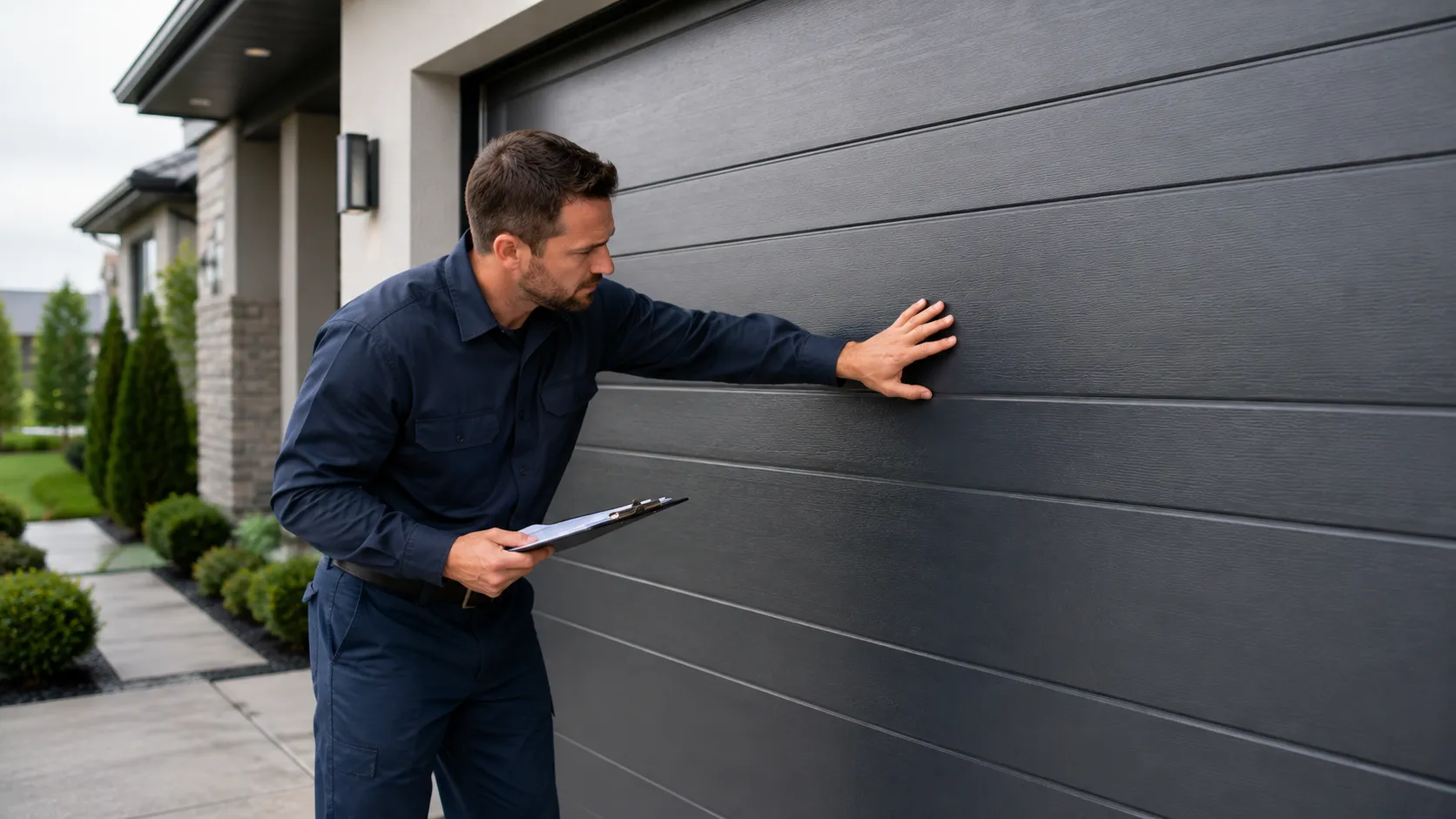
On-site diagnosis - Newark garage door service

On-site diagnosis

A technician tests the door under power and by hand and finds what actually failed.

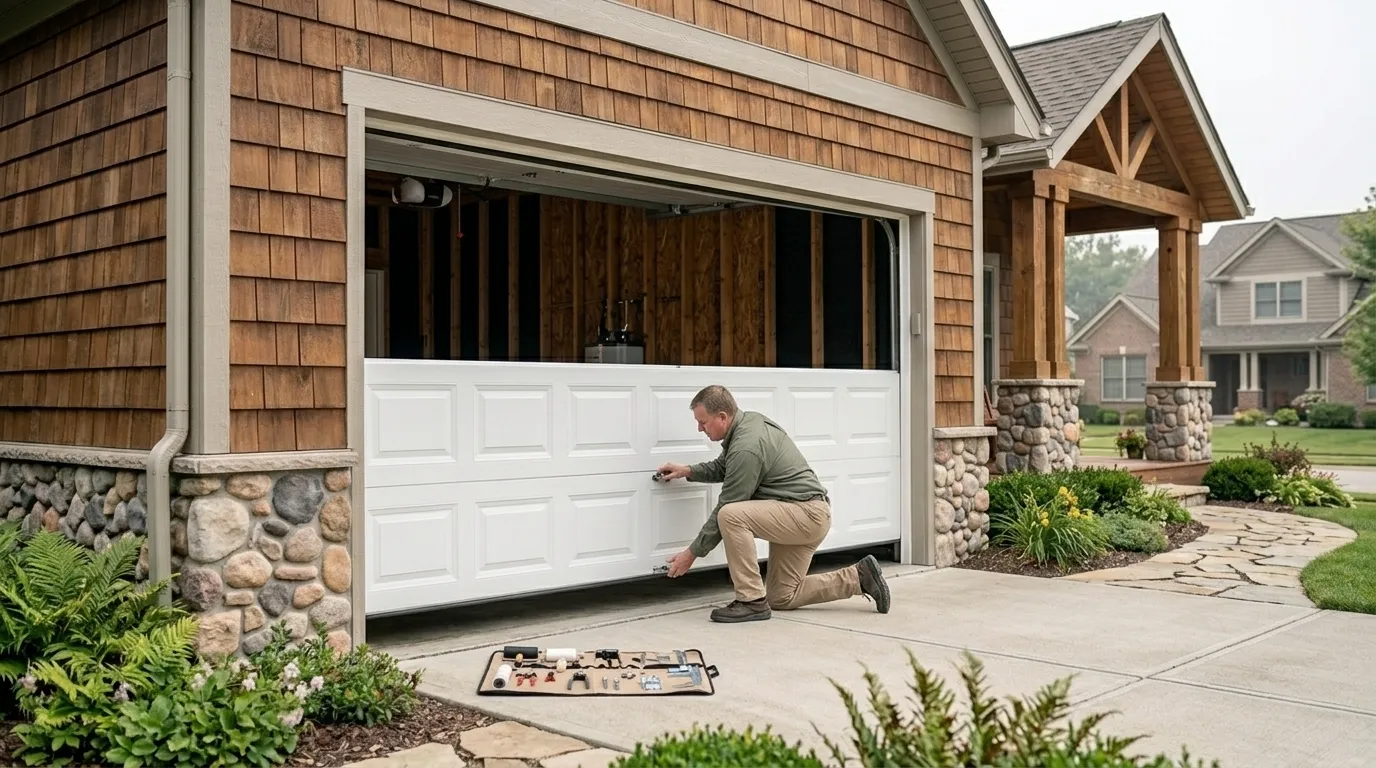
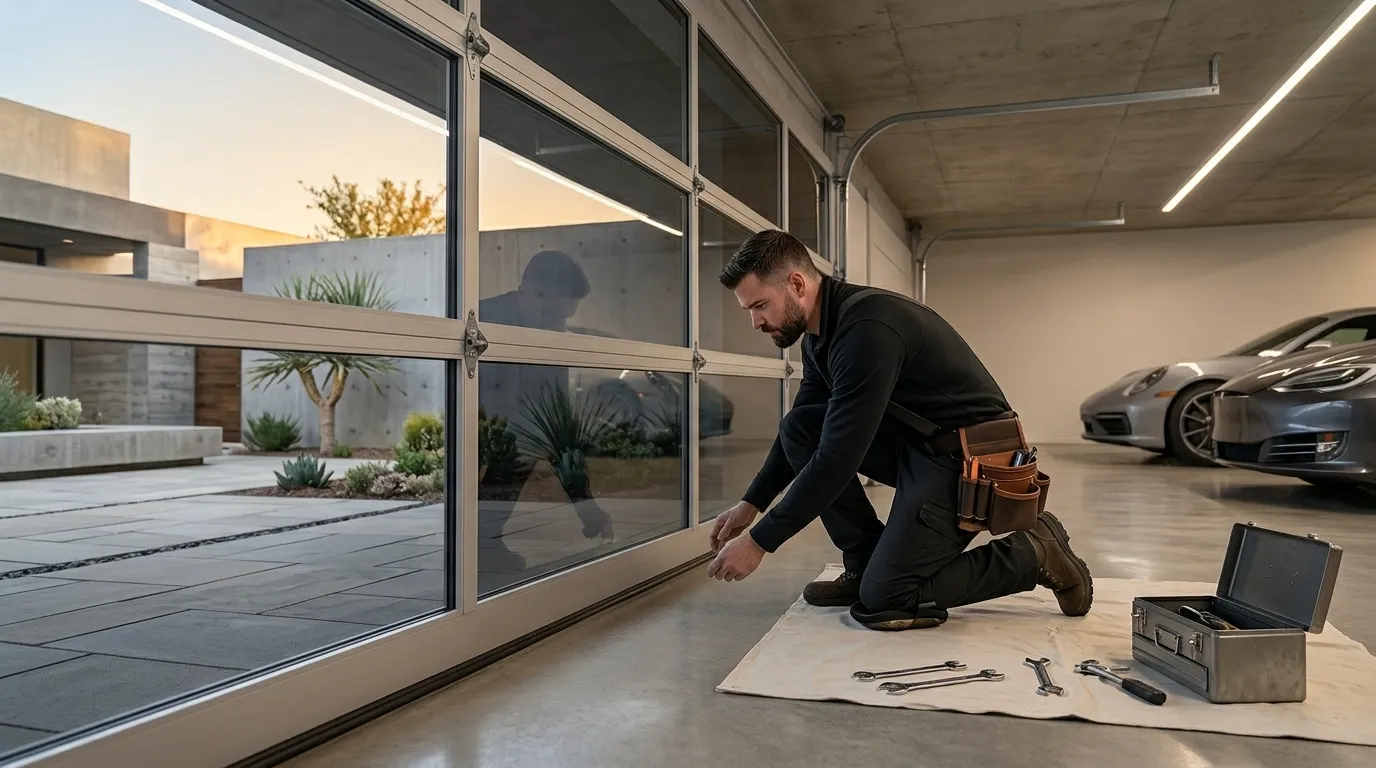
Clear, up-front plan - Newark garage door service

Clear, up-front plan

You get the fix that’s needed and what drives the cost - before any work starts.

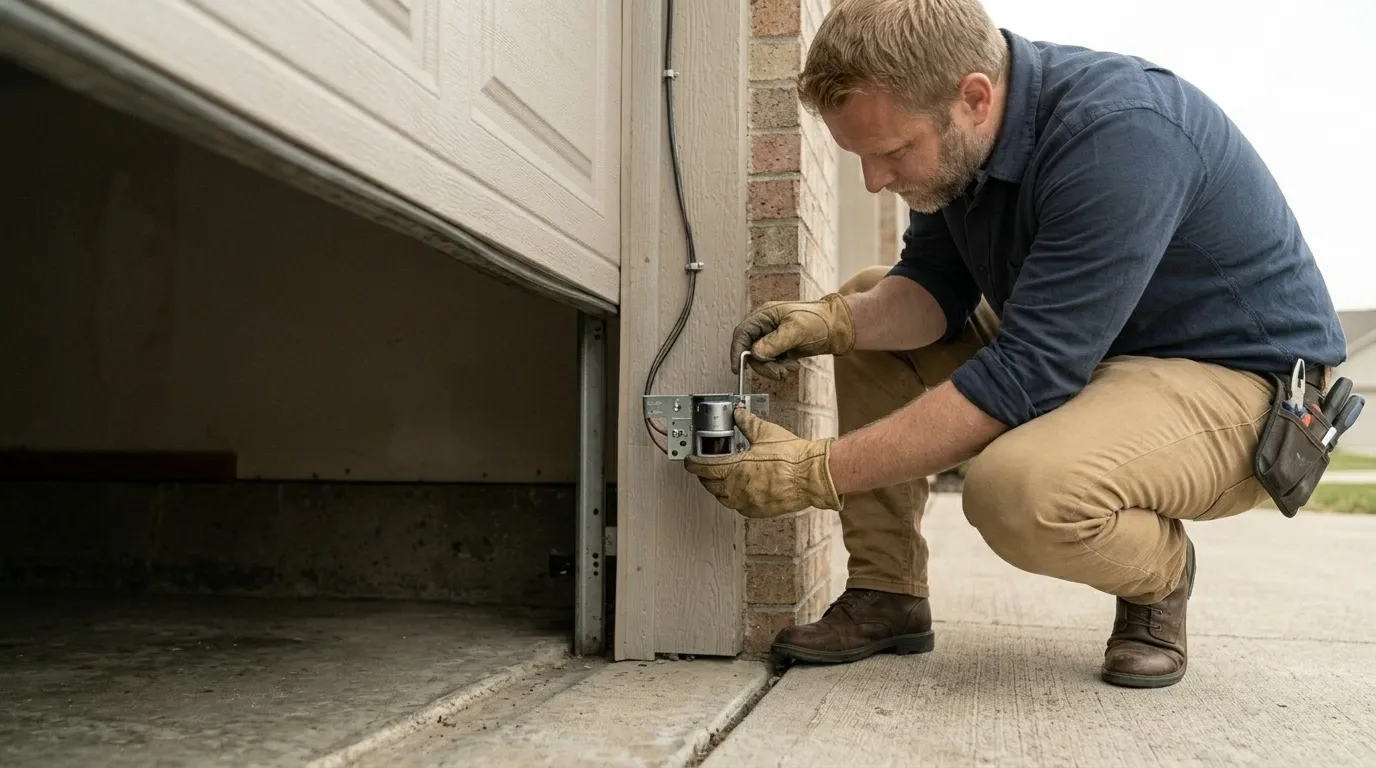
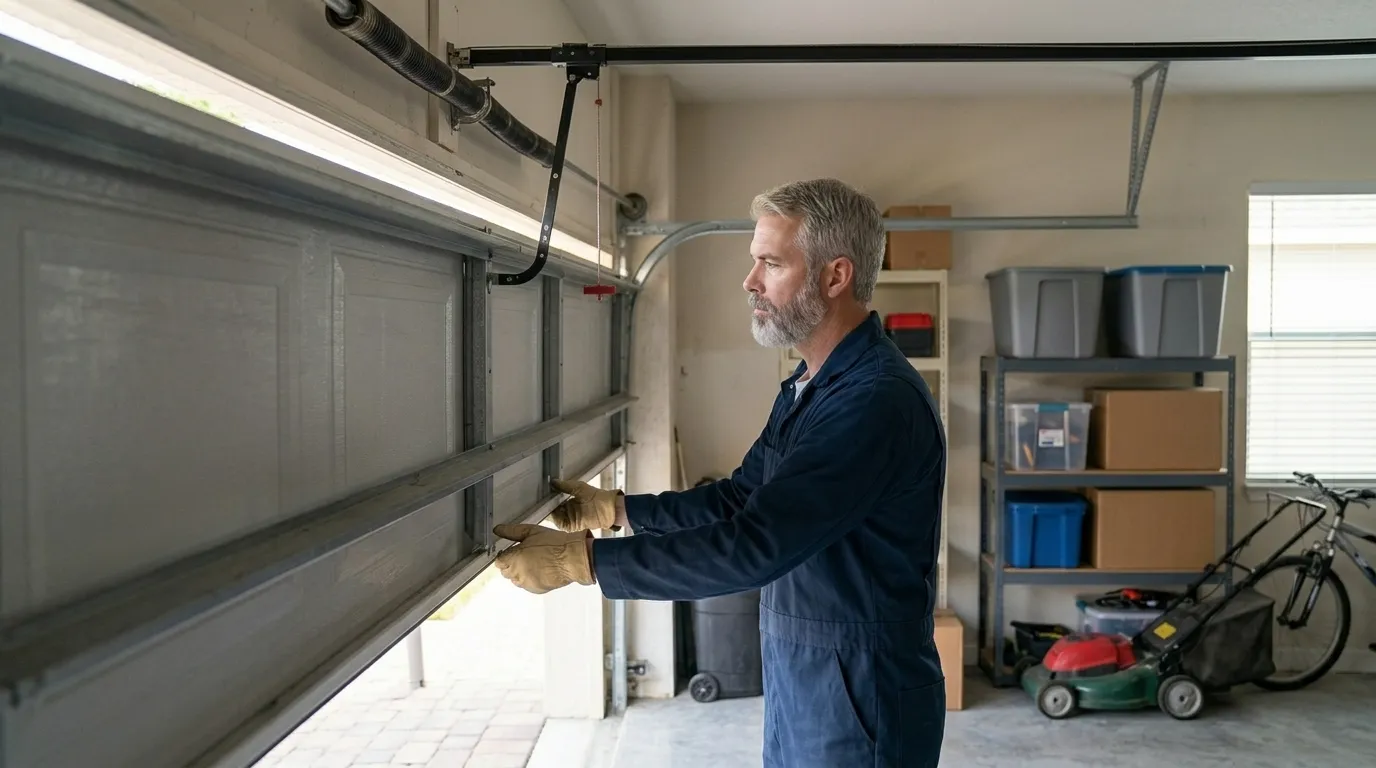
Repaired & tested - Newark garage door service

Repaired & tested

The repair is done, the door is set true and tested, and the work area left clean.

Serving Newark, OH - tell us what your door’s doing and we’ll take it from there.

How we work

What to expect

Diagnosis firstEvery visit starts by finding what actually failed - not a pre-written parts list.
The right part for the doorSprings and openers matched to the door’s weight and age, so the fix holds up.
Straight answersWhen a repair makes more sense than a replacement - or the reverse - you hear it plainly.
Clean, careful workTension released safely, hardware set true, the door tested under power before we leave.
47,986Residents in Newark
8Garage door services
7Neighborhoods & suburbs
OHServing Newark, OH
Questions

Frequently asked

Straight answers about garage door repair in Newark. Still unsure? Ask us directly.

Do you have a location in Buckeye Lake?

No. We're based in Newark, about 10 miles away, and every Buckeye Lake call is dispatched from there. There's no local counter or drop-off point in Buckeye Lake itself - the truck comes to you.

Why does my old garage door spring break so often?

If your house was built around 1975, like most in Buckeye Lake, the door is likely an original uninsulated steel panel on a torsion spring sized lighter than current standard. Decades of cold-weather stress on that older coil gauge is the usual reason it keeps failing.

Can you fix the door instead of replacing it?

Often, yes - especially spring, cable, and roller failures on an otherwise sound door. But if the track is bent or rusted through, or the opener's drive gear is stripped on top of everything else, replacing the whole unit is sometimes the more honest answer than patching an old system.

How fast can you get out to Buckeye Lake?

We don't promise a set response window for Buckeye Lake since it's a 10-mile drive from our Newark shop, not a local stop. Call and we'll give you a realistic estimate for that day based on the route and what's already scheduled.

Ready to get your garage door sorted?

Tell us what it’s doing and where you are in Newark - we’ll take it from there.

Request a QuoteCall