How to Book
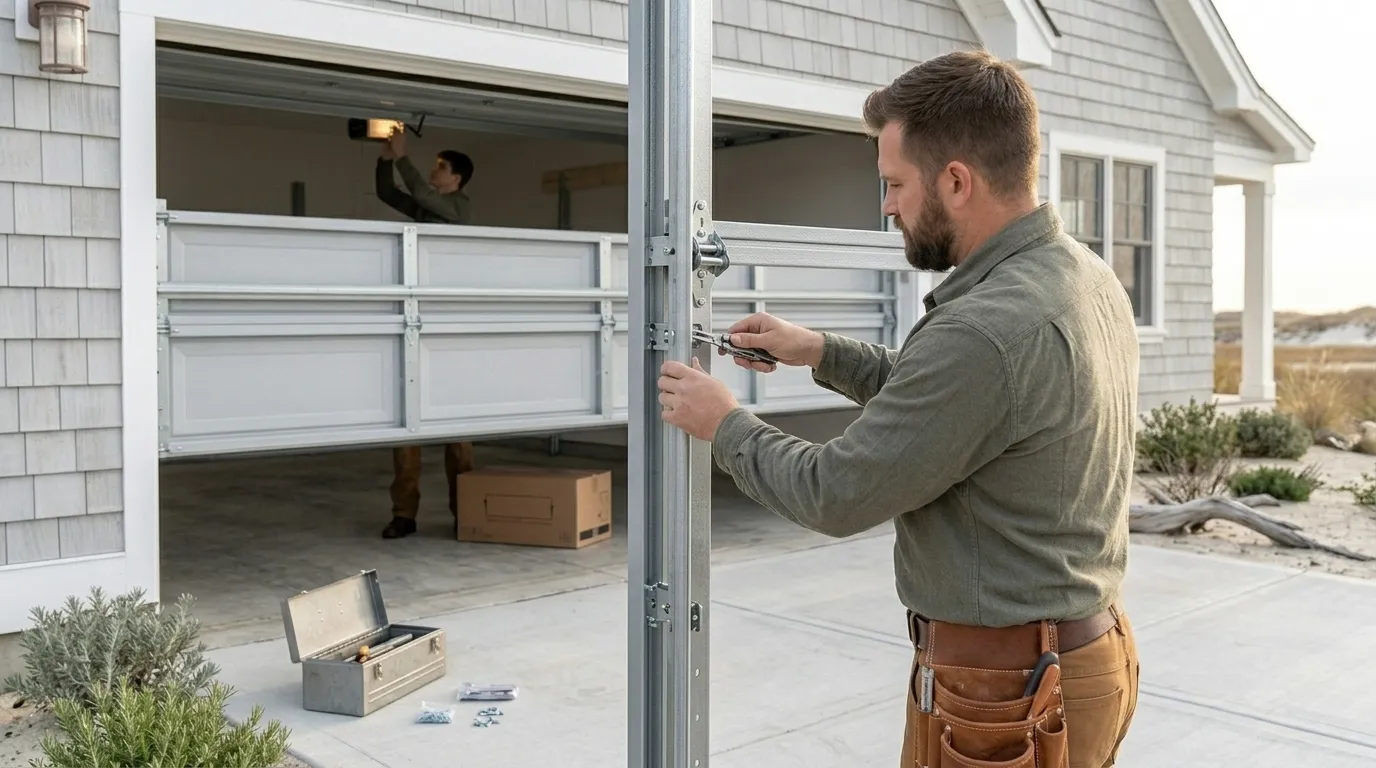
We run this job out of Newark, ten miles up the road, so there's no branch office sitting in Buckeye Lake itself. That means we schedule the panel job same as any call in the service area: you tell us the door make, panel size, and what happened, we tell you whether we can match the existing panel or whether the whole section needs to come off. For a small lake community of about 1,087 households, we're not out here every day the way we are in the denser parts of the service area, so give us a call ahead of when you need the truck rather than expecting a same-day drop-in. If you're not sure yet whether this is a panel problem or something bigger with the track or opener, our Buckeye Lake garage door repair page covers the diagnosis side of things.
What Causes It Around Here
Buckeye Lake's housing sits at a median build year of 1975, almost exactly on the mid-1960s-to-70s stock that runs across this whole service area. That means a lot of doors here are original steel sectional units from that era, or first replacements installed not long after, with narrow panel profiles and hardware sized differently than what ships on doors today. A dented or rusted-through panel on one of these doors isn't a quick swap from a big-box shelf. The other driver is the cold: this is a severe cold climate band, and non-insulated single-layer steel panels from that vintage take a beating over decades of freeze-thaw cycling. Rust starts at the bottom panel first, where road salt and standing water sit longest, and it works its way up. We see more bottom-panel failures here than top-panel failures, which tells you where the water damage starts and stays.
How It Shows Up
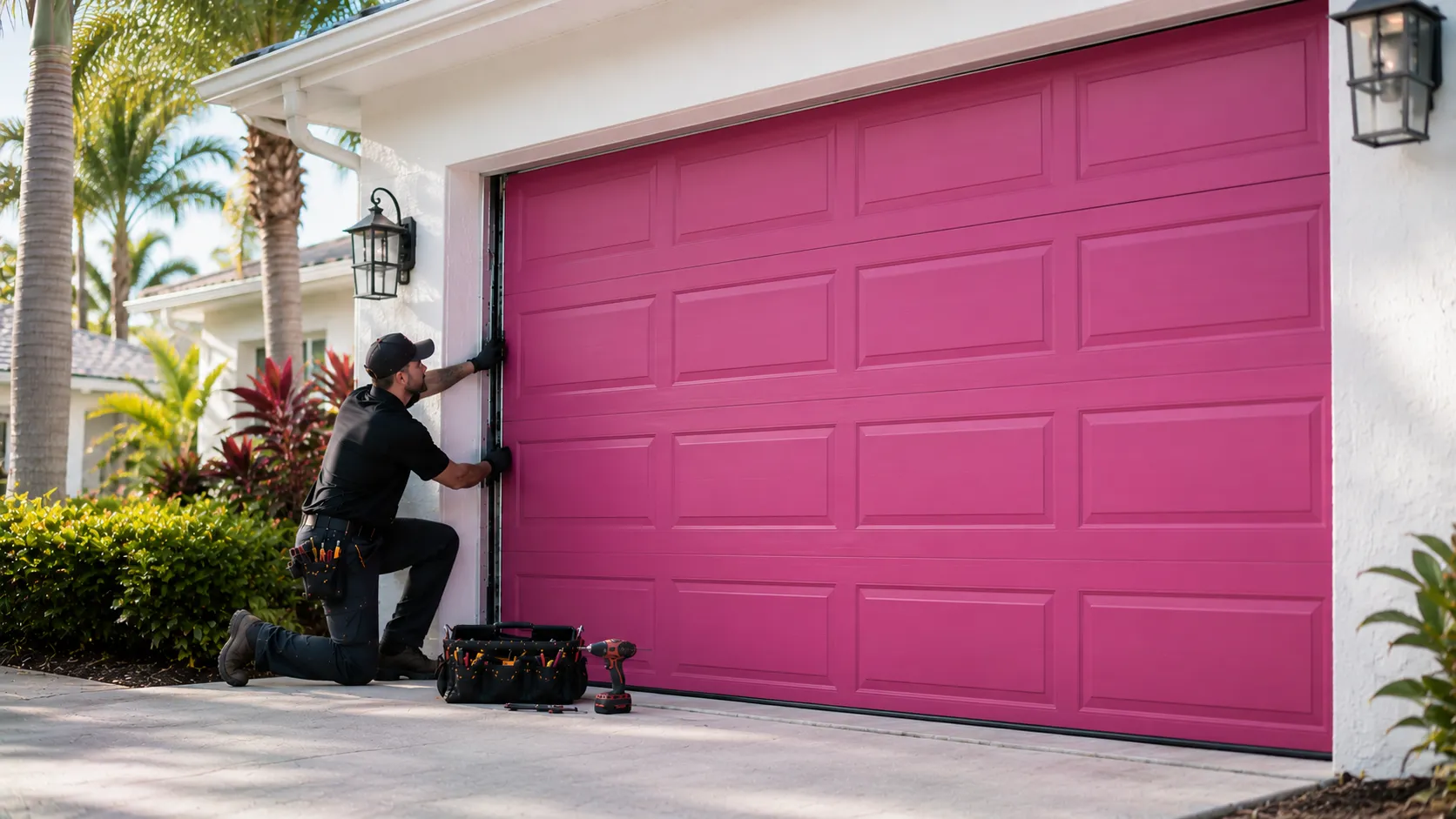
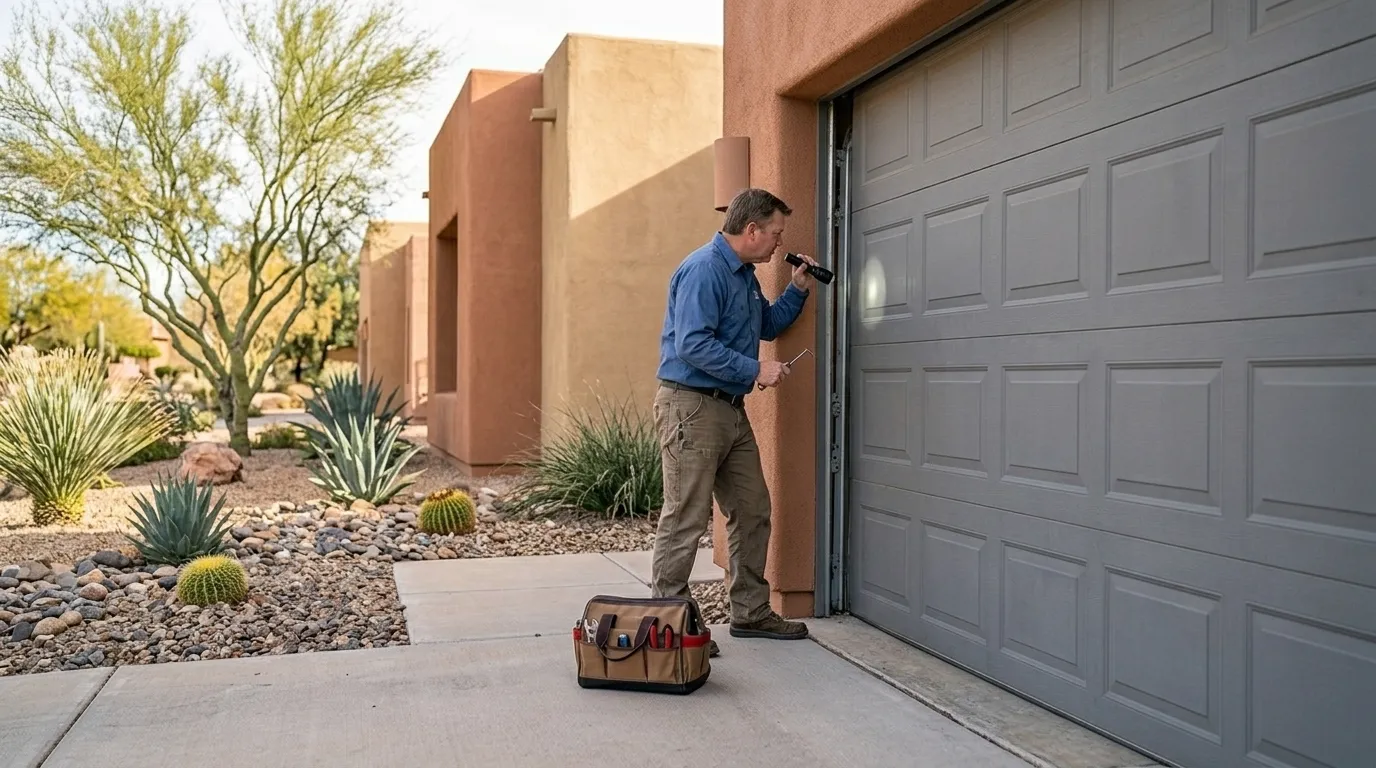
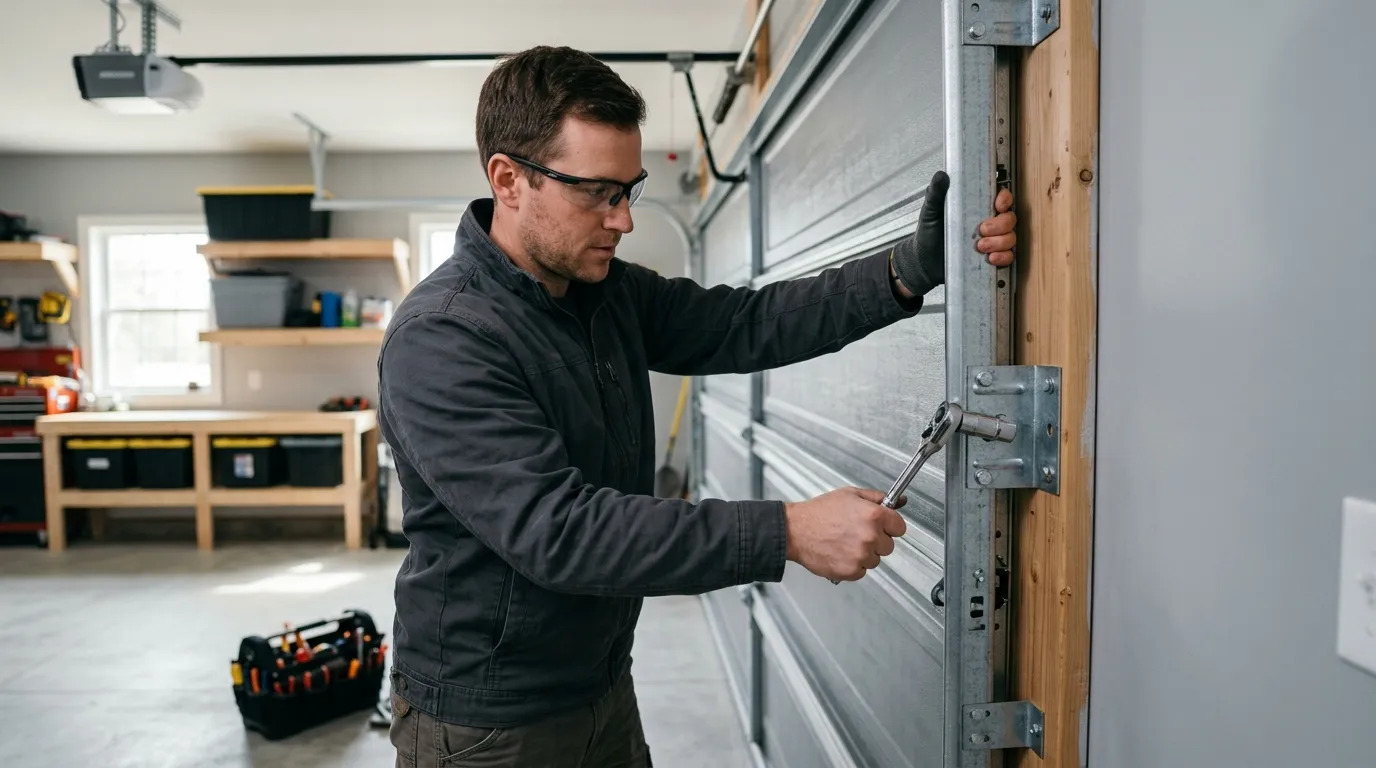
On a door built in the 1975 era, panel failure usually starts as a dent from a car bumper or a basketball, then turns into a rust line once the paint cracks and water gets under it. On steel doors this age, that rust doesn't stay put - it spreads along the seam and weakens the panel enough that it flexes when the door runs, which then throws off the roller alignment on that side. You'll notice the door start to run crooked in the track before the panel itself looks bad enough to worry about. Sometimes it's simpler: a impact from backing out the truck, or hail damage on the wider lake-facing exposures common to homes at this elevation and distance from Newark's more built-up center. Either way, the fix depends on catching it before the bent panel starts pulling on the track.
What Can Go Wrong
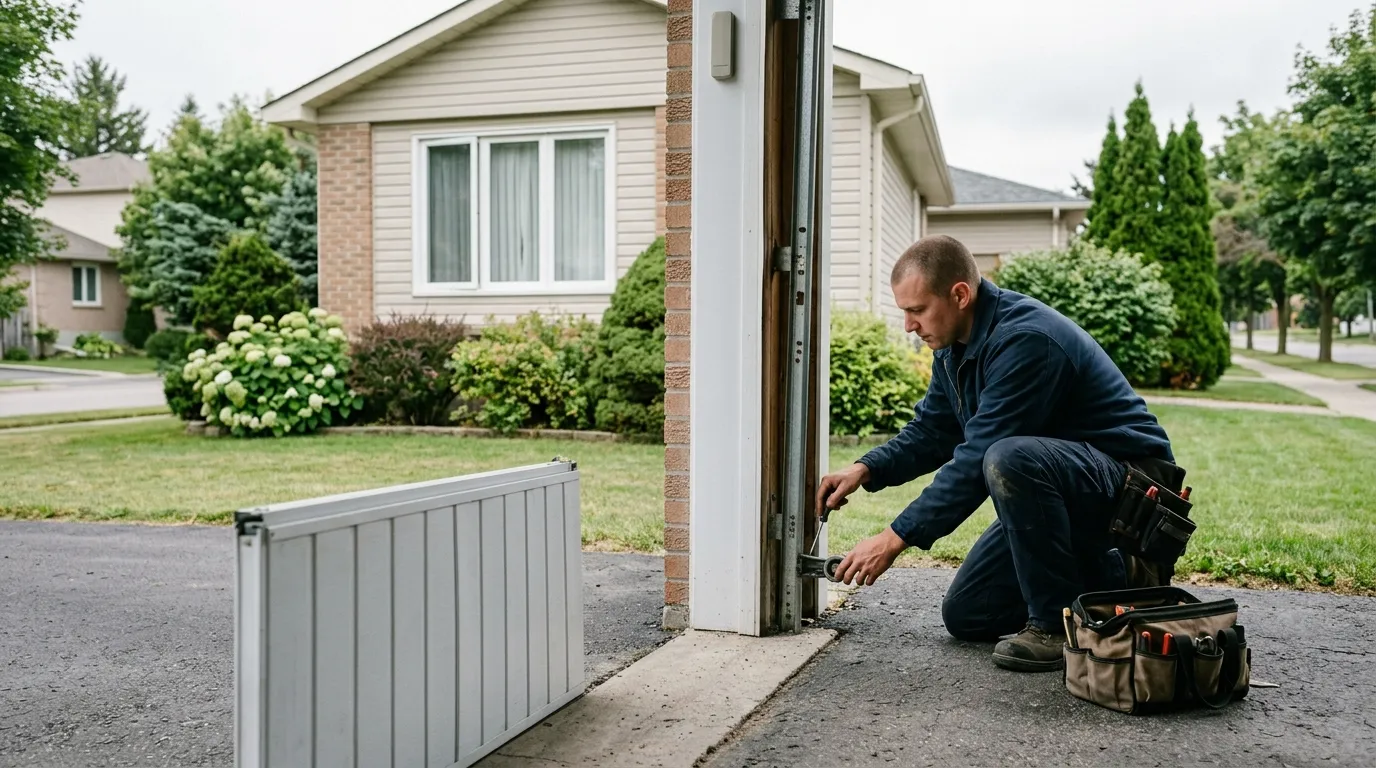
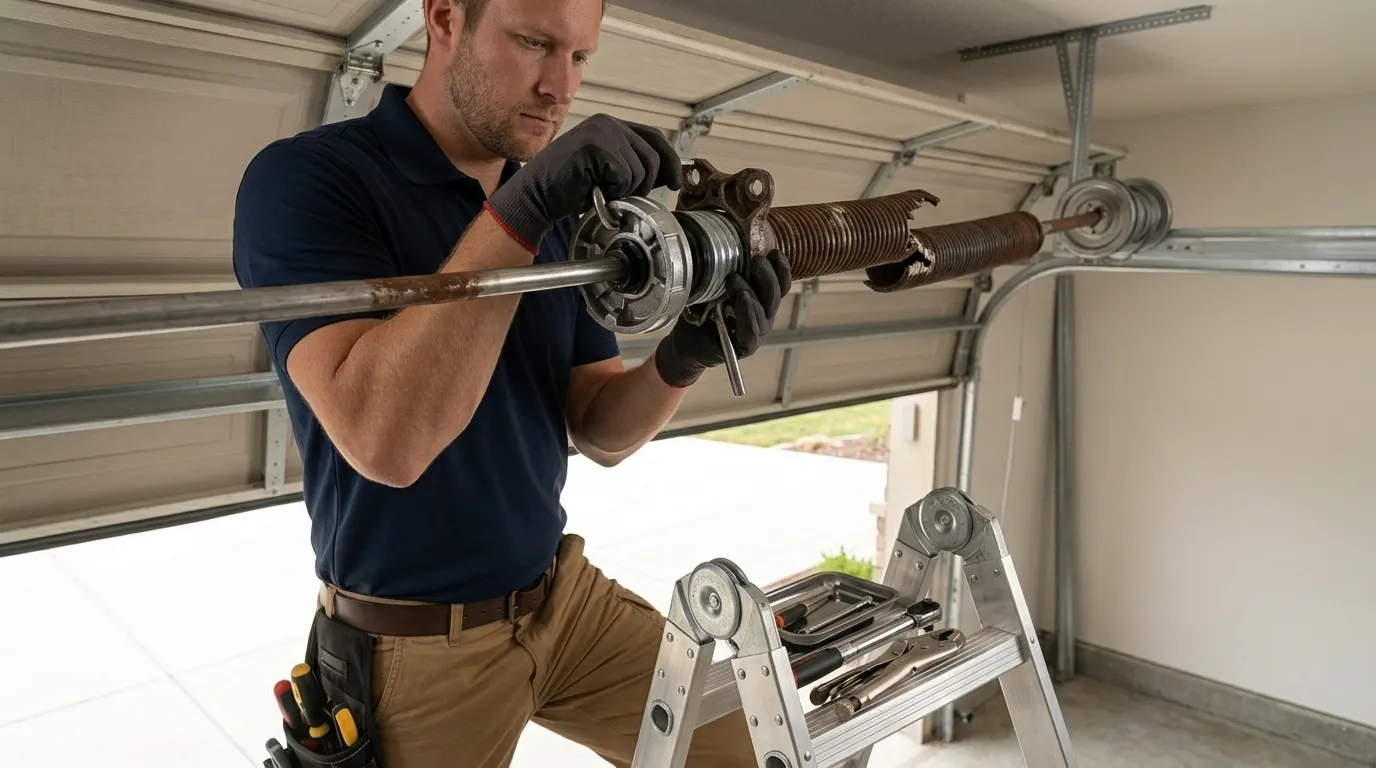
The main risk on a door this old is discovering, once the damaged panel comes off, that the section behind it is thinner-gauge steel that's also rusting from the inside out - common on doors from the 1970s that weren't galvanized as heavily as later stock. That turns a one-panel job into a two- or three-panel job mid-repair. We also see cases where the track and rollers have worn to match the sag of the bent panel, so once we install a straight replacement, the door runs unevenly until we true up the hardware too. And on the smallest scale, an under $75,179 median household income area like Buckeye Lake means a lot of owners want the cheapest fix - which is fine for a cosmetic dent, but not fine if the panel damage has already reached the spring or cable side of the door. We'll tell you which situation you're in before you spend money.