How to Book
We run out of Newark, about 10 miles from Buckeye Lake, so we don't keep a truck sitting idle waiting on a call from your street. When you reach out, tell us the door size, whether it's one spring or two, and roughly how old the opener is if you know it. That's usually enough for us to load the right springs before we ever leave the shop, which matters more here than in a newer subdivision. A house built around the area's median year of 1975 is old enough that the springs on it were sized to a 1970s door weight, and if the door's been swapped since then without a hardware update, the spring on the wall may not even match the door it's lifting anymore. We'd rather ask two extra questions on the phone than show up with the wrong wire gauge.
We don't keep a Buckeye Lake branch or promise a same-hour window here - we travel in for every job, so booking ahead when you can beats calling at the first bad noise. If the spring's already snapped and the door won't move at all, say so; that changes what we bring.
What Causes It Around Here
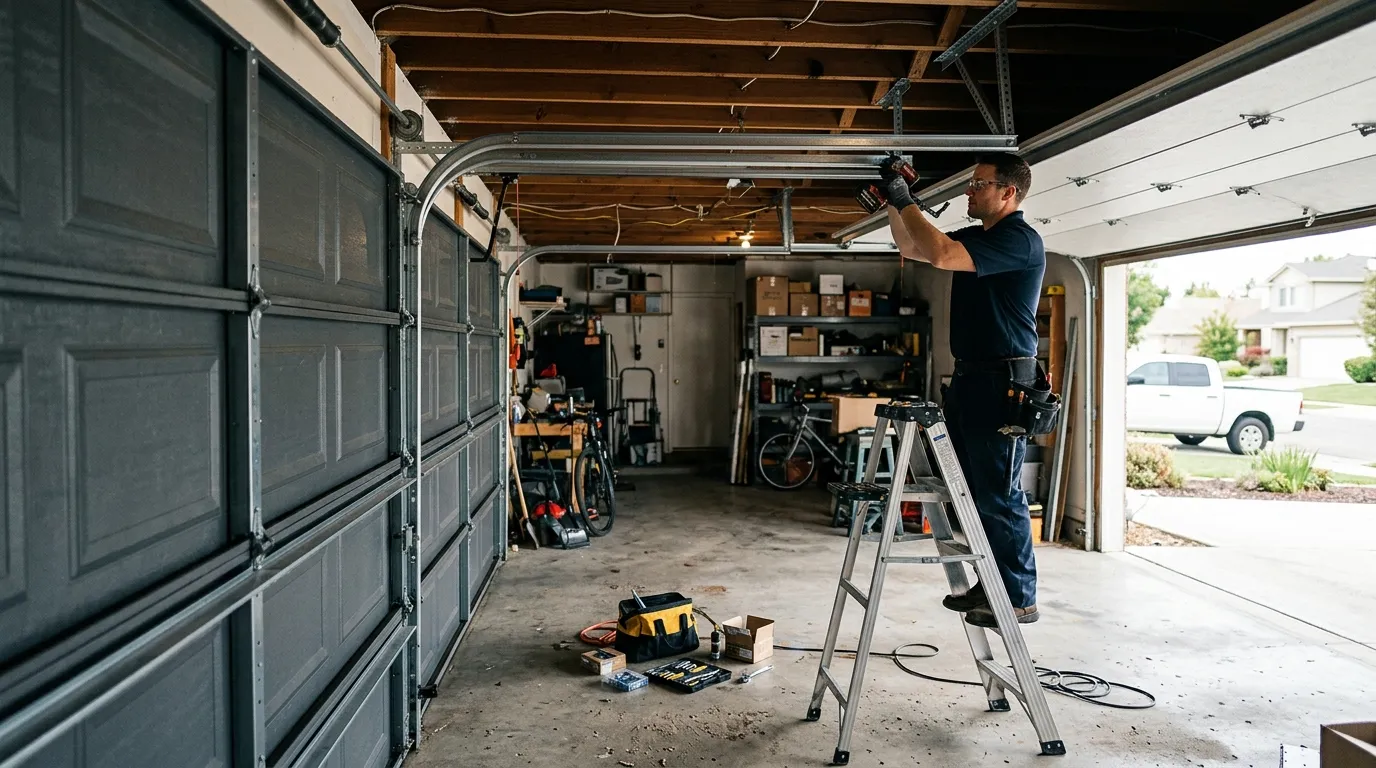
Buckeye Lake's housing stock centers on a median build year of 1975, which puts a lot of these garages at roughly fifty years on their original torsion hardware. Torsion springs are rated in cycles, not years, but a door that's opened and closed twice a day for five decades has put in more work than most springs were ever built to survive. If nobody's touched the spring since the house was framed, it's not a matter of if it goes, it's which winter.
And that's the other half of it: this area sits in a cold, severe climate band, and cold steel is brittle steel. A spring that's fatigued but still holding in July can snap in January when the metal contracts and the door's colder and heavier off the slab. We see more calls in the deep-cold months for exactly this reason - not because the spring failed suddenly, but because it was already near the end and the cold finished the job.
With only about 1,087 households in Buckeye Lake, we're not doing volume here - each job tends to be an older door on hardware nobody's inspected since it went up.
How It Shows Up
The door feels heavier than it should when you pull the release and lift it by hand - that's the first sign the spring's carrying less than it used to. Next comes the opener straining on the way up, sometimes stalling a few inches off the floor, sometimes reversing itself because the sensor reads the extra load as an obstruction.
A full snap is loud - a bang some homeowners mistake for something falling in the garage - and after that the door won't lift at all, or it lifts a few inches and drops. On a lot of these 1975-era Buckeye Lake garages, the door's original enough that when the spring finally goes, the cable or the pulley sometimes goes with it, since none of it has been serviced in the door's working life.
What Can Go Wrong
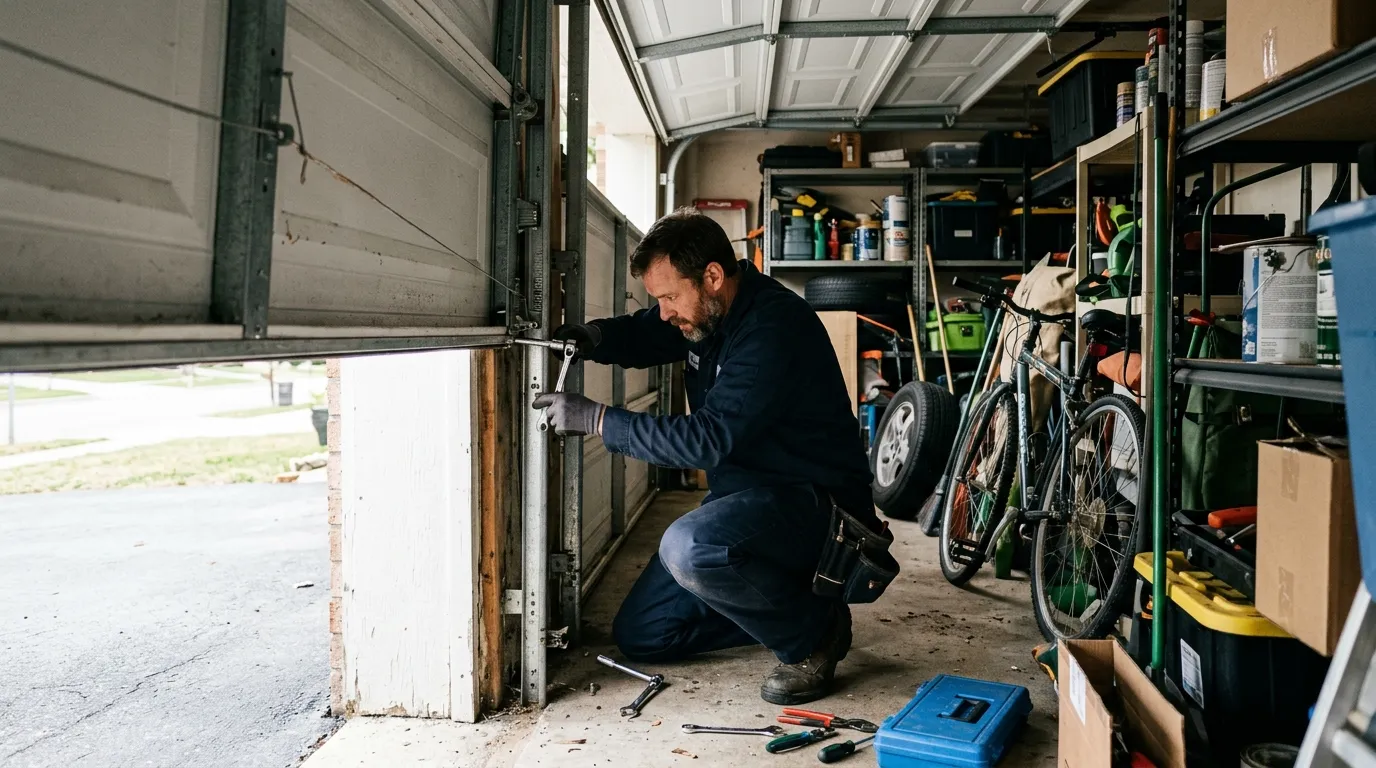
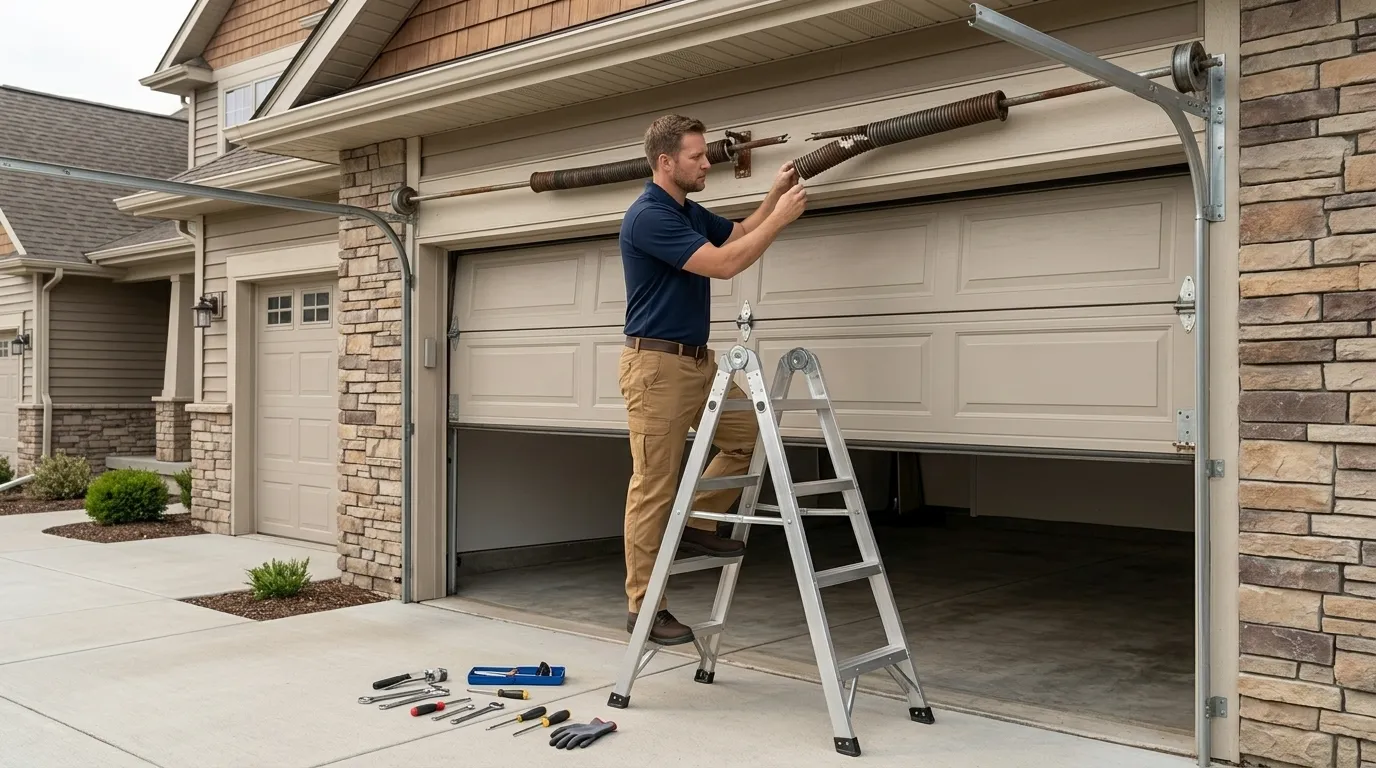
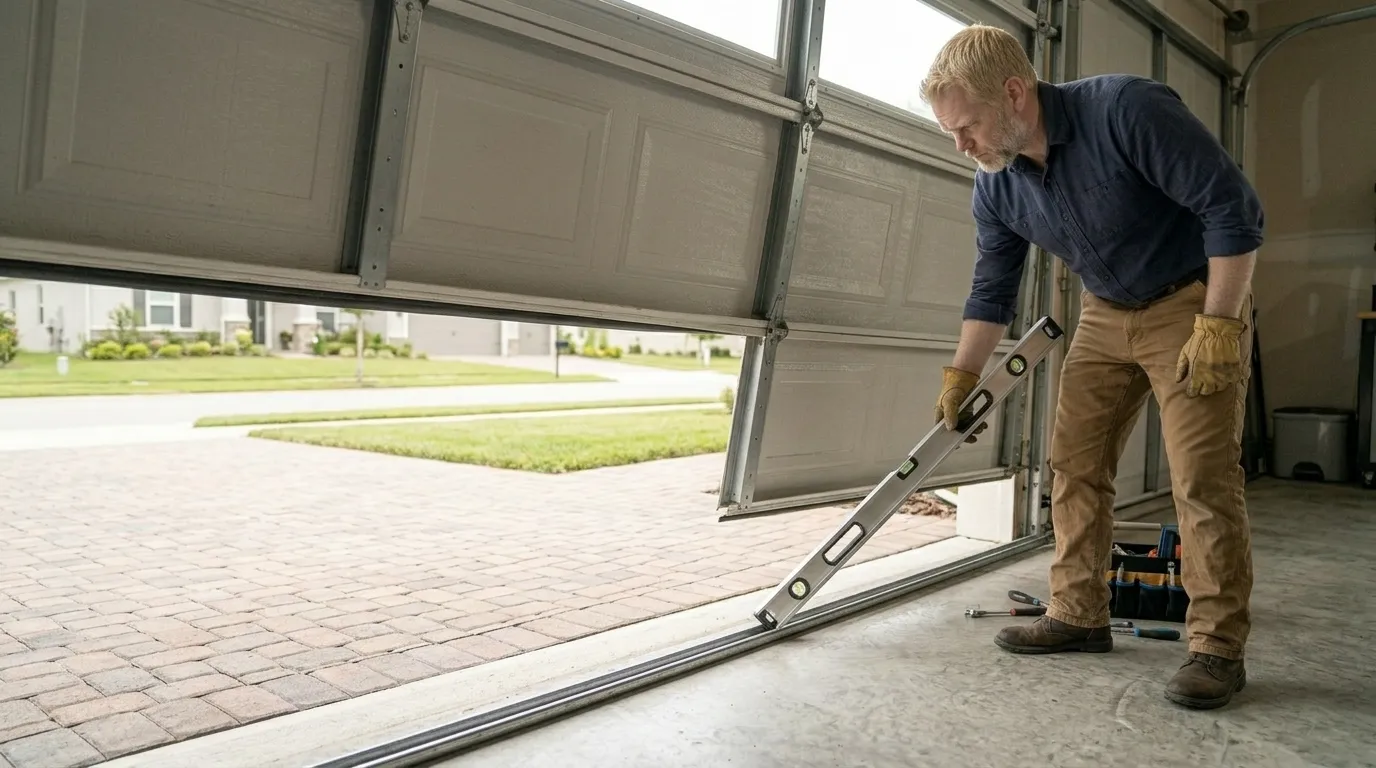
A broken spring under tension is dangerous to touch, full stop - don't try to unwind or remove one yourself, and don't let the door hang half-open on a failing spring while you wait for a slot. On an older door where the spring's been weak for a while before it broke, we sometimes find the cable frayed or a bottom bracket bent from running under uneven tension - that turns a spring job into a spring-and-cable job on the spot.
The honest limitation here: if your door is original to a 1975-era build and the spring's just one part of hardware that's fifty years old across the board - drums, bearings, track - replacing the spring alone can buy you a few good years, but it won't make the whole system new. Sometimes the more sensible move is replacing the door and hardware together rather than patching one worn part at a time, and we'll tell you when we think that's the case instead of just doing the smaller job.