How Long You Are Without the Door
Heath sits about four miles from our shop in Newark, so travel time is short once we're on the way. The bigger variable is the door itself, not the drive. A house built around the median year here, 1978, was very likely fitted with the spring and track setup that came standard at the time, and in a lot of cases nobody has touched it since. That means when something lets go, it's often not one part failing in isolation but a whole assembly of original hardware reaching the end of its life together. A cable that snaps on a door that old frequently means the drum and roller brackets are due too, which changes a same-day fix into a job that needs us to confirm parts before we start. We won't quote a wait time we can't back up from Newark, but we'll tell you straight whether your door is a quick call or a parts-order call once we've looked at what's actually on the track.
How We Fix It
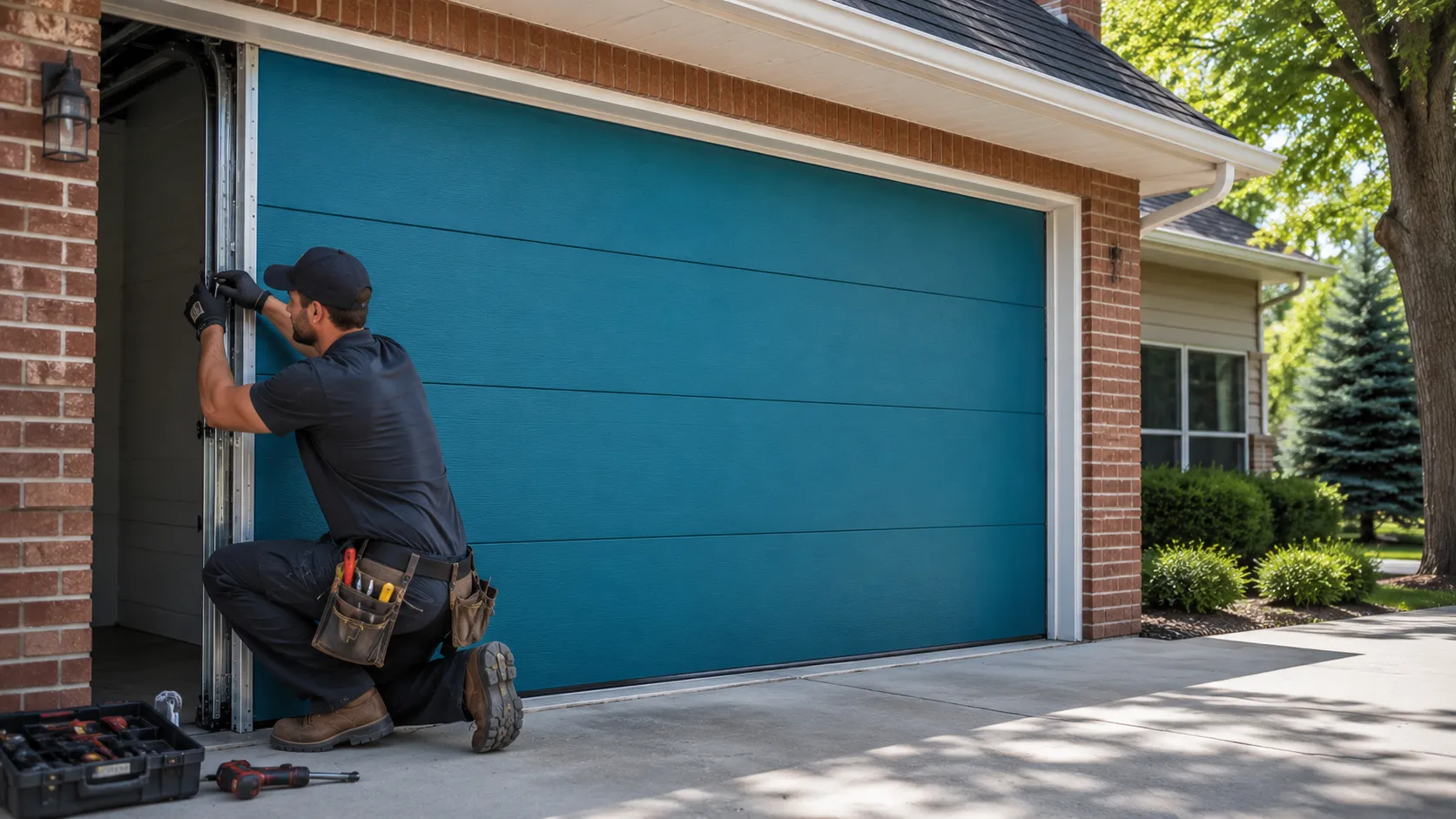
We start by figuring out how much of the door is original. On a house from the late 1970s, that's usually the torsion spring, the drum, sometimes the track, and often the opener drive gear even if the motor housing has been swapped once already. Cold-climate service areas like this one are hard on steel hardware, since repeated freeze-thaw cycles stiffen grease and stress galvanized coating faster than a mild climate would. So we check for corrosion on the spring coils and track bolts before we touch anything else, because a spring that looks fine can be one cold morning away from snapping. If the hardware is original and sound, we service what's there rather than replace it. If it's original and worn past safe operation, we say so and explain why, rather than patching around a part that's going to fail again in a season or two.
What Can Go Wrong
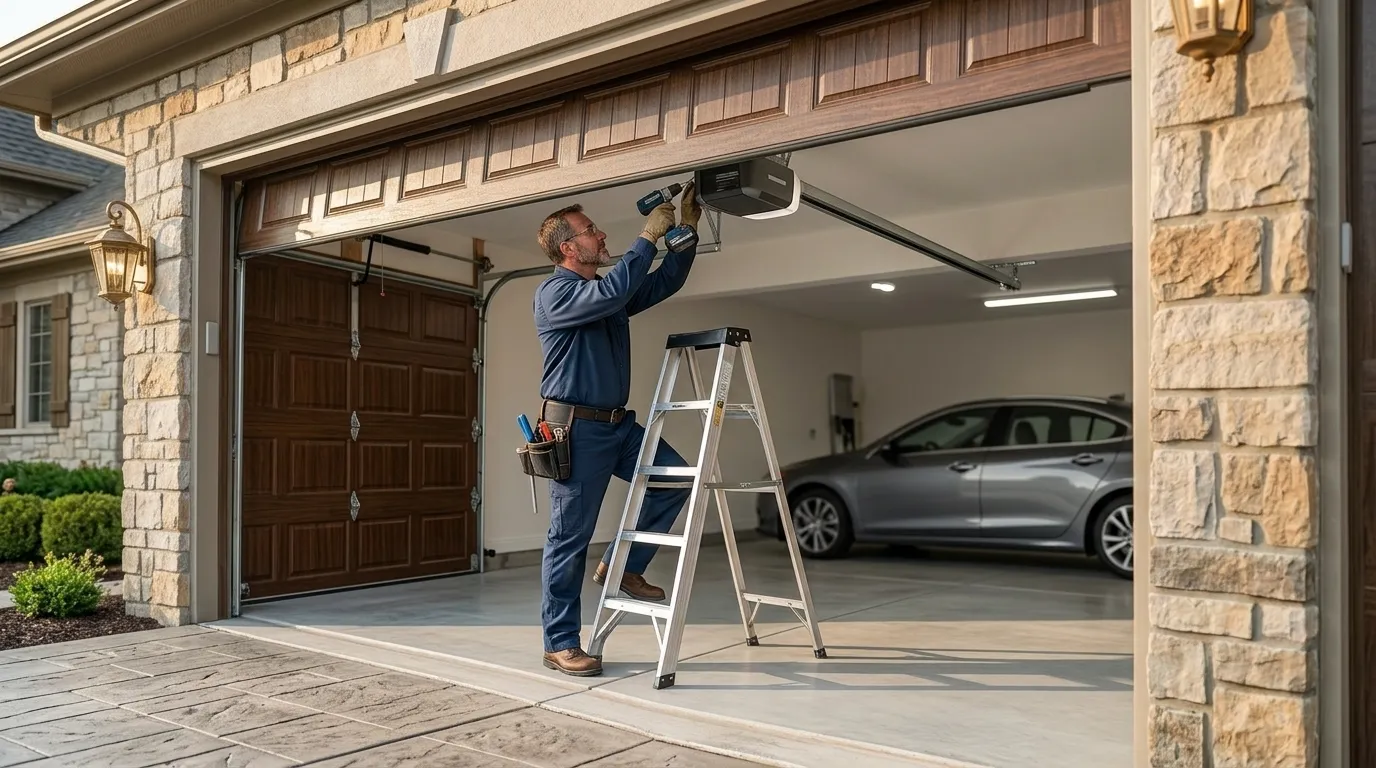
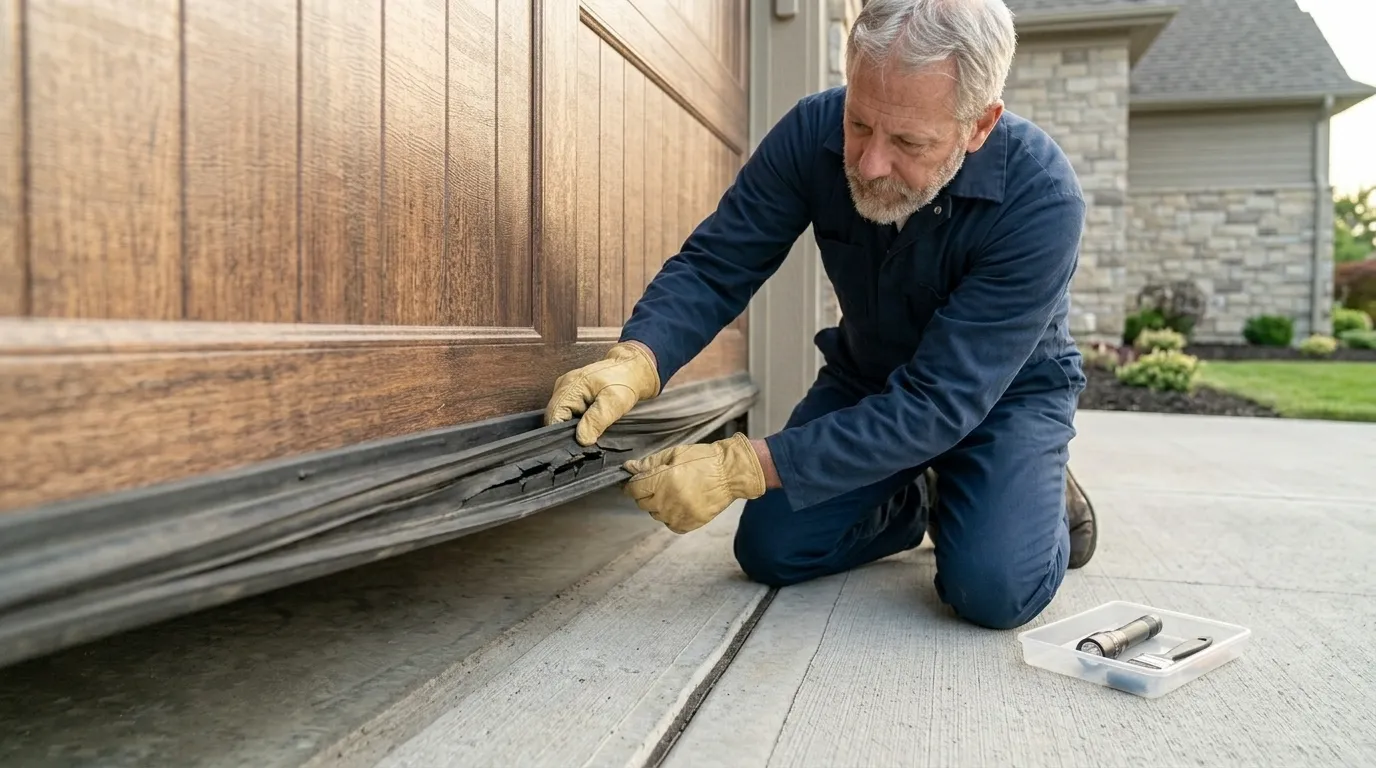
The obvious failure is a broken torsion spring, and on original hardware from the 1970s, that's the one we see most in this area. Less obvious is what a cold snap does to a track that's been bolted to the same jamb for close to fifty years: wood shifts, fasteners loosen, and a door that used to run straight starts binding on one side. Openers from this era, if they haven't been replaced, often lack the auto-reverse safety sensors that became standard later, which is a genuine safety issue and not just a convenience one. We'll point that out even on a visit that's only about the springs, because leaving it alone isn't something we're comfortable doing quietly. Rust on a lower panel is common too, especially on doors that have gone unpainted since installation, and it can hide the fact that the steel underneath has thinned to the point of tearing at the hinge.
Can You Do This Yourself
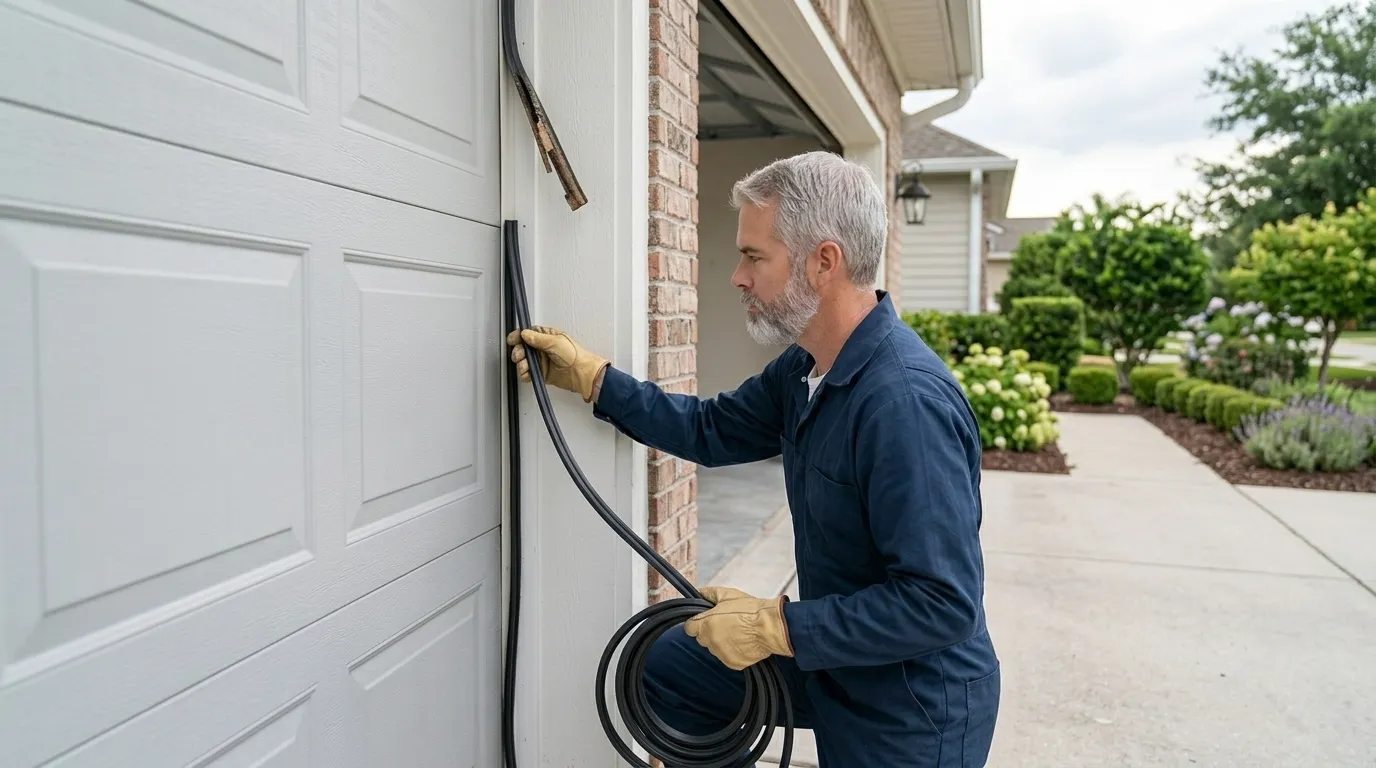
Some of it, yes. Lubricating rollers, tightening loose hinge bolts, and clearing debris from the track are fine to do yourself and worth doing regularly, especially given how hard the cold season here is on unlubricated steel. Torsion springs are a different matter. They're wound under enough tension to cause serious injury, and on a door this old, the drum and cable are usually rated for the original spring, not a generic replacement off a shelf. We'd rather you call us for that one part of the job than save the labor cost and end up in the emergency room. If you're comfortable with basic maintenance, keep doing it between our visits. If a spring is broken or a cable has jumped the drum, that's ours to handle.