
How Long You Are Without the Door
Heath's housing stock centers on 1978, a couple years past Newark's own median of 1976 across the wider service area. That gap sounds small, but it lands right where a lot of builders switched roller stem lengths and track gauges without much notice. A door built in '78 in Heath doesn't always take the same roller as a door three streets over in Newark proper that went up in the mid-60s.
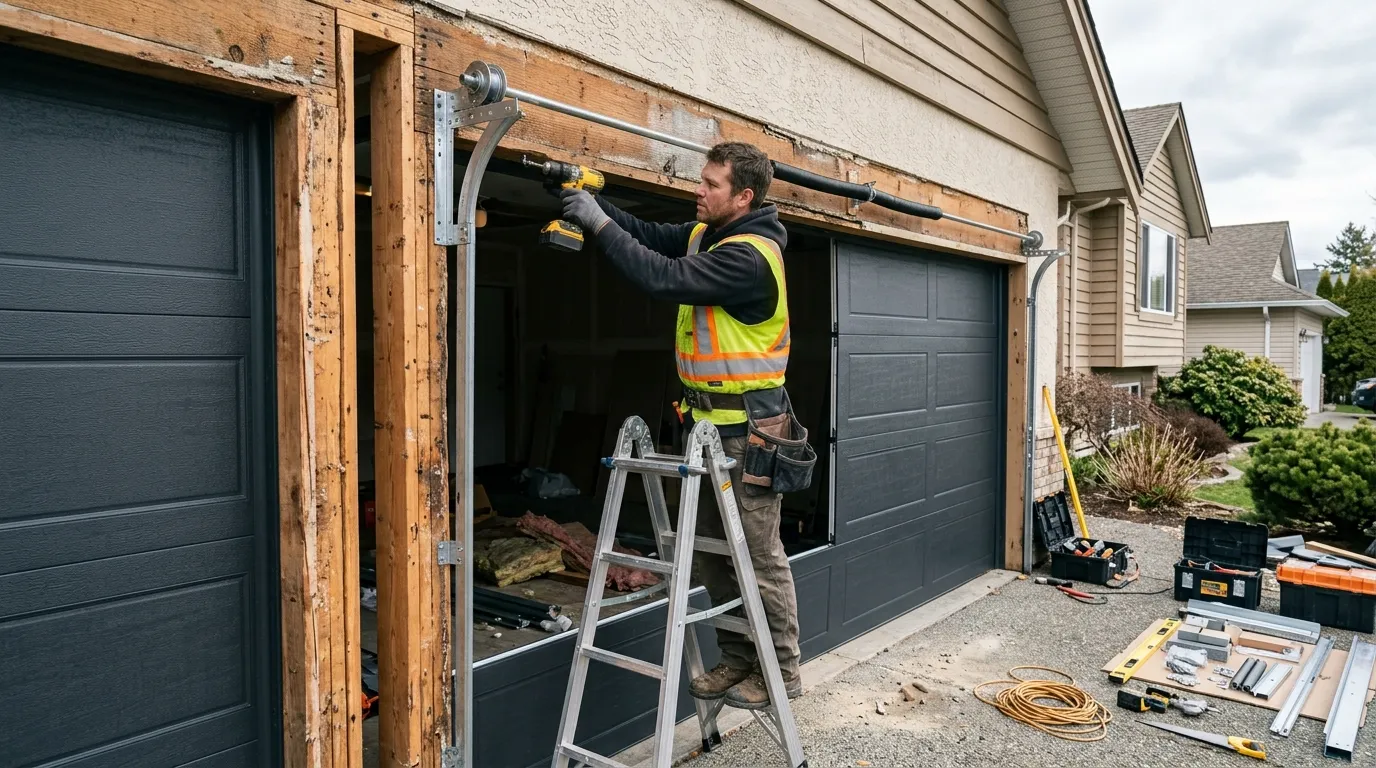
We come from Newark for this job, about 4 miles out, so there's no local branch sitting in Heath waiting on a call. Once we're on site, roller swaps on a double door usually run under an hour if the track isn't bent and the rollers weren't dragging metal shavings into the hinges for months first. Single doors go faster. What slows a job down isn't distance, it's condition - a track that's been bowed out by dead rollers for a year needs straightening before new rollers do any good, and that's a longer visit.
We don't stock every roller stem length on the truck for every build year. If your door needs an odd one, we'll tell you on site rather than guess and come back twice.
How We Fix It
Nylon rollers with sealed bearings are the standard swap now, and they're what we put in unless you ask for steel. Nylon runs quieter, doesn't need the oiling steel rollers want, and holds up fine through the cold-climate swings this area sees - freeze-thaw cycles are hard on old steel rollers with dry bearings, and that's usually what's failing when a door in Heath starts grinding on the way up.
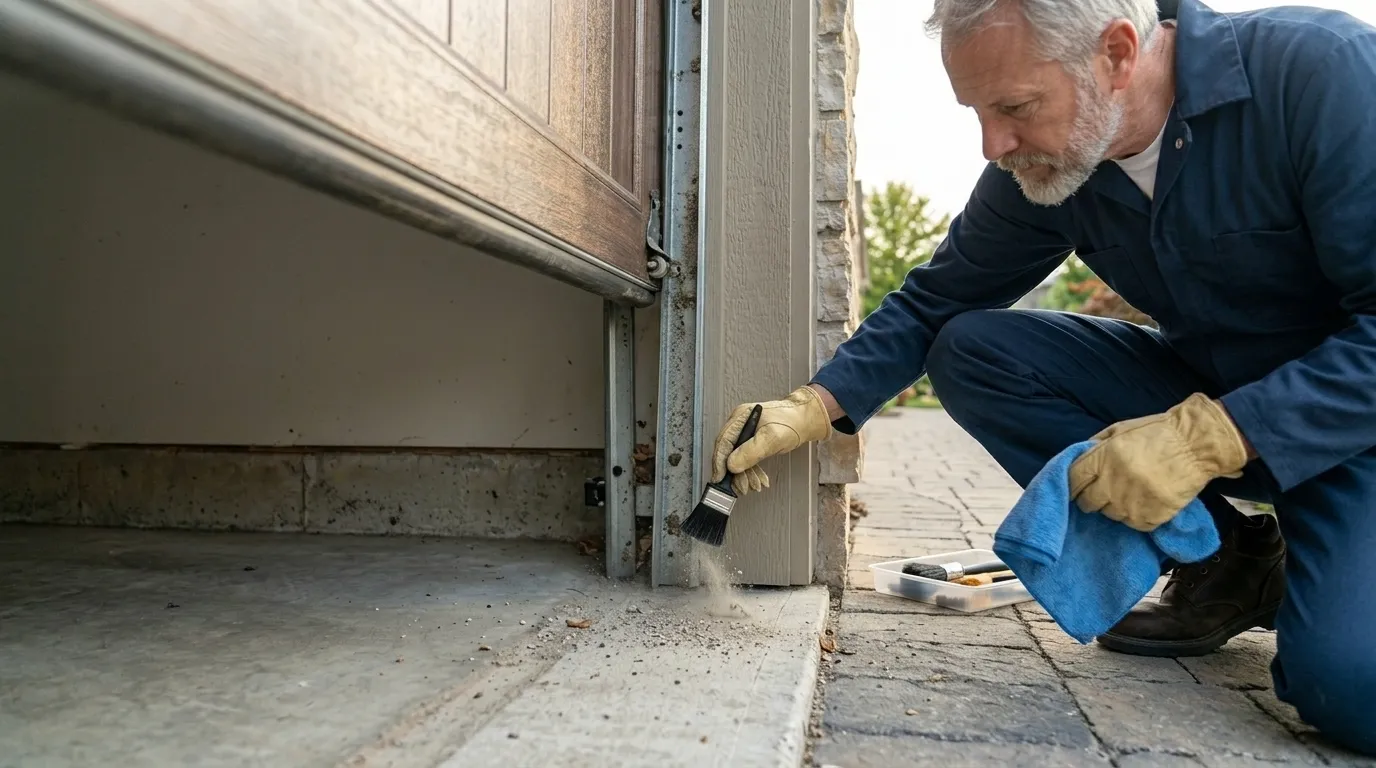
We pull the old rollers one at a time, check the track for wear grooves where a bad roller's been chewing the rail, and true up any bent sections before the new rollers go in. If your door dates closer to that 1978 median, the track gauge is often narrower than what you'd find on a newer build - we carry both, but we confirm on site before ordering anything special.
We also check the hinges the rollers sit in. A worn hinge hole will chew through a brand-new roller in a season, so replacing rollers alone without checking hinge wear is a half job. We tell you if that's what's going on rather than sell you rollers that'll fail again in six months.
What Can Go Wrong
The most common failure on Heath doors we've seen from this build era is a roller that's cracked or gone flat-sided from age, still turning but no longer round, which puts uneven strain on the opener every cycle. Left alone, that strain moves up the chain to the opener's gears or to the cables, and what started as an $8 roller problem turns into a spring or opener repair.
Cold matters more here than people think. This area sits in a severe cold-climate band, and steel rollers with dry or rusted bearings bind up hard on the first cold mornings of the season - that binding is what snaps a cable or strips an opener gear trying to force a door that isn't moving freely. Nylon rollers with sealed bearings don't have that problem the same way.
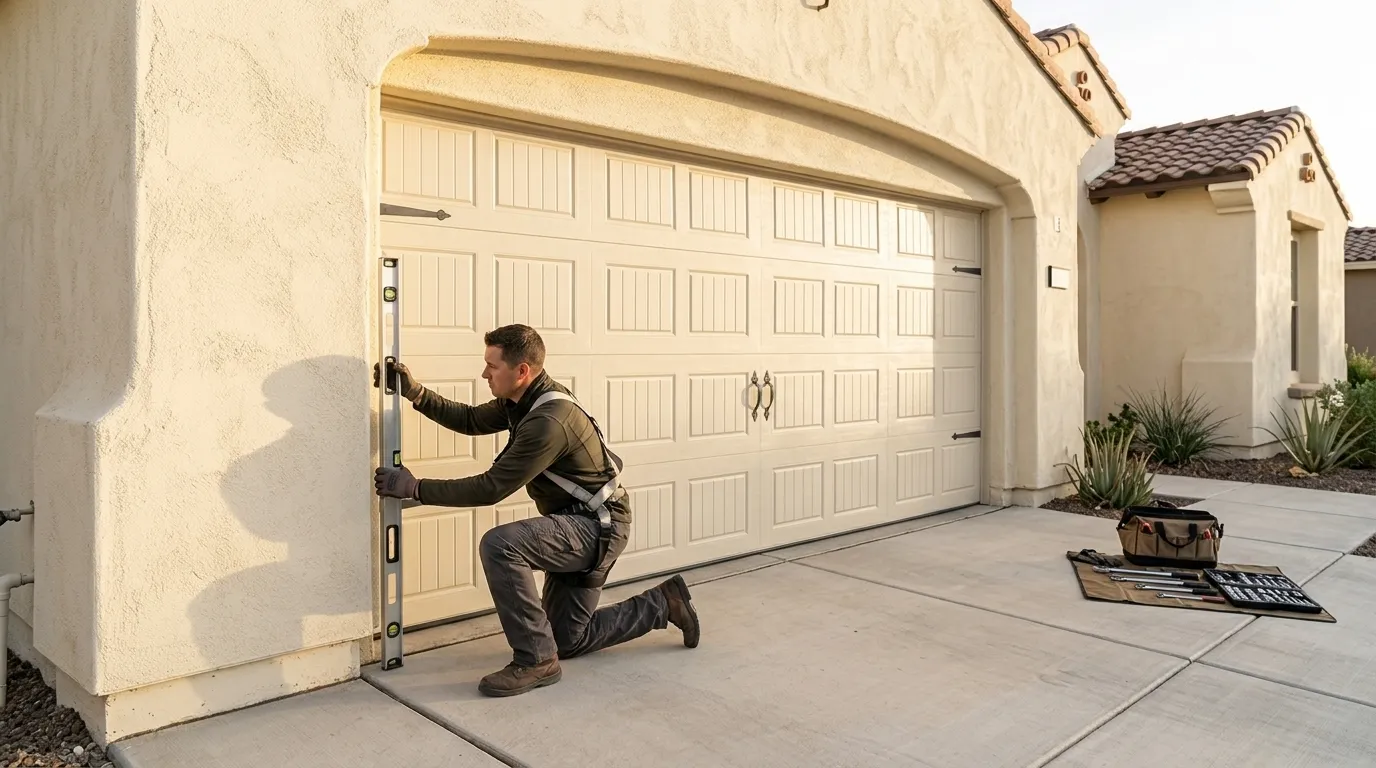
The other thing we see: homeowners replace the rollers but not the track alignment, and a door built around 1978 with a track that's shifted slightly over the decades will still bind even with new rollers in it. Rollers are cheap to fix. A track that's out of alignment is not a rollers problem, and no set of new rollers will solve it.
Can You Do This Yourself
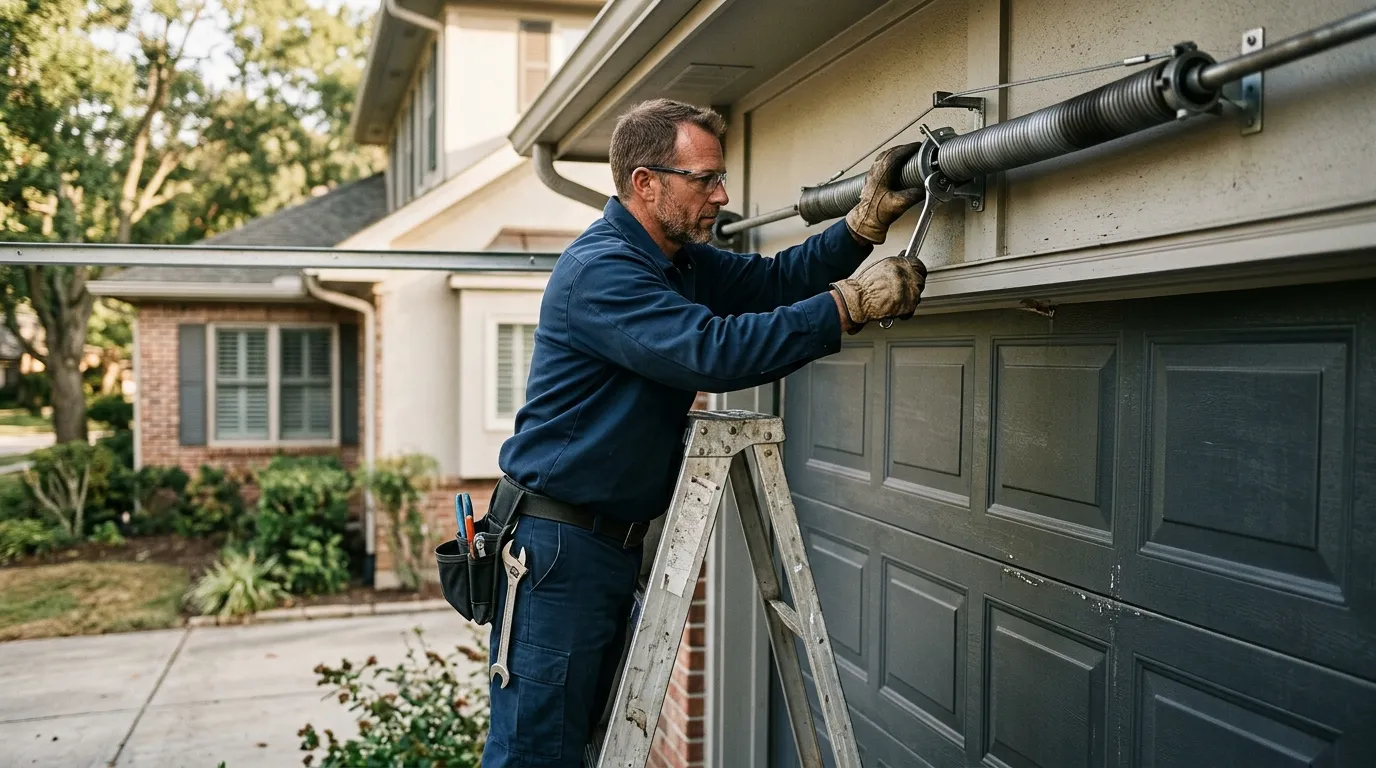
Swapping rollers is one of the more doable DIY jobs on a garage door, if you're comfortable with the door under tension and you know to never touch the torsion spring itself. Bottom rollers are simple - open the door, the roller drops out of its track, new one goes in. Rollers near the top, close to the spring and cables, are where we'd tell most homeowners to stop and call someone, not because the roller swap is hard but because you're working right next to a spring that can put you in the hospital if it lets go while you're up there.
If your door was built around that 1978 range common in Heath, take the old roller to a hardware store before buying ten new ones online - stem lengths from that era aren't all standard, and a roller that's a half-inch too long will bind the moment you close the door. That's the honest limitation here: we can't tell you the exact stem length without seeing the door, and neither can a parts counter clerk guessing off a photo.