How Long You Are Without the Door
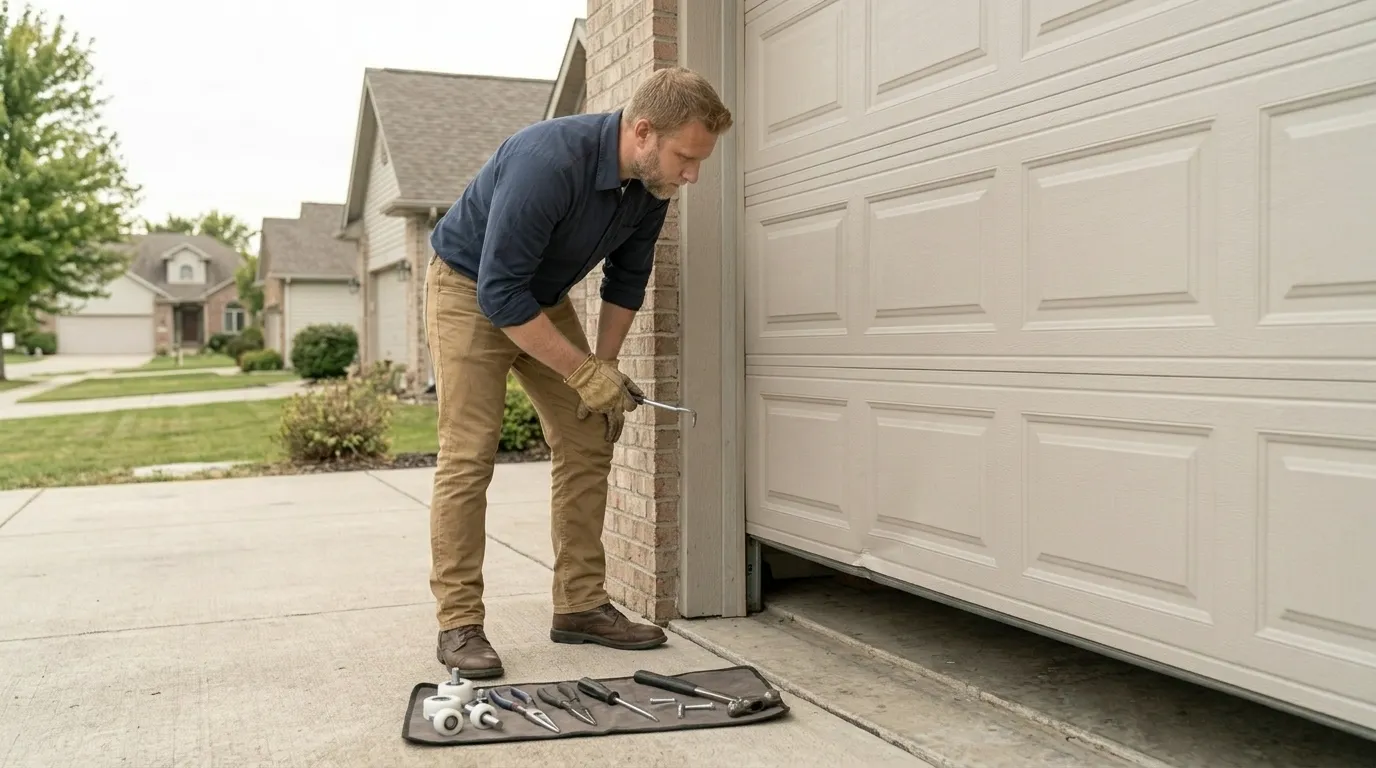
Most of the trouble we see in Heath starts the same way: a torsion spring snaps overnight and the door won't budge in the morning. That's not a Heath-specific fault by itself, but the age of the house behind it usually is. A lot of Heath was built around 1978, which means steel sectional doors on torsion springs sized for the lighter hardware common in that decade - not the beefier dual-spring setups you see on newer double doors elsewhere in the service area.
Because we run out of Newark, about 4 miles away, we're not sitting in Heath waiting on a call. That said, 4 miles is a short run - it doesn't add much to the job compared to a same-town outfit, and we'd rather be honest about that than pretend we have a branch here we don't. Once we're on site, a straightforward torsion spring swap on a single door usually runs an hour or two, start to finish, door open the same visit in most cases.
Winters here get cold enough that spring steel gets brittle and cycles harder in freezing temps, which is part of why late-winter and early-spring calls for snapped springs are common in this area. If your door died on a cold morning, that's consistent with what we see, not a coincidence.
How We Fix It
We match the spring to the door's weight and the drum size already on your shaft, not to a generic size chart. On 1970s-era doors we still service in this area, that often means finding an odd wind count or an older-style stationary cone that isn't stocked on every truck - which is one reason we look at the door in person before quoting a number.
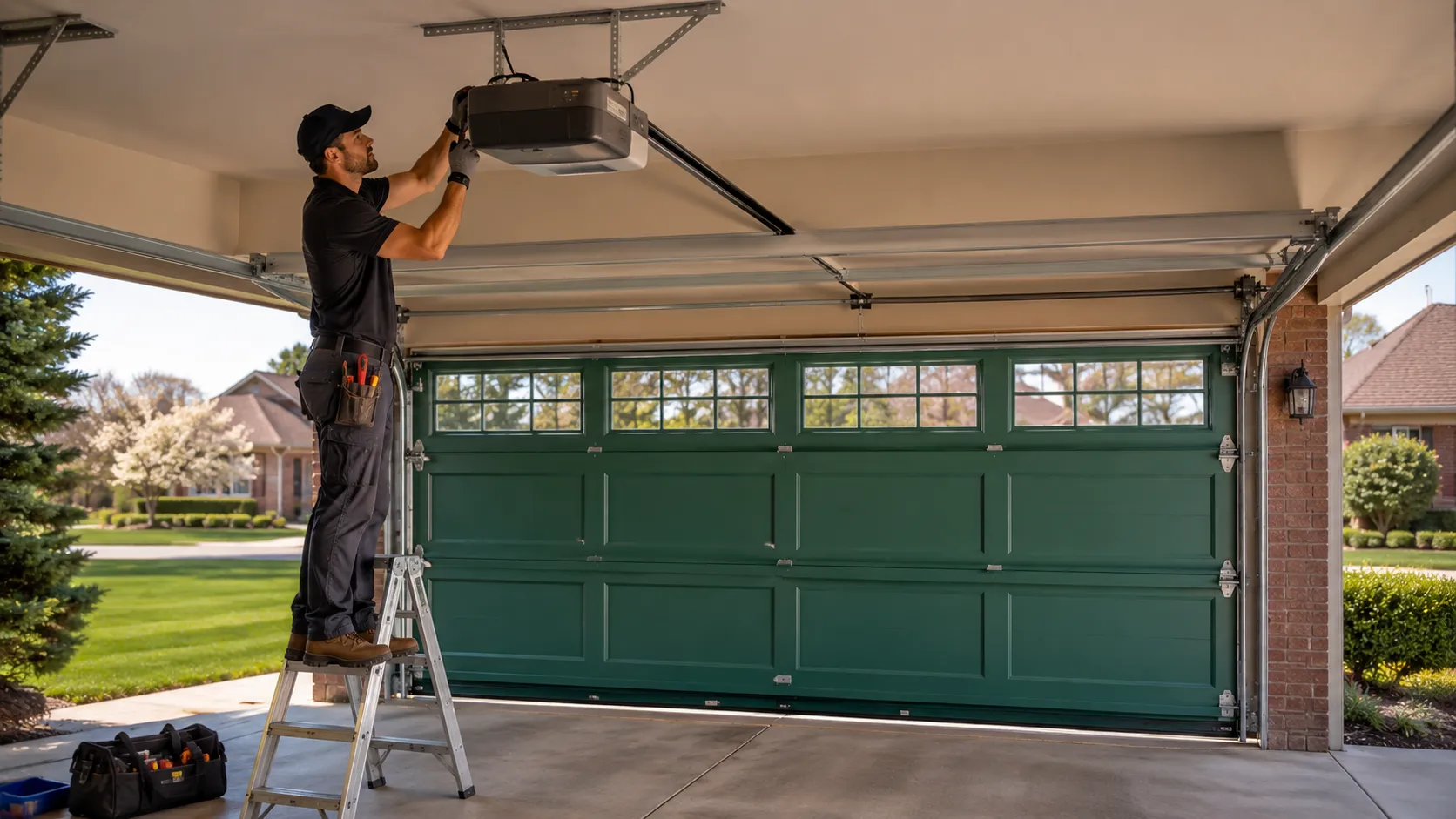
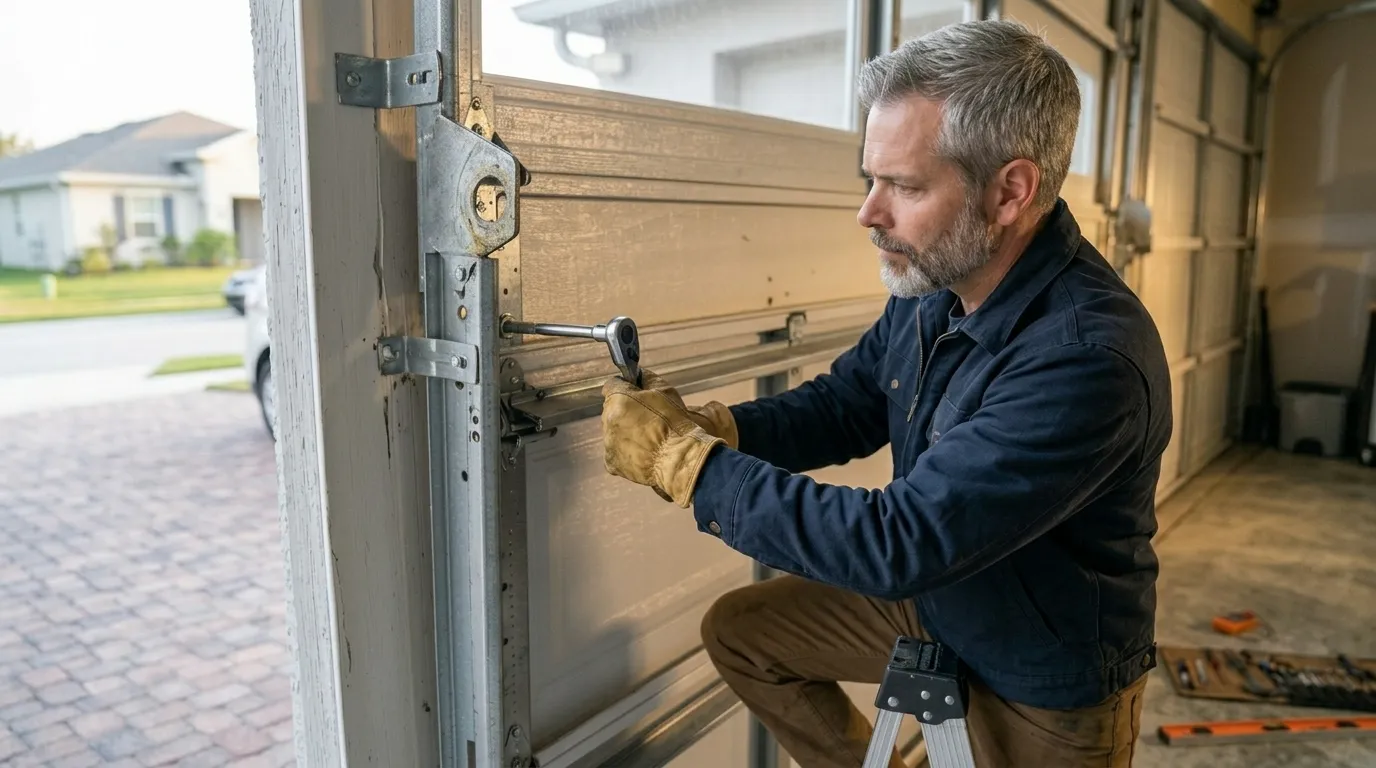
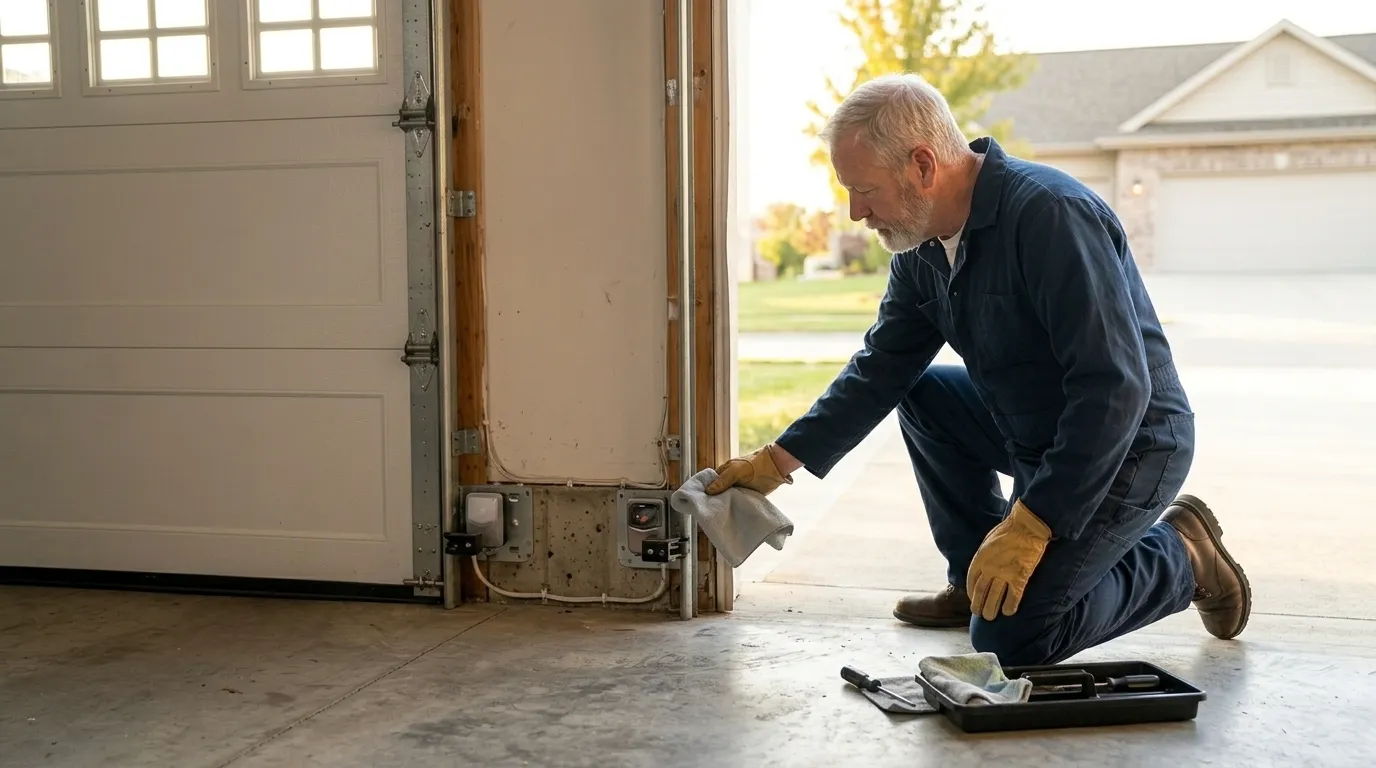
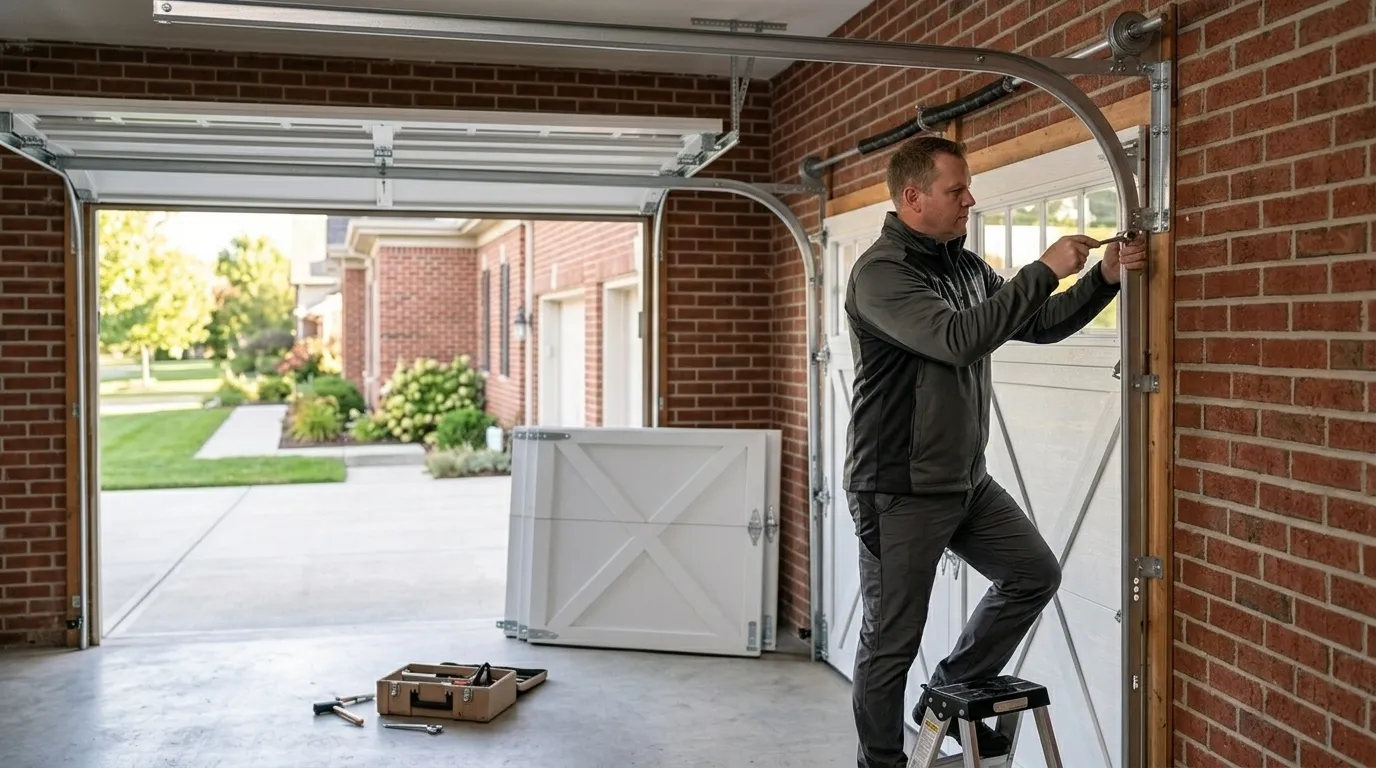
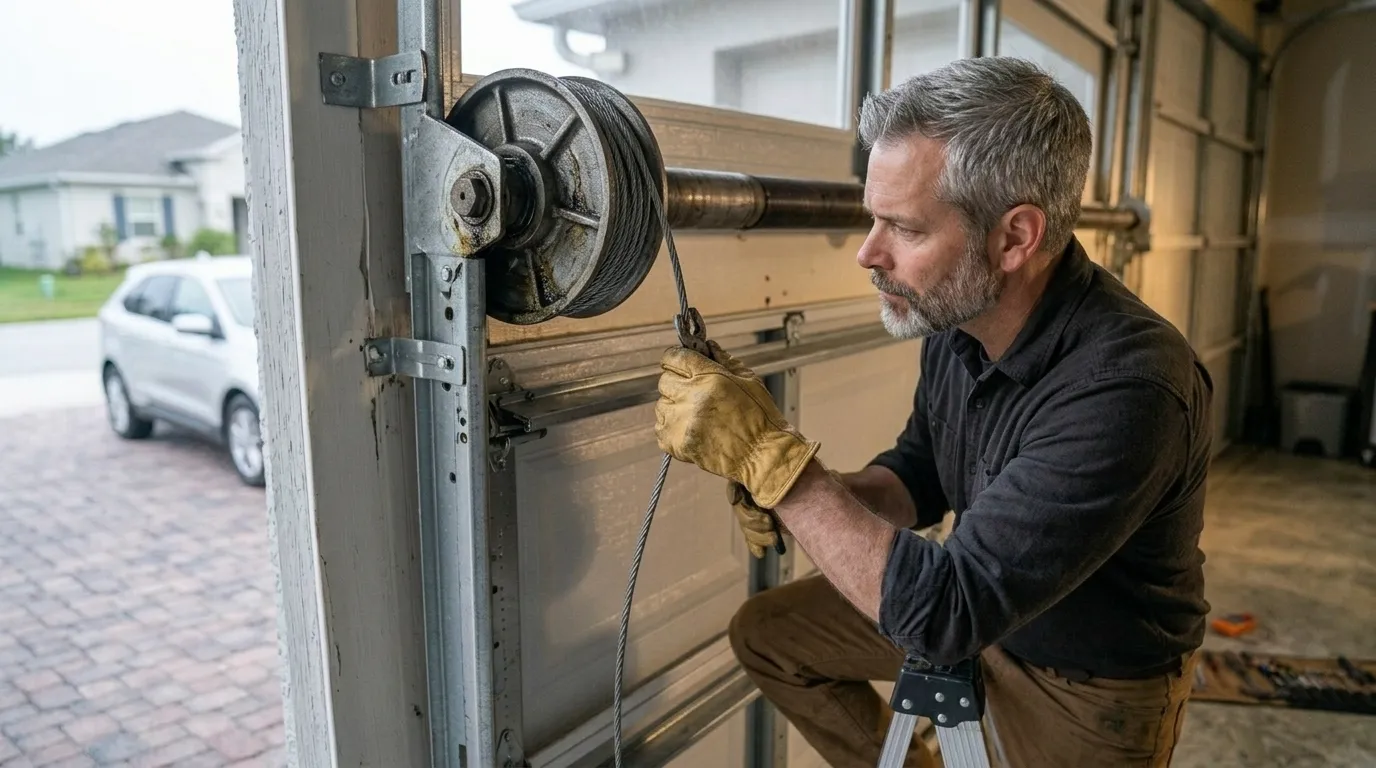
The repair itself is mechanical and repeatable: wind down the old spring under control, pull the broken halves off the shaft, cut a new spring to the right wire size and length, set it on the shaft with the correct winding cone, and wind it to the door manufacturer's turn count. We check cable condition and bearing plates while we're in there, because a spring failure on a door this age is often the first sign, not the only one.
We don't recommend re-using a spring that's already stretched or rusted through, even if it hasn't broken yet - it's a matter of when, not if, and the second call costs you the door being stuck shut again.
What Can Go Wrong
On a door built to late-1970s standards, the failure points cluster in a few places. The torsion spring itself is the obvious one, but a snapped spring under load can also bend the shaft or crack a bearing plate if the door was forced open or closed after it broke - which happens more than people admit, usually someone trying to get a car out before a repair call. Cables can fray at the drum end once a spring loses tension and the door starts binding instead of gliding.
Cold-weather cycling is the other factor worth naming plainly: repeated freeze-thaw swings stress spring steel faster than a mild climate would, and older galvanized coatings on original hardware don't hold up as well as newer coatings. If your spring is original to a house from this era, it's had four and a half decades of that cycling, and that's a long run for any coil of wire under constant tension.
Can You Do This Yourself
We'll say it plainly: don't wind a torsion spring yourself. The tool and the technique matter, and a spring under full tension can put someone in the hospital if it lets go while you're working on it. That's not scare talk aimed at selling a call - it's the actual reason most reputable shops won't sell you a torsion spring over the counter without asking what you're doing with it.
What you can safely do yourself: check whether the spring is visibly separated (a gap in the coil is the giveaway), and leave the door down and the opener disconnected until someone with the winding bars and experience gets there. If it's a single spring holding a heavier double door, don't try to prop the door open manually - that's exactly when a bent shaft or a second failure happens.