How Long You Are Without the Door
Heath's median home was built around 1978, a couple years newer than the broader Newark service area's 1976 median. That gap matters more than it sounds like it should. Doors from that stretch were almost always single-layer steel, no insulation, hung on torsion springs sized for a lighter section than what ships standard today. When one of those originals finally gives out - a cracked panel, a spring that's lost its wind count, a track that's racked from years of a hardware store roller - you're not just swapping a door, you're often correcting for hardware nobody makes to those specs anymore.
We travel from Newark, about 4 miles out, so getting someone out to measure the opening and write a real quote doesn't take long. What does take time, sometimes, is the door itself. If your opening needs a jamb correction or the track spacing doesn't match a stock kit, that part gets ordered, not improvised. We'll tell you which category your job falls into at the measure, not after we've started cutting.
How We Fix It
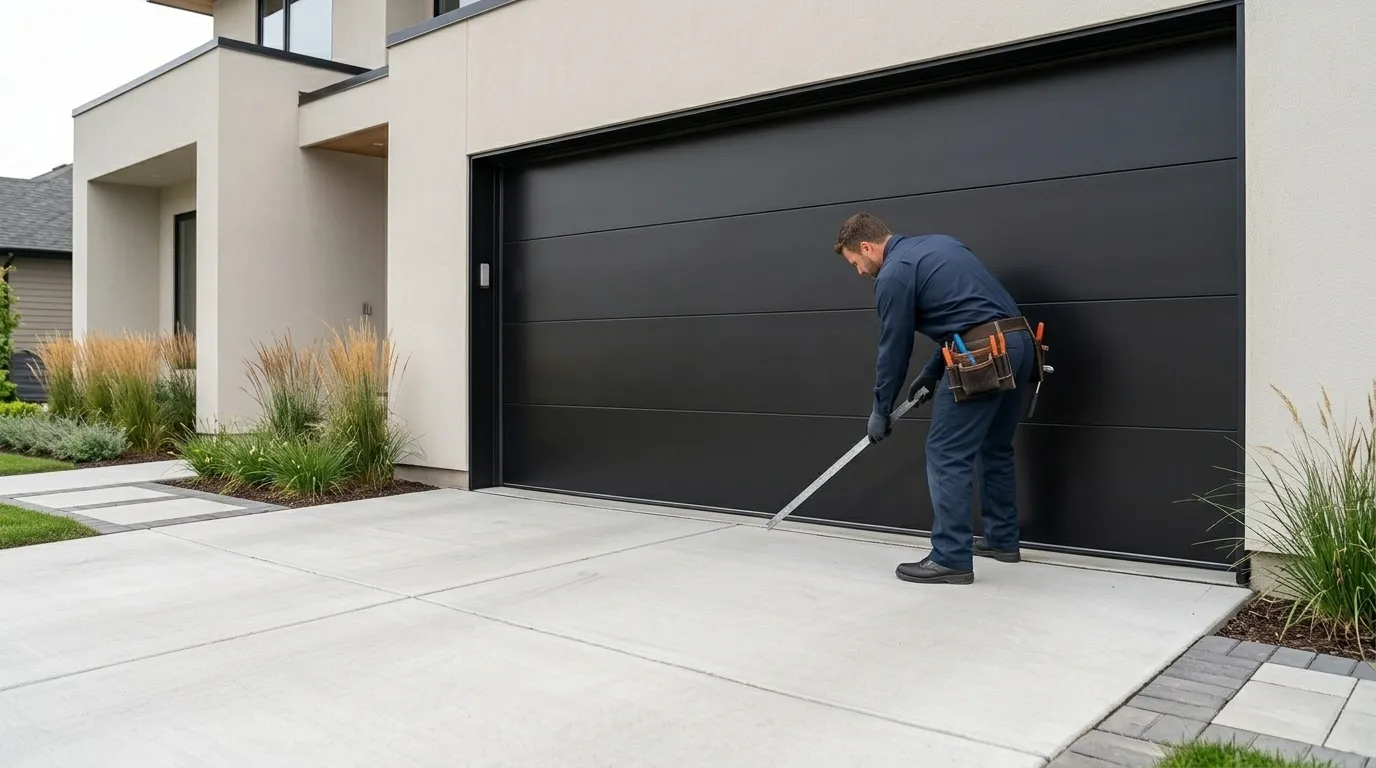
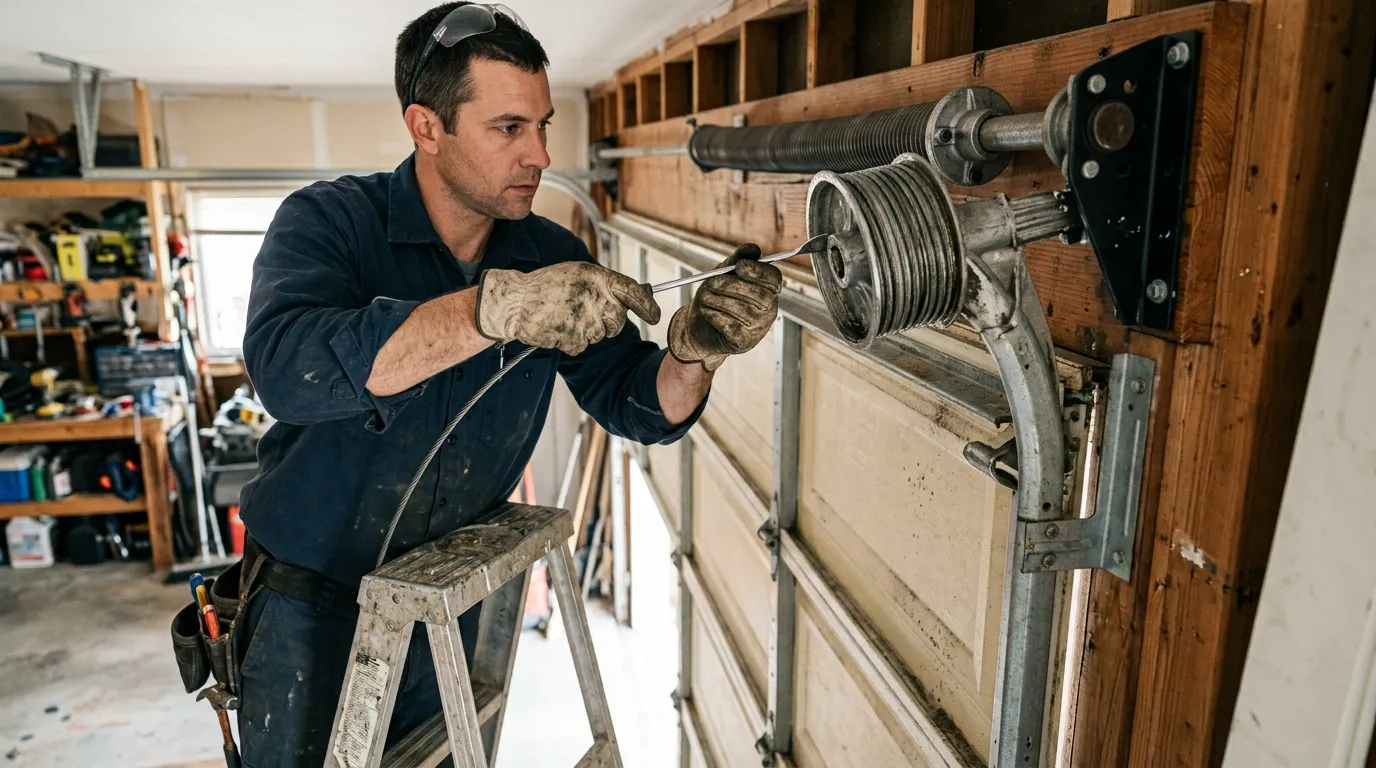
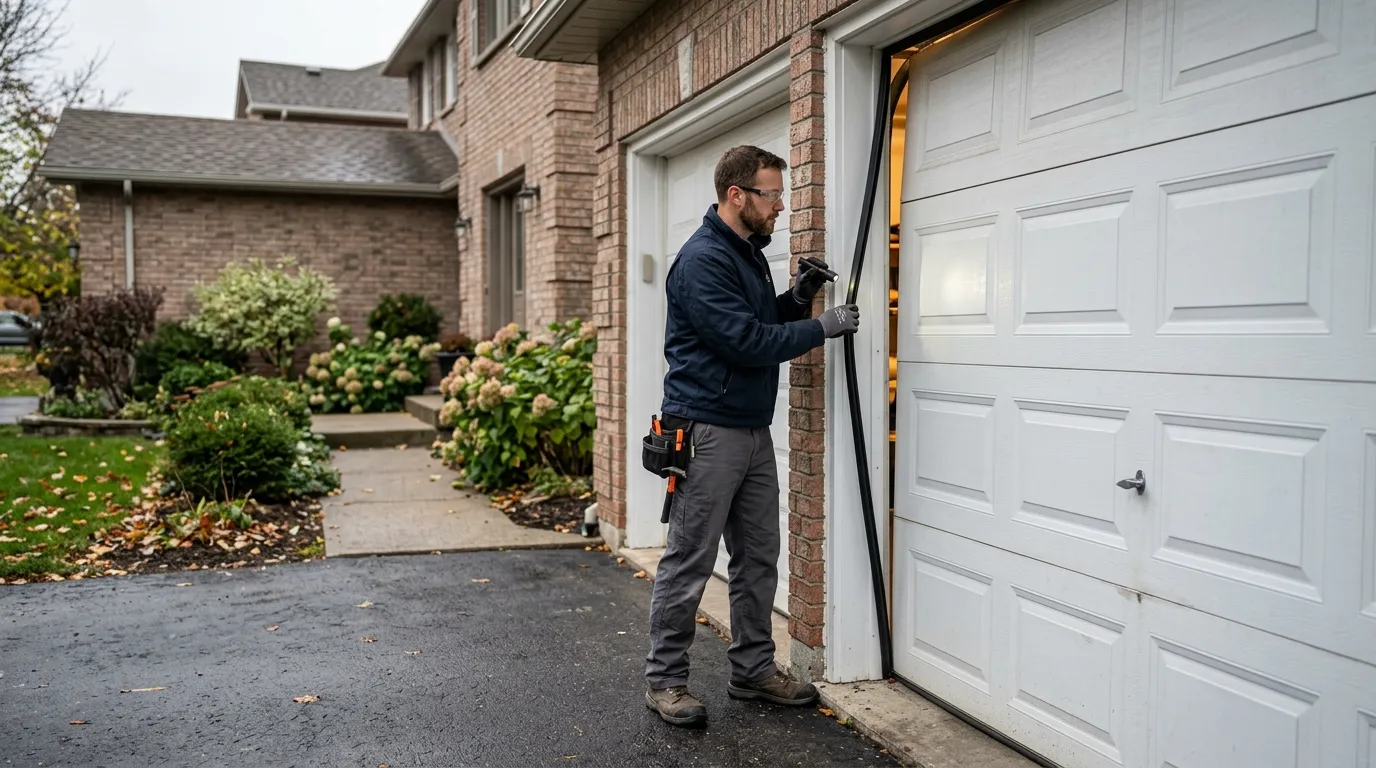
Installation starts with the opening, not the catalog. We measure width, height, headroom, and backroom clearance against what's actually there in a house built in the late 1970s, then match spring wind and cable gauge to the new door's weight - insulated sections weigh more than the single-layer steel most Heath garages have carried for decades.
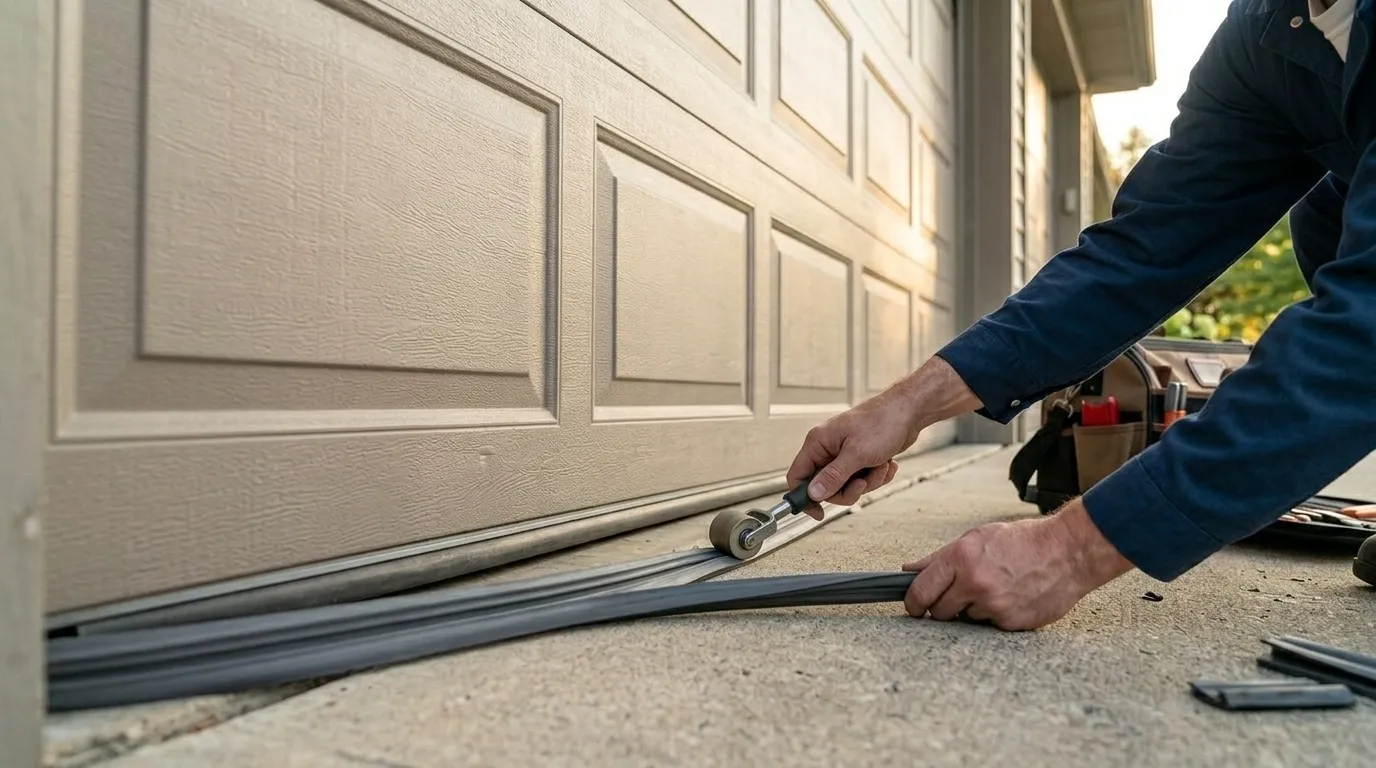
Licking County sits in a severe cold-climate band, which means an insulated door isn't an upgrade we're selling you, it's what the building code expects for a habitable-adjacent space in this part of Ohio. We install the section, weatherstrip, and bottom seal as one system rather than treating insulation as an add-on afterward.
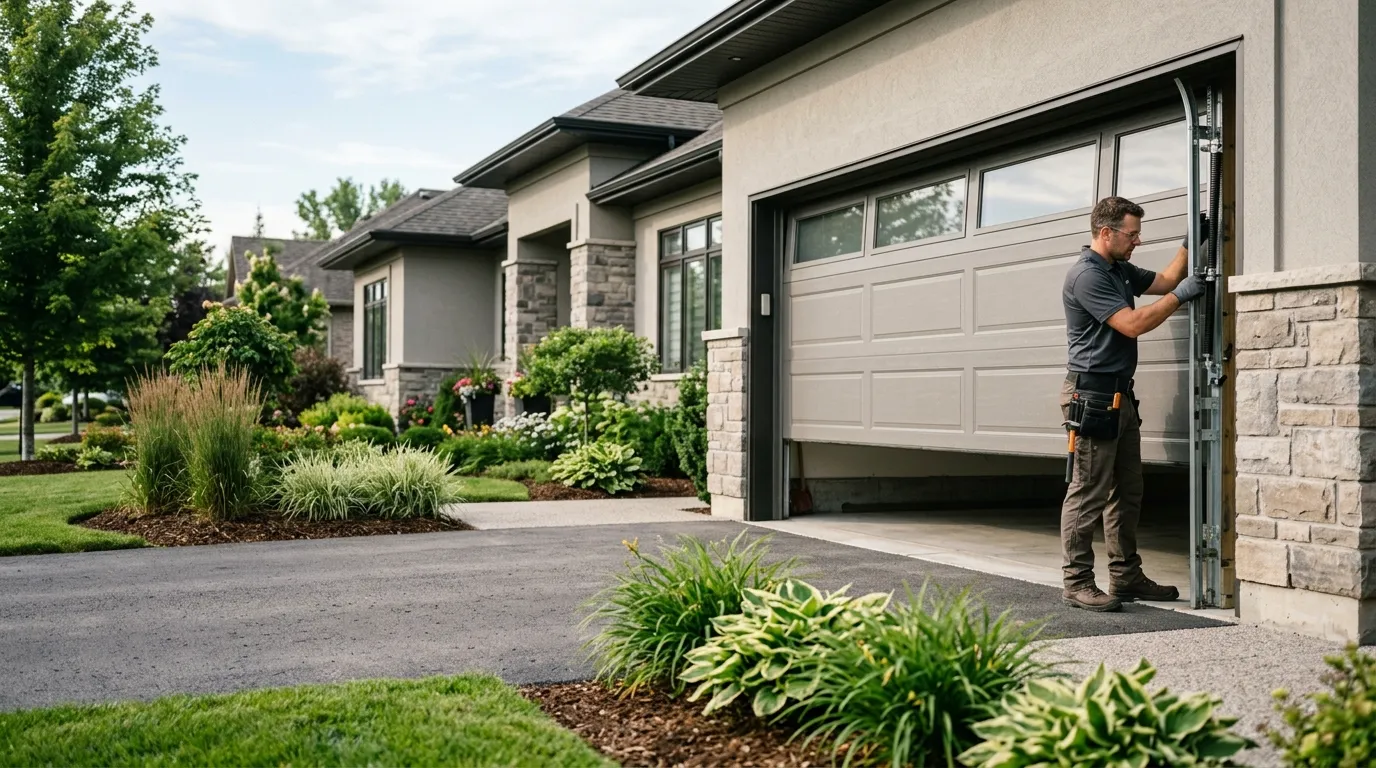
Old track brackets get replaced, not reused, if they're not rated for the new door's travel. Same with the spring - a 1970s torsion spring sized for a lighter panel will burn out fast under a heavier insulated door, and that's a callback nobody wants. Opener compatibility gets checked too; a lot of these houses still have the original chain-drive from whenever the door was last replaced, and it may or may not be worth keeping.
What Can Go Wrong
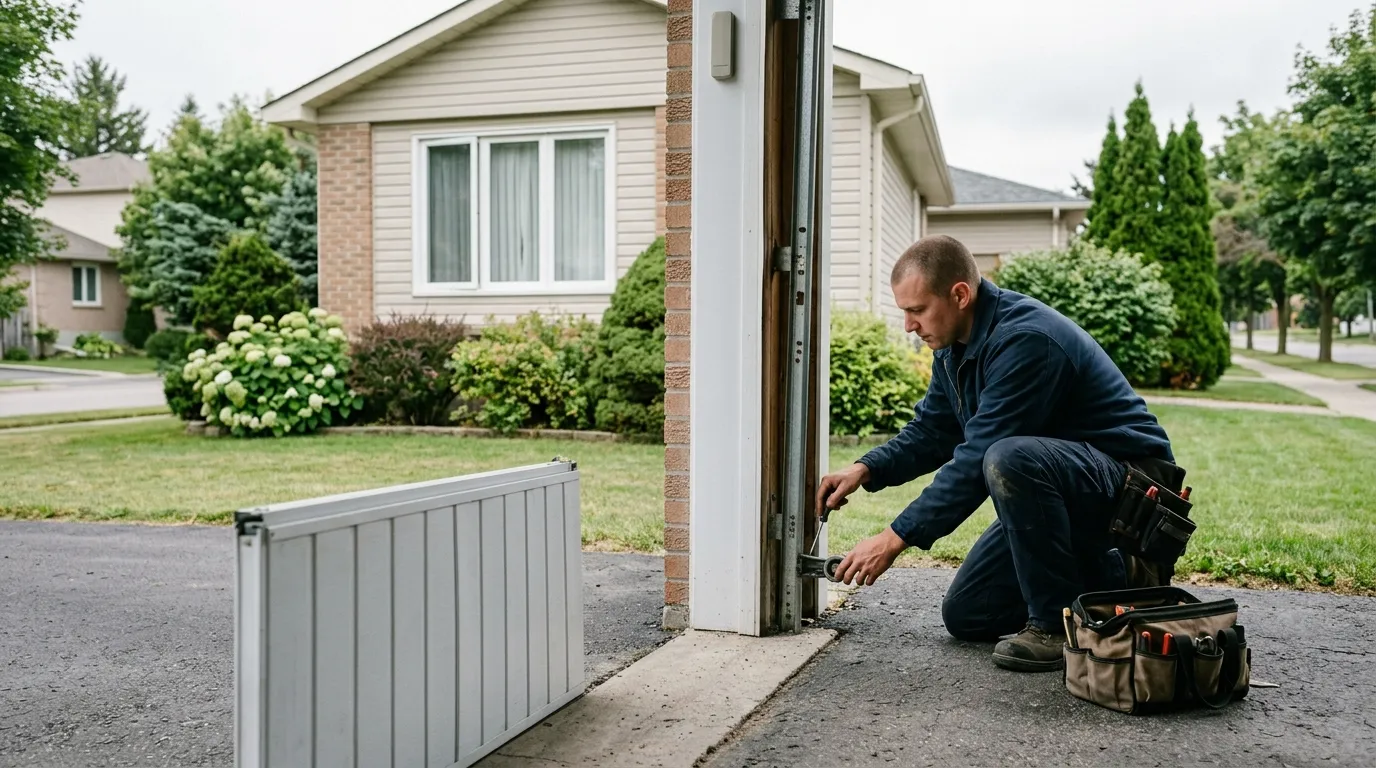
The most common surprise in Heath jobs is hardware mismatch - a 1970s-era track spacing or a header height that doesn't line up with a stock door kit. It's not a defect in the house, it's just a different building era than what most new doors are cut for today, and it means a small correction before install rather than a straight swap.
The second surprise is springs. A torsion spring that's been holding a light steel door for forty-plus years can look fine and still be near the end of its wind cycles. If we're putting on a heavier insulated door, we're not reusing that spring regardless of how it looks - it wasn't rated for this weight to begin with.
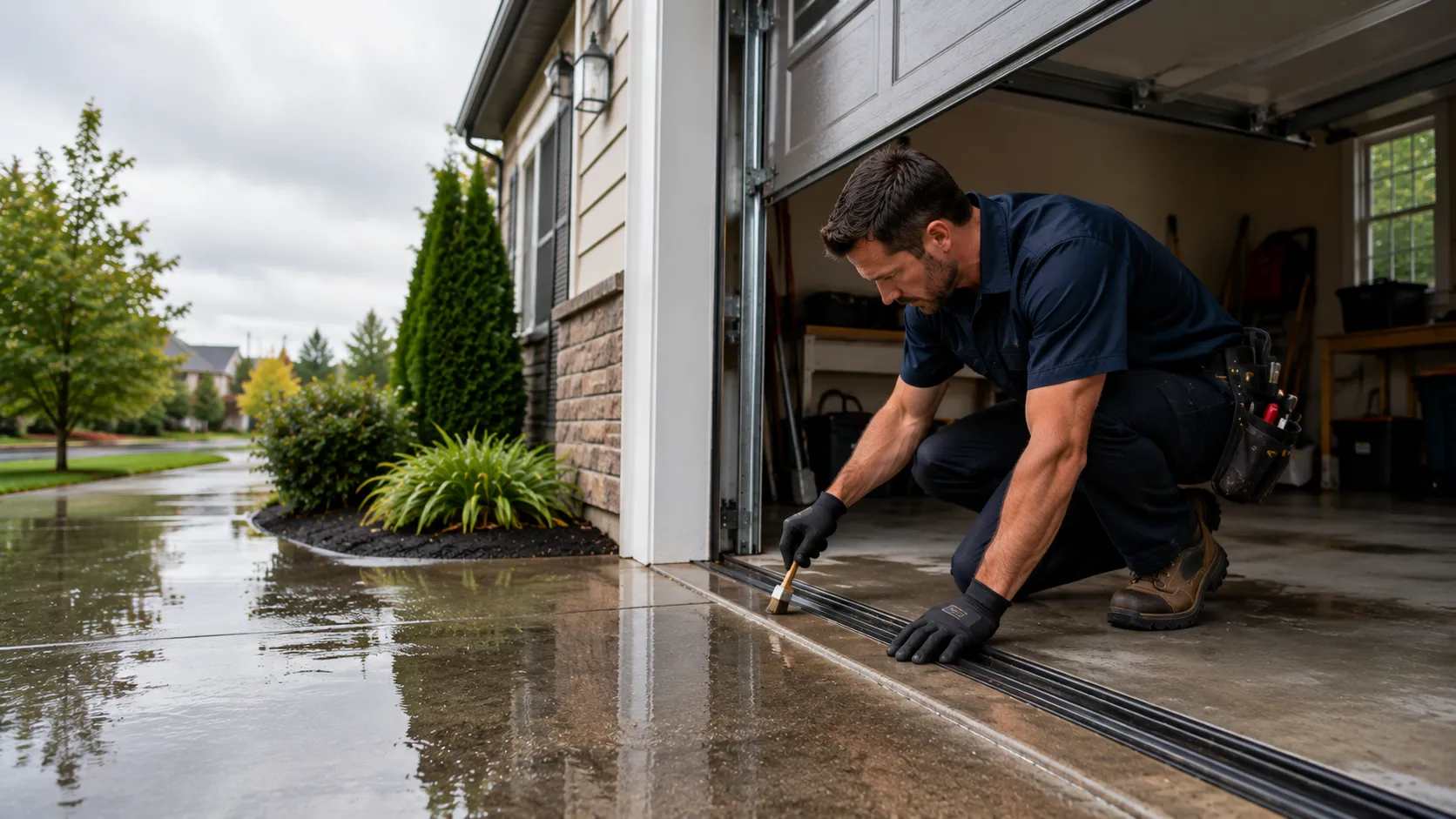
Cold-climate seal failure is the third one. If the bottom seal and weatherstrip aren't matched to the door and the opening together, you get a gap that lets Ohio winter air straight into the garage no matter how good the panel insulation is. We check seal fit as part of the install, not as a separate step someone can skip.
Can You Do This Yourself
Some of this you can do. Painting trim, clearing the opening, swapping a keypad - fine. Setting a new door on old torsion hardware is not something we'd talk you through doing yourself. A spring under full wind tension can put someone in the hospital, and on a 1970s opening where the bracket or header doesn't match modern stock, the margin for error is smaller, not bigger.
Here's the honest limitation: if your door opening needs a non-standard jamb correction, we may not have the exact trim kit on the truck that day. That part gets ordered, and depending on the supplier, it can push the job out by more than a day. We'd rather tell you that upfront than promise a same-visit finish we can't back up.
If you're set on doing the swap yourself, at minimum get someone to release spring tension before you touch the door. That's the one step we won't recommend skipping, contractor or homeowner.