The Problem
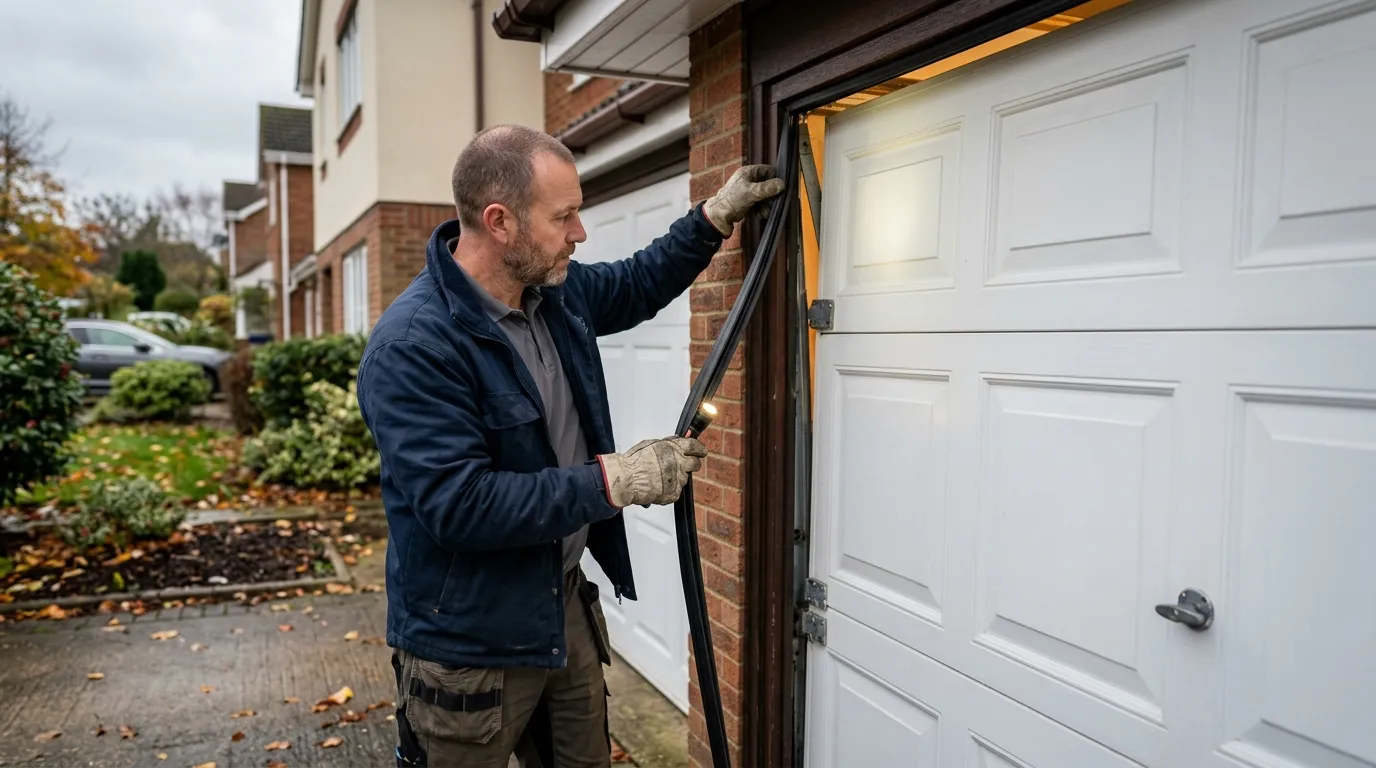
Every noise a garage door makes is the hardware telling you something about its age, and in Newark that age varies a lot depending on which side of town you're on. Housing here runs from 1938 up through 2005, with the median build year sitting around 1976, and most of the 16 named areas we work in got built out in that 1960s-70s wave. That matters because a door on a 1976 house isn't wearing the same way as one on a house built in 2001. Older openers on older track systems tend to bang and shudder; newer belt-drive setups on the same era of house grind when a roller starts to go. A door that's quiet for years can start making noise the season the original hardware finally gives out, and in this town that clock started ticking decades ago for a lot of houses at once. The problem isn't that noise means something is broken right now - it's that homeowners here often can't tell whether a sound is normal wear on 1970s-era track or a spring about to let go. Both sound similar from inside the house. We can't diagnose a bearing or a spring over the phone from a description alone; we have to look at the door.
What to Check
Start by listening for where the sound comes from. A rhythmic thump as the door travels usually means a flat spot on a roller, common on doors that have been running since the 1970s-80s build wave that makes up a lot of Newark's stock. A sharp bang, especially near the top of the door's travel, is often a torsion spring reaching the end of its cycle life - and single-spring setups, more common on pre-1980 houses here, tend to announce themselves louder than the double-spring systems used on newer builds. A grinding or scraping noise close to the opener head points to the drive gear, which wears out on schedule regardless of house age but shows up sooner on units that were never serviced. Squealing on the way up or down is almost always a lubrication problem - hinges and rollers, not the opener. Popping sounds while the door sits still, not moving, usually mean a track that's slightly out of alignment, which shows up more on older houses where the framing has settled over 40 or 50 years. None of this is a full diagnosis. It's a starting point so you know what to describe when you call.
Season by Season
Fall is when you'll first hear the cold-weather noises start - the grease thickening, the metal tightening up, the popping and creaking that wasn't there in September. Winter is the loudest season for older hardware; a door in the cold-severe band we sit in works harder against stiff springs and tight tolerances, and that's when a spring near the end of its life is most likely to finally go. Spring brings a different set of sounds as moisture works into wood door panels and metal tracks that spent months contracted in the cold, sometimes shifting alignment enough to cause a new rattle. Summer is usually the quiet season - lubricant loosens up, metal expands back to normal tolerances, and a lot of the noise from winter just goes away on its own, which is exactly why people assume the problem fixed itself. It didn't; the underlying wear, especially on hardware original to a 1960s or 70s build, is still there and just quieter until the next cold stretch. If a noise shows up in summer, when conditions are easiest on the hardware, that's usually the one worth calling about sooner rather than later.