24/7 Emergency Service Open 7 days · 7am–8pm Serving Newark, OH & nearby
(220) 239-4920
Newark, OH

Why Newark's Cold Snaps Break Garage Door Springs

Newark homes built between 1938 and 2005 face specific spring failures in severe cold. Here's what to check before you call, and why local housing stock matters.

Why Newark's Cold Snaps Break Garage Door Springs

The Problem

Torsion springs lose flex as steel gets cold. In a severe-cold climate band like Newark sits in, that matters more than in a lot of places, because the swing between a mild fall day and a hard freeze happens fast and often. A spring that's been quietly wearing down for years can hold on through summer and let go the first morning it's 12 degrees out. You hear a bang, the door won't budge, or it slams down instead of coming down slow. Most of the calls we get after a cold snap aren't new problems - they're old wear that cold weather finally exposed. Newark's housing stock runs from 1938 up through 2005, with a lot of it clustered in the 1960s and 70s across the older neighborhoods. That means a big share of the springs and openers in this service area are original or close to it, sized for doors that have since been reweighted with insulation retrofits or heavier replacement panels. Cold doesn't create the weakness. It just finds it.

What to Check

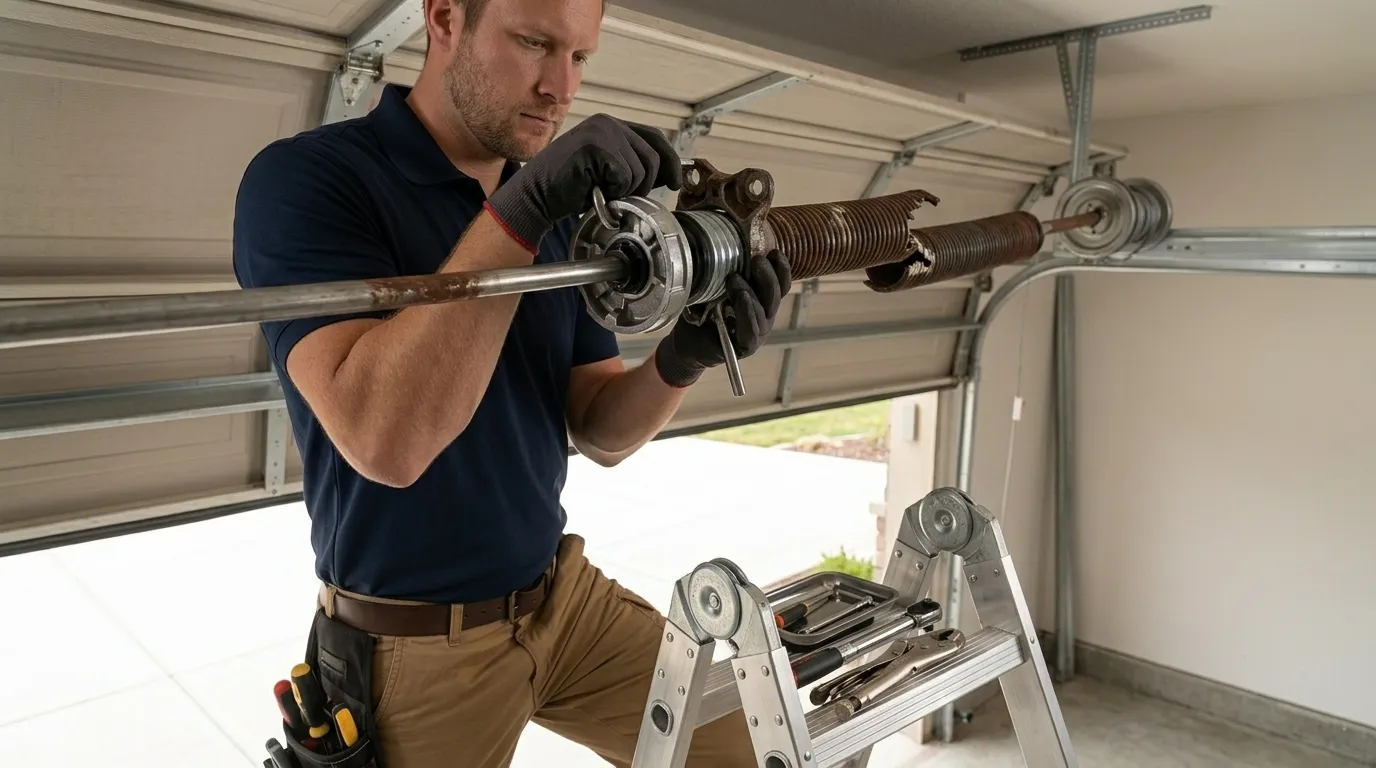
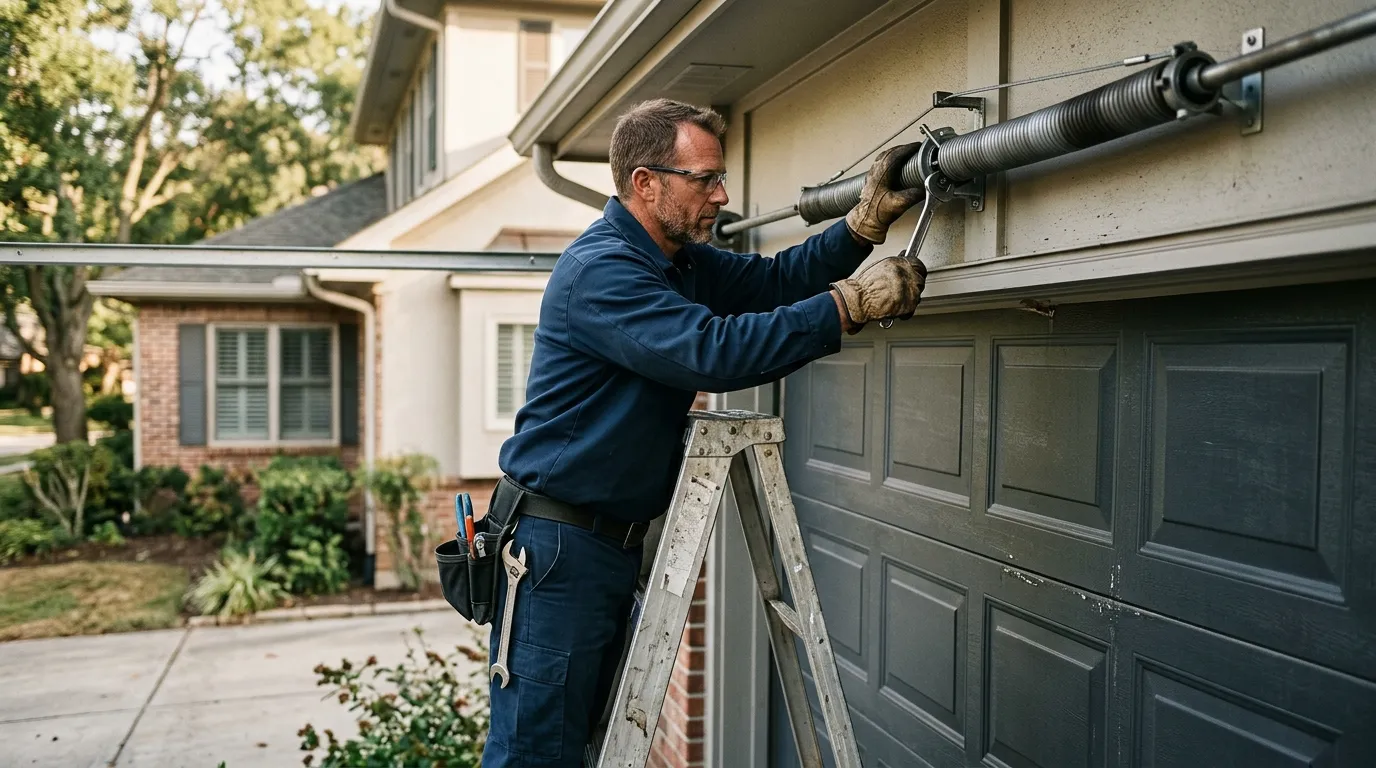
Before you assume it's the opener, look at the spring itself - the coiled bar above the door, or the pair of them on a double-wide. A gap in the coil, or one side sagging lower than the other, means it's done or close to it. Don't try to unwind or adjust it yourself; that's a job that has put people in the hospital. Second, check the cables on either side of the bottom bracket - fraying shows up more in winter because the cable contracts along with everything else and puts more load on weak spots. Third, if the door is heavy to lift by hand with the opener disconnected, that's a spring problem, not a motor problem, no matter what the opener sounds like when it strains. Homes built before the 1980s in this area often still run on the original torsion hardware, and that hardware wasn't built with today's heavier insulated doors in mind. If your door was swapped out for an insulated model at some point but the spring wasn't upsized to match, cold weather is exactly when that mismatch shows itself.

How Local Conditions Play In

Newark's climate band is classified severe cold, which for a garage door means the lubricant in rollers and hinges thickens up, rubber weatherseal at the bottom of the door goes stiff and cracks, and any moisture that got into a cable or spring coil during a fall rain can freeze and expand overnight. None of that is unique to any one house - but the age spread of housing across Newark and the surrounding areas means the exposure is uneven. A door on original 1960s or 70s hardware is carrying forty-plus winters of thermal cycling on the same springs and cables. A door in a house built closer to 2000 is dealing with newer parts but sometimes lighter-duty hardware that wasn't spec'd for a heavier door added later. Either way, the failure shows up the same way: a cold morning, a door that won't lift, and a spring that's finally out of flex to give.

Season by Season

Fall is when we'd rather see you than January - a spring that's marginal in October will usually tell you with a slow close or a grinding sound before it snaps in a hard freeze. Winter is when the failures actually happen, almost always first thing in the morning after the coldest night of a stretch. Spring thaw brings a second wave: moisture that worked into cable ends or hinge pins over winter shows up as rust and stiffness once things warm back up. Summer is the easy season - it's also the best time to replace a spring that's clearly aging, before it becomes an emergency call in the cold. We don't recommend waiting until a door fails completely to deal with an aging spring, especially heading into a Newark winter. One honest limitation: we can't tell you over the phone whether a spring is a same-day fix or a next-week job - torsion springs sized for older, non-standard door widths sometimes have to be special-ordered, and that can add a few days regardless of how bad the weather is.
How it works

From “it’s stuck” to “it’s fixed”

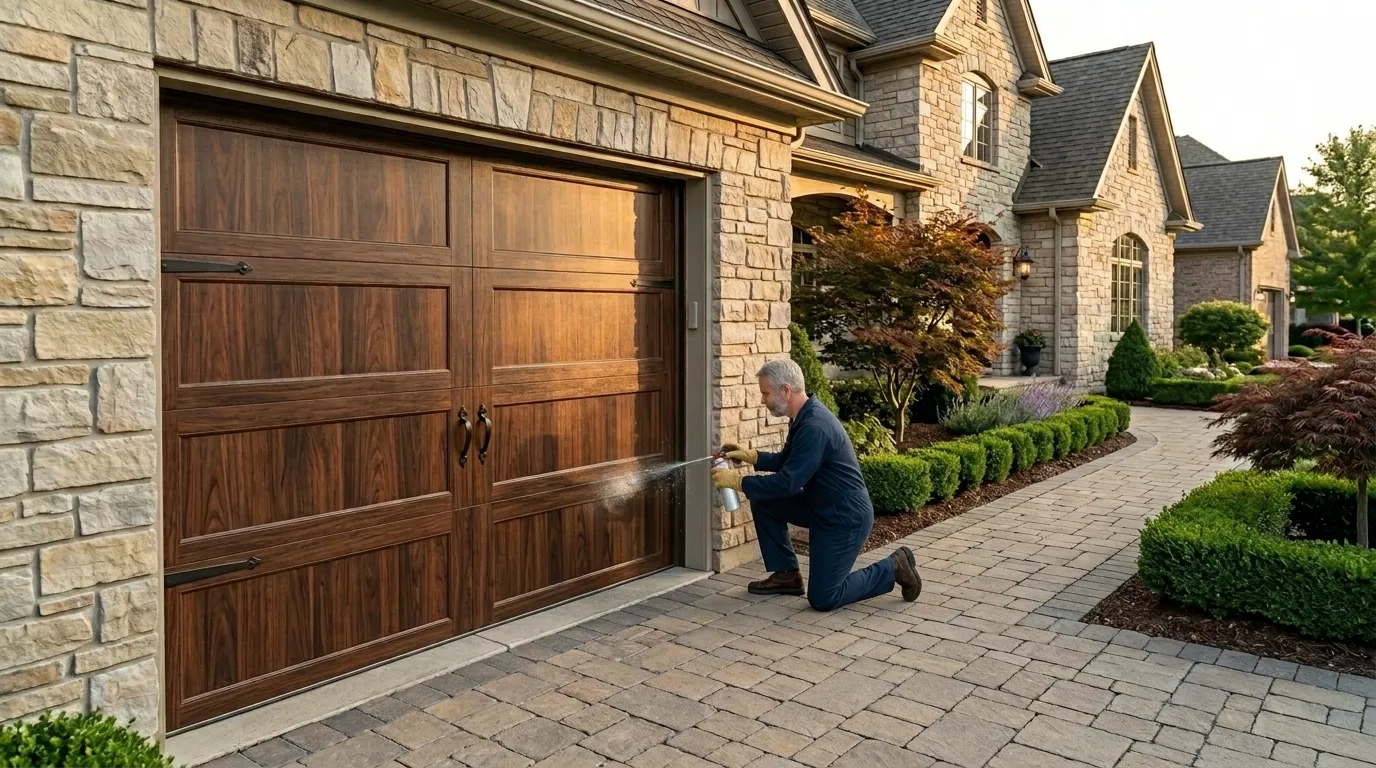
Tell us what’s wrong - Newark garage door service

Tell us what’s wrong

Describe the symptom - won’t open, loud bang, opener runs but the door won’t move.

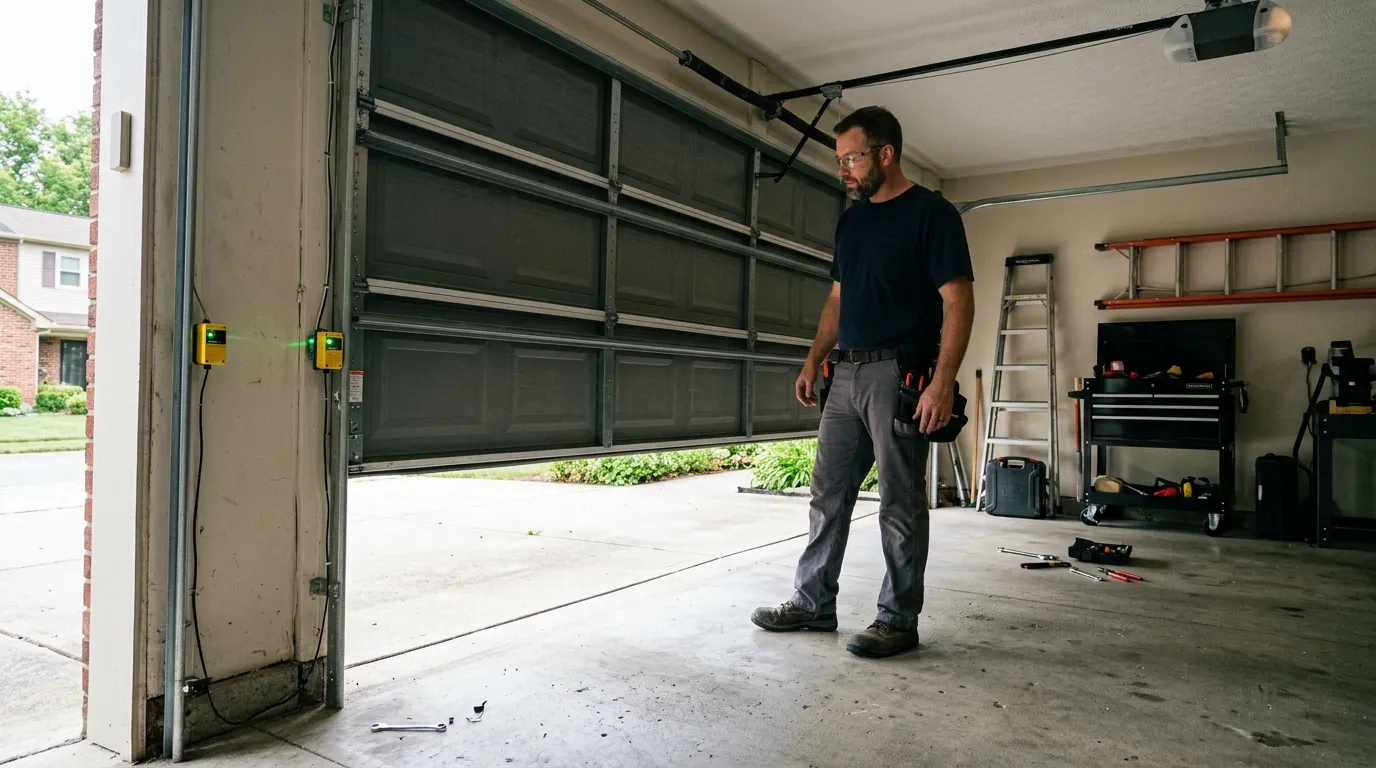
On-site diagnosis - Newark garage door service

On-site diagnosis

A technician tests the door under power and by hand and finds what actually failed.

Clear, up-front plan - Newark garage door service

Clear, up-front plan

You get the fix that’s needed and what drives the cost - before any work starts.

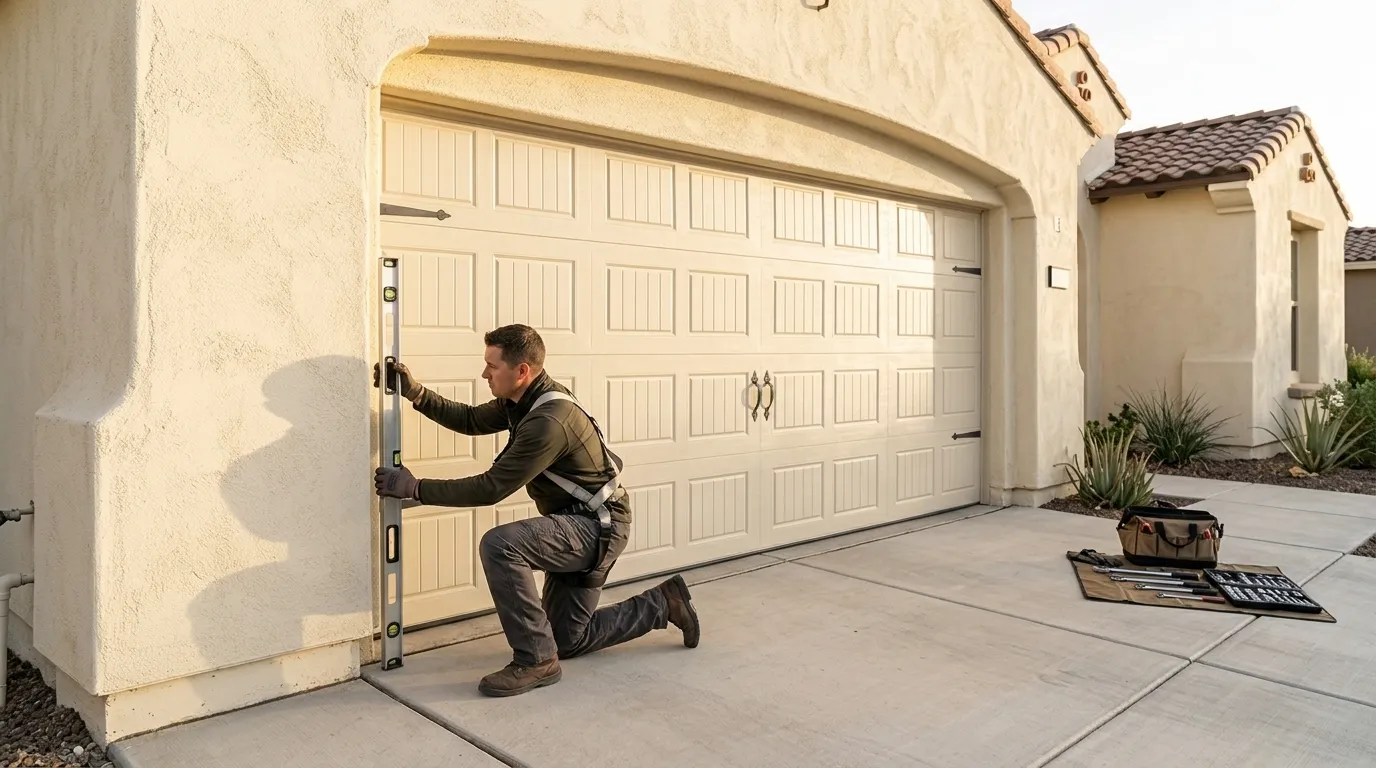
Repaired & tested - Newark garage door service

Repaired & tested

The repair is done, the door is set true and tested, and the work area left clean.

Serving Newark, OH - tell us what your door’s doing and we’ll take it from there.

How we work

What to expect

Diagnosis firstEvery visit starts by finding what actually failed - not a pre-written parts list.
The right part for the doorSprings and openers matched to the door’s weight and age, so the fix holds up.
Straight answersWhen a repair makes more sense than a replacement - or the reverse - you hear it plainly.
Clean, careful workTension released safely, hardware set true, the door tested under power before we leave.
Questions

Frequently asked

Straight answers about garage door repair in Newark. Still unsure? Ask us directly.

Why did my garage door spring break in the cold if it worked fine all summer?

Steel springs lose some flexibility as temperatures drop, and a spring that's already worn from years of cycling has less give left to work with. In Newark's severe-cold climate, that last bit of flex often disappears on the coldest mornings, which is why breaks cluster right after a hard freeze rather than spreading evenly through the year.

Is my house's age a factor in spring failure?

Yes. A lot of Newark's housing was built in the 1960s and 70s, and homes from that era often still have original torsion hardware sized for lighter, non-insulated doors. If the door was upgraded since without upsizing the spring, cold weather tends to be when that mismatch finally causes a failure.

Can I lubricate or adjust the spring myself before winter?

You can lubricate rollers, hinges, and the torsion bar itself with a garage-door-rated lubricant - that helps. But do not attempt to adjust spring tension yourself. Torsion springs are under heavy load and adjusting them without the right bars and training has caused serious injuries.

How fast can you get a new spring installed?

That depends on the size - standard springs we usually have on the truck, but some older Newark homes have non-standard door widths that need a special-ordered spring, which can take a few extra days. We'll tell you which situation you're in once we see the door.

Ready to get your garage door sorted?

Tell us what it’s doing and where you are in Newark - we’ll take it from there.

Request a QuoteCall