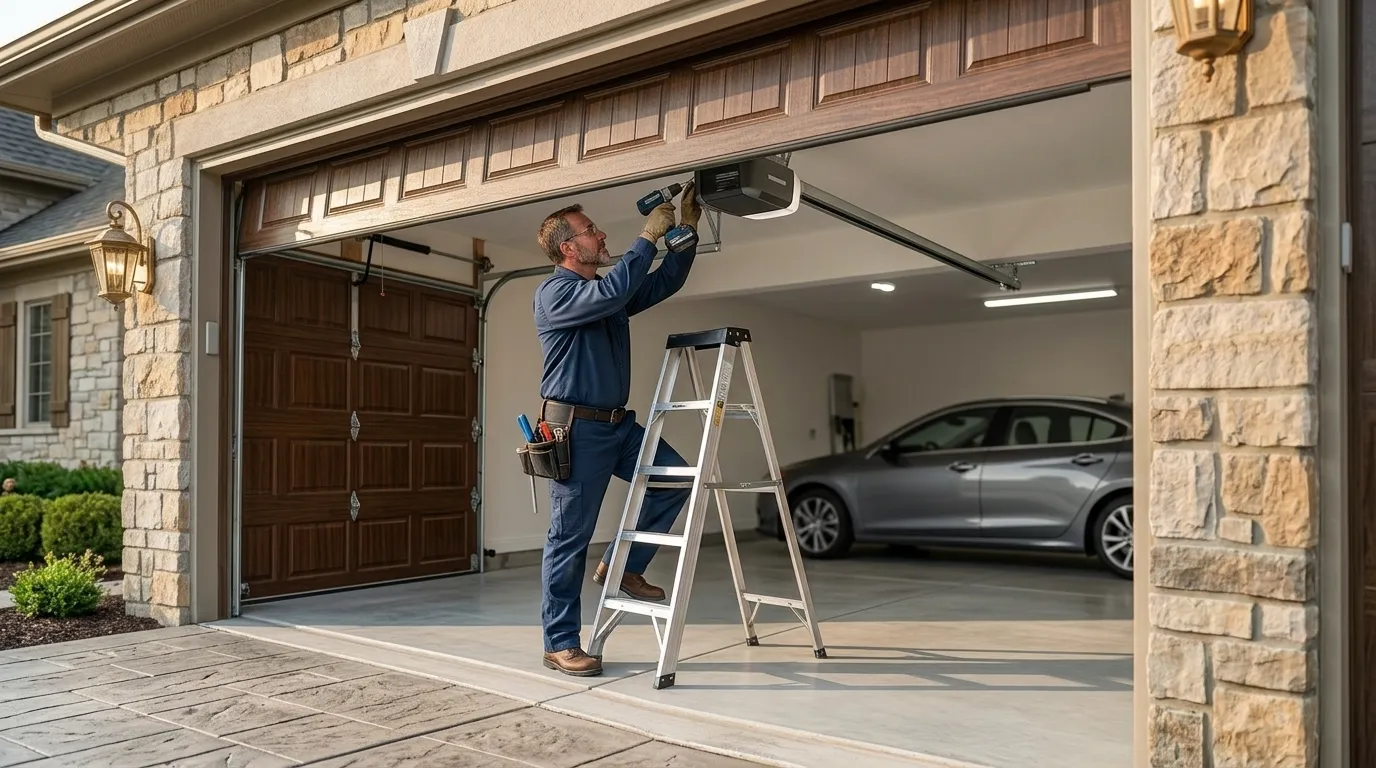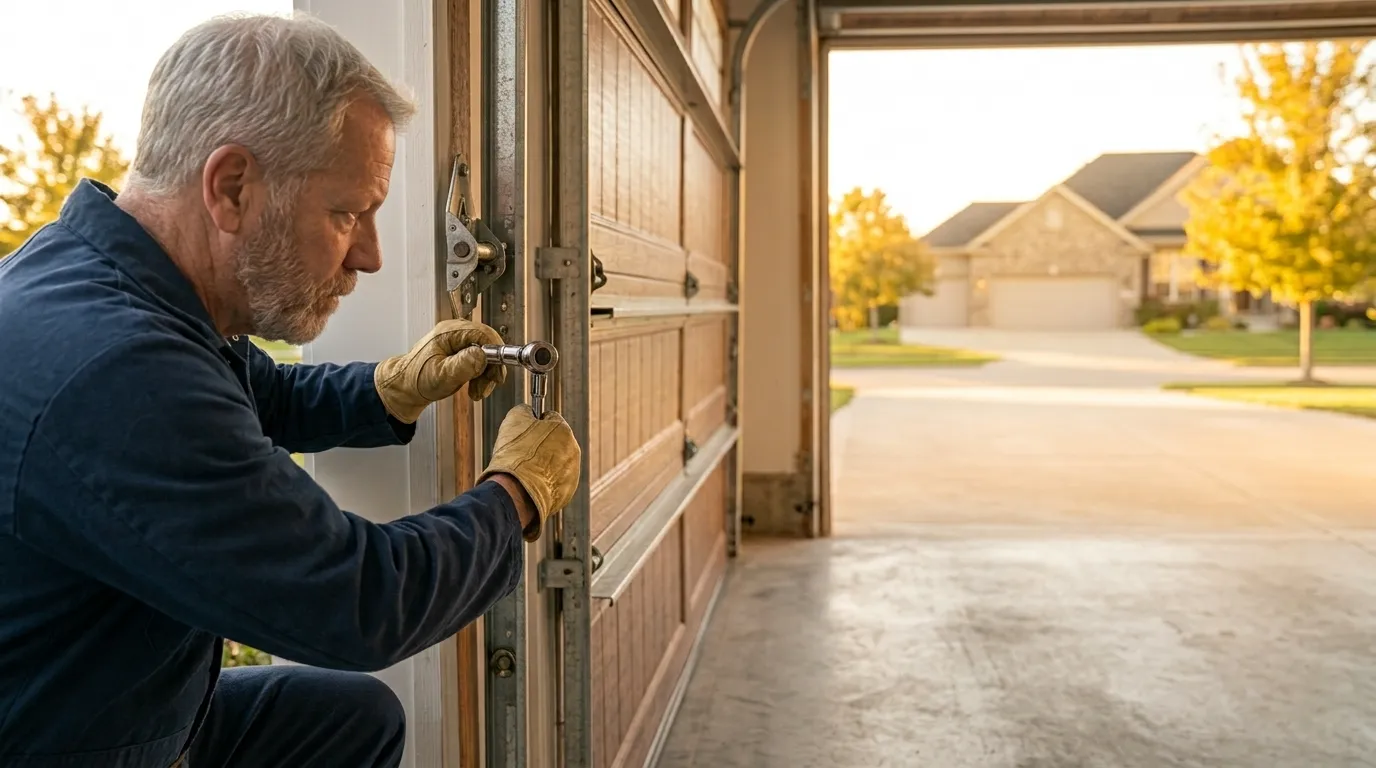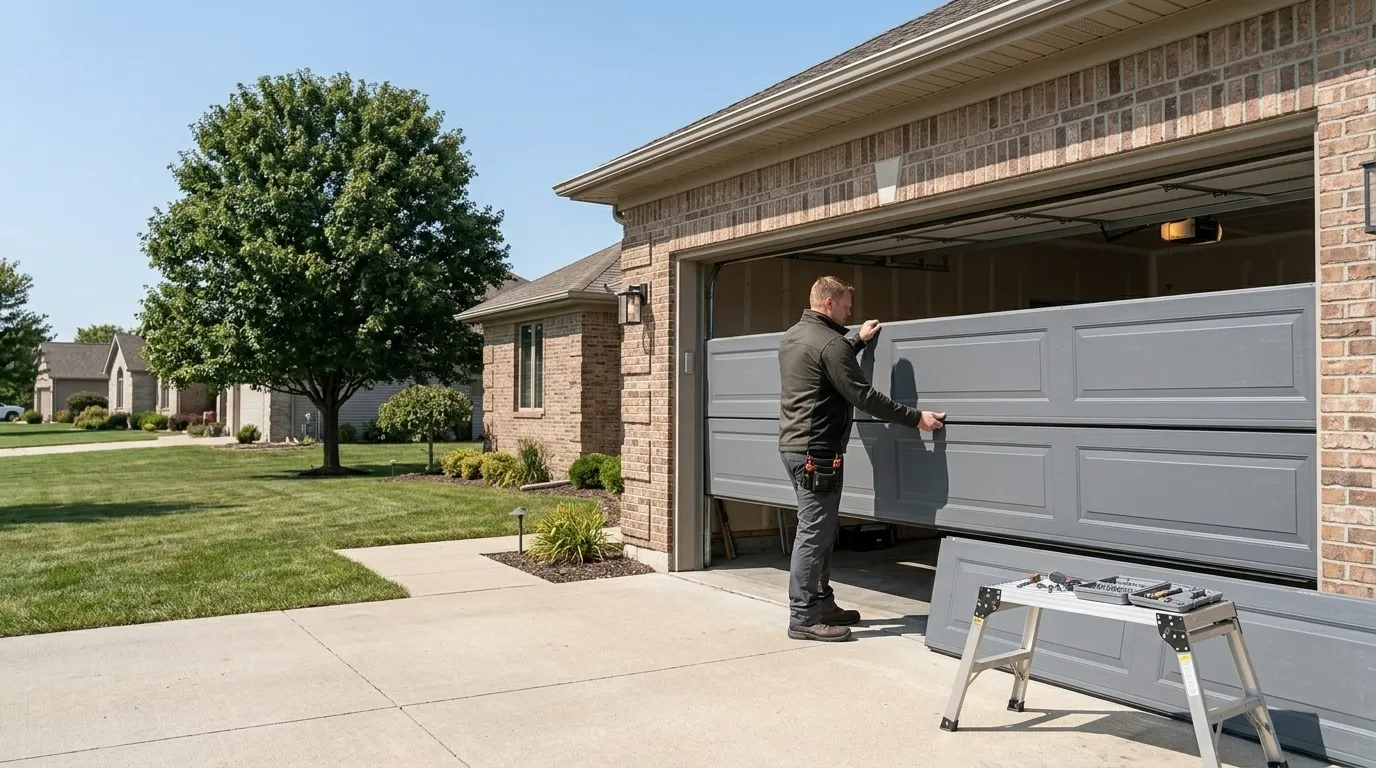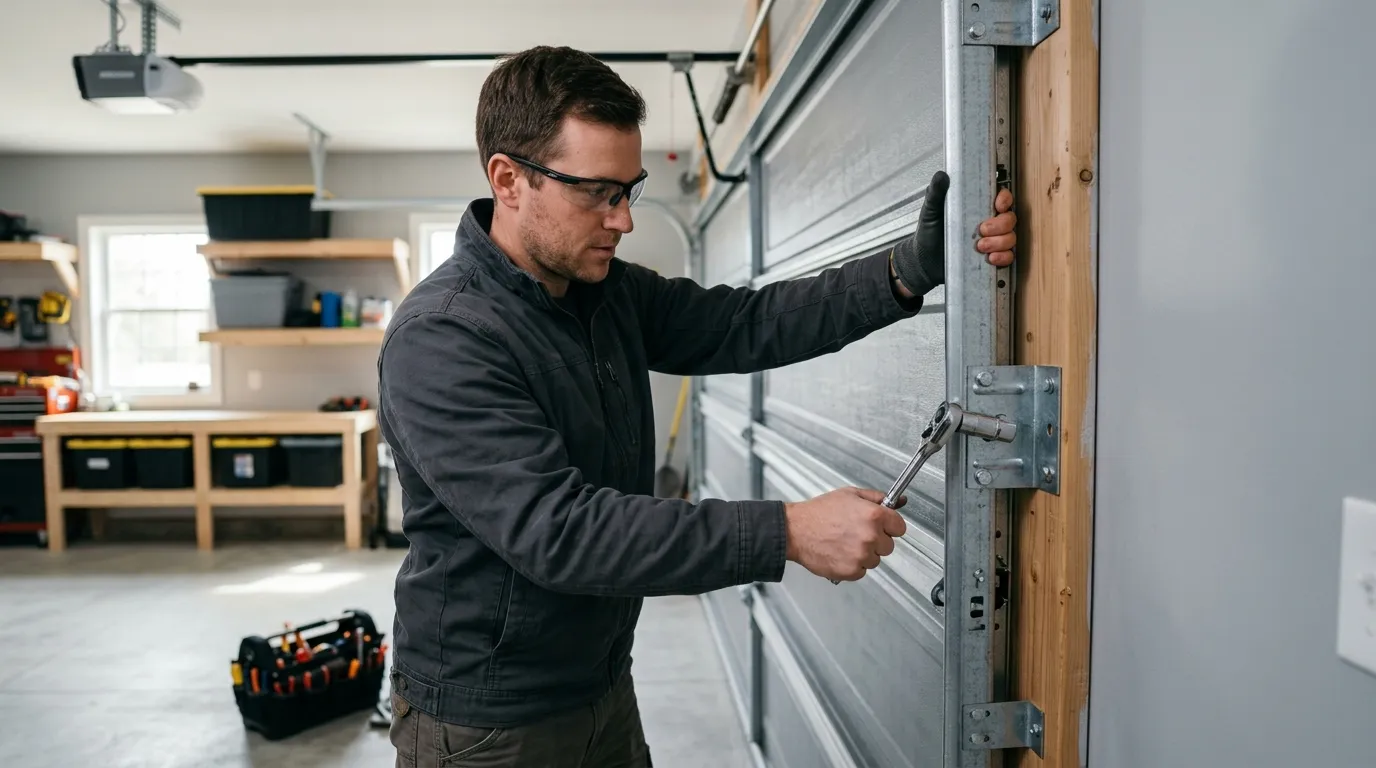
How We Fix It
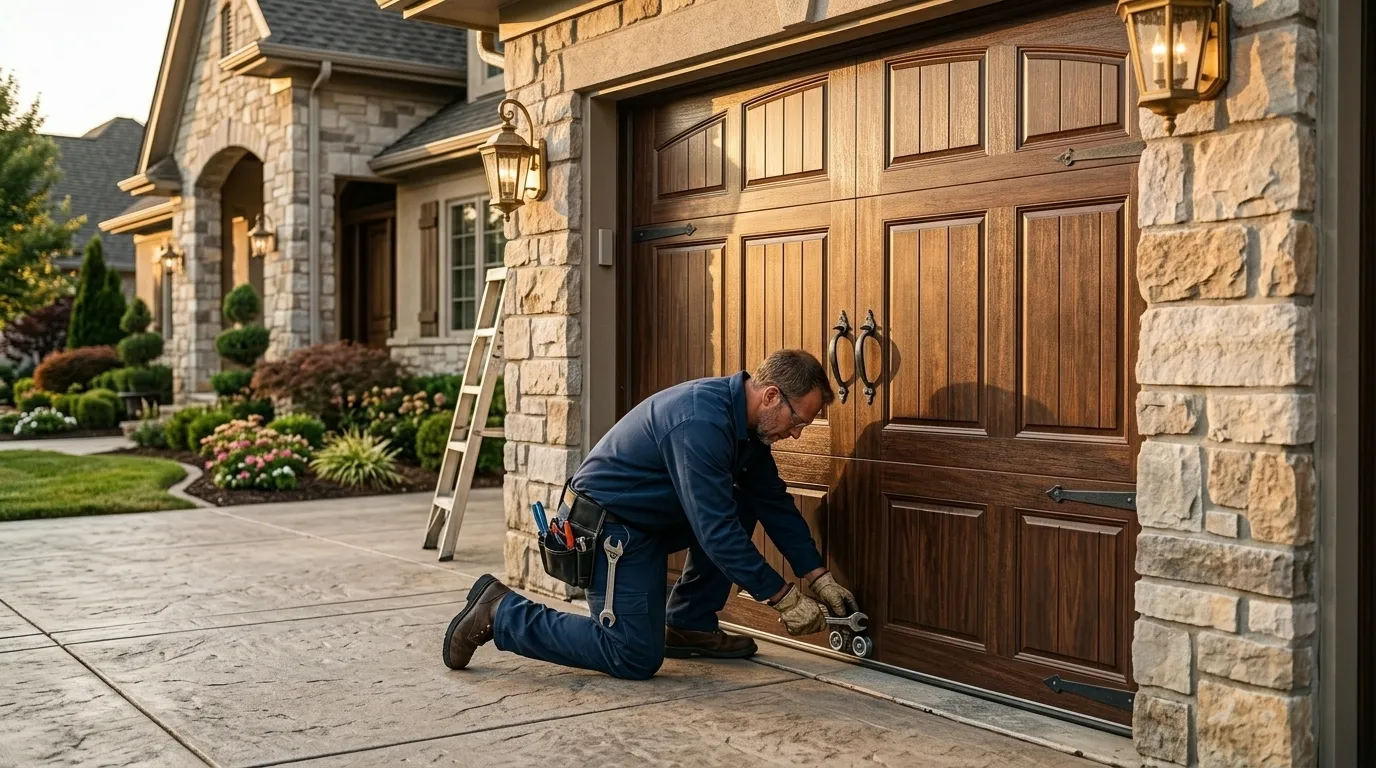
Most of the calls we run in Newark come down to one of three parts: a torsion spring that's lost its temper, a bottom bracket cable that's frayed through, or a track that's pulled out of alignment from years of temperature swings. On a house built in the 1960s or 70s - which describes a big share of the 16 areas we work across - the spring is usually the original size, sized for a lighter door than what's often hanging on it now after a panel replacement or insulation retrofit.
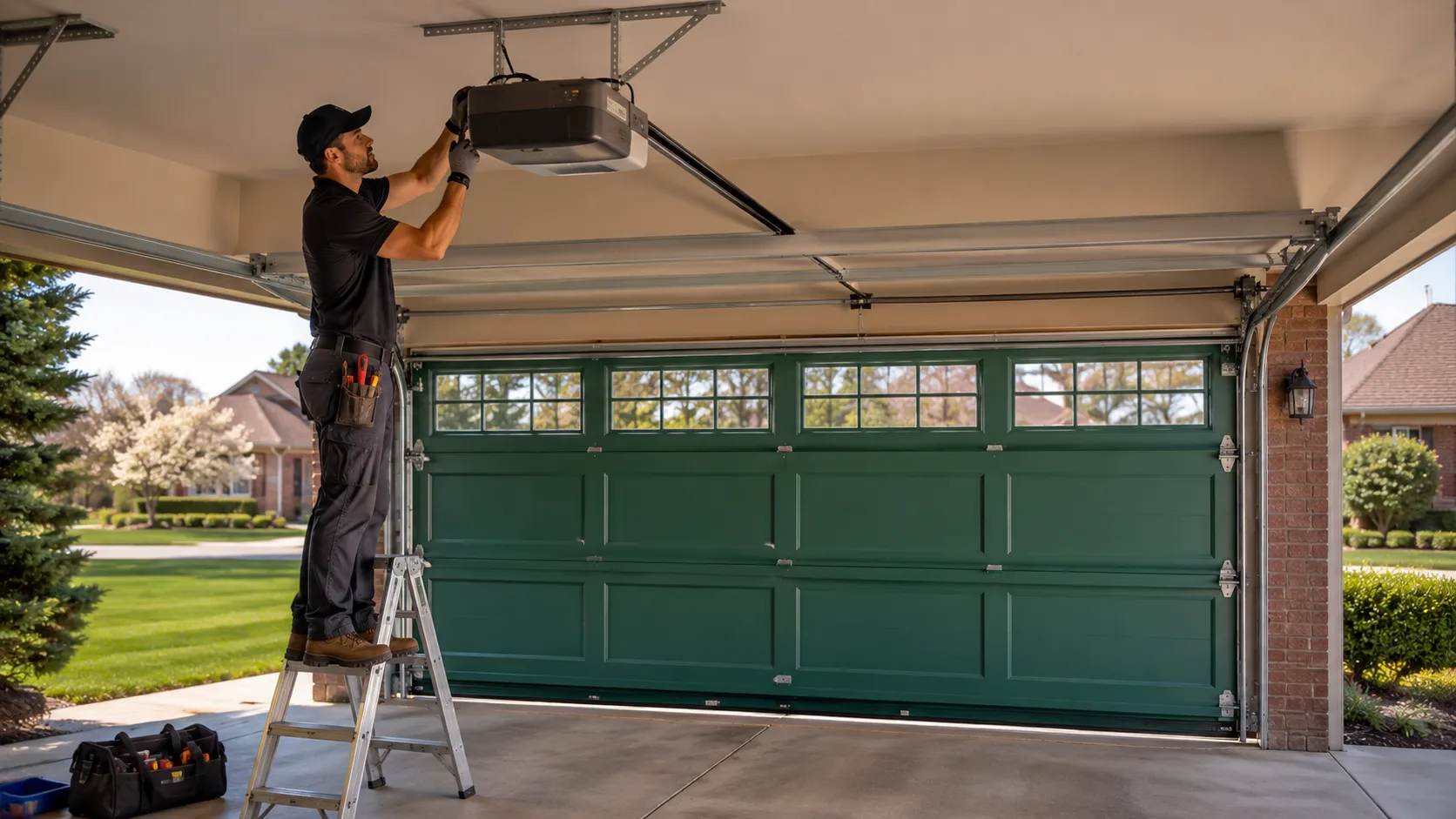
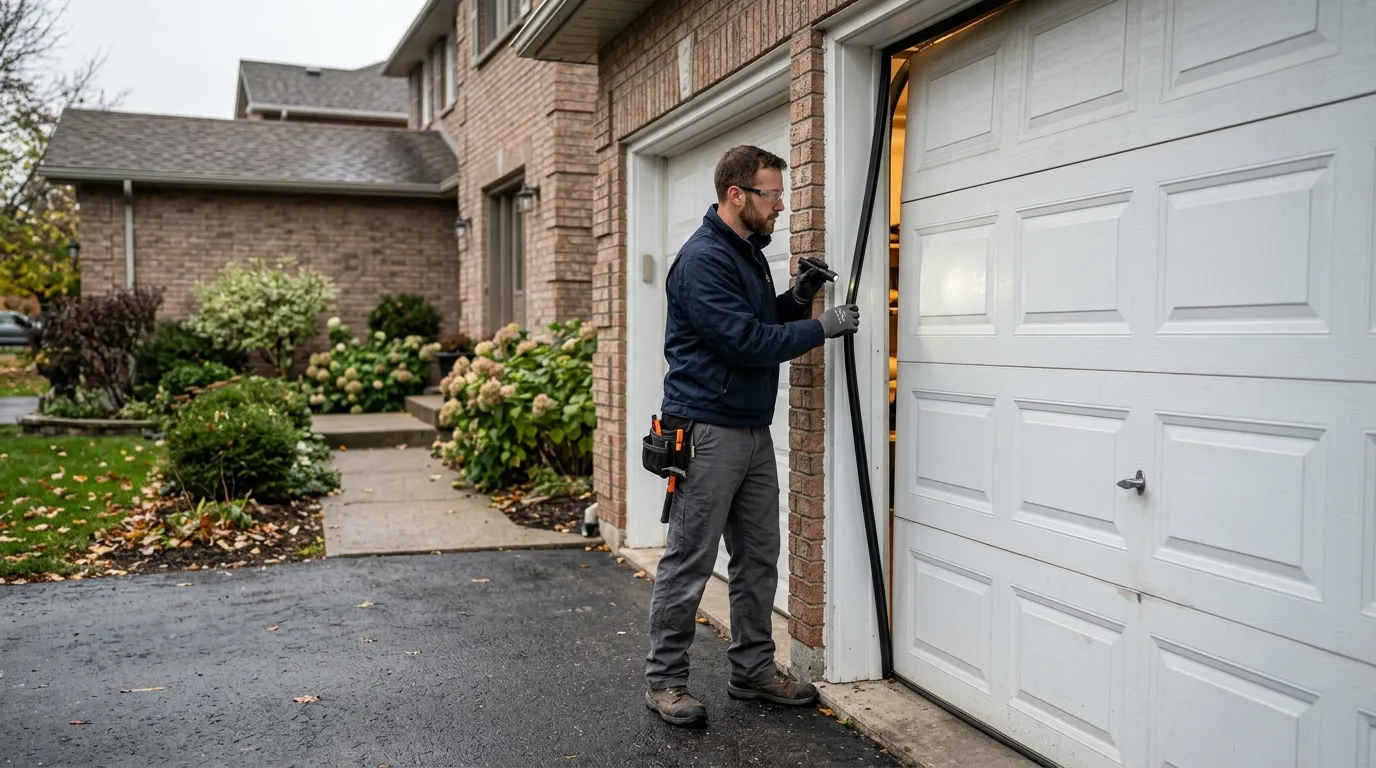
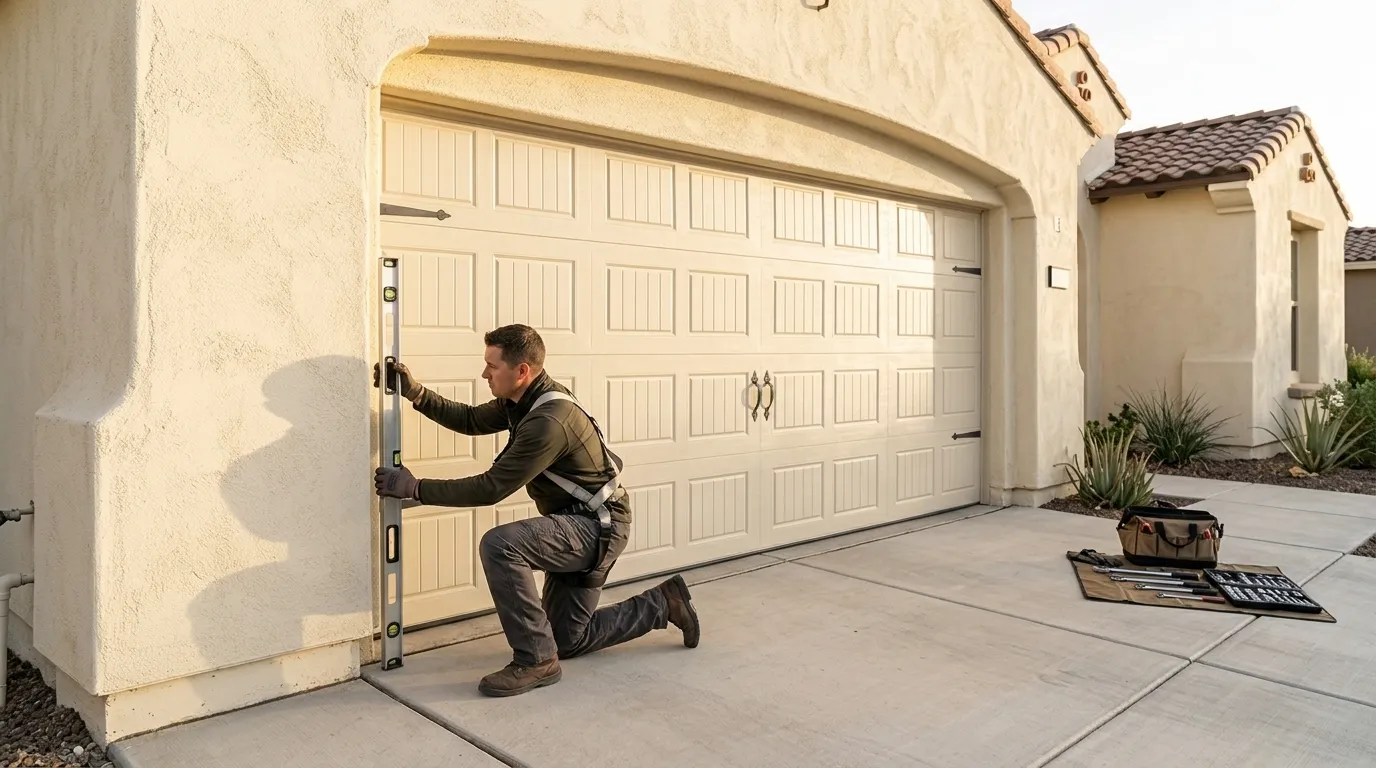
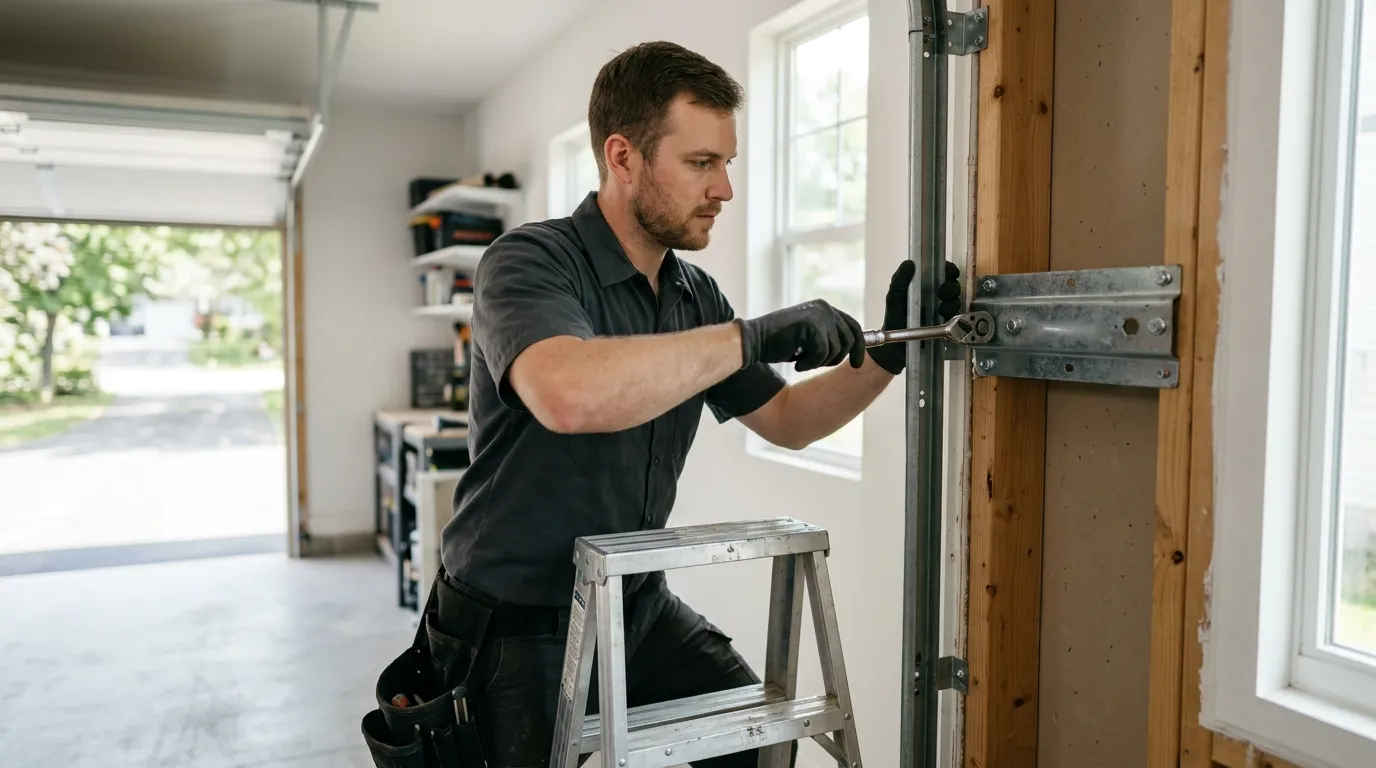
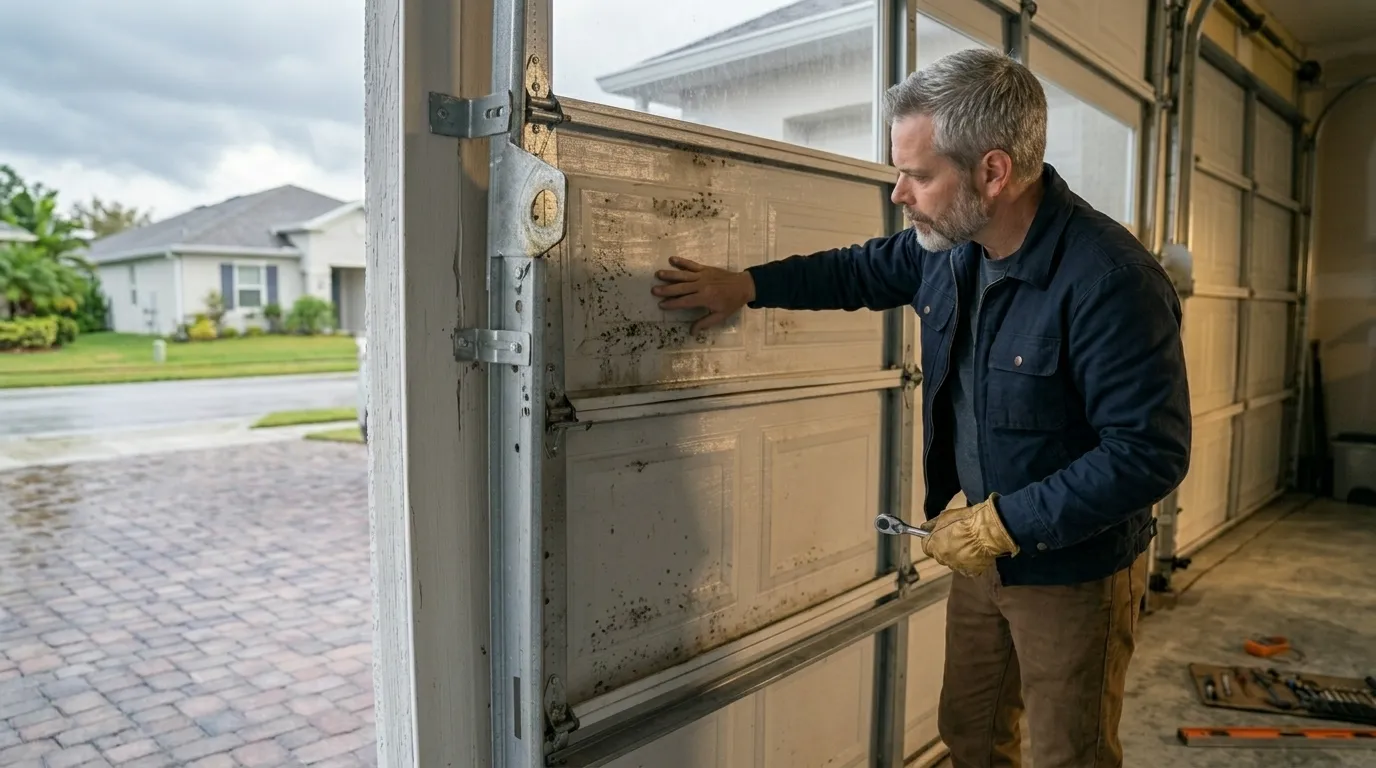
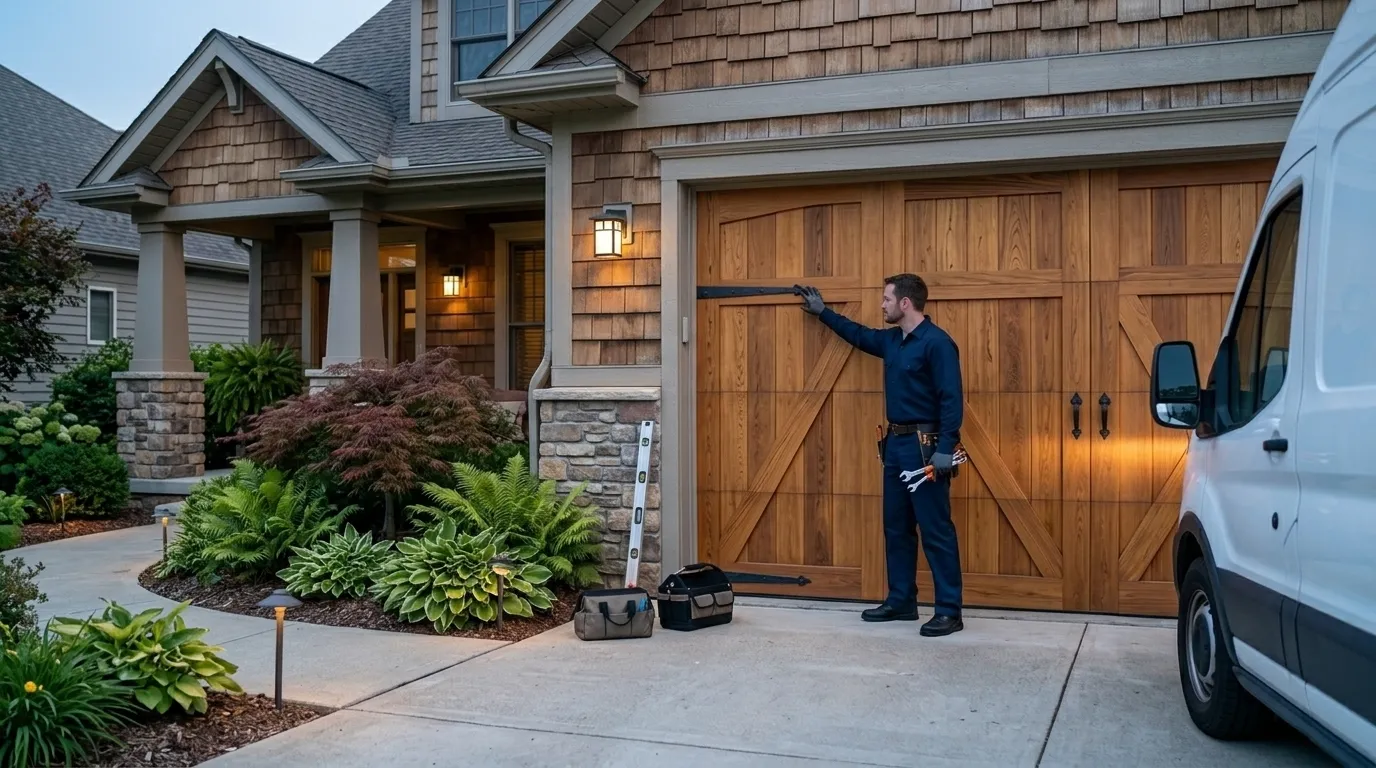
We start by cycling the door by hand with the opener disconnected, which tells us in about thirty seconds whether the problem is spring tension, track binding, or something in the opener itself. Torsion spring swaps get done in pairs, even if only one has broken, because the other one is the same age and close behind it. Track realignment is measured, not eyeballed - a track that's a quarter inch off at the top can bind a roller enough to shorten cable life by years.
One honest limit: if the door itself is warped or the panel seams have separated from decades of freeze-thaw cycling, we'll tell you that a new spring won't fix what's really wrong, and replacement is the better spend.
How Long You Are Without the Door
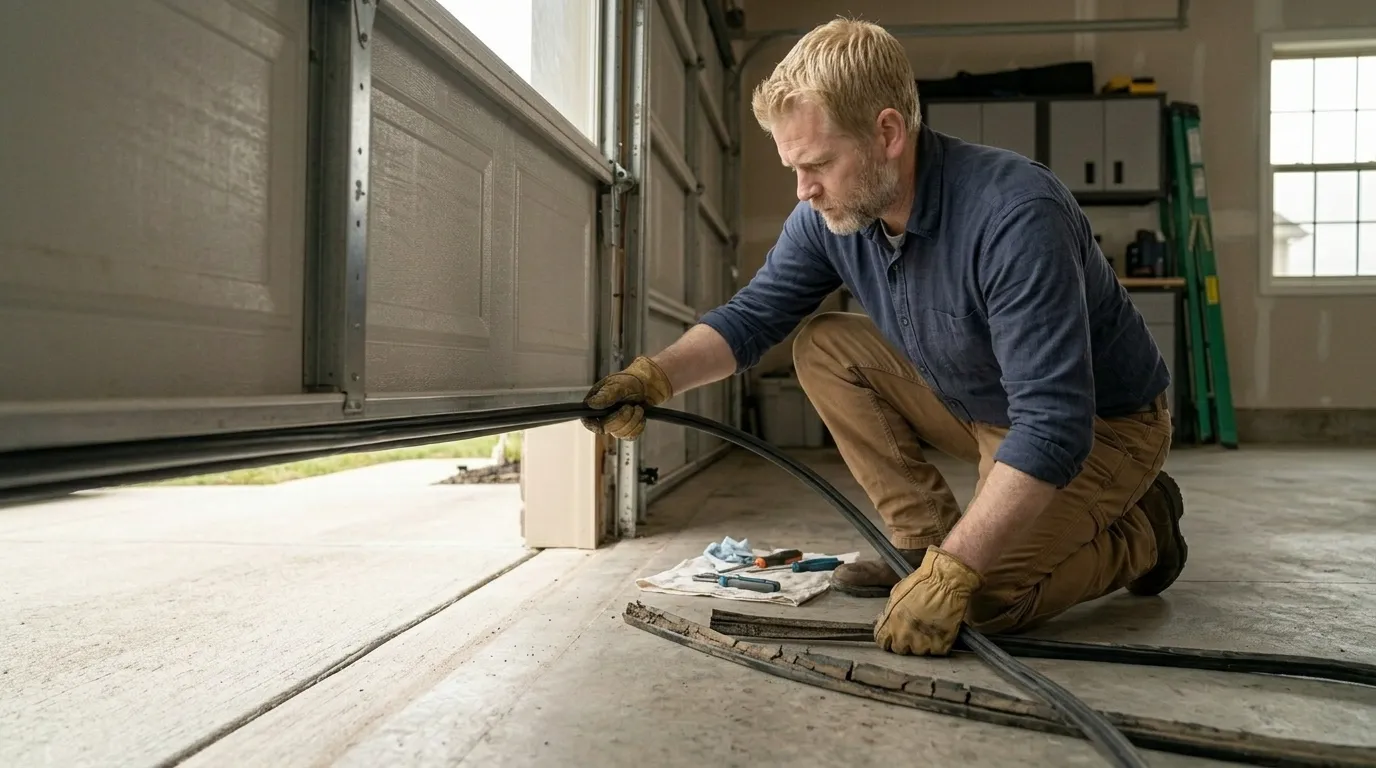
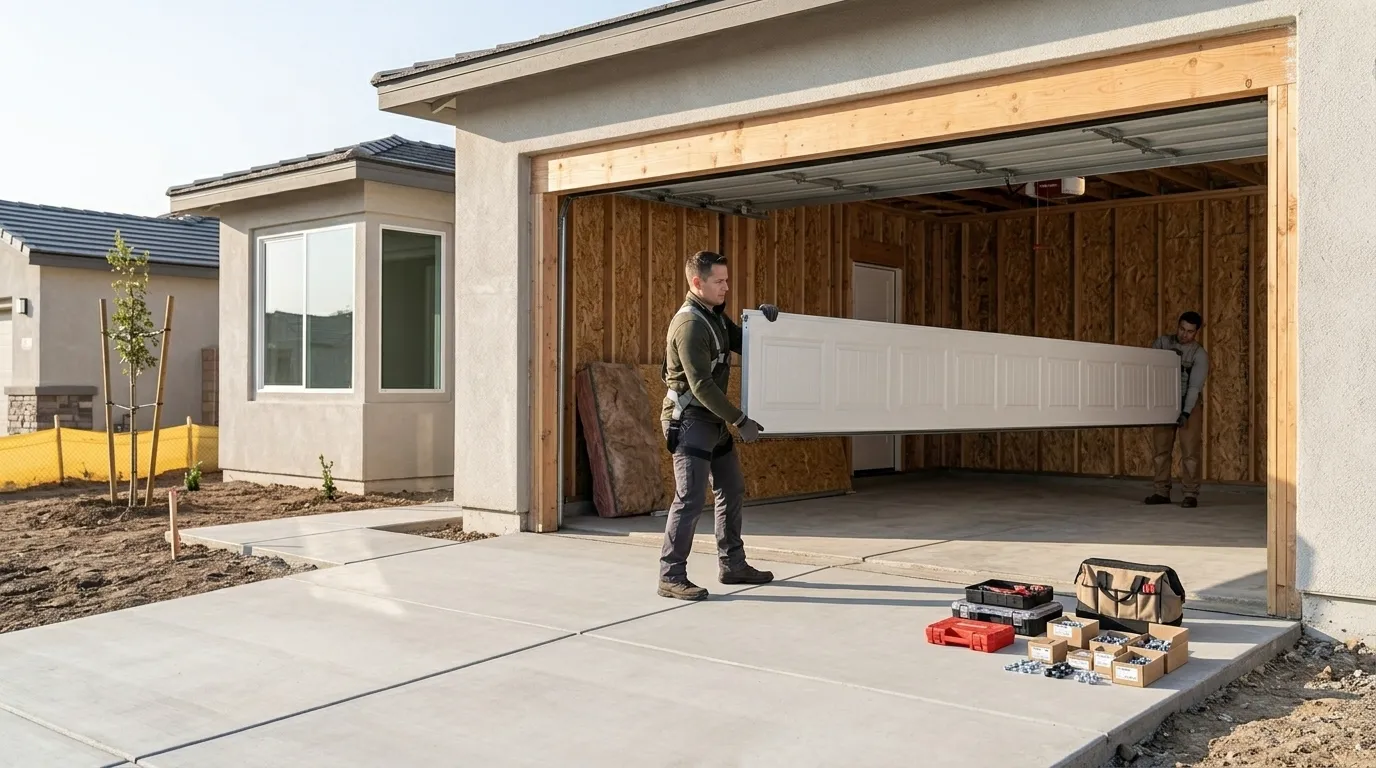
A straightforward torsion spring replacement on a standard double door takes under two hours once we're on site, and the door goes back to normal use the same visit. Cable and roller work runs similar timing. What extends the job is parts availability on older or oversized doors - homes on the upper end of Newark's 1938-2005 build range sometimes have hardware sized for a door width nobody stocks off the truck, and that can mean a return trip.
We won't quote a same-day guarantee here because a lot depends on what's actually failed and whether the track or opener bracket got damaged when the spring let go. What we can tell you is that a broken spring doesn't have to mean the car stays in the driveway for a week. Most single-spring failures on a two-car door are a same-visit fix; it's the double failure, or one paired with a bent track, that adds a day.
How It Shows Up
The most common sign is the door stopping partway, usually because the opener senses resistance from a spring that can no longer lift its share of the weight. Some owners hear it first - a loud bang from the garage, which is the spring letting go rather than snapping quietly. Others notice the door feels heavier when lifted by hand, or that the opener strains and reverses instead of closing.
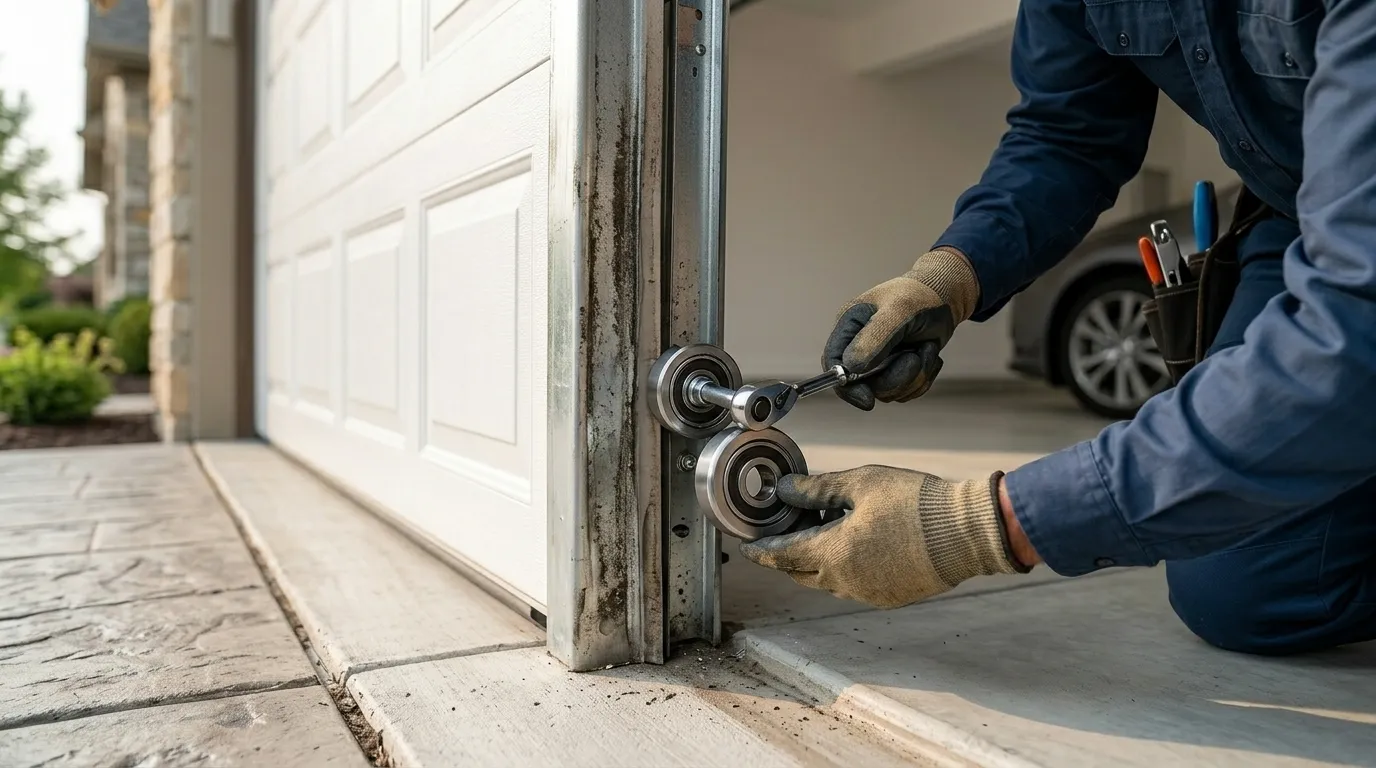
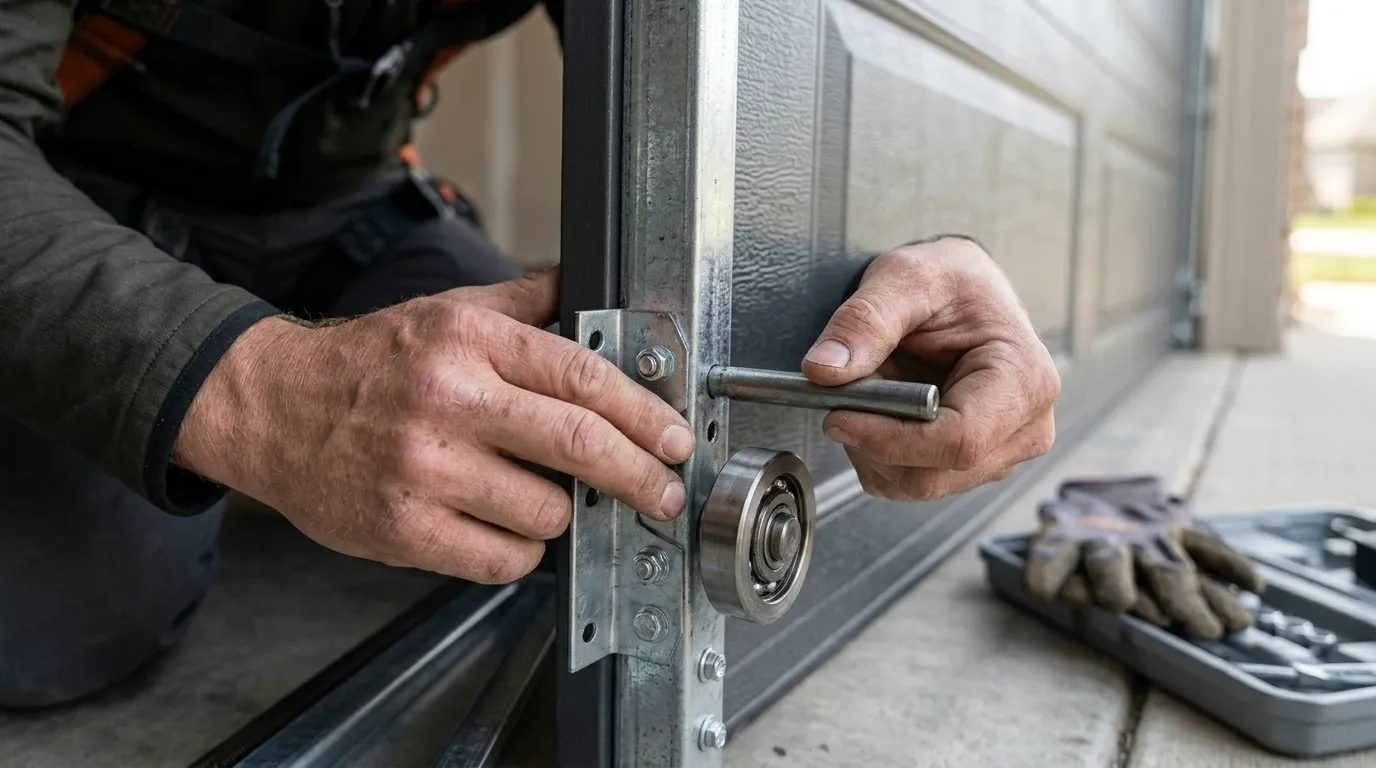
On older track systems common to the area's 1960s-70s builds, you might also see a roller that's worn oval instead of round, or a track bracket that's loosened from the wall over years of vibration. None of these get better on their own, and running the opener against a bad spring is what turns a $200 repair into a cracked opener gear a month later.