24/7 Emergency Service Open 7 days · 7am–8pm Serving Newark, OH & nearby
(220) 239-4920
Newark, OH

Is Your Older Newark Garage Door Worth Fixing, or Done

A look at when a 1960s or 70s Newark, OH garage door is worth repairing versus replacing, based on the area's housing age and cold-climate wear.

Is Your Older Newark Garage Door Worth Fixing, or Done

The Problem

Most of the calls we get around Newark aren't for a door that failed all at once - they're for a door that's been getting worse for years and the owner finally hit the wall. That tracks with what's actually out there. Housing in this area runs 1938 to 2005, with the median landing around 1976, and the bulk of it clusters in 1960s and 70s construction across the sixteen named areas we work in. A door that age is usually on its second or third opener but still wearing the original track, hinges, and sometimes the original spring. That's the door where a single roller replacement buys you six more months, or where the track has been bent so long the whole system is fighting itself every time it opens. The honest answer isn't always "repair it" and it isn't always "replace it" - it depends on whether the springs, track, and panel are failing together or one at a time. One thing we won't do is chase a repair on a door where the panel steel has gone soft with rust; at that point you're paying twice, once now and once in a year.

What to Check

Before you call anyone, look at four things. First, the springs - if they're original to a 1960s or 70s build, they've likely been recoiling for decades longer than they were rated for, and a torsion spring that's lost its coating is a spring that's close to snapping. Second, the track - stand back and sight down it; a track bowed even a quarter inch will chew through rollers faster than it should. Third, the panels themselves, especially the bottom one, for rust bubbling under the paint rather than sitting on top of it. Bubbling from underneath means the steel is going, not just the finish. Fourth, check whether the door still balances - disconnect the opener, lift the door halfway by hand, and see if it holds. If it drops or shoots up, the springs are doing the wrong job, and that's not a lubrication fix. A door that fails two or more of these checks is usually past the point where a single-part repair makes sense. A door that fails just one is often a good, cheap fix.

How Local Conditions Play In

Newark sits in a climate band the federal data marks as cold and severe, and that matters more for a garage door than people expect. Steel panels and torsion springs both move with temperature - they contract in a hard freeze and expand back as the garage warms during the day, and that cycle repeats all winter, every winter, for as long as the door has been standing. On a door built in the 1970s, that's forty-plus years of expansion and contraction on hardware that was never rust-proofed to modern standards. It's why springs on older Newark doors tend to go in cold snaps rather than in July, and why panel seams near the bottom are usually where rust shows up first - that's the section closest to slush and de-icing salt tracked in off the driveway. If you're out toward Heath or Granville, four miles out either way, or further toward Hebron and Hanover at eight, you're dealing with the same winter load on the same era of door. The climate doesn't care how far out you are; the housing stock does the rest.

Season by Season

Winter is when an older Newark door tells on itself. Cold-stiffened springs, ice in the track, and a slab that's shifted slightly with frost all show up as a door that groans, sticks, or won't seal at the bottom. That's also when a marginal spring is most likely to let go, since cold steel is more brittle steel. Spring, once the ground thaws, is a good time to check for track misalignment that the freeze-thaw cycle caused over the winter - a track bolted to a slab that moved even slightly needs re-shimming before it wears the rollers. Summer humidity is easier on the hardware but hard on wood-trim doors from the older part of the housing stock, where swelling can bind a door that ran fine all winter. Fall is really the only season for prevention rather than reaction: lubricating hinges and rollers, checking spring tension, and clearing debris from the track before the first freeze locks anything in place. We'd rather get the call in October than in January, but we understand that's not always how it goes.
How it works

From “it’s stuck” to “it’s fixed”

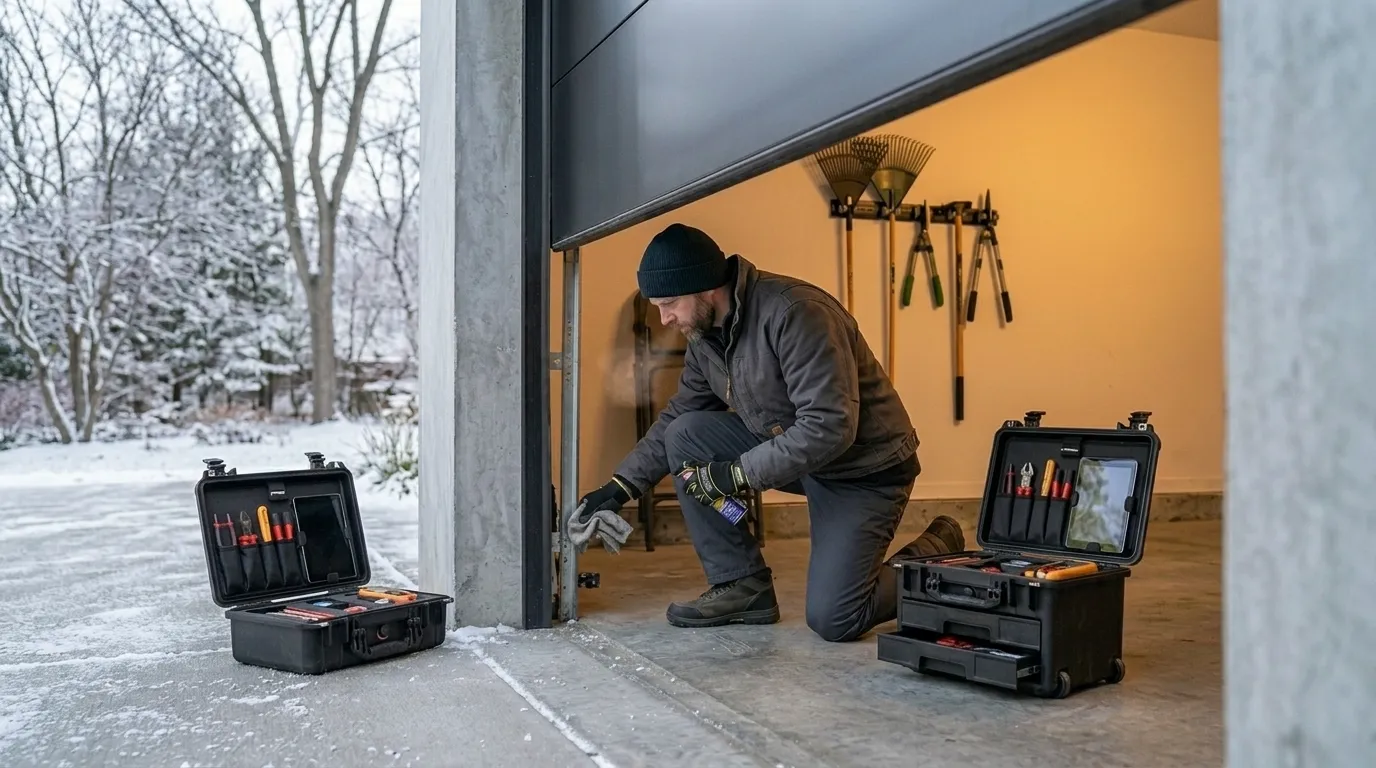
Tell us what’s wrong - Newark garage door service

Tell us what’s wrong

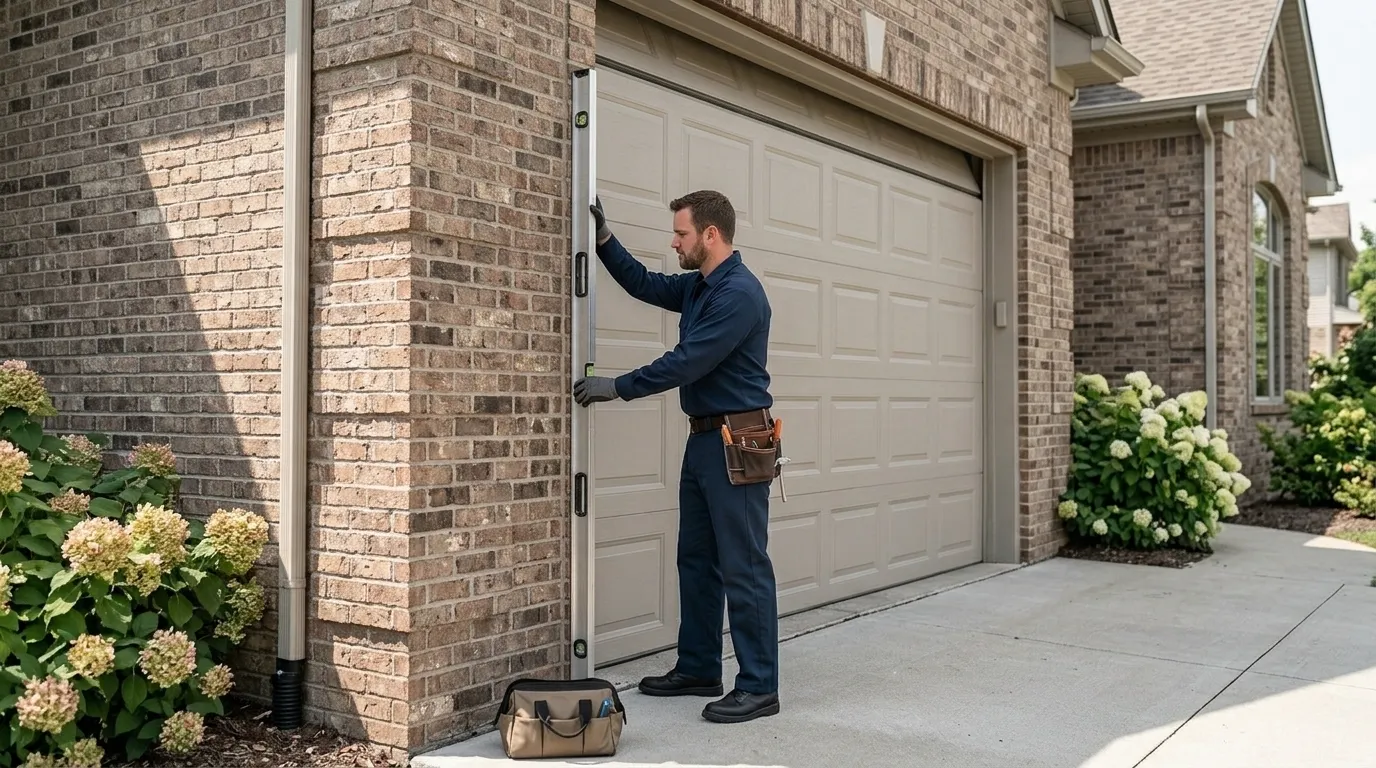
Describe the symptom - won’t open, loud bang, opener runs but the door won’t move.

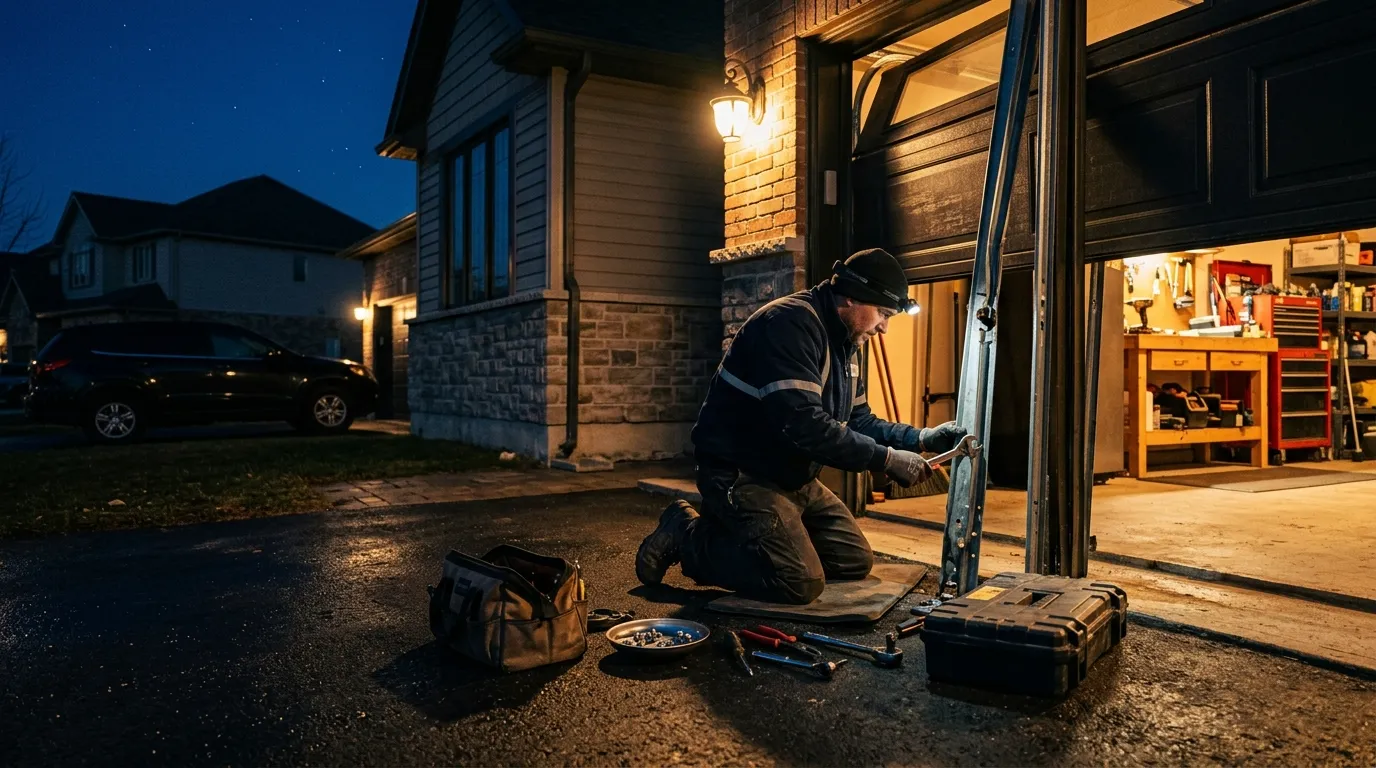
On-site diagnosis - Newark garage door service

On-site diagnosis

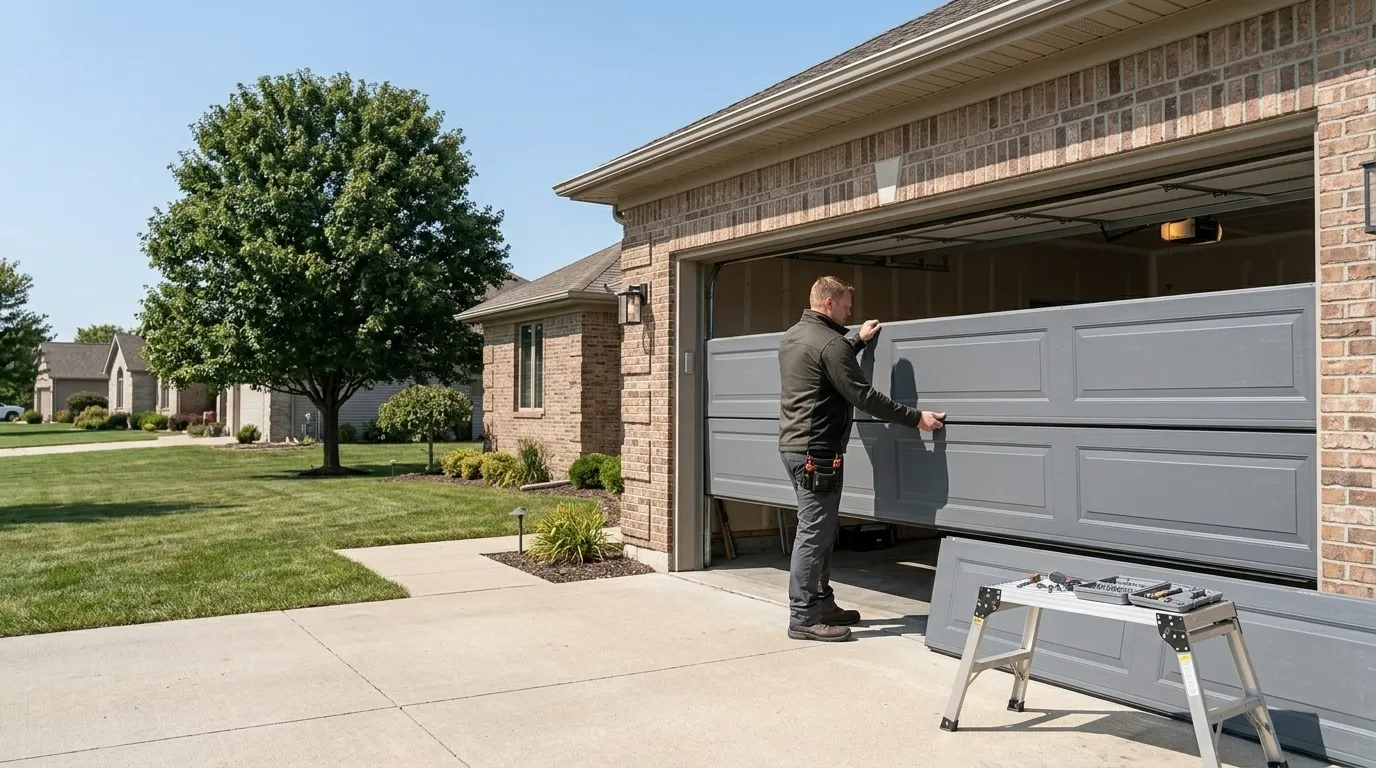
A technician tests the door under power and by hand and finds what actually failed.

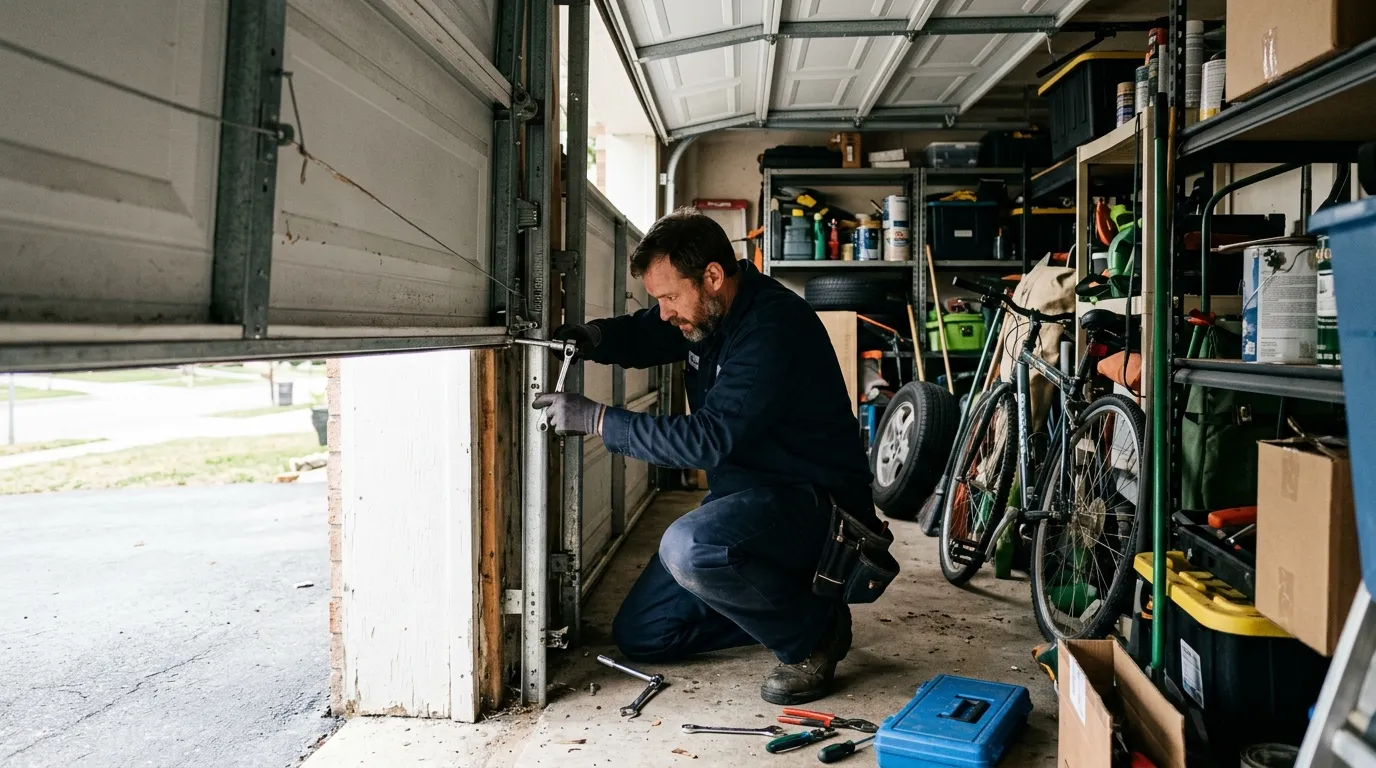
Clear, up-front plan - Newark garage door service

Clear, up-front plan

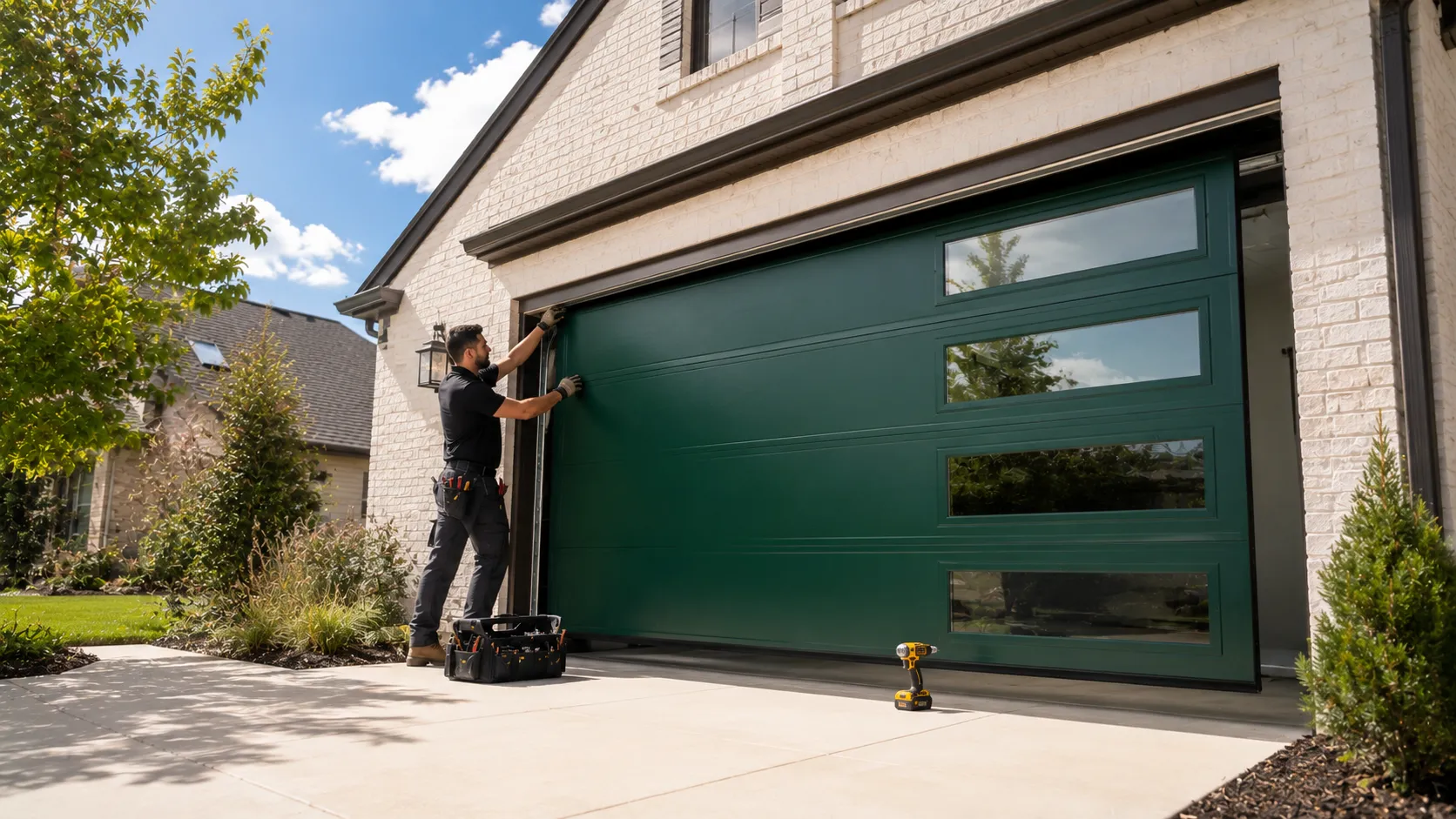
You get the fix that’s needed and what drives the cost - before any work starts.

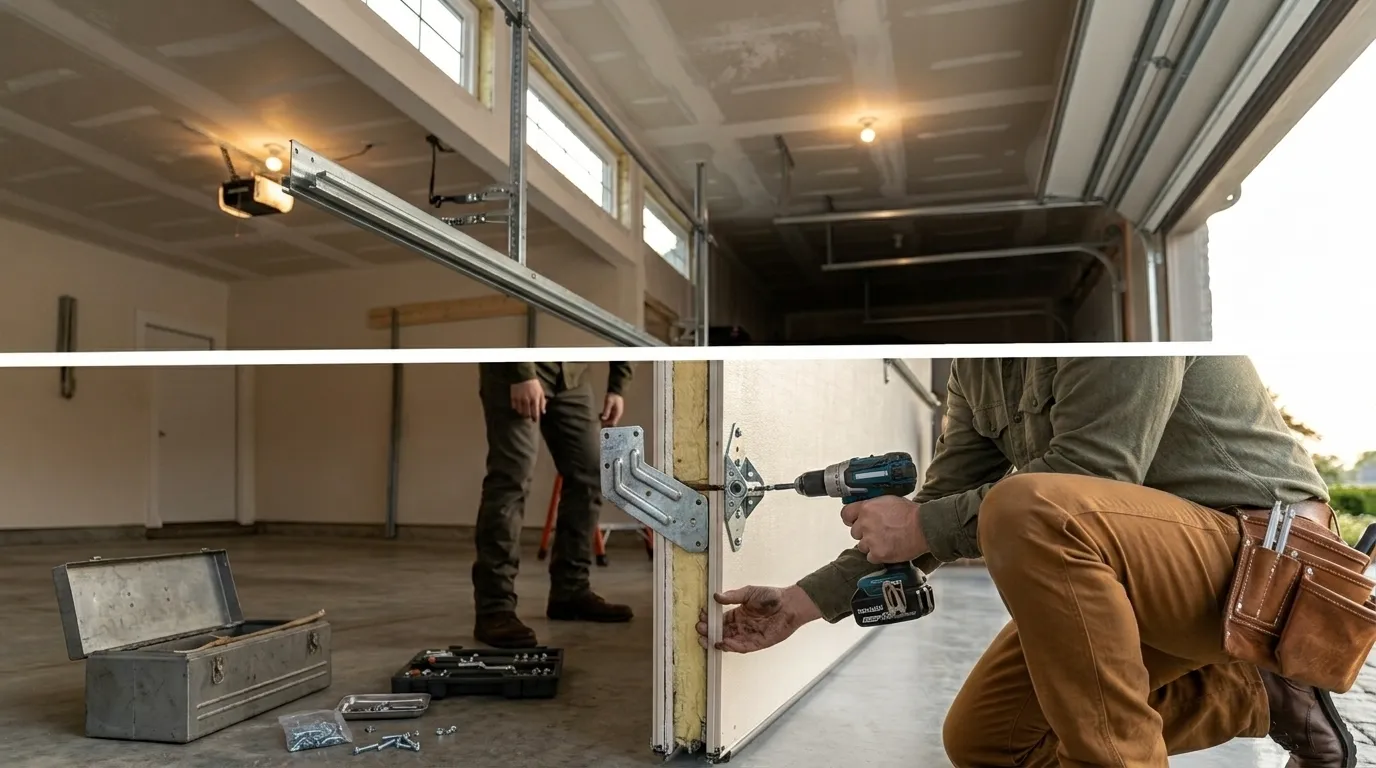
Repaired & tested - Newark garage door service

Repaired & tested

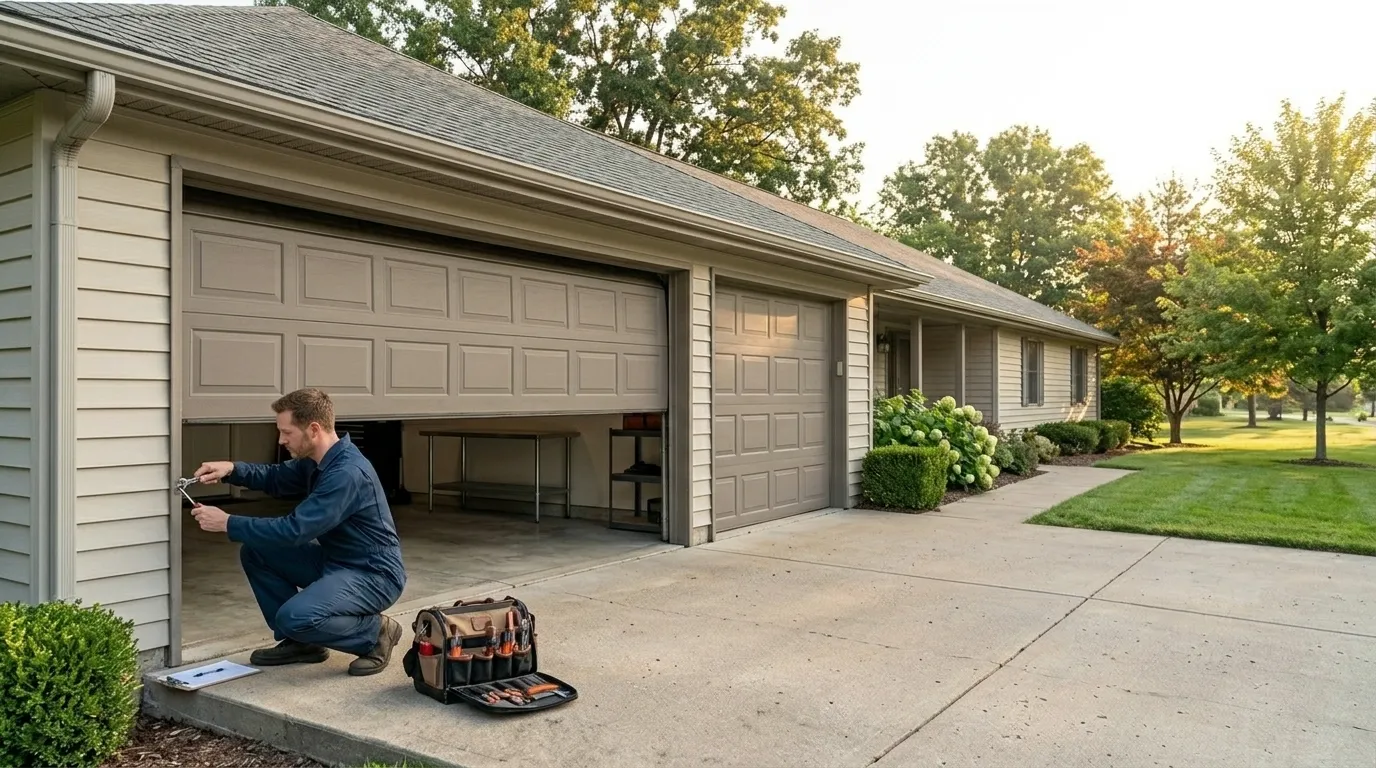
The repair is done, the door is set true and tested, and the work area left clean.

Serving Newark, OH - tell us what your door’s doing and we’ll take it from there.

How we work

What to expect

Diagnosis firstEvery visit starts by finding what actually failed - not a pre-written parts list.
The right part for the doorSprings and openers matched to the door’s weight and age, so the fix holds up.
Straight answersWhen a repair makes more sense than a replacement - or the reverse - you hear it plainly.
Clean, careful workTension released safely, hardware set true, the door tested under power before we leave.
Questions

Frequently asked

Straight answers about garage door repair in Newark. Still unsure? Ask us directly.

How old does a garage door have to be before repair stops making sense?

There's no fixed age - it comes down to whether the springs, track, and panels are failing together. A lot of Newark houses date to the 1960s and 70s, and a door from that era with rusted-through panel steel plus a shot spring is usually cheaper to replace than to keep patching piece by piece.

Why do older doors in Newark seem to fail more in winter?

This area sits in a cold-severe climate band, and steel hardware contracts and expands with every freeze-thaw cycle. On a door that's forty or fifty years old, that cycle has repeated thousands of times, which is why springs and rollers tend to give out in a cold snap rather than mid-summer.

Is it worth fixing a door if the opener still works fine?

Often, yes. The opener is usually the newest part on an older door - most homeowners have replaced it at least once. If the track and springs are sound and it's really just rollers or a panel dent, that's a straightforward repair worth doing before you touch the opener at all.

Ready to get your garage door sorted?

Tell us what it’s doing and where you are in Newark - we’ll take it from there.

Request a QuoteCall