
The Problem
A door doesn't jump its track in one afternoon. It happens over years, and Newark's housing stock gives you a lot of years to work with - homes here were built anywhere from 1938 to 2005, with the median landing around 1976. Across the service area's 15,101 owner-occupied houses, a good share of those garages still run the original steel track and roller hardware the builder put in, or a straight swap done decades later with the same mounting points.
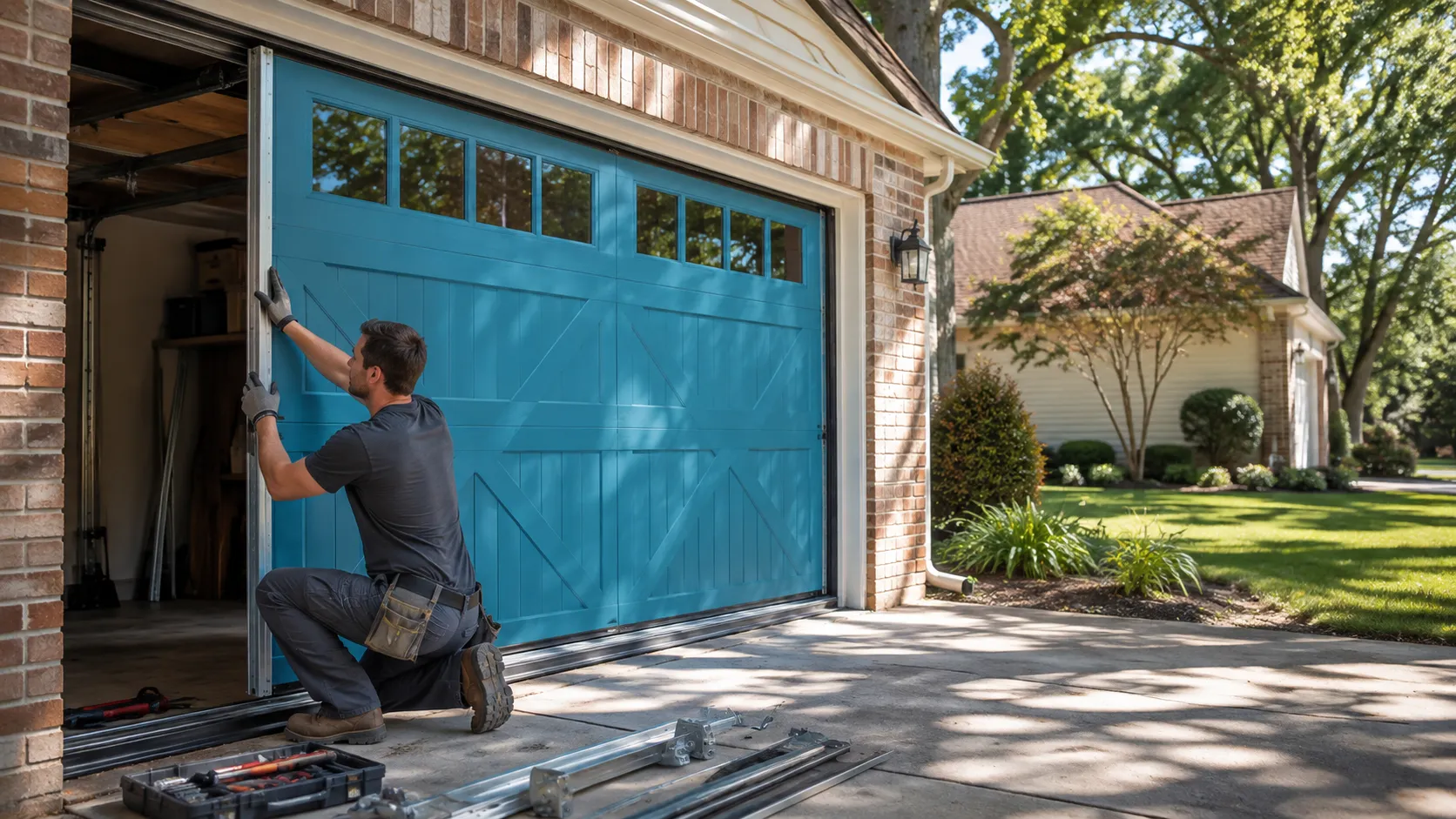
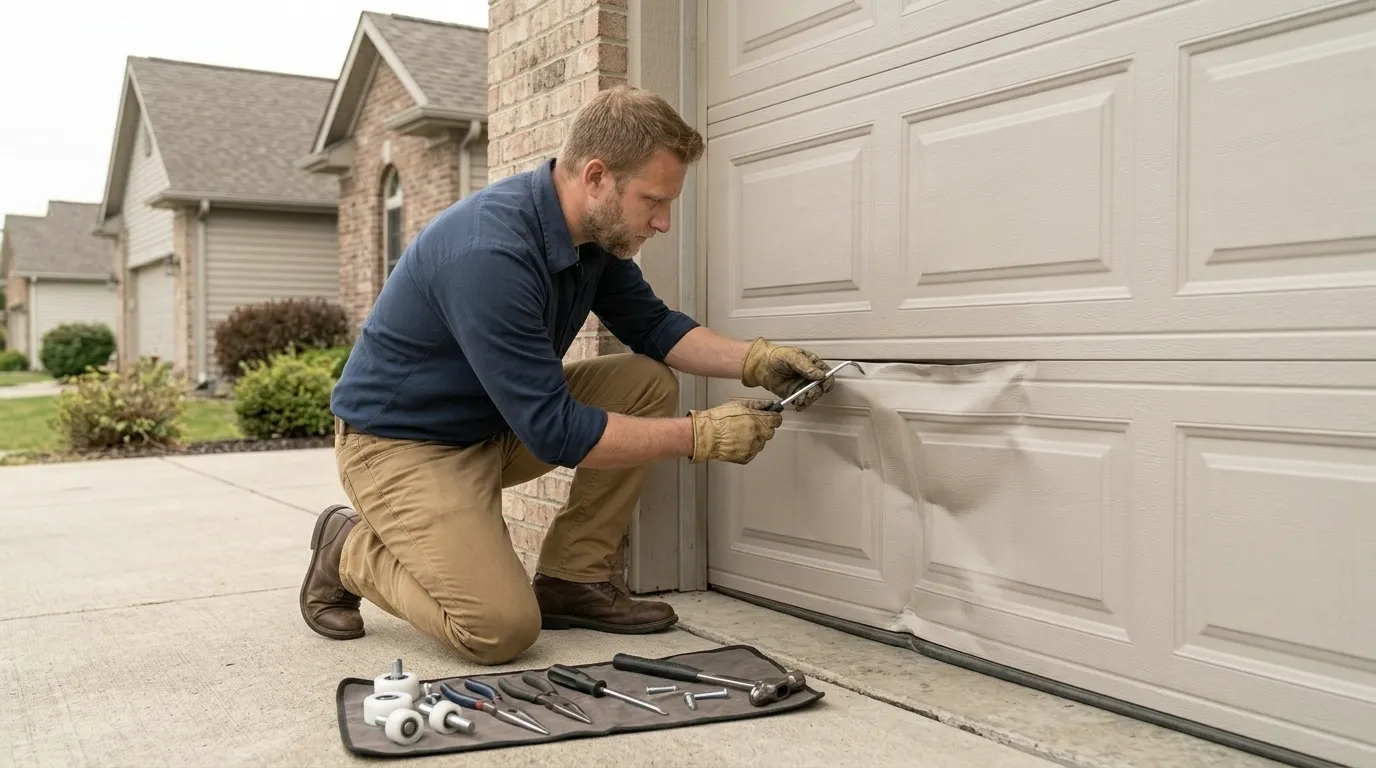
What happens is simple mechanics. The track brackets bolt into framing, and framing moves - settling, seasonal shift, a door that's been slammed a thousand times. Each small movement nudges a bracket a fraction out of true. Rollers wear round edges flat. Cables stretch. None of it looks like much on any given day, until the door hits a slightly-off bracket at speed and the roller pops clean out of the channel. At that point you've got a door hanging crooked in the opening, sometimes with a bent track, sometimes with a spring still under load - not a job to force back into place by hand.
The honest caveat: if the track itself is bent rather than just loose, straightening rarely holds. Past a certain point, replacing the section is the cheaper long-term fix.
What to Check
Before you call anyone, a few things are worth eyeballing yourself, with the door down and the opener unplugged.
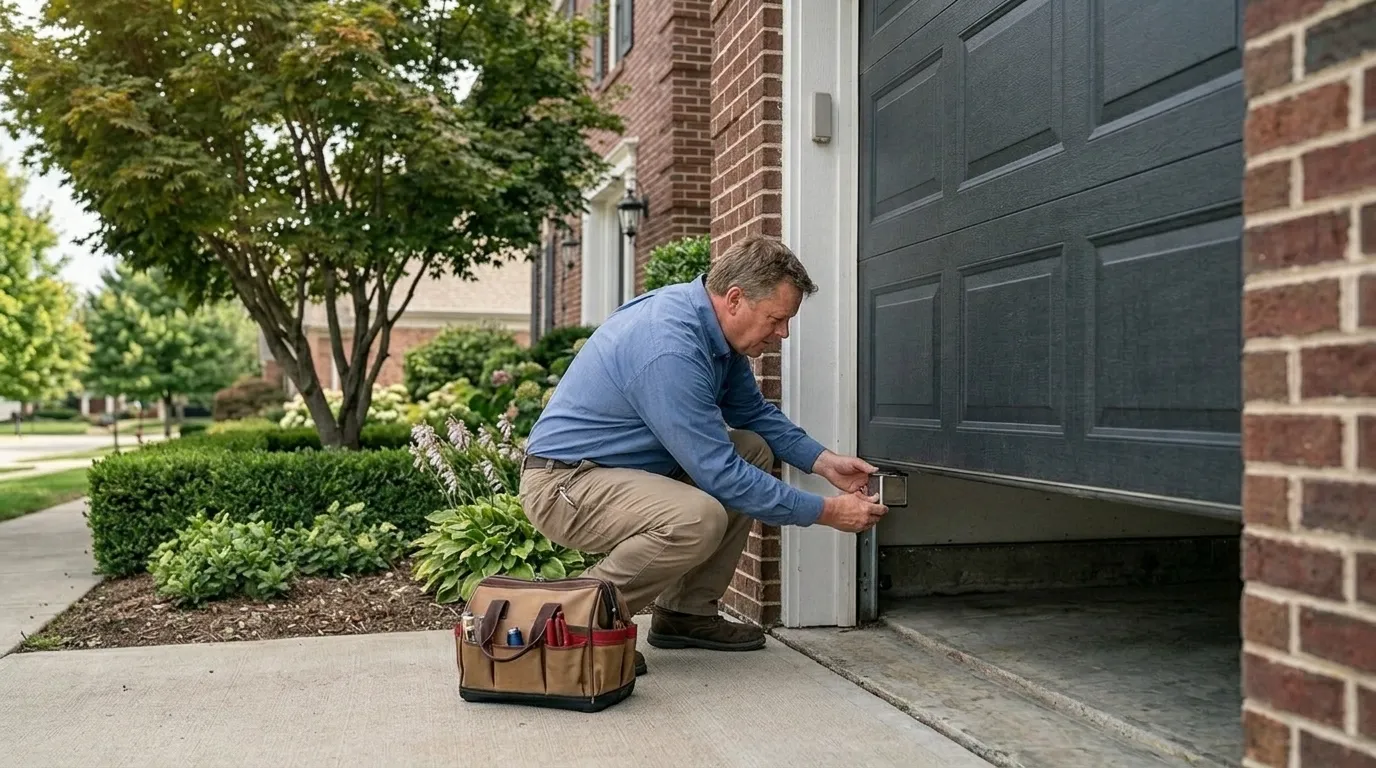
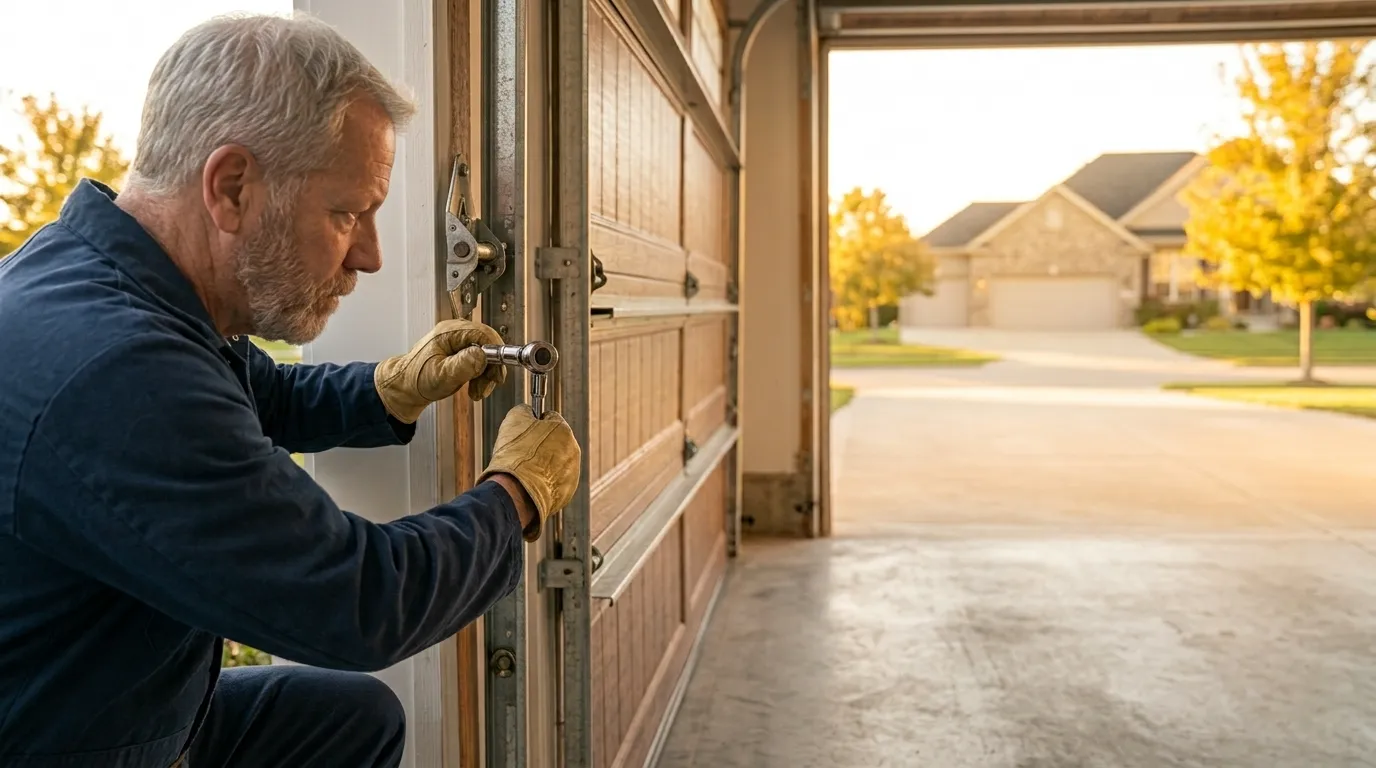
Look at the track brackets where they meet the wall studs or header - on houses from Newark's 1960s-70s wave especially, these are often the original lag screws, and they back out over time. Give each one a wiggle. If a bracket moves independently of the wall, that's your answer.
Check the rollers next. Nylon rollers should look round in profile; if one side is worn flatter than the other, it's been riding off-center for a while. Steel rollers on older doors wear a groove that does the same thing.
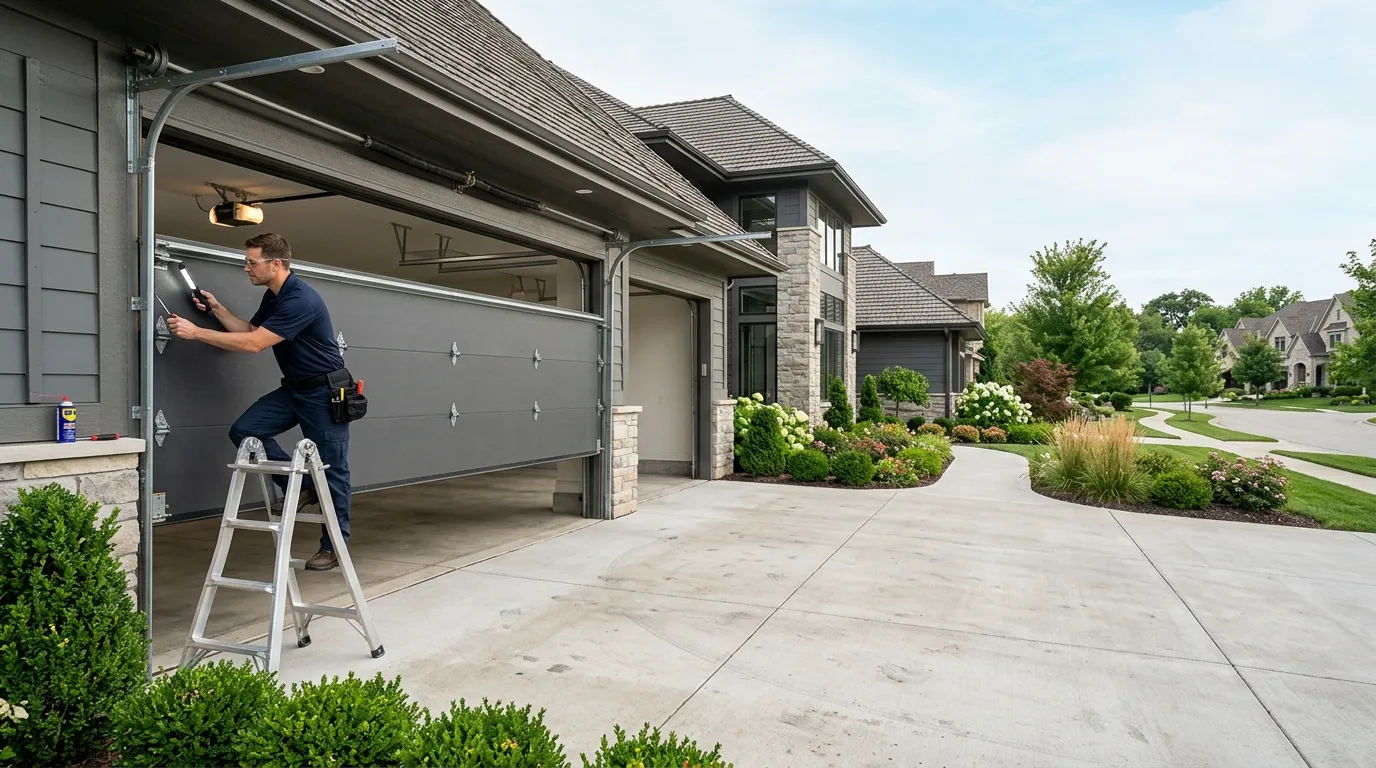
Run a level against the track on both sides of the door. Track that's crept even a quarter inch out of plumb over a couple decades is enough to cause a jump under the right conditions - a fast stop, a slightly heavier door panel, a gust through the opening.
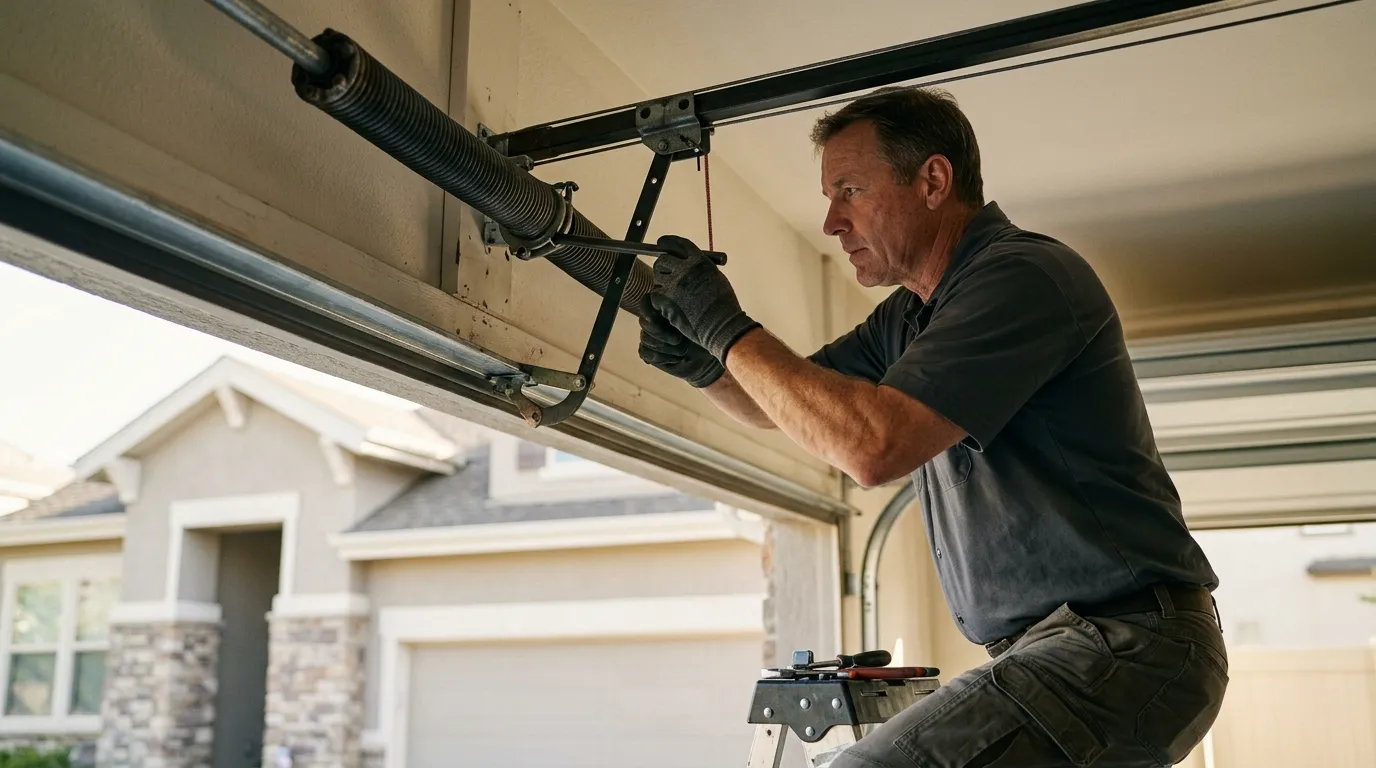
Last, look at the cable drums at the top. A cable that's jumped off its drum will pull the door crooked immediately, and that's a different repair than a track problem, though the symptom looks similar from the driveway.
What you shouldn't do is force the door back onto the track yourself if a spring is still under tension - that's where people get hurt.
Season by Season
Late fall is when small looseness turns into a real problem. Brackets that loosened gradually all summer get their first hard test when temperatures drop and the frame contracts - this is when a lot of Newark calls come in for doors that jumped track on the season's first cold snap.
Winter is the worst stretch for it, straight through into a hard freeze-thaw February. Ice on rollers, contracted framing, and salt-and-slush buildup in the track channel all stack together. If your door is going to come off the rail, this is the window.
Spring brings the opposite movement - ground thaw, frame expansion - and it can be just as hard on a bracket that's already fatigued from winter. This is a good time to walk the track with a wrench, especially on houses toward the older end of the 1938-2005 range.
Summer is the quiet season for track problems here, though heat can swell wood framing enough to pinch a track that was already running tight.
That cycle repeats every year a house stands, whether it's in town or out toward Heath or Granville, and it's part of why track hardware on an older Newark garage needs a real look on a schedule, not just when something finally jumps.