The Problem
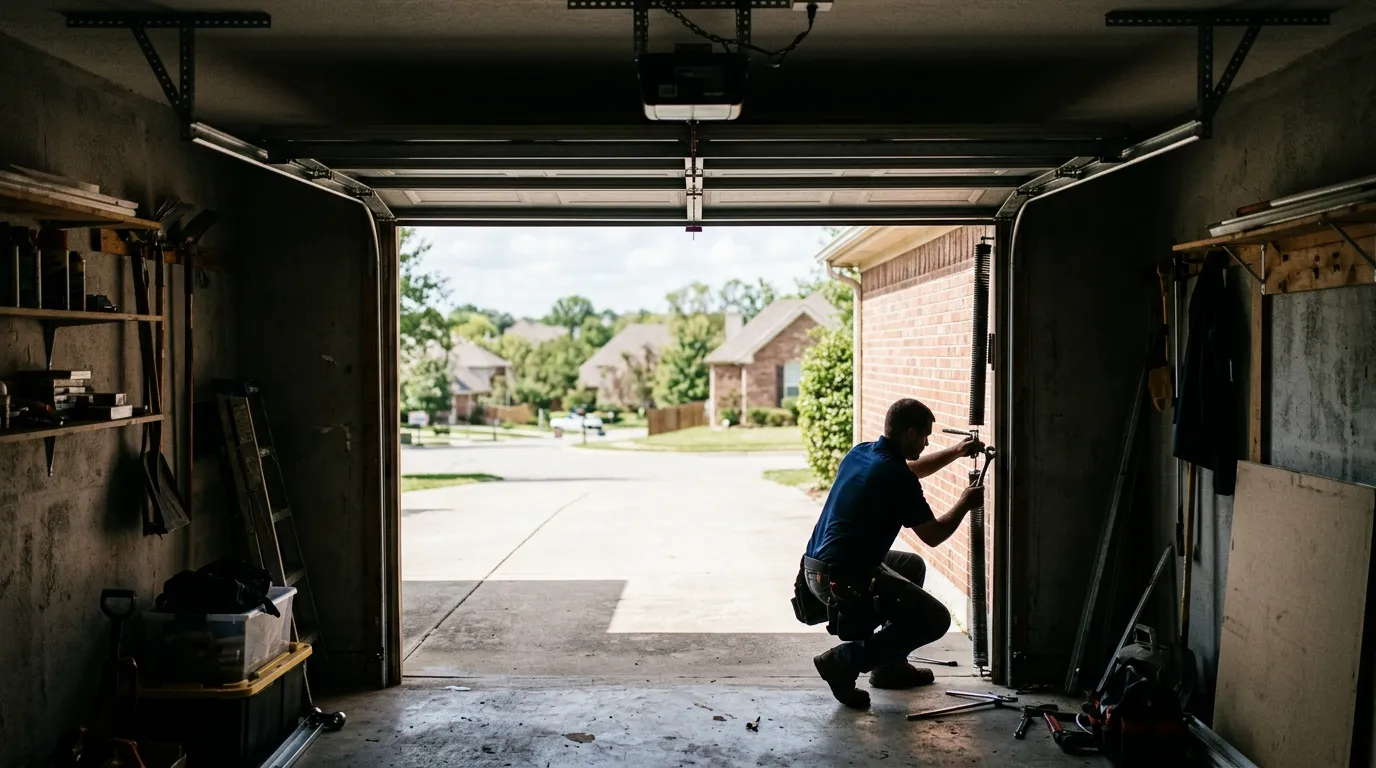
Most calls we get in Newark start the same way: a spring lets go, a door won't open past a foot, or the opener grinds trying to lift a door it can't. This isn't random. Housing across our service area was mostly built between 1938 and 2005, with the median landing around 1976, and a good share of that stock - spread across sixteen named communities - went up in the 1960s and 70s. A door installed in 1974 has had fifty years of temperature swings on its torsion spring, and most of these springs were only ever rated for a set number of open-close cycles. When that number runs out, it doesn't warn you first. It just breaks, usually on the coldest morning of the year. We also still find original extension-spring setups on doors that predate current safety-cable practice, which is its own separate conversation with the homeowner. A service call exists to find out which of these things is actually happening before it turns into a door that's stuck open or stuck shut for good.'
What to Check
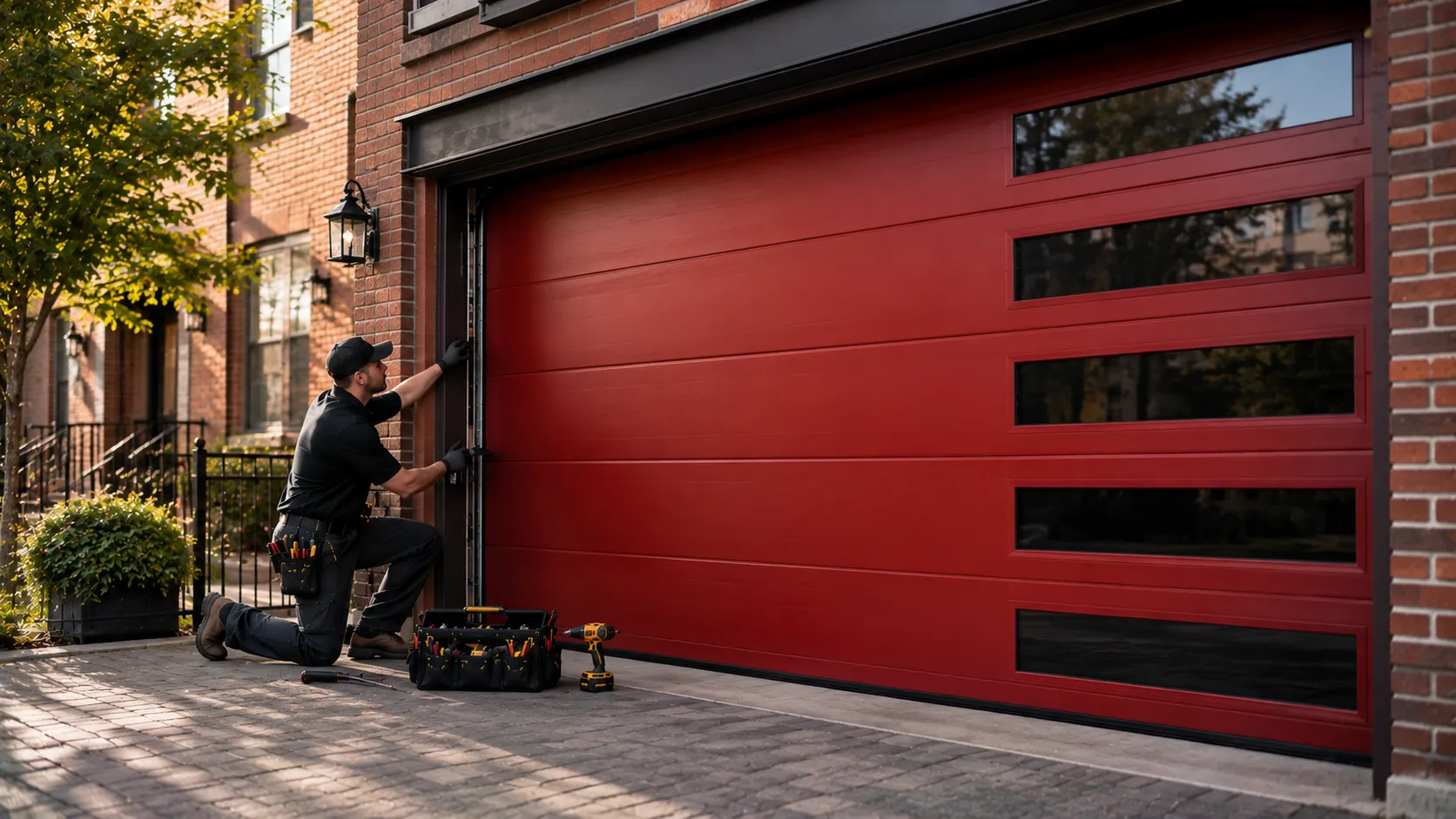
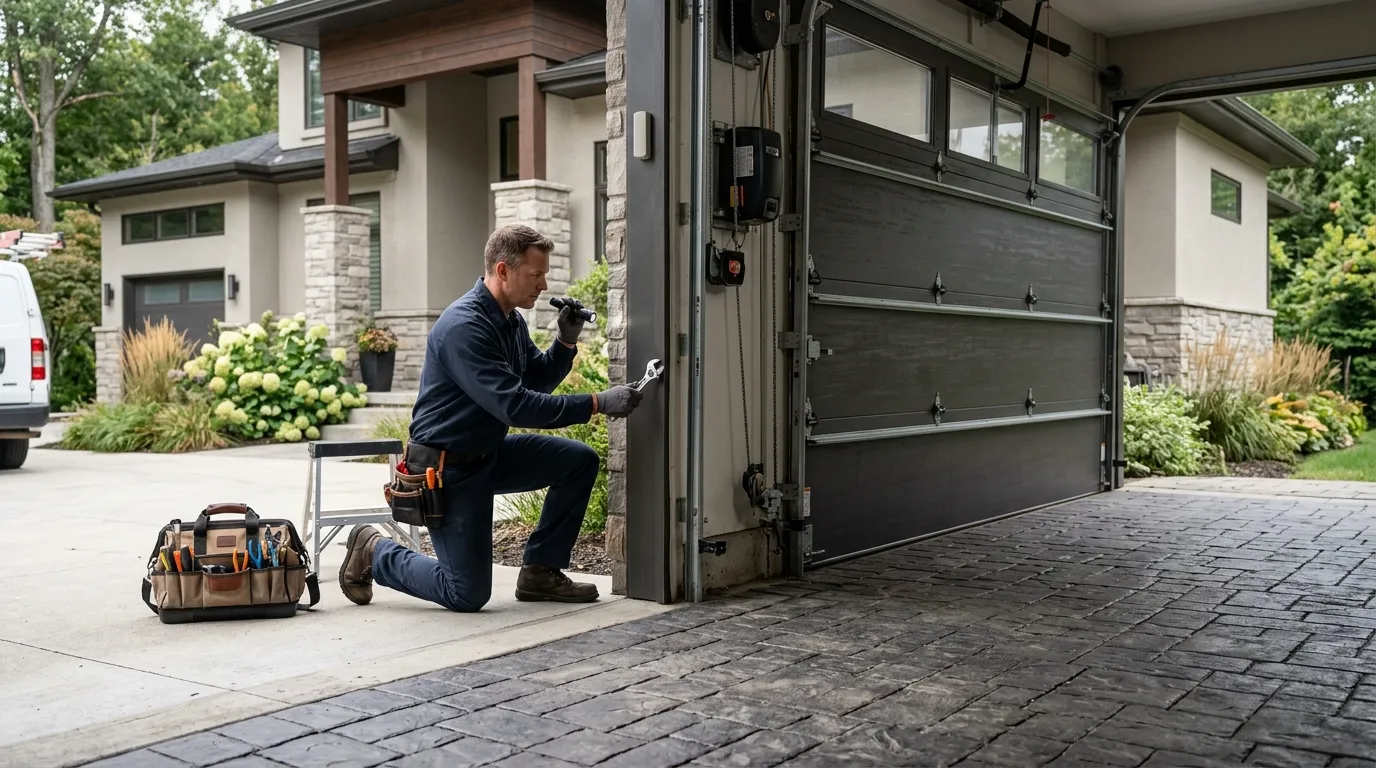
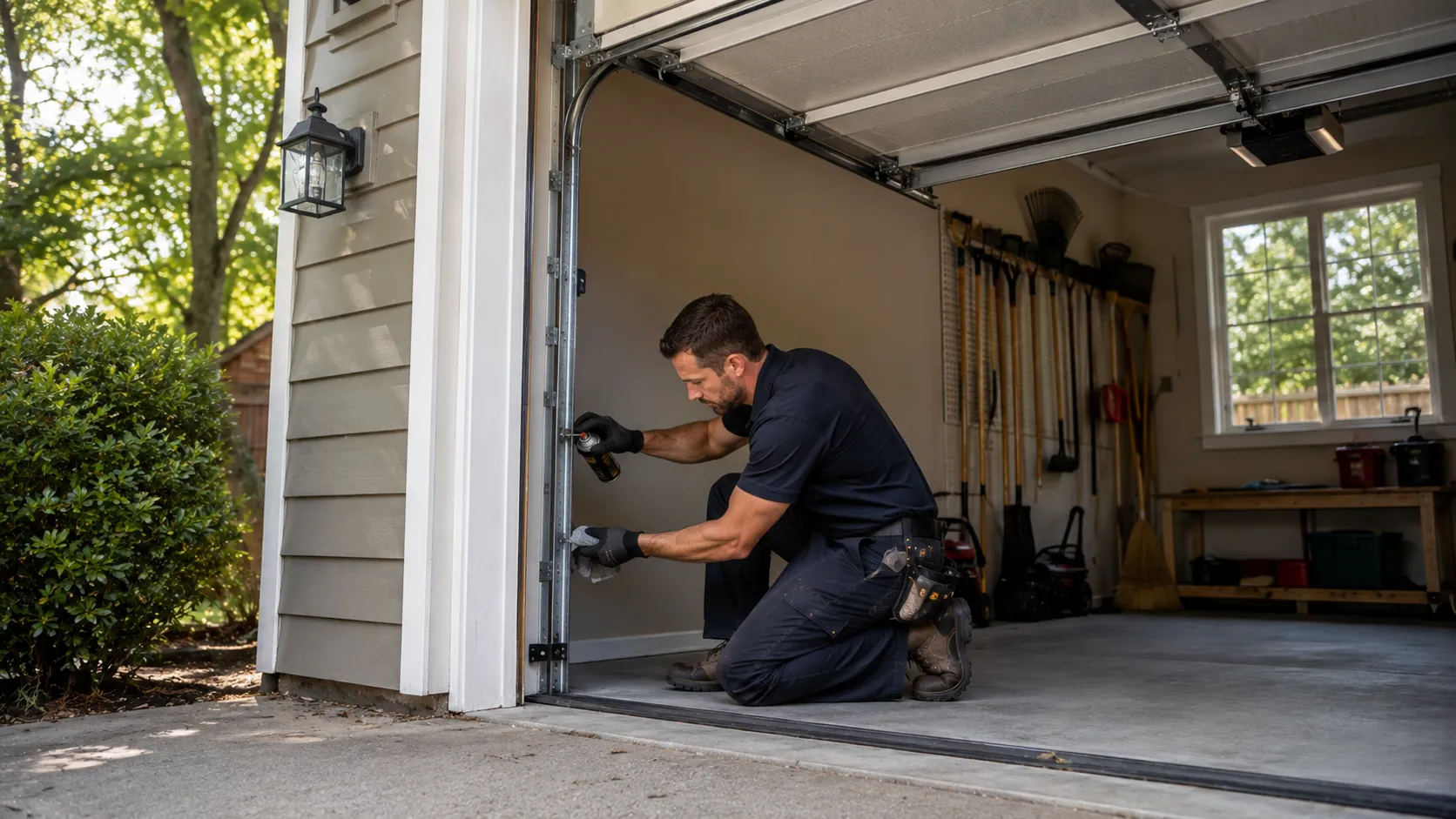
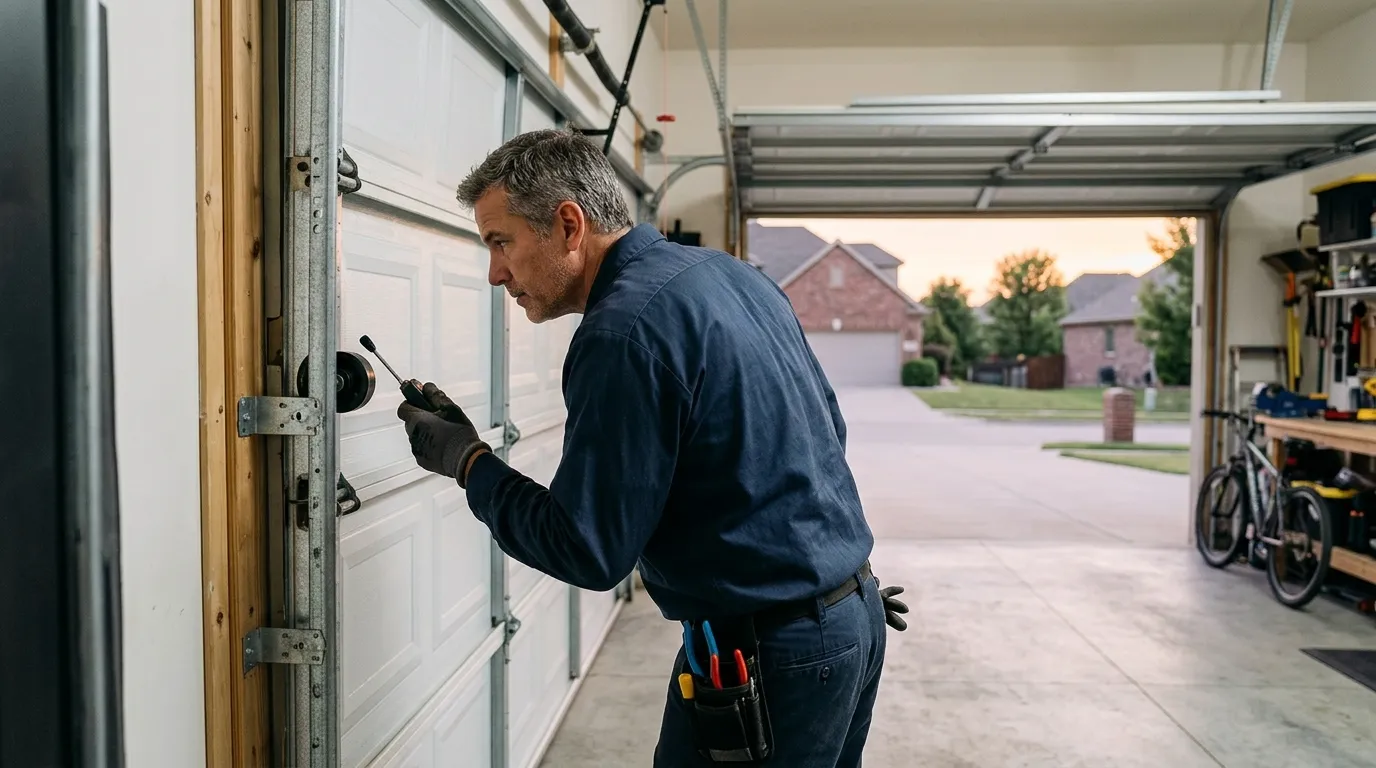
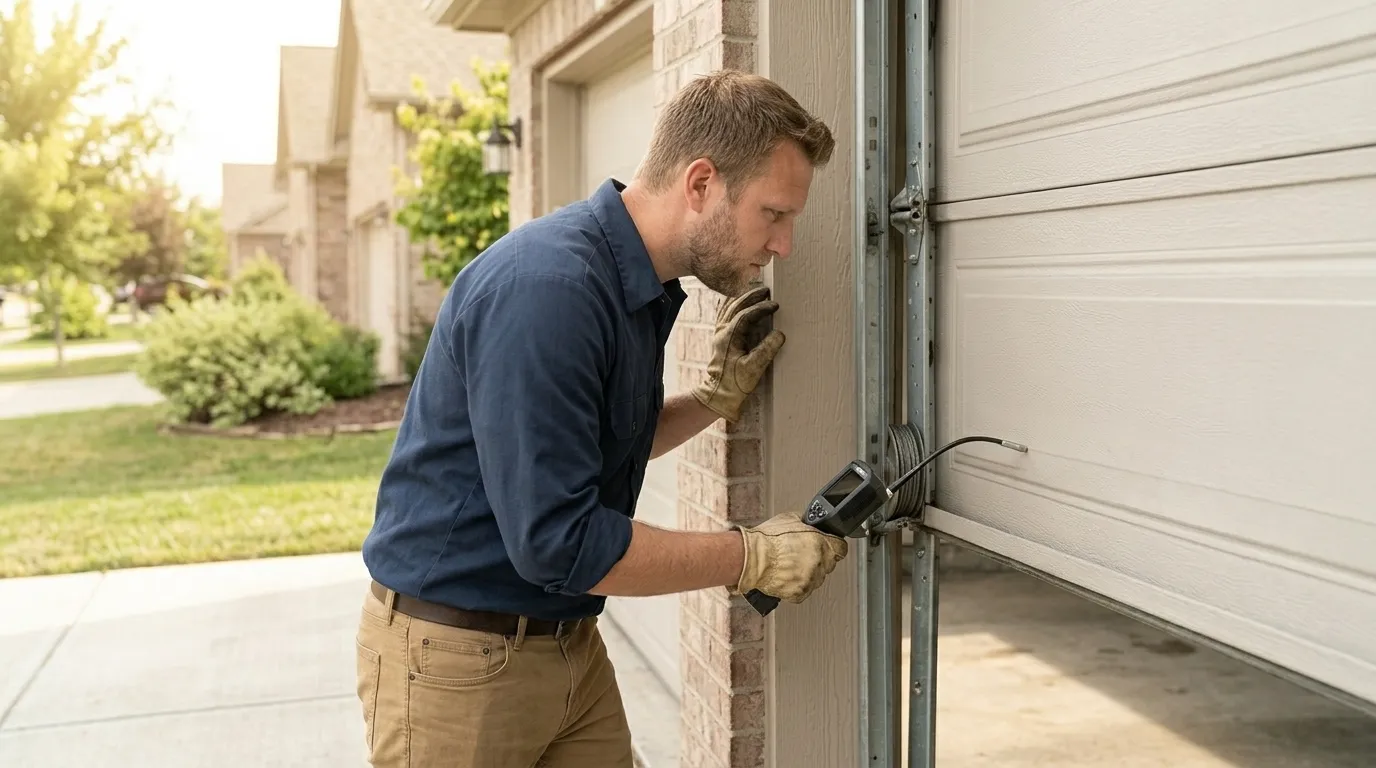
Before we touch a wrench, a proper service call covers the same ground every time: torsion or extension springs (original or replaced, matched pair or not, rust at the coil), the lift cables for fraying, the rollers for cracking or flat spots, and the track for alignment - a door that's walked off true track is a common find in houses this age. We check the opener's force and travel limits, since a door that's slower to close than it used to be is often a sign the springs are already carrying too much of the load. We also look at weatherstripping and the bottom seal, which matters more here than it would in a milder climate, because a gap lets cold air straight into an attached garage all winter. What we don't do on a basic service call is swap a full door system on the spot - if the panels are rusted through or the track is bent past adjustment, that becomes a separate estimate, not a same-visit replacement. Most calls end one of two ways: a repair finished that day, or a clear, honest list of what's failing and why it's worth fixing now instead of later.
Season by Season
Winter is when the phone rings most. Cold makes steel brittle and grease thick, so a spring that's been weakening for years finally lets go on a night that's ten degrees colder than it's been all week - a pattern that tracks with the cold-severe rating this area carries. Openers strain harder in winter too, since cold lubricant in the rail slows the trolley and the unit compensates by pulling more current, which shortens motor life over time. We don't have humidity or storm data for this area beyond that winter severity rating, so we're not going to guess at what a typical spring or summer call looks like here beyond the wear that comes with age. A fifty-year-old door built on 1976-era hardware is going to need attention regardless of the calendar, and that's the honest answer more often than a seasonal one.